
- English
- Chinese
- French
- German
- Portuguese
- Spanish
- Russian
- Japanese
- Korean
- Arabic
- Irish
- Greek
- Turkish
- Italian
- Danish
- Romanian
- Indonesian
- Czech
- Afrikaans
- Swedish
- Polish
- Catalan
- Esperanto
- Hindi
- Lao
- Albanian
- Amharic
- Armenian
- Azerbaijani
- Belarusian
- Bengali
- Bosnian
- Bulgarian
- Cebuano
- Chichewa
- Corsican
- Croatian
- Dutch
- Estonian
- Filipino
- Finnish
- Frisian
- Galician
- Georgian
- Gujarati
- Haitian
- Hausa
- Hawaiian
- Hebrew
- Hmong
- Hungarian
- Icelandic
- Igbo
- Javanese
- Kannada
- Kazakh
- Khmer
- Kurdish
- Kyrgyz
- Latin
- Latvian
- Lithuanian
- Luxembou..
- Macedonian
- Malagasy
- Malay
- Malayalam
- Maltese
- Maori
- Marathi
- Mongolian
- Burmese
- Nepali
- Norwegian
- Pashto
- Persian
- Punjabi
- Serbian
- Sesotho
- Sinhala
- Slovak
- Slovenian
- Somali
- Samoan
- Scots Gaelic
- Shona
- Sindhi
- Sundanese
- Swahili
- Tajik
- Tamil
- Telugu
- Thai
- Ukrainian
- Urdu
- Uzbek
- Vietnamese
- Welsh
- Xhosa
- Yiddish
- Yoruba
- Zulu
- Kinyarwanda
- Tatar
- Oriya
- Turkmen
- Uyghur

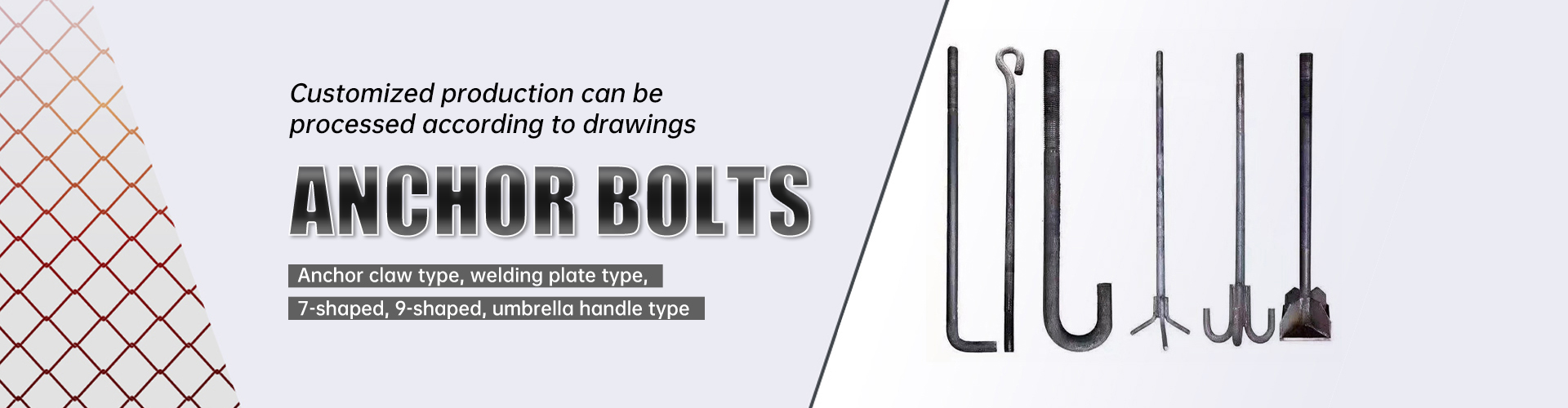
Bolt expansion anchor innovations in sustainability?
2026-03-17
When you hear ‘sustainability’ and ‘expansion anchors’ in the same sentence, most people’s eyes glaze over. They think it’s just marketing fluff, or maybe about recycling steel. But that’s the common mistake—it’s not just about the material itself. The real innovation is in how the entire system—from manufacturing to installation to the structure’s end-of-life—wastes less energy, less material, and lasts longer. It’s a quiet revolution happening in the details of torque values, installation techniques, and design philosophies that allow for material reduction without compromising safety. Let’s dig into what that actually looks like on the ground.
Rethinking Material Efficiency Beyond the Bolt
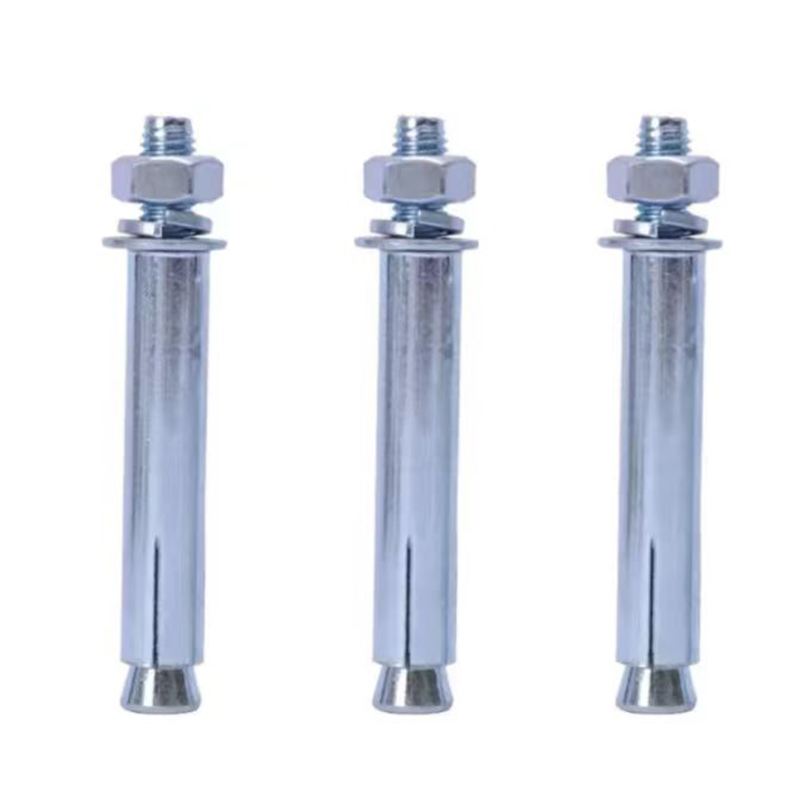
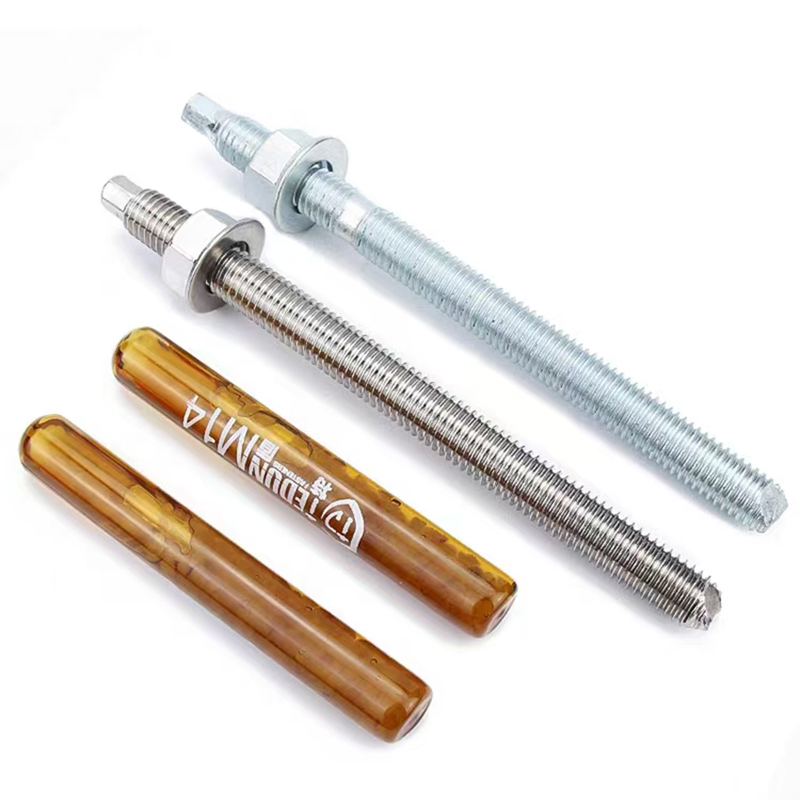
The first leap wasn’t switching to some exotic alloy. It was asking a simple question: are we over-engineering this? For decades, the answer was often ‘yes’. A traditional wedge anchor for heavy-duty concrete might use a significant mass of steel to achieve a required load. The innovation came with Hedapen aingura designs that achieve higher holding power with less embedded depth and a smaller diameter. This isn’t just about saving a few grams of steel. It means smaller drill holes, less drilling dust (silica), less energy consumed by the hammer drill, and reduced wear on drill bits. I’ve seen sites where switching to a more efficient anchor design cut drilling time by nearly a third on a facade project. That’s a tangible sustainability win—reduced labor, energy, and consumables.
But material efficiency gets tricky with coatings. The push for corrosion resistance often meant thick, hot-dip galvanizing. It works, but it’s an energy-intensive process and can affect the anchor’s expansion mechanics, sometimes requiring oversizing. The move towards mechanically applied, thin-film coatings like geometric zinc flakes or advanced polymer systems has been a game-changer. These provide equal or better corrosion protection without the thermal load of galvanizing and without altering the critical expansion tolerances. We tested a batch from a manufacturer, let’s say a company like Handan Zitai Fastener Manufacturing Co., Ltd. based in that massive production hub in Yongnian, on a coastal retrofit. The spec called for a hot-dip, but we got approval for their zinc flake coated anchors. Five years in, no corrosion issues, and the installation was smoother because the coating didn’t gum up the expansion mechanism.
The real test, though, is in deconstruction. Can the anchor be removed? Traditional wedge anchors are practically permanent; you often have to chip them out. Newer designs, like some undercut anchors or torque-controlled expansion systems, can sometimes be designed for demountability. This isn’t always highlighted, but for temporary structures or future material recovery, it’s a huge consideration. It’s not perfect—concrete is still damaged—but it’s a step towards designing for disassembly, a core iraunkortasun principle.
The Installation Process: Where Most Waste Happens
This is the dirty secret nobody talks about. You can have the most ‘green’ anchor on the planet, but if the installer drills the hole wrong, you’ve wasted everything. I’ve lost count of jobs where anchors were scrapped because of blown-out holes, incorrect depth, or debris left in the hole. The innovation here is as much about education and tooling as it is about the product. Anchor manufacturers are finally providing clear, foolproof installation tools—like combination drill and vacuum systems that capture dust at the source, or depth-stop collars that are integral to the drill bit packaging.
We ran a pilot on a hospital project mandating these dust-collection systems. The upfront cost was higher, but we eliminated silica containment tents and saved on cleanup. More importantly, it ensured a clean hole for proper anchor setting. The load verification rates went up. That’s a systemic sustainability benefit: a correctly installed anchor lasts the design life and doesn’t need replacement, avoiding all the embedded waste of a failed fixity.
Then there’s the issue of torque. Over-tightening is rampant. It stresses the steel, can crack the concrete substrate, and creates a point of premature failure. The move towards torque-indicating bolts or setting indicators on the anchor itself is massive. It turns a subjective ‘feel’ into a verifiable step. I remember a warehouse project where we used a new generation of anchors with a visual setting ring. The crew foreman, a seasoned guy, was skeptical. But after the first dozen, he admitted it took the guesswork out. Fewer call-backs, no wasted anchors from shearing during install. Simple, but profoundly effective.
Case in Point: The Lightweighting of Facade Systems
A concrete example is in curtain wall and rainscreen cladding. The trend is towards lighter, often composite, panels. This reduces the load on the building structure, which is a primary sustainability goal. But it demands a different approach to anchorage. You can’t just use a smaller version of an old anchor; the dynamics change.
We worked on a project using thin, terracotta cladding. The wind load calculations were intense, requiring a high number of fixings. The initial design used a standard stainless steel expansion anchor. The weight of all that stainless was significant, and the drilling schedule was a nightmare. The solution was a switch to a specialized, lightweight alloy anchor with a modified expansion sleeve. It was designed for the specific substrate (in this case, pre-cast concrete with some aggregate variability) and the specific load profile (high shear, lower tension). Sourcing from a specialized producer with rigorous testing protocols was key. A manufacturer with a focus on R&D, like the one you’d find at https://www.zitaifasteners.com, often has the capability to tweak designs for these niche applications. The result was a 40% reduction in anchor steel weight per panel, faster installation, and no compromise on safety. The iraunkortasun payoff was across the board: embodied carbon in the anchors, transport weight, and on-site labor energy.
The lesson here is that anchor innovation for sustainability is rarely a standalone product. It’s a systems integration problem. The anchor must be co-engineered with the panel, the bracket, and the substrate. When it’s not, you get failures. I recall an early attempt at using a ‘green’ anchor made from a high-recycled-content steel. It performed fine in lab tests, but in the field, the variability in hardness led to inconsistent setting under real-world torque guns. We had a 15% rejection rate on site. A failure. It taught us that material sourcing is only one variable; manufacturing consistency and installation compatibility are non-negotiable.
Logistics and Localization: The Unsung Factor
You can’t discuss sustainability without touching on supply chains. An ‘innovative’ anchor shipped by air freight from Europe to Asia for a project negates a lot of its material benefits. The location of manufacturing matters. The concentration of fastener production in areas like Yongnian District in Handan, adjacent to major rail and road networks, isn’t an accident. It creates logistical efficiency. For projects across Asia, sourcing from a local industrial base like that of Handan Zitai Fastener Manufacturing Co., Ltd., which highlights its proximity to the Beijing-Guangzhou Railway and expressways, drastically cuts down on transportation emissions compared to trans-oceanic shipping.
This localization also enables more responsive just-in-time delivery, reducing the need for massive on-site inventories that can lead to damage, loss, or corrosion. We’ve shifted to working with regional suppliers who can batch-produce to our project’s phased schedule. It requires more planning, but it cuts down on waste from over-ordering. The website for Zitai, for instance, isn’t just a catalog; for a project manager, it represents a node in a leaner supply chain.
Furthermore, being in a major production base often means access to specialized secondary processes—like precise heat treatment or coating application—without needing to ship components to another facility. This vertical integration, common in Yongnian, streamlines production and, again, saves energy on intermediate transport. It’s a background factor, but it directly impacts the carbon footprint of the pallet of anchors that shows up on your job site.
The Verdict: It’s About Holistic Performance
So, are bolt expansion anchors seeing real innovation in sustainability? Absolutely, but not in a flashy way. It’s in the aggregate of a hundred small improvements: a more efficient geometric design that uses less steel; a smarter coating that lasts longer with less environmental impact; installation aids that prevent errors; and logistics that shrink the supply chain radius.
The most sustainable anchor is the one you only have to install once, that performs for the full design life of the structure, and that allows for future adaptability. The innovations are pushing in that direction. They’re moving the focus from pure ultimate tensile strength to a broader metric of lifecycle efficiency. It’s less about a single ‘hero’ product and more about the entire technical solution—from the factory floor in Hebei to the torque wrench in an installer’s hand—being optimized to waste nothing.
For specifiers and contractors, the ask is now to look beyond the data sheet. Ask about the installation process, the sourcing of materials, the consistency of production, and the potential for end-of-life recovery. That’s where you’ll find the true innovations in sustainability. The anchor is just the most visible piece of a much larger, and increasingly more responsible, system.
Mesedez, utzi mezu bat
-


-
-


Urriatu