
- English
- Chinese
- French
- German
- Portuguese
- Spanish
- Russian
- Japanese
- Korean
- Arabic
- Irish
- Greek
- Turkish
- Italian
- Danish
- Romanian
- Indonesian
- Czech
- Afrikaans
- Swedish
- Polish
- Catalan
- Esperanto
- Hindi
- Lao
- Albanian
- Amharic
- Armenian
- Azerbaijani
- Belarusian
- Bengali
- Bosnian
- Bulgarian
- Cebuano
- Chichewa
- Corsican
- Croatian
- Dutch
- Estonian
- Filipino
- Finnish
- Frisian
- Galician
- Georgian
- Gujarati
- Haitian
- Hausa
- Hawaiian
- Hebrew
- Hmong
- Hungarian
- Icelandic
- Igbo
- Javanese
- Kannada
- Kazakh
- Khmer
- Kurdish
- Kyrgyz
- Latin
- Latvian
- Lithuanian
- Luxembou..
- Macedonian
- Malagasy
- Malay
- Malayalam
- Maltese
- Maori
- Marathi
- Mongolian
- Burmese
- Nepali
- Norwegian
- Pashto
- Persian
- Punjabi
- Serbian
- Sesotho
- Sinhala
- Slovak
- Slovenian
- Somali
- Samoan
- Scots Gaelic
- Shona
- Sindhi
- Sundanese
- Swahili
- Tajik
- Tamil
- Telugu
- Thai
- Ukrainian
- Urdu
- Uzbek
- Vietnamese
- Welsh
- Xhosa
- Yiddish
- Yoruba
- Zulu
- Kinyarwanda
- Tatar
- Oriya
- Turkmen
- Uyghur

Colored zinc-plated bolts: sustainable innovation?
2026-01-14
You see ‘colored zinc-plated bolts’ on a spec sheet or a supplier’s website, and the immediate reaction in our line of work is often a mix of skepticism and curiosity. Is it just a marketing gimmick, a way to charge more for a standard fastener with a dash of paint? Or is there a genuine engineering and environmental argument buried under that layer of pigment? I’ve spent years sourcing and testing fasteners for various outdoor and architectural applications, and I can tell you, the conversation around these parts is rarely black and white—or in this case, silver and blue. The sustainability claim is the real hook, but it’s tangled up with performance myths, coating chemistry, and some harsh realities from the factory floor.
Beyond Aesthetics: The Real Function of Color
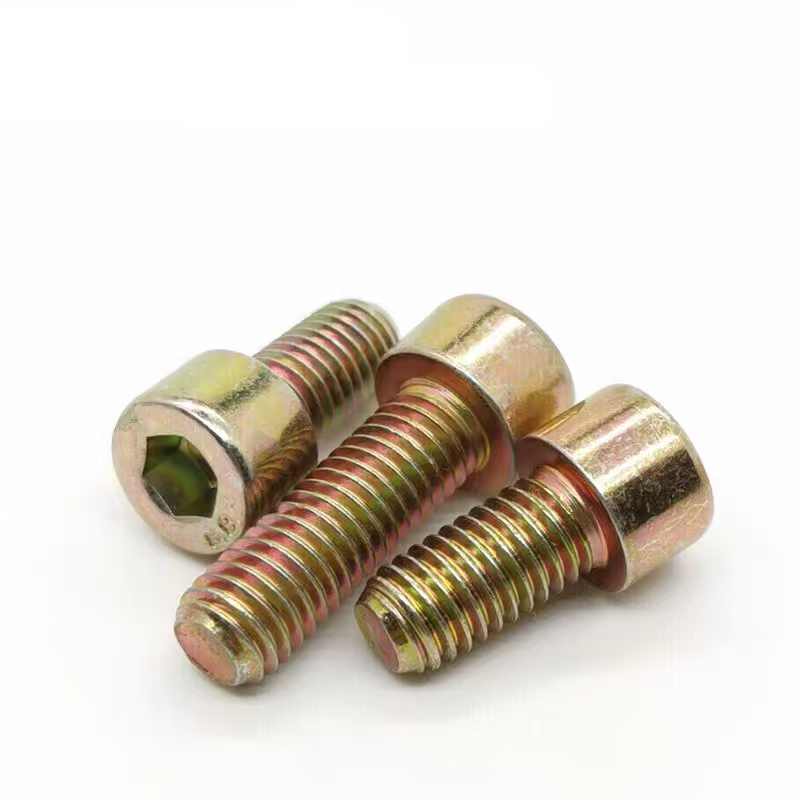
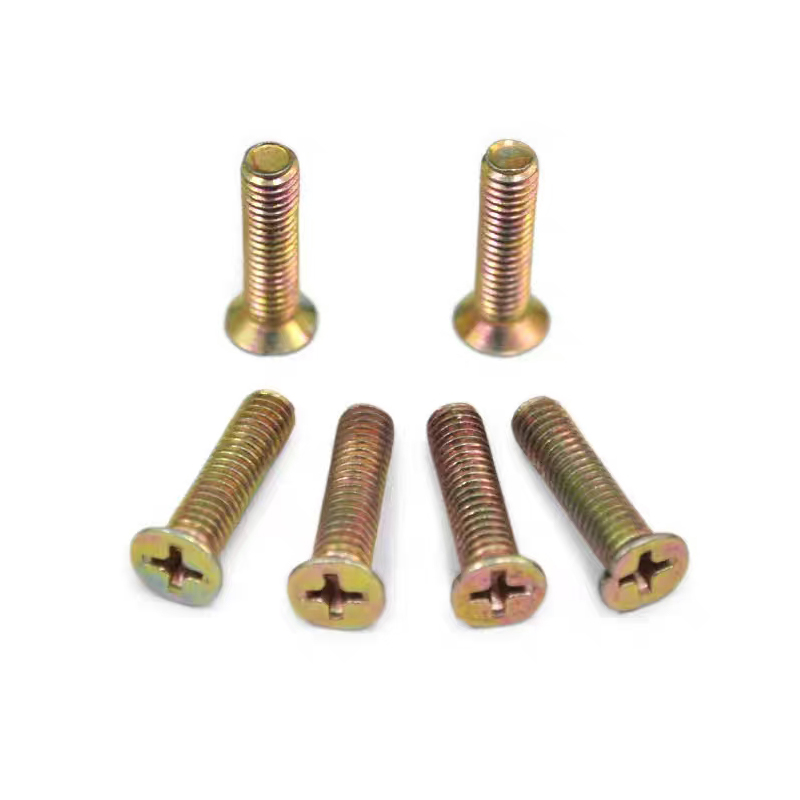
Let’s cut through the first misconception: the color isn’t primarily for looks. Sure, it allows for color-coding in assembly or architectural matching, which has value. But in a functional sense, that topcoat of color—usually a chromate conversion coating with dye or an organic sealant—is the real workhorse. A standard clear or blue-bright zinc plating offers sacrificial corrosion protection, but its lifespan against white rust, especially in humid or coastal environments, can be disappointingly short. The colored layer, often a thicker trivalent or non-hexavalent chromate layer, acts as a much more robust barrier. It seals the porous zinc plating underneath. I’ve seen standard clear zinc parts from a batch show white corrosion after 48 hours in a salt spray test, while the yellow iridescent ones from the same batch were still clean at 96 hours. The difference isn’t cosmetic; it’s a fundamental upgrade in corrosion resistance.
This leads directly to the sustainability angle. If a bolt lasts two or three times longer before corroding, you’re reducing replacement frequency, material waste, and the labor/energy for maintenance. That’s a tangible lifecycle benefit. But—and it’s a big but—this hinges entirely on the integrity of that colored coating process. A poorly controlled bath, inconsistent immersion time, or inadequate rinsing can leave you with a part that looks great on arrival but fails prematurely. The color can hide a multitude of sins in the underlying zinc layer, which is why trusting your supplier’s process control is non-negotiable.
I remember a project for a seaside boardwalk railing. The architect wanted a specific dark bronze finish. We sourced colored zinc-plated bolts that matched perfectly. Visually, they were flawless. Within 18 months, we had reports of rust staining. Post-failure analysis showed the zinc layer was thin and patchy; the beautiful topcoat had simply masked a substandard base plating job. The sustainable, long-life product became a source of premature failure and waste. The lesson wasn’t that the technology is bad, but that its performance is entirely process-dependent.
The Chemistry Shift: From Hex-Cr to Trivalent and Beyond
The drive for sustainability has fundamentally changed the chemistry behind these coatings. For decades, the gold standard for high-corrosion resistance was the hexavalent chromate (Hex-Cr) passivation layer. It produced those distinctive yellow or iridescent finishes and was incredibly effective. But it’s also highly toxic and carcinogenic, leading to severe environmental and worker safety regulations (RoHS, REACH). Calling a Hex-Cr coated bolt sustainable would be laughable, regardless of its longevity.
The innovation—the actual sustainable step—has been the development of viable trivalent chromate and non-chromium (e.g., zirconium-based, silica-based) conversion coatings that can be colored. These are far less hazardous. When a supplier like Handan Zitai Fastener Manufacturing Co., Ltd. talks about their colored zinc plating now, they’re almost certainly referring to these newer chemistries. Located in Yongnian, the heart of China’s fastener production, they’re in a region that’s had to adapt rapidly to global environmental standards. The shift isn’t optional for exporters.
However, the performance parity debate is real. Early trivalent chromates didn’t match Hex-Cr’s self-healing properties or salt spray resistance. The technology has caught up significantly, but it requires more precise process control. The bath chemistry is less forgiving. I’ve had technical reps from coating chemical companies admit that if the pH or temperature drifts, the color consistency and corrosion performance of trivalent processes can vary more than the old, toxic standard. So, the sustainable alternative demands higher expertise from the manufacturer. It’s not a simple drop-in replacement.
Supply Chain Realities and the Yongnian Factor
When you drill down into where these colored zinc-plated bolts come from, a huge volume flows through clusters like Yongnian District in Handan. The concentration of expertise and infrastructure there is staggering. A company like Handan Zitai Fastener, positioned near major transport routes, embodies the scale and capability of this base. They can handle the entire chain: cold heading, threading, heat treatment, plating, and coloring. This vertical integration is key for quality control in a process as sensitive as colored plating.
But scale brings its own challenges. During peak demand, I’ve seen quality consistency suffer across the board in the region. The coloring stage, often a final step, can become a bottleneck. Rushed rinsing or shortened drying times before packaging can lead to wet storage stain—corrosion that occurs in transit because residual moisture is trapped against the bolt. You receive a box of beautifully colored bolts that are already starting to white rust in the crevices. This isn’t a failure of the product concept, but of production logistics and quality gates. It’s a practical reminder that sustainability isn’t just about the coating chemistry; it’s about the entire manufacturing discipline that prevents waste.
Their website, zitaifasteners.com, showcases the range—from standard galvanized to Koloretako zinka estalita options. What you don’t see is the behind-the-scenes investment in wastewater treatment for their plating lines, which is a massive part of the true environmental cost. A supplier’s commitment to treating effluent from the plating and coloring process is, in my view, a more telling indicator of their sustainable stance than the color of the bolt itself.
Application Specifics: Where It Makes Sense (and Where It Doesn’t)
So, when do you specify a colored zinc-plated bolt? It’s not a universal upgrade. For indoor, dry environments, it’s overkill; standard zinc is more cost-effective. The sweet spot is in exterior applications where moderate to high corrosion resistance is needed, but stainless steel is cost-prohibitive, and hot-dip galvanizing is too bulky or rough for the assembly. Think electrical enclosures, HVAC mounting, solar panel framing, playground equipment, and certain architectural metalwork.
We used them successfully on a series of modular outdoor lighting poles. The bolts needed to blend with a dark bronze pole finish and withstand a coastal-urban atmosphere. The colored trivalent chromate bolts provided the corrosion resistance and the aesthetic match. Five years in, with no maintenance, they still look and perform fine. That’s a win for the sustainability argument—no replacements, no stains, no callbacks.
But there are limits. We attempted to use them in a highly abrasive, high-vibration setting on agricultural machinery. The colored coating, while corrosion-resistant, was relatively thin and wore off quickly at bearing surfaces, exposing the underlying zinc to accelerated wear. Failure. It taught us that abrasion resistance is a different property altogether. The innovation is specific; it solves a corrosion/identification problem, not a mechanical wear one.
The Verdict: A Qualified Yes, With Eyes Wide Open
Is it a sustainable innovation? Yes, but with heavy qualifications. The move from toxic Hex-Cr to safer trivalent or non-chrome chemistries is a clear environmental and health win. The potential to extend service life through superior barrier protection reduces waste. That’s the core of the sustainable case.
However, the term sustainable gets diluted if the manufacturing process is wasteful or poorly controlled, leading to high reject rates or premature failures in the field. The innovation isn’t in the bolt being blue or yellow; it’s in the advanced, regulated chemistry applied with precision over a sound zinc substrate. It requires a competent, invested manufacturer.
My advice? Don’t just order by color swatch. Interrogate the process. Ask for salt spray test reports (ASTM B117) specifying the hours to white and red rust for their specific colored finish. Inquire about their wastewater management. Audit if you can. The real sustainability, and performance, comes from the details behind the colorful facade. For suppliers operating at scale with integrated control, like those in the Yongnian base who have adapted, it represents a genuine step forward. For others, it’s just colored metal. Knowing the difference is everything.
Mesedez, utzi mezu bat
-


-
-


Urriatu