
- English
- Chinese
- French
- German
- Portuguese
- Spanish
- Russian
- Japanese
- Korean
- Arabic
- Irish
- Greek
- Turkish
- Italian
- Danish
- Romanian
- Indonesian
- Czech
- Afrikaans
- Swedish
- Polish
- Catalan
- Esperanto
- Hindi
- Lao
- Albanian
- Amharic
- Armenian
- Azerbaijani
- Belarusian
- Bengali
- Bosnian
- Bulgarian
- Cebuano
- Chichewa
- Corsican
- Croatian
- Dutch
- Estonian
- Filipino
- Finnish
- Frisian
- Galician
- Georgian
- Gujarati
- Haitian
- Hausa
- Hawaiian
- Hebrew
- Hmong
- Hungarian
- Icelandic
- Igbo
- Javanese
- Kannada
- Kazakh
- Khmer
- Kurdish
- Kyrgyz
- Latin
- Latvian
- Lithuanian
- Luxembou..
- Macedonian
- Malagasy
- Malay
- Malayalam
- Maltese
- Maori
- Marathi
- Mongolian
- Burmese
- Nepali
- Norwegian
- Pashto
- Persian
- Punjabi
- Serbian
- Sesotho
- Sinhala
- Slovak
- Slovenian
- Somali
- Samoan
- Scots Gaelic
- Shona
- Sindhi
- Sundanese
- Swahili
- Tajik
- Tamil
- Telugu
- Thai
- Ukrainian
- Urdu
- Uzbek
- Vietnamese
- Welsh
- Xhosa
- Yiddish
- Yoruba
- Zulu
- Kinyarwanda
- Tatar
- Oriya
- Turkmen
- Uyghur

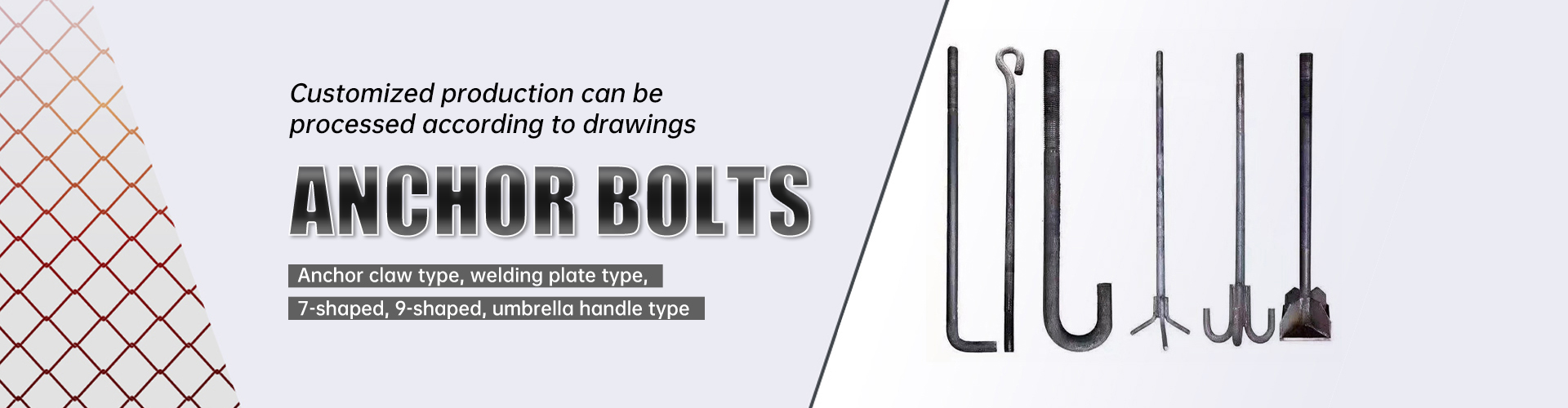
Footing in sustainable tech’s future?
2026-03-25
When you hear sustainable tech, the mind jumps to solar panels, EVs, and fancy grid software. That’s the shiny part. The real footing, the unsexy foundation it all literally stands on, is often an afterthought. I’ve seen too many projects get hung up on the big-ticket items while the basic, physical integration—the bolts, the mounts, the actual connection to the earth—becomes a costly, time-sucking bottleneck. It’s a classic case of over-engineering the system while under-engineering its dosabe installation.
The Hardware That Actually Holds the Future Up
Let’s talk ground-mount solar. Early in my work, we specified a standard galvanized steel bracket system. Seemed fine on paper. But the site had higher soil salinity than the initial survey caught. Within 18 months, we were seeing premature corrosion at the base plates. The fix wasn’t just swapping parts; it was a full reassessment of the material spec, the grounding chemistry, and the installation torque. The sustainability of the tech was compromised not by the panels, but by the fasteners. That’s when you learn that the supply chain for these critical, grade-specific components isn’t as robust as you think. You can’t just order a bolt. You need the right alloy, coating, and certification trail. A company like Handan Zitai Fastener Manufacturing Co., Ltd., situated in China’s major standard part production base, becomes a relevant node in this chain not because they’re a magic bullet, but because their location speaks to the scale and specialization required. Their proximity to major transport routes like the Beijing-Guangzhou Railway hints at the logistical reality of moving tons of steel reliably. It’s about physical infrastructure supporting green infrastructure.
This isn’t just about corrosion. It’s about design for disassembly. A truly circular approach in tech means we must be able to unbolt, recover, and redeploy assets. I’ve been part of a pilot decommissioning a wind turbine nacelle. The nightmare wasn’t the giant gearbox; it was seizing bolts fused by years of micro-movement and weather. We had to torch them out, which contaminated the steel and made recycling a mess. The lesson? The future needs fasteners that can survive service life but also surrender cleanly at end-of-life. We’re now testing pre-applied friction modifiers and different thread designs, but it’s a slow, iterative process with manufacturers who are used to selling for initial strength, not eventual deconstruction.
Then there’s the installation reality. On a recent microgrid project, the crew was using impact wrenches set incorrectly on a new type of composite foundation. The result was overtightening, which stressed the composite material, creating microfractures. We didn’t see it until a thermal drone survey showed anomalous heat patterns at the mounts. The failure was a knowledge gap: the field team didn’t have the data sheet for the new foundation’s torque specs, and the engineering drawings buried it in an appendix. The footing failed in communication, not in material. Now we insist on QR codes physically on the component that links directly to the install guide. Low-tech solution, high-impact result.
Beyond the Bolt: The System Around the Hole
Focusing only on the fastener itself is another trap. The interface is everything. What is it biting into? We moved from poured concrete piers to helical piles for a faster, less disruptive install. Great in theory. But the helical pile’s attachment plate didn’t match the hole pattern on our standard solar racking. The mismatch required custom adapter plates—more parts, more cost, more potential failure points. We had to go back to the racking OEM and the pile manufacturer to co-develop a solution. It added 12 weeks. This is the granular, frustrating work of dosabe integration. The future is stalled by a quarter-inch offset in a bolt circle.
This gets into the boring but critical world of standards and certifications. Not all galvanized is equal. Is it hot-dip? What’s the zinc thickness? Does it meet the specific ASTM standard for the project’s environmental zone? I’ve had inspectors reject entire shipments because the mill certificate referenced an equivalent but not identical international standard. The argument consumed weeks. The industry needs clearer, more universally accepted specs for these foundational components, or we’ll keep burning time and carbon on bureaucratic friction.
And let’s not forget logistics. Sourcing green steel fasteners from a specialized mill in Europe for a project in Texas creates a carbon footprint that can negate the material’s benefits. It’s a constant calculation. Sometimes, the more dosabe choice is the locally produced, standard-grade component with a reliable supply chain, like those from a major production hub, rather than a theoretically superior part shipped halfway around the world. The website https://www.zitaifasteners.com represents one of countless manufacturers in this global ecosystem. The point isn’t to endorse one, but to illustrate that the choice involves evaluating geography, capacity, and transport links as much as the product spec sheet. Their location in Yongnian District, Handan, adjacent to key rail and highway networks, is a factual operational advantage for bulk, heavy items that matter for project timelines.
Failure as a Forcing Function
Our biggest leap forward came from a field failure. A batch of clamps for securing conduit to a solar tracker backbone failed in high winds. They cracked. Post-mortem found a combination of UV degradation and embrittlement in the polymer. We’d prioritized chemical resistance over UV stability. The fix involved switching material families and adding a sacrificial UV protective layer. It worked, but it was reactive. Now, we’re pushing for accelerated life testing that combines UV, thermal cycling, and mechanical stress simulation for every external polymer component. It’s expensive, but cheaper than a recall.
This experience forced us to look at the entire BOM (Bill of Materials) differently. We now have a sustainability stress test for the top 20 highest-volume hardware items. It’s not just about recycled content. It’s about: Can it be installed correctly by a typical crew with standard tools? Can it be inspected easily? What is its proven service life in a nearly identical environment? What is its clean end-of-life pathway? This checklist often rules out the latest and greatest in favor of the boring, proven, and logistically sensible.
The irony is that this focus on the mundane often unlocks the next level of efficiency. For example, standardizing on a single bolt head drive type (like Torx) across a site reduces tool changes, minimizes stripping, and speeds up installation. It seems trivial, but on a 500-acre site, it saves hundreds of labor hours. That’s a direct carbon and cost saving. It’s a footing for efficiency, born from paying attention to the dirt-level details.
The Human Element in the Ground
All this tech is useless without the people putting it in the dirt. The knowledge transfer gap is huge. I’ve watched an experienced ironworker, new to solar, instinctively overtighten a bolt on an aluminum extrusion, warping the channel. His intuition from structural steel was wrong for this application. We now mandate joint training sessions where the civil, structural, and mechanical contractors walk through the critical connections together. It’s about building a shared mental model of how the system works as a physical assembly, not just a set of discrete tasks.
This extends to procurement. The cheapest fastener from an unknown supplier is a massive risk. A failed bolt in a critical connection can bring down a whole array. The due diligence involves auditing the manufacturer’s quality control, their raw material sourcing, their testing protocols. It’s less about the product and more about the process behind it. When you look at a manufacturer’s profile, like that of Handan Zitai Fastener Manufacturing Co., Ltd., their positioning as part of the largest standard part production base in China signals a certain industrial ecosystem—concentrated expertise, competitive pressure, and deep supply networks. That doesn’t automatically mean quality, but it does mean scale and specialization, which are necessary factors for meeting the massive, global demand for the hardware of the energy transition.
Etorkizuna sustainable tech isn’t held together by hopes, dreams, or even just software. It’s held together by precisely specified, correctly installed, and thoughtfully sourced pieces of metal and composite. Getting that footing right is a discipline in itself—one that requires respecting the complexity of the simple things, learning from field failures, and never letting the gloss of the high-tech system obscure the gritty reality of its physical installation. It’s the unglamorous work that actually lets the future stand up and stay up.
Mesedez, utzi mezu bat
-

-
-
Urriatu



Privacy Policy
Our Commitment to Privacy
Introduction.
Rainbow Inc. recognizes the importance of protecting the privacy of all personal information provided by its customers, including users of www.rainbow-inkjet.com and other Rainbow Inc. affiliated websites (collectively "Rainbow Inc. Sites"). We created the following policy guidelines with a fundamental respect for our customers´ right to privacy and because we value our relationships with our customers. Your visit to the Rainbow Inc. Sites is subject to this Privacy Statement and our Online Terms and Conditions.
Description.
This Privacy Statement describes the types of information we collect and how we may use that information. Our Privacy Statement also describes the measures we take to protect the security of this information as well as how you may reach us to update your contact information.
Data Collection
Personal Data Collected Directly From Visitors.
Rainbow Inc. collects personal information when: you submit questions or comments to us; you request information or materials; you request warranty or post-warranty service and support; you participate in surveys; and by other means that may be specifically provided for on the Rainbow Inc. Sites or in our correspondence with you.
Type of Personal Data.
The type of information collected directly from the user may include your name, your company's name, physical contact information, address, billing and delivery information, e-mail address, the products you use, demographic information such as your age, preferences, and interests and information relating to the sale or installation of your product.
Non-Personal Data Collected Automatically.
We may collect information about your interaction with Rainbow Inc. Sites and services. For example, we may use website analytics tools on our site to retrieve information from your browser, including the site you came from, the search engine(s) and the keywords you used to find our site, and the pages you view within our site. Additionally, we collect certain standard information that your browser sends to every website you visit, such as your IP address, browser type, capabilities and language, your operating system, access times and referring Web site addresses.
Storage and Processing.
Personal data collected on our websites may be stored and processed in the United States in which Rainbow Inc. or its affiliates, joint ventures, or third party servicers maintain facilities.
How We Use the Data
Services and transactions.
We use your personal data to deliver services or execute transactions you request, such as providing information about Rainbow Inc. products and services, processing orders, answering customer service requests, facilitating use of our Web sites, enabling online shopping, and so forth. In order to offer you a more consistent experience in interacting with Rainbow Inc., information collected by our websites may be combined with information we collect by other means.
Product Development.
We use the personal and non-personal data for product development, including for such processes as idea generation, product design and improvements, detail engineering, market research and marketing analysis.
Website Improvement.
We may use the personal and non-personal data to improve our websites (including our security measures) and related products or services, or to make our websites easier to use by eliminating the need for you to repeatedly enter the same information or by customizing our websites to your particular preference or interests.
Marketing Communications.
We may use your personal data to inform you of products or services available from Rainbow Inc. When collecting information that might be used to contact you about our products and services, we often give you the opportunity to opt-out from receiving such communications. Moreover, in our email communications with you we may include an unsubscribe link allowing you to stop delivery of that type of communication. If you elect to unsubscribe, we will remove you from the relevant list within 15 business days.
Commitment to Data Security
Security.
Rainbow Inc. Corporation uses reasonable precautions to keep the personal information disclosed to us secure. To prevent unauthorized access, maintain data accuracy, and ensure the correct use of information, we have put in place appropriate physical, electronic, and managerial procedures to safeguard and secure your personal information. For example, we store sensitive personal data on computer systems with limited access that are located in facilities to which access is limited. When you move around a site to which you have logged in, or from one site to another that uses the same login mechanism, we verify your identity by means of an encrypted cookie placed on your machine. Nonetheless, Rainbow Inc. Corporation does not guarantee the security, accuracy or completeness of any such information or procedures.
Internet.
The transmission of information via the internet is not completely secure. Although we do our best to protect your personal information, we cannot guarantee the security of your personal information transmitted to our Website. Any transmission of personal information is at your own risk. We are not responsible for circumvention of any privacy settings or security measures contained on the Rainbow Inc. Sites.
Jar zaitez gurekin harremanetan
If you have questions regarding this privacy statement, our handling of your personal data, or your privacy rights under applicable law, please contact us by mail at the address below.
Rainbow Inc.
Attn: Katherine Tan
Add: No.1658 Husong Road, Shanghai, China.
Statement Updates
Revisions.
Rainbow Inc. reserves the right to modify this privacy statement from time to time. If we decide to change our Privacy Statement, we will post the revised Statement here.
Date.
This Privacy Statement was last amended on September 7, 2022.