
- English
- Chinese
- French
- German
- Portuguese
- Spanish
- Russian
- Japanese
- Korean
- Arabic
- Irish
- Greek
- Turkish
- Italian
- Danish
- Romanian
- Indonesian
- Czech
- Afrikaans
- Swedish
- Polish
- Catalan
- Esperanto
- Hindi
- Lao
- Albanian
- Amharic
- Armenian
- Azerbaijani
- Belarusian
- Bengali
- Bosnian
- Bulgarian
- Cebuano
- Chichewa
- Corsican
- Croatian
- Dutch
- Estonian
- Filipino
- Finnish
- Frisian
- Galician
- Georgian
- Gujarati
- Haitian
- Hausa
- Hawaiian
- Hebrew
- Hmong
- Hungarian
- Icelandic
- Igbo
- Javanese
- Kannada
- Kazakh
- Khmer
- Kurdish
- Kyrgyz
- Latin
- Latvian
- Lithuanian
- Luxembou..
- Macedonian
- Malagasy
- Malay
- Malayalam
- Maltese
- Maori
- Marathi
- Mongolian
- Burmese
- Nepali
- Norwegian
- Pashto
- Persian
- Punjabi
- Serbian
- Sesotho
- Sinhala
- Slovak
- Slovenian
- Somali
- Samoan
- Scots Gaelic
- Shona
- Sindhi
- Sundanese
- Swahili
- Tajik
- Tamil
- Telugu
- Thai
- Ukrainian
- Urdu
- Uzbek
- Vietnamese
- Welsh
- Xhosa
- Yiddish
- Yoruba
- Zulu
- Kinyarwanda
- Tatar
- Oriya
- Turkmen
- Uyghur


High temp PTFE gasket durability?
2026-02-10
Let’s be real, when someone asks about high temp PTFE gasket durability, they’re usually picturing a magic seal that handles 500°F forever. That’s the first place we get tripped up. PTFE is great, but high temp is relative, and durability depends on what you’re actually asking it to do. Is it continuous thermal cycling? Is there chemical exposure on top of the heat? Or is it just a static, hot flange? The answer changes everything.
The High Temp Misconception and Material Reality
Pure PTFE starts to creep significantly above 400°F (around 204°C). You can find datasheets saying it’s usable up to 500°F (260°C), and technically, it won’t immediately melt. But at those upper limits, its physical properties soften. The gasket can cold flow, meaning it slowly deforms under bolt load, leading to stress relaxation and eventual leakage. So, durability at 250°C is a question of time and pressure, not a simple yes/no.
I recall a project on a chemical line with intermittent steam cleaning. The temperature would spike to 230°C for short periods. We used a PTFE gasket, and it worked… for about three months. Then leaks started at the bolt holes. The issue wasn’t the peak temperature per se, but the repeated thermal cycles combined with the flange rotation during bolting. The material lost its resilience.
That’s why filled PTFE grades come into play. Materials like glass-filled or carbon-filled PTFE improve creep resistance substantially. They can handle higher mechanical loads at elevated temperatures, extending the service life. But even then, you trade off some of the pure PTFE’s superb chemical resistance. It’s always a compromise.
Failure Modes You Only Learn by Seeing
Beyond creep, the big killer is thermal degradation. Prolonged exposure at the upper end of the temperature range causes PTFE to become brittle. It doesn’t melt; it starts to crack, especially during shutdowns when things cool down. You’ll find the gasket shattered into pieces when you open the flange.
Another subtle point is the flange surface finish. On high-temperature services, a serrated finish might be specified for better bite. But with a soft material like PTFE, those serrations can cut into the gasket over time, especially during thermal expansion/contraction cycles. I’ve switched to a spiral-wound gasket with PTFE filler for such cases, where the metal windings take the mechanical bite, and the PTFE provides the seal. Much better durability.
Pressure is the other half of the equation. A high-temp, low-pressure steam line might let a PTFE gasket last years. That same temperature with high internal pressure, particularly if it’s cyclic, will drastically shorten its life. The load on the gasket face is constantly changing, working the material.
Practical Selection and Installation Pitfalls
Gasket thickness matters more than people think. For high-temp apps, I tend to go thinner. A 1.5mm gasket has less material to creep and distort than a 3mm one. It also requires higher bolt load to seal initially, which leads to the next critical factor: bolting procedure.
If you don’t get the bolt load right from the start, forget about long-term high temp performance. Under-torquing, and the initial seal is poor. Over-torquing, and you’ve compressed the PTFE beyond recovery, accelerating creep. Using a calibrated torque wrench and a proper cross-pattern tightening sequence isn’t just good practice; it’s the difference between a gasket lasting one year or three.
We learned this the hard way on a bank of heat exchangers. The maintenance team used impact wrenches for speed. The gaskets (a reinforced PTFE type) blew out within weeks of reaching operating temperature. The uneven, excessive load created localized stress points that the heat finished off.
When to Use It and When to Walk Away
So, where does a high temp PTFE gasket make sense? For continuous service, I’d be cautious above 200°C unless it’s a filled grade and the pressure is low. Its sweet spot is in corrosive service where the temperature is moderate but chemicals rule out most elastomers. For example, hot acid streams at 150-180°C.
For true high-temperature, high-pressure flanges, like in power generation, you’re looking at graphite, spiral-wound, or ring-type joints. PTFE isn’t the player there. I’ve seen specs from engineering firms that blindly call for PTFE for corrosion resistance on a 280°C line, and it’s a recipe for a shutdown. You have to push back with the material limits.
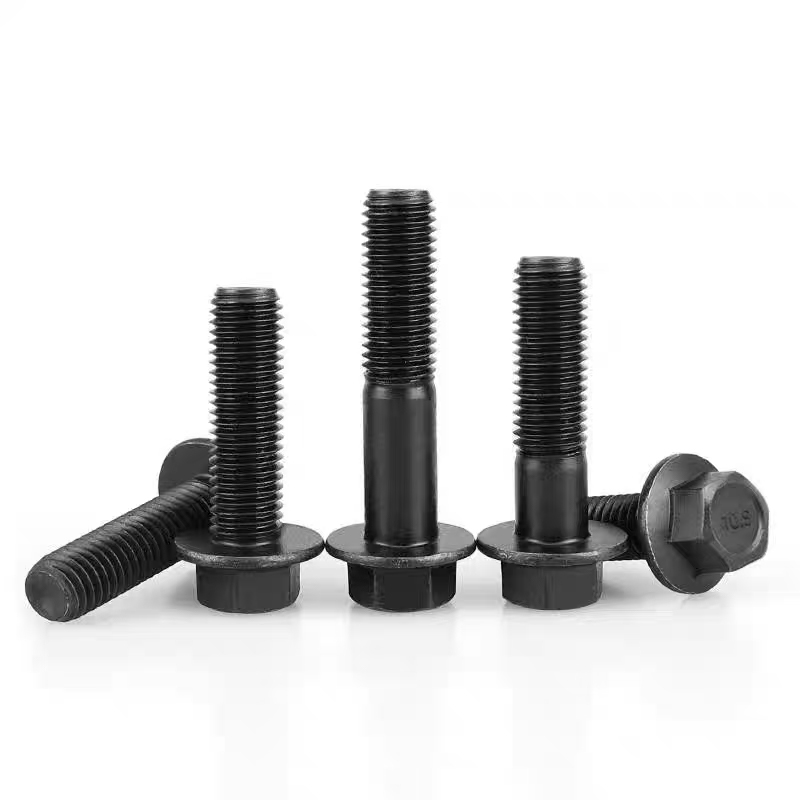
Sometimes, the solution is layered. A project I worked on with a supplier like Handan Zitai Fastener Manufacturing Co., Ltd. (they’re based in Yongnian, the big fastener hub in Hebei, you can find them at zitaifasteners.com) involved not just the gasket but the entire bolting system. We needed high-strength bolts that could maintain load at temperature to keep the PTFE gasket functional. It’s a system, not an isolated component.
The Long-Term View and Alternatives
Durability is ultimately about total cost. A cheap PTFE gasket that fails in 6 months costs more in labor and downtime than a more expensive spiral-wound gasket that lasts 5 years. You need to factor in the maintenance schedule and the criticality of the line.
For replacements in existing flanges, always measure the gap at operating temperature if you can. Old flanges warp. The gasket you install cold has to seal hot, in a distorted geometry. Sometimes, the most durable option is to fix the flange first.
In the end, answering forces you to ask a dozen more questions. What’s the exact temperature profile? What’s the medium? What’s the flange condition and bolting? There’s no single answer, just a set of trade-offs based on experience—and sometimes, on past failures. The goal isn’t forever; it’s for a predictable, reliable service interval that you can plan around. And for that, understanding the material’s real-world limits is the only thing that works.
Mesedez, utzi mezu bat
-


-
-


Urriatu
