
- English
- Chinese
- French
- German
- Portuguese
- Spanish
- Russian
- Japanese
- Korean
- Arabic
- Irish
- Greek
- Turkish
- Italian
- Danish
- Romanian
- Indonesian
- Czech
- Afrikaans
- Swedish
- Polish
- Catalan
- Esperanto
- Hindi
- Lao
- Albanian
- Amharic
- Armenian
- Azerbaijani
- Belarusian
- Bengali
- Bosnian
- Bulgarian
- Cebuano
- Chichewa
- Corsican
- Croatian
- Dutch
- Estonian
- Filipino
- Finnish
- Frisian
- Galician
- Georgian
- Gujarati
- Haitian
- Hausa
- Hawaiian
- Hebrew
- Hmong
- Hungarian
- Icelandic
- Igbo
- Javanese
- Kannada
- Kazakh
- Khmer
- Kurdish
- Kyrgyz
- Latin
- Latvian
- Lithuanian
- Luxembou..
- Macedonian
- Malagasy
- Malay
- Malayalam
- Maltese
- Maori
- Marathi
- Mongolian
- Burmese
- Nepali
- Norwegian
- Pashto
- Persian
- Punjabi
- Serbian
- Sesotho
- Sinhala
- Slovak
- Slovenian
- Somali
- Samoan
- Scots Gaelic
- Shona
- Sindhi
- Sundanese
- Swahili
- Tajik
- Tamil
- Telugu
- Thai
- Ukrainian
- Urdu
- Uzbek
- Vietnamese
- Welsh
- Xhosa
- Yiddish
- Yoruba
- Zulu
- Kinyarwanda
- Tatar
- Oriya
- Turkmen
- Uyghur

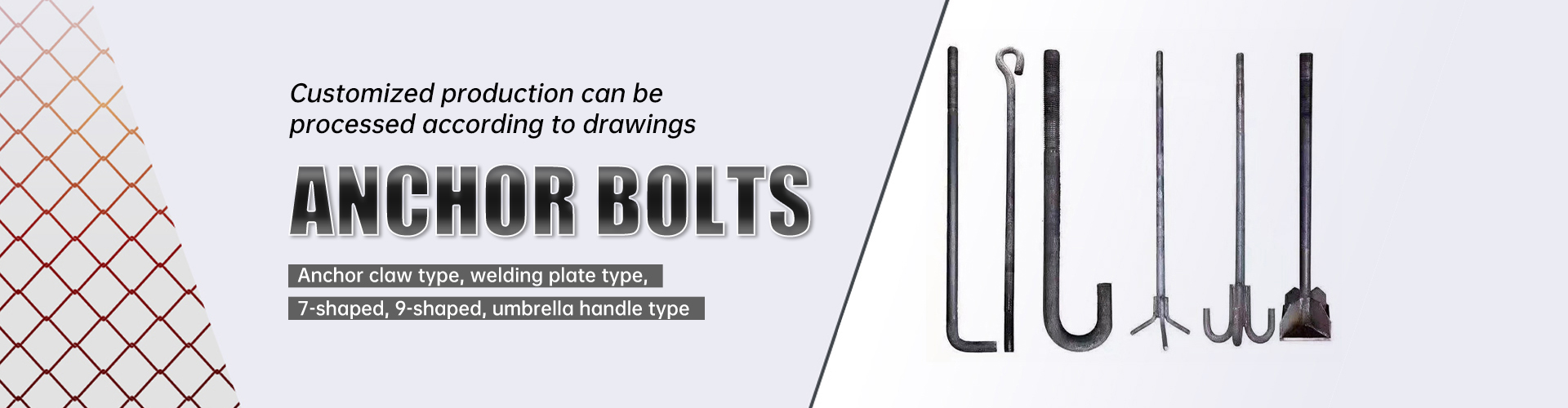
T-bolts: driving sustainable industrial innovation?
2026-03-21
You hear T-bolts and most people, even some engineers, just think of a weirdly shaped fastener for holding down machinery. The sustainability angle? That seems like a stretch, pure marketing fluff. I used to think that too. But after a decade sourcing and specifying these for heavy equipment assemblies, I’ve seen the shift. The question isn’t whether a single component can be sustainable, but how its entire lifecycle—from the alloy it’s made from to the energy wasted during installation—forces a chain reaction of decisions. The humble T-bolt is a surprisingly effective pressure point.
The Misunderstood Workhorse
Let’s clear something up first. The innovation isn’t in the T-shape itself. It’s in the application philosophy. A standard hex bolt can be overtightened, under-tightened, require a washer, and often needs re-torquing. In a large-scale solar tracker array, for instance, that’s thousands of potential failure points. A properly designed T-bolt system, like those used in modular framing, engages with a slot. It aligns itself, distributes load differently, and often allows for pre-assembled modules. The sustainability gain isn’t direct; it’s in the reduction of on-site adjustment time, wasted material from cross-threading, and future maintenance downtime. It’s a design-for-assembly (DFA) principle made physical.
I remember a project for a modular cleanroom installation. The client initially insisted on standard fasteners for cost. The install took three weeks, with a small ocean of discarded bolts from stripped threads and miscalculated lengths. The next phase, we pushed for a T-slot aluminum framing system with integrated T-bolts. The assembly time dropped by 60%. The material waste? Almost negligible, as the bolts were reused from the jigs for the actual structure. The upfront cost was higher, but the total project cost and material footprint were lower. That’s the kind of math that matters.
This is where the sourcing comes in. Not all T-bolts are created equal. The real environmental impact is often baked in at the forging stage. A cheap, non-standard alloy might mean a shorter lifespan, leading to premature replacement. Or, a poorly controlled heat treatment process consumes more energy for a subpar product. You start looking for suppliers who get that the material science is part of the equation.
Material Sourcing and the Local Reality
This brings me to Yongnian District in Handan. It’s not just a production base. It’s the ecosystem. Being there, you see the sheer scale and the granular specialization. One workshop does nothing but cold heading for specific bolt heads, another focuses on electroplating. The concentration drives efficiency in logistics and energy use for the region as a whole. A company like Handan Zitai Fastener Manufacturing Co., Ltd., operating there, is embedded in that network. Their location adjacent to major rail and road arteries isn’t just a line on a website (https://www.zitaifasteners.com); it means a container of steel wire rod arrives efficiently, and a shipment of finished fasteners can get to the port of Tianjin with minimal intermediate trucking. That logistical efficiency is a massive, often ignored, component of embodied carbon.
But here’s the on-ground nuance. The push for sustainability from Western buyers often clashes with local cost priorities. Asking for a specific, more recyclable zinc-nickel coating over standard zinc plating adds cost. The innovation happens in increments. A supplier like Zitai might start by optimizing their own furnace efficiency to reduce energy per ton of bolts, which saves them money and reduces footprint—a win-win they can control without a premium price tag. That’s real, unsexy progress. It’s not about a green T-bolt, but about a greener process for making all their fasteners.
We tried once to mandate a specific, certified low-carbon steel for a run of T-bolts. The theory was sound. The reality was a supply chain nightmare, delayed production, and a cost that killed the project. The lesson? The lever for sustainability isn’t always the most direct one. Sometimes, it’s about working with a competent manufacturer on their own process improvements, which might yield a bigger overall reduction than a perfect, boutique material stream that can’t scale.
The Failure of Over-Engineering
There’s a trap in this discussion: over-engineering. I’ve seen designers specify a high-grade stainless T-bolt for an indoor, non-corrosive environment because it feels more permanent. That’s anti-sustainable. The energy and resource intensity of producing that stainless steel is orders of magnitude higher than a carbon steel part with a suitable coating. The innovation is in precise specification—matching the component to its actual service life and environment. It requires deep knowledge of both materials and application. A good technical salesperson from a manufacturer who asks detailed questions about the operating environment is doing more for sustainability than one who just pushes a premium catalog.
The Ripple Effect in Assembly and Maintenance
The true driving force of the T-bolt comes post-manufacturing. Think about wind turbine internal access platforms. They’re modular, need periodic inspection, and are in a brutal environment. Using a T-bolt system allows for tool-less or single-tool disassembly. A technician can safely and quickly remove a panel. This cuts maintenance time, which cuts the time the turbine is offline, which maximizes green energy output. The sustainability benefit is indirect but profound: it’s in the optimization of the asset powered by the fastener.
Another case is in prototyping and test rigs. Labs are terrible for waste. A reusable T-slot and T-bolt framing system means a test structure can be built, torn down, and rebuilt a hundred times without a single fastener being thrown away. Compared to welded structures or drilled-tap assemblies, the material efficiency over time is staggering. It promotes a culture of reuse before recycling.
But it’s not automatic. We learned this the hard way on an assembly line retrofit. We installed beautiful, reusable T-slot workstations. The workers, used to drilling holes anywhere, hated the constraint of the slots. The innovation failed because we didn’t train or design with the end-user in mind. The hardware was sustainable; the implementation wasn’t. Now, we run small pilot cells first to build familiarity.
Beyond the Bolt: Systems and Standards
So, can a T-bolt drive innovation? Not alone. It’s a catalyst within a system. Its value is unlocked by compatible extrusions, proper torque procedures, and thoughtful design. The move towards more sustainable industry isn’t about magic bullets; it’s about optimizing countless, mundane pressure points. The T-bolt, due to its niche but critical role in modular, adjustable, and reusable structures, sits at one of those points.
The future I see isn’t in a new bolt shape. It’s in the data. Imagine a T-bolt with a QR code linking to its material passport—recyclability data, carbon footprint of its batch, optimal disassembly torque. That data layer, integrated into a BIM model, would be revolutionary. We’re not there yet. For now, the progress is in choosing a robust, precisely specified fastener from a manufacturer that is on its own efficiency journey, and deploying it in systems designed for long life and easy adaptation.
Companies embedded in places like Yongnian, with its dense industrial ecosystem, are key. Their challenge is to climb the value chain from pure volume manufacturing to offering this kind of integrated, knowledge-based service. When a quote from a site like zitaifasteners.com comes with a technical note suggesting a more efficient grade or coating for your specific application, that’s when you know the mindset is shifting. That’s the real driver. The bolt is just the tangible part of it.
Mesedez, utzi mezu bat
-

-
-
Urriatu



Privacy Policy
Our Commitment to Privacy
Introduction.
Rainbow Inc. recognizes the importance of protecting the privacy of all personal information provided by its customers, including users of www.rainbow-inkjet.com and other Rainbow Inc. affiliated websites (collectively "Rainbow Inc. Sites"). We created the following policy guidelines with a fundamental respect for our customers´ right to privacy and because we value our relationships with our customers. Your visit to the Rainbow Inc. Sites is subject to this Privacy Statement and our Online Terms and Conditions.
Description.
This Privacy Statement describes the types of information we collect and how we may use that information. Our Privacy Statement also describes the measures we take to protect the security of this information as well as how you may reach us to update your contact information.
Data Collection
Personal Data Collected Directly From Visitors.
Rainbow Inc. collects personal information when: you submit questions or comments to us; you request information or materials; you request warranty or post-warranty service and support; you participate in surveys; and by other means that may be specifically provided for on the Rainbow Inc. Sites or in our correspondence with you.
Type of Personal Data.
The type of information collected directly from the user may include your name, your company's name, physical contact information, address, billing and delivery information, e-mail address, the products you use, demographic information such as your age, preferences, and interests and information relating to the sale or installation of your product.
Non-Personal Data Collected Automatically.
We may collect information about your interaction with Rainbow Inc. Sites and services. For example, we may use website analytics tools on our site to retrieve information from your browser, including the site you came from, the search engine(s) and the keywords you used to find our site, and the pages you view within our site. Additionally, we collect certain standard information that your browser sends to every website you visit, such as your IP address, browser type, capabilities and language, your operating system, access times and referring Web site addresses.
Storage and Processing.
Personal data collected on our websites may be stored and processed in the United States in which Rainbow Inc. or its affiliates, joint ventures, or third party servicers maintain facilities.
How We Use the Data
Services and transactions.
We use your personal data to deliver services or execute transactions you request, such as providing information about Rainbow Inc. products and services, processing orders, answering customer service requests, facilitating use of our Web sites, enabling online shopping, and so forth. In order to offer you a more consistent experience in interacting with Rainbow Inc., information collected by our websites may be combined with information we collect by other means.
Product Development.
We use the personal and non-personal data for product development, including for such processes as idea generation, product design and improvements, detail engineering, market research and marketing analysis.
Website Improvement.
We may use the personal and non-personal data to improve our websites (including our security measures) and related products or services, or to make our websites easier to use by eliminating the need for you to repeatedly enter the same information or by customizing our websites to your particular preference or interests.
Marketing Communications.
We may use your personal data to inform you of products or services available from Rainbow Inc. When collecting information that might be used to contact you about our products and services, we often give you the opportunity to opt-out from receiving such communications. Moreover, in our email communications with you we may include an unsubscribe link allowing you to stop delivery of that type of communication. If you elect to unsubscribe, we will remove you from the relevant list within 15 business days.
Commitment to Data Security
Security.
Rainbow Inc. Corporation uses reasonable precautions to keep the personal information disclosed to us secure. To prevent unauthorized access, maintain data accuracy, and ensure the correct use of information, we have put in place appropriate physical, electronic, and managerial procedures to safeguard and secure your personal information. For example, we store sensitive personal data on computer systems with limited access that are located in facilities to which access is limited. When you move around a site to which you have logged in, or from one site to another that uses the same login mechanism, we verify your identity by means of an encrypted cookie placed on your machine. Nonetheless, Rainbow Inc. Corporation does not guarantee the security, accuracy or completeness of any such information or procedures.
Internet.
The transmission of information via the internet is not completely secure. Although we do our best to protect your personal information, we cannot guarantee the security of your personal information transmitted to our Website. Any transmission of personal information is at your own risk. We are not responsible for circumvention of any privacy settings or security measures contained on the Rainbow Inc. Sites.
Jar zaitez gurekin harremanetan
If you have questions regarding this privacy statement, our handling of your personal data, or your privacy rights under applicable law, please contact us by mail at the address below.
Rainbow Inc.
Attn: Katherine Tan
Add: No.1658 Husong Road, Shanghai, China.
Statement Updates
Revisions.
Rainbow Inc. reserves the right to modify this privacy statement from time to time. If we decide to change our Privacy Statement, we will post the revised Statement here.
Date.
This Privacy Statement was last amended on September 7, 2022.