
- English
- Chinese
- French
- German
- Portuguese
- Spanish
- Russian
- Japanese
- Korean
- Arabic
- Irish
- Greek
- Turkish
- Italian
- Danish
- Romanian
- Indonesian
- Czech
- Afrikaans
- Swedish
- Polish
- Catalan
- Esperanto
- Hindi
- Lao
- Albanian
- Amharic
- Armenian
- Azerbaijani
- Belarusian
- Bengali
- Bosnian
- Bulgarian
- Cebuano
- Chichewa
- Corsican
- Croatian
- Dutch
- Estonian
- Filipino
- Finnish
- Frisian
- Galician
- Georgian
- Gujarati
- Haitian
- Hausa
- Hawaiian
- Hebrew
- Hmong
- Hungarian
- Icelandic
- Igbo
- Javanese
- Kannada
- Kazakh
- Khmer
- Kurdish
- Kyrgyz
- Latin
- Latvian
- Lithuanian
- Luxembou..
- Macedonian
- Malagasy
- Malay
- Malayalam
- Maltese
- Maori
- Marathi
- Mongolian
- Burmese
- Nepali
- Norwegian
- Pashto
- Persian
- Punjabi
- Serbian
- Sesotho
- Sinhala
- Slovak
- Slovenian
- Somali
- Samoan
- Scots Gaelic
- Shona
- Sindhi
- Sundanese
- Swahili
- Tajik
- Tamil
- Telugu
- Thai
- Ukrainian
- Urdu
- Uzbek
- Vietnamese
- Welsh
- Xhosa
- Yiddish
- Yoruba
- Zulu
- Kinyarwanda
- Tatar
- Oriya
- Turkmen
- Uyghur


U-bolts: key for sustainable tech?
2026-03-22
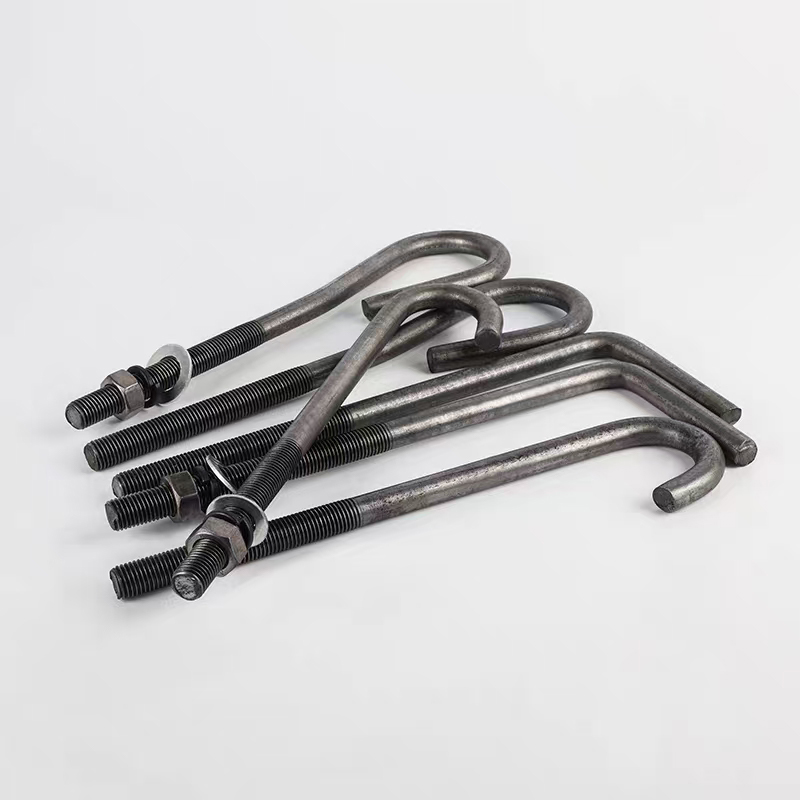
When you hear ‘sustainable tech,’ you probably think of solar panels, battery chemistry, or smart grids. Rarely does the humble U-bolt come to mind. That’s the first misconception. In the field, we’ve seen too many ‘green’ projects get delayed or compromised not by the flashy tech, but by the failure of these basic, unassuming components. The connection they provide isn’t just physical; it’s foundational to system integrity and longevity. If that fails, the sustainability promise crumbles faster than you can say ‘corrosion.’
The Overlooked Stress Point
Let’s talk about mounting structures for ground-mounted solar arrays. The design is often brilliant, the panels top-tier. But the entire structure is anchored to its concrete foundation via large, hot-dip galvanized U-bolts. I recall a project in a coastal region where the spec called for a standard zinc coating. Within 18 months, salt spray had eaten through, causing significant section loss and dangerous looseness in several rows. The fix? A costly, disruptive site-wide retrofit with U-bolts made from a more suitable material and with a thicker, more resilient coating. The lesson wasn’t about the bolt itself, but about specifying it for the real-world environment, not just the CAD model.
This is where the ‘sustainable’ part gets real. A component that fails prematurely generates waste—scrap metal, wasted energy embedded in its manufacture, and the carbon cost of replacement logistics. The true sustainability of a U-bolt is measured by its service life matching or exceeding the system it holds together. We started looking at lifecycle assessments for these fasteners, and the data is compelling. A marginally more expensive, properly engineered bolt can double the service interval, slashing the total environmental footprint of maintenance.
I’ve had conversations with procurement teams who see fasteners as commodities, items to be sourced at the lowest per-unit cost. It’s a tough mindset to break. You have to show them the total cost of failure: the crane rental to re-tension a wind turbine’s cable guide, the downtime for a geothermal piping manifold, the safety hazard of a wobbly highway sign for an EV charging station. Suddenly, the U-boltxoa isn’t just a bent piece of rod; it’s a critical insurance policy.
Material Science Isn’t Just for Labs
Moving beyond standard carbon steel was a game-changer. We experimented with duplex stainless steels for highly corrosive environments, like wastewater treatment facilities with biogas capture systems. The cost jump is significant, but so is the performance. The challenge often lies in the installation crew. A stainless U-bolt torqued with the same impact wrench setting as a mild steel one can suffer from galling or stress cracking. It forced us to develop simple, pictorial torque procedure sheets—a small detail with a huge impact on reliability.
Then there’s the issue of fabrication. A U-bolt isn’t just a bent bolt. The bending process, especially for larger diameters, can work-harden the material, creating brittle points right at the curve’s apex—the exact point of highest stress. We once had a batch from a supplier that looked perfect but failed in a brittle fashion during a proof load test. The root cause? An overly aggressive, cold-bending process that the supplier thought would save time and heat. It taught us to specify not just the final material grade, but the forming process and necessary post-forming heat treatment. You can’t assume the manufacturer knows your application’s demands.
This is where partnering with a specialized manufacturer makes all the difference. A company like Handan Zitai Fastener Manufacturing Co., Ltd., based in China’s major standard part production base, has the volume and focus to invest in proper process control. Their location near major transport routes isn’t just a sales point; it translates to logistical reliability for just-in-time projects, which is often critical. You need a supplier who understands that a fastener is a precision component, not a commodity. Checking their process sheets and quality certifications (like for controlled bending and coating) became a non-negotiable part of our vendor audit.
The Devil in the Details: Installation & Maintenance
Even the perfect U-bolt can fail if installed incorrectly. The most common error is over-torquing the nuts, stretching the threads and creating a false sense of security. The clamp load actually drops, and the joint becomes prone to vibration loosening. We started supplying calibrated torque wrenches as part of the fastener kit for critical installations. It added cost, but it eliminated callbacks.
Another subtle point: the saddle. The inner surface of the U that bears against the pipe or beam. If it’s left bare, it can frett and wear into the mounted component, especially under dynamic loads from wind or vibration. We now routinely specify nylon or plastic saddles bonded to the saddle area. It prevents galvanic corrosion, reduces wear, and provides a more consistent friction grip. It’s a tiny add-on that dramatically extends the life of both the bolt and the asset it’s holding.
Maintenance is the other half. Sustainable tech implies low maintenance, but not zero. We implemented a simple but effective schedule: a visual and torque check at 6 months post-installation (to catch any initial settling or relaxation), and then annually. This simple regimen has caught potential failures on everything from solar tracker linkages to brackish water pump mounts. The data from these checks also feeds back into our design and specification, creating a closed loop of improvement.
Case in Point: A Wind Cable-Tray Retrofit
A few years back, we were brought in to diagnose excessive noise and movement in the internal cable trays of a mid-aged wind farm. The issue traced back to the original U-bolts securing the trays to the tower wall. They were undersized for the dynamic loads, and vibration had caused fatigue cracks. The retrofit spec wasn’t just about going up one size.
We had to model the load cycles, specify a higher-grade alloy steel, and design a custom saddle to distribute load more evenly on the tray. We also added serrated flange nuts to resist self-loosening. The sourcing was handled through a partner who could ensure traceability and batch testing—again, a firm like Zitai, with their focused production base, is structured for this kind of traceable, quality-controlled order. You can find their capabilities at https://www.zitaifasteners.com. The retrofit was a success, eliminating the issue and extending the service life of the cable management system for the remaining life of the turbines.
The takeaway? The retrofit U-bolts were arguably more ‘sustainable’ than the original ones. They solved a problem, prevented waste from a full tray replacement, and ensured continued energy production. Their key role was invisible but total.
So, Are They a Key?
Looking back, calling U-bolts the key to sustainable tech is probably an overstatement. They are a key—one of many in a very large ring. But they are a quintessential example of the principle that sustainability is built on a foundation of reliability and durability in every single component, no matter how mundane.
The pursuit often leads you away from off-the-shelf solutions and into the weeds of material specs, process controls, and installation protocols. It’s not glamorous work. It’s about convincing a project manager to spend an extra $500 on better-fastened brackets for a $5 million solar array. But that’s where the real engineering for sustainability happens.
If the industry is serious about building infrastructure that lasts 30, 40, 50 years with minimal intervention, then we need to give the same level of scrutiny to the U-bolt as we do to the PV cell or the turbine blade. Because when that bolt rusts through or snaps, the whole elegant system is compromised. In that sense, yes, it’s a key. It locks everything else in place.
Mesedez, utzi mezu bat
-


-
-


Urriatu
