
- English
- Chinese
- French
- German
- Portuguese
- Spanish
- Russian
- Japanese
- Korean
- Arabic
- Irish
- Greek
- Turkish
- Italian
- Danish
- Romanian
- Indonesian
- Czech
- Afrikaans
- Swedish
- Polish
- Catalan
- Esperanto
- Hindi
- Lao
- Albanian
- Amharic
- Armenian
- Azerbaijani
- Belarusian
- Bengali
- Bosnian
- Bulgarian
- Cebuano
- Chichewa
- Corsican
- Croatian
- Dutch
- Estonian
- Filipino
- Finnish
- Frisian
- Galician
- Georgian
- Gujarati
- Haitian
- Hausa
- Hawaiian
- Hebrew
- Hmong
- Hungarian
- Icelandic
- Igbo
- Javanese
- Kannada
- Kazakh
- Khmer
- Kurdish
- Kyrgyz
- Latin
- Latvian
- Lithuanian
- Luxembou..
- Macedonian
- Malagasy
- Malay
- Malayalam
- Maltese
- Maori
- Marathi
- Mongolian
- Burmese
- Nepali
- Norwegian
- Pashto
- Persian
- Punjabi
- Serbian
- Sesotho
- Sinhala
- Slovak
- Slovenian
- Somali
- Samoan
- Scots Gaelic
- Shona
- Sindhi
- Sundanese
- Swahili
- Tajik
- Tamil
- Telugu
- Thai
- Ukrainian
- Urdu
- Uzbek
- Vietnamese
- Welsh
- Xhosa
- Yiddish
- Yoruba
- Zulu
- Kinyarwanda
- Tatar
- Oriya
- Turkmen
- Uyghur

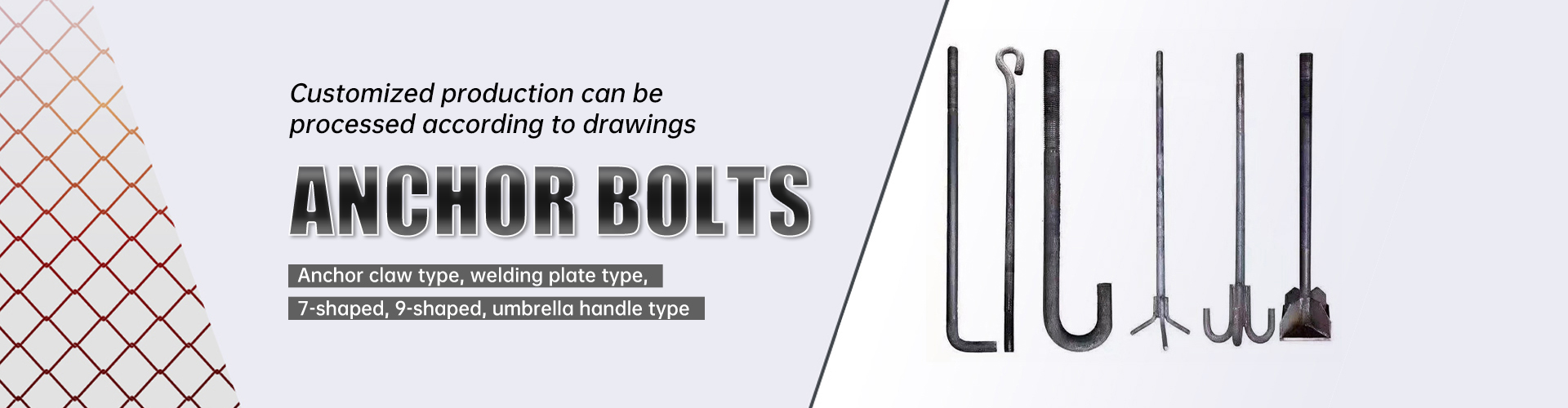
Welding nails: eco-friendly innovations?
2026-03-08
You hear eco-friendly welding nails tossed around a lot these days. My first reaction? Skepticism. In our world, the primary job of a welding nail or a stud is to hold, to bond, to endure shear and tensile forces. Green often feels like a marketing layer sprayed on top of the same old processes. But after seeing a few projects fail and others quietly succeed by tweaking the fundamentals, I’ve had to reconsider. It’s less about a magical new product and more about a shift in the entire chain—from the alloy mix and the coating to the arc stability and even the logistics of getting the stuff to the job site. The real innovation isn’t always shiny; sometimes it’s in using less, wasting less, and making the whole operation leaner.
The Core Misconception: Material vs. Method
Most discussions jump straight to the material. Recycled steel, lead-free coatings, that sort of thing. And sure, that’s part of it. Handan Zitai Fastener, for instance, sources its wire rod with tighter controls on residual elements. Less sulphur and phosphorus means not just better mechanical properties, but also cleaner fumes during welding. It’s a tangible, if incremental, step. But focusing solely on the nail itself misses the bigger picture. The eco-impact is often dominated by the welding process itself—the energy consumption, the shielding gases, the amount of spatter and fume generated. A green nail used with an inefficient, smoky welding procedure is a bit of a farce.
I remember a warehouse retrofit where the spec called for environmentally preferable fasteners. We got these studs with a thin, zinc-based coating. Looked fine. But the welding parameters weren’t adjusted from the standard uncoated ones. The result? Excessive spatter, poor arc starts, and a haze of fumes that had the crew breaking more often. The nails themselves might have had a better lifecycle assessment on paper, but the on-site reality was more waste (grinding down spatter) and higher local emissions. The lesson was that the welding nails and the process are a system. You can’t optimize one in isolation.
This is where the practical definition of innovation kicks in. It’s not necessarily a new alloy. It’s a nail designed for a specific inverter-based welding machine that reduces spatter by 30% because its tip geometry initiates the arc more cleanly. That’s an eco-friendly gain: less consumable waste, less post-weld cleanup (which often involves chemicals or more energy), and better air quality in the work cell. Those details are where the real work happens.
Logistics and Lifecycle: The Unsexy Backbone
Let’s talk about transportation. It sounds boring until you’re on a site waiting for a pallet of studs that’s stuck somewhere, holding up an entire crew. Eco-friendly innovations in this space are profoundly unglamorous. A company’s location and supply chain efficiency matter immensely. Handan Zitai Fastener Manufacturing Co., Ltd. being in Yongnian, the big fastener hub, and right next to major rail and road arteries isn’t just a sales point. It means consolidated shipments, fewer separate truckloads, and a lower carbon footprint for getting product to ports like Tianjin. For a fabricator in Europe or North America ordering a container, that logistical efficiency translates into a real, if hidden, environmental benefit. It’s about bulk, efficient movement, not magical nails.
Then there’s packaging. We’ve moved from wooden crates (often treated lumber) to cardboard and recyclable plastic bands. Again, not exciting, but it eliminates waste on the receiving dock. Some suppliers are now using minimal, printed-on labeling to avoid non-recyclable plastic tags. These are the granular, operational choices that add up. When you visit a site and see a neat stack of stud coils with simple, returnable steel spools, you’re seeing a functional eco-friendly innovation. It’s about designing out waste before the first arc is even struck.
The lifecycle thinking extends to the waste stream itself. Failed welds, cut-offs, and discarded studs. On a big structural job, this can amount to tons of steel. The most progressive sites we work with now have separate bins for ferrous weld waste. It gets collected, sent back, and remelted. The innovation here is a procedural and contractual one—making salvage and recycling a part of the job spec, not an afterthought. The nail, in this view, is just a temporary form for the steel.
Case in Point: The Coating Conundrum
Durability versus environmental toll is the eternal battle. Traditional cadmium or thick zinc coatings are fantastically protective, especially in corrosive environments. But the plating process is nasty, and the fumes during welding are toxic. The shift is toward thin, diffusion-bonded coatings or mechanically applied alternatives. I was involved in testing a batch of aluminum-bronze coated studs for a marine application. The theory was great: corrosion resistance without the hexavalent chromium. The reality was a nightmare for consistent weld quality. The coating’s conductivity was different, throwing off our automated feed systems. We spent weeks tweaking voltage, feed speed, and gun angle.
It was a partial failure. We got the welds to hold, but the process window was so narrow that it required highly skilled operators, defeating the purpose of a fast, reliable stud welding system. We went back to a more traditional, but carefully sourced, zinc coating with fume extraction at the source. The innovation that stuck wasn’t the flashy new coating; it was the integration of high-efficiency fume extractors directly into the welding guns. It solved the immediate worker health issue and captured over 95% of particulates. Sometimes, the supporting technology around the welding nails is the bigger leap forward.
This is where supplier transparency matters. You need to know what’s on the nail. I appreciate when a datasheet from a maker like Zitai doesn’t just list anti-corrosion coating but specifies the type, thickness, and even suggests compatible welding parameters. That honesty allows for informed trade-offs. Maybe you don’t need the absolute longest-lasting coating if the structure is indoors. Choosing a simpler, cleaner-process coating for an indoor application is an eco-friendly choice—it avoids over-engineering and its associated environmental cost.
Energy Input: The Welding Arc’s Appetite
This is the heavyweight factor. Stud welding is an energy-intensive process. The real eco-innovation over the last decade hasn’t been in the nails, but in the welding power supplies. Modern inverter-based machines are vastly more efficient than the old transformer-based beasts. They convert AC to DC with minimal loss, provide stunningly precise control over the arc, and can be tuned to use just the right amount of energy for the specific nail diameter and base material.
Here’s a concrete example. On a recent project attaching shear studs to composite decking, we switched from an older machine to a new inverter model. The weld schedule for the same 19mm stud dropped from 1500 amps for 0.8 seconds to 1350 amps for 0.7 seconds. That’s a significant reduction in total energy per weld. Multiply that by thousands of studs, and the energy savings are substantial. The nail didn’t change. The process around it did. The innovation was in the control, allowing for a shorter, hotter, more precise arc that achieved the same fusion with less overall input. The welding nails themselves need to be consistent enough to work with these tighter parameters, which puts the quality burden back on the manufacturer.
This precision also reduces reject rates. A bad weld means grinding out the stud and re-welding—doubling the energy use and creating waste. A consistent nail, paired with a stable, efficient machine, minimizes that. So when we talk about the eco-friendliness of a fastener, its weldability and consistency are perhaps its most important green features. A nail that welds right the first time, every time, is an environmental asset.
So, Are They Truly Innovating?
Looking back, the answer is yes, but not in the way a press release might claim. The path to more sustainable stud welding is a grind of incremental improvements. It’s in the metallurgy that allows for lower welding energy. It’s in the logistics of a supplier like Handan Zitai Fastener leveraging its location in a concentrated production base to streamline global shipping. It’s in the move away from toxic coatings toward a combination of safer materials and better fume control at the source. It’s in the packaging that disappears into the recycling stream.
The most significant innovation might be a change in mindset. It’s moving from seeing a welding nail as a cheap commodity to understanding it as a critical component in a system where performance, efficiency, and environmental impact are intertwined. The best suppliers get this. They provide the data that lets you make informed choices, not just greenwashed slogans.
Ultimately, the eco-friendliness of a welding nail is not a binary yes or no. It’s a spectrum. It’s about asking the right questions: Where and how was the steel made? How efficiently can it be shipped? What happens during the weld? And what’s the plan for the steel at the end of this structure’s life? The nails that score well on those questions are the ones driving real, if quiet, innovation in the field. The rest is just noise.
Mesedez, utzi mezu bat
-


-
-


Urriatu