- English
- Chinese
- French
- German
- Portuguese
- Spanish
- Russian
- Japanese
- Korean
- Arabic
- Irish
- Greek
- Turkish
- Italian
- Danish
- Romanian
- Indonesian
- Czech
- Afrikaans
- Swedish
- Polish
- Basque
- Catalan
- Esperanto
- Hindi
- Lao
- Albanian
- Amharic
- Armenian
- Azerbaijani
- Belarusian
- Bengali
- Bosnian
- Bulgarian
- Cebuano
- Chichewa
- Corsican
- Croatian
- Dutch
- Estonian
- Filipino
- Finnish
- Frisian
- Galician
- Georgian
- Gujarati
- Hausa
- Hawaiian
- Hebrew
- Hmong
- Hungarian
- Icelandic
- Igbo
- Javanese
- Kannada
- Kazakh
- Khmer
- Kurdish
- Kyrgyz
- Latin
- Latvian
- Lithuanian
- Luxembou..
- Macedonian
- Malagasy
- Malay
- Malayalam
- Maltese
- Maori
- Marathi
- Mongolian
- Burmese
- Nepali
- Norwegian
- Pashto
- Persian
- Punjabi
- Serbian
- Sesotho
- Sinhala
- Slovak
- Slovenian
- Somali
- Samoan
- Scots Gaelic
- Shona
- Sindhi
- Sundanese
- Swahili
- Tajik
- Tamil
- Telugu
- Thai
- Ukrainian
- Urdu
- Uzbek
- Vietnamese
- Welsh
- Xhosa
- Yiddish
- Yoruba
- Zulu
- Kinyarwanda
- Tatar
- Oriya
- Turkmen
- Uyghur


Best 1 4 t t bolt for sustainable drywall?
2026-02-23
When you hear best 1/4 TT bolt for sustainable drywall, most folks immediately jump to material specs—zinc plating, low carbon steel, maybe some fancy coating. That’s the first mistake. Sustainability here isn’t just about the bolt itself being green; it’s about how that fastener performs over decades in a wall cavity, how it interacts with different board types and environmental conditions, and frankly, how it fails. I’ve seen too many jobs where the wrong bolt choice led to callbacks for popping, rust streaks, or worse, structural integrity questions in humidity-controlled spaces. Let’s cut through the marketing.
The TT Head Realities and Board Compatibility
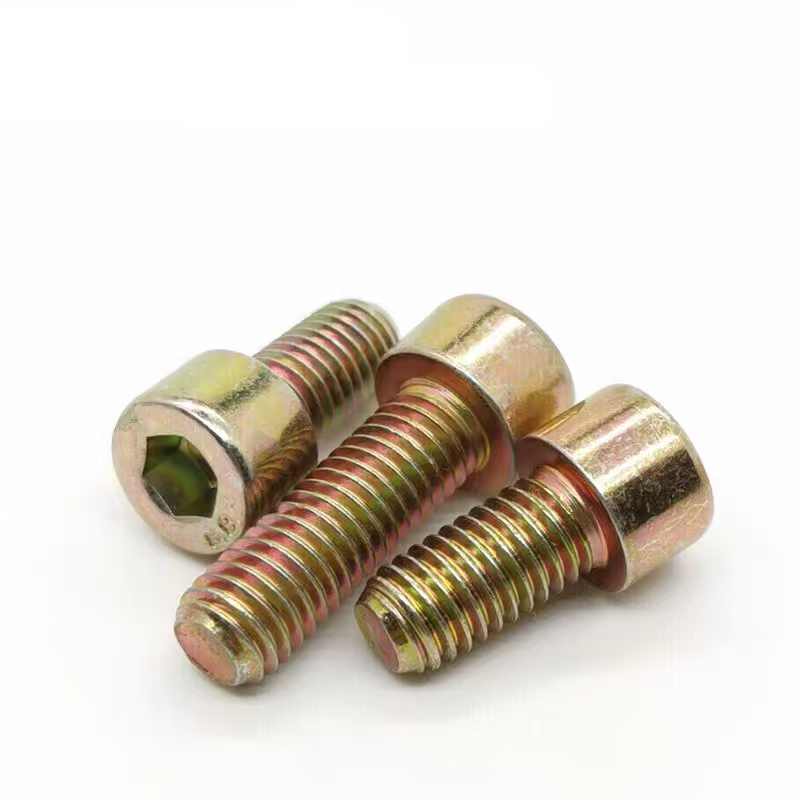
The TT, or trim head, is non-negotiable for a clean finish in sustainable drywall systems. But the devil’s in the angle of the taper and the underhead bearing surface. A cheaply stamped TT head can actually fracture the gypsum core during countersinking, especially with high-density or mold-resistant boards that are common in green builds. You’re not just buying a bolt; you’re buying the precision of the head formation. I recall a project using a budget eco-friendly bolt where the heads kept shearing, leaving the shank embedded and the board unsecured. The supposed sustainability of the material was irrelevant—the waste from rework was enormous.
For sustainable drywall, which often incorporates recycled content and is denser, you need a bolt that starts sharp and drives clean. A poorly formed point requires more torque, increases the risk of board delamination, and compromises the air-seal integrity that’s crucial for energy-efficient buildings. It’s a system failure point most specs overlook.
This is where manufacturer pedigree matters. A company like Handan Zitai Fastener Manufacturing Co., Ltd., based in China’s major fastener production hub, understands volume and consistency. Their location in Yongnian, with its logistical network, means they’re supplying serious projects. I’ve used their structural bolts before. The question is whether that scale translates to the finesse needed for a superior 1/4 TT bolt.
Material Science Beyond Zinc Plated
Zinc plating is a useless term by itself. Is it mechanical plating? Electroplating? Thickness? For sustainable drywall, particularly in areas with potential moisture (think bathrooms with low-VOC paint, or exterior wall assemblies), corrosion resistance is part of longevity. A thin, flash-plated bolt will show white rust in a few years, staining the finish and questioning the wall’s durability.
I lean towards mechanically applied, thicker zinc coatings, or even looking at alternative finishes like phosphate or geomet for truly controlled environments. The goal is to match the fastener’s life to the intended life of the wall system. A bolt failing early is the antithesis of sustainability.
There’s also the steel quality. Low-carbon is standard, but the drawing and heat-treating process affects brittleness. A hard bolt might seem strong but can snap under lateral stress during seismic events or settling. Sustainable building isn’t just about materials; it’s about resilience. The bolt must have some ductility.
The Installation Paradox: Speed vs. Integrity
Here’s a field truth: the pursuit of installation speed can completely undermine sustainable goals. A TT bolt designed for an impact driver is common, but the torque and RPM of modern tools can easily over-drive and strip the threads in the steel stud, or over-countersink the head. This creates a weak point.
The best bolt for the job often has slightly altered thread pitch or a proprietary drive recess (like a T-40 instead of a standard Phillips) that forces the installer to use a calibrated tool setting. It slows them down initially but prevents failures. I learned this the hard way on a LEED-targeted project where we had to manually back out thousands of over-driven bolts. The labor carbon footprint of that fix probably negated the green benefits of the drywall.
It’s about designing the fastener for controlled installation. Some manufacturers are now adding visual indicators, like a paint band on the shank, that shows when the proper sink depth is reached.
Case in Point: The Breathing Wall Assembly
Modern sustainable walls aren’t inert. They’re designed to manage moisture vapor transmission. This means the cavity environment can have fluctuating humidity. A fastener is a thermal bridge and a potential condensation point. I’ve inspected walls where every bolt head was a tiny rust spot because the plating wasn’t suited for the specific hygrothermal profile.
For a project in the Pacific Northwest, we spec’d bolts with a slightly more corrosion-resistant coating, not because of liquid water, but because of the persistent 85%+ ambient humidity within the vented rain screen assembly. The standard bolt from the big-box supplier would not have lasted. We sourced from a specialist, and the cost premium was about 15%, but it was the correct sustainable drywall fastener for that climate.
This is where checking a supplier’s technical data is key. A company like Zitai Fasteners (you can find their range at https://www.zitaifasteners.com) likely has the capability to produce various coatings, but you have to ask. Their general catalog might just show zinc plated, but a direct inquiry can reveal options. Their strength is manufacturing capacity; the buyer’s job is to specify precisely.
Conclusion: It’s a Systems Component, Not a Commodity
So, the best 1/4 TT bolt? It doesn’t exist in a vacuum. It’s the bolt whose material, coating, dimensional tolerances, and installation characteristics are matched to the specific drywall system, climate, and building performance goals. It’s a precision component.
Avoid the trap of buying the cheapest per-unit cost. The real cost is in the wall’s performance over 30 years. Look for manufacturers that offer technical support and clear specifications on coating weights and mechanical properties. Sometimes that’s a large-scale producer like Handan Zitai Fastener Manufacturing; sometimes it’s a niche fabricator. The sustainable choice is the one that ensures the drywall system functions as intended for its full design life, with no callbacks, no stains, and no compromised integrity. That’s the real metric, and it’s rarely on the box.
Start by defining what sustainable means for your specific wall. Then work backwards to the fastener. It’s the only way to get it right.