
- English
- Chinese
- French
- German
- Portuguese
- Spanish
- Russian
- Japanese
- Korean
- Arabic
- Irish
- Greek
- Turkish
- Italian
- Danish
- Romanian
- Indonesian
- Czech
- Afrikaans
- Swedish
- Polish
- Basque
- Catalan
- Esperanto
- Hindi
- Lao
- Albanian
- Amharic
- Armenian
- Azerbaijani
- Belarusian
- Bengali
- Bosnian
- Bulgarian
- Cebuano
- Chichewa
- Corsican
- Croatian
- Dutch
- Estonian
- Filipino
- Finnish
- Frisian
- Galician
- Georgian
- Gujarati
- Hausa
- Hawaiian
- Hebrew
- Hmong
- Hungarian
- Icelandic
- Igbo
- Javanese
- Kannada
- Kazakh
- Khmer
- Kurdish
- Kyrgyz
- Latin
- Latvian
- Lithuanian
- Luxembou..
- Macedonian
- Malagasy
- Malay
- Malayalam
- Maltese
- Maori
- Marathi
- Mongolian
- Burmese
- Nepali
- Norwegian
- Pashto
- Persian
- Punjabi
- Serbian
- Sesotho
- Sinhala
- Slovak
- Slovenian
- Somali
- Samoan
- Scots Gaelic
- Shona
- Sindhi
- Sundanese
- Swahili
- Tajik
- Tamil
- Telugu
- Thai
- Ukrainian
- Urdu
- Uzbek
- Vietnamese
- Welsh
- Xhosa
- Yiddish
- Yoruba
- Zulu
- Kinyarwanda
- Tatar
- Oriya
- Turkmen
- Uyghur

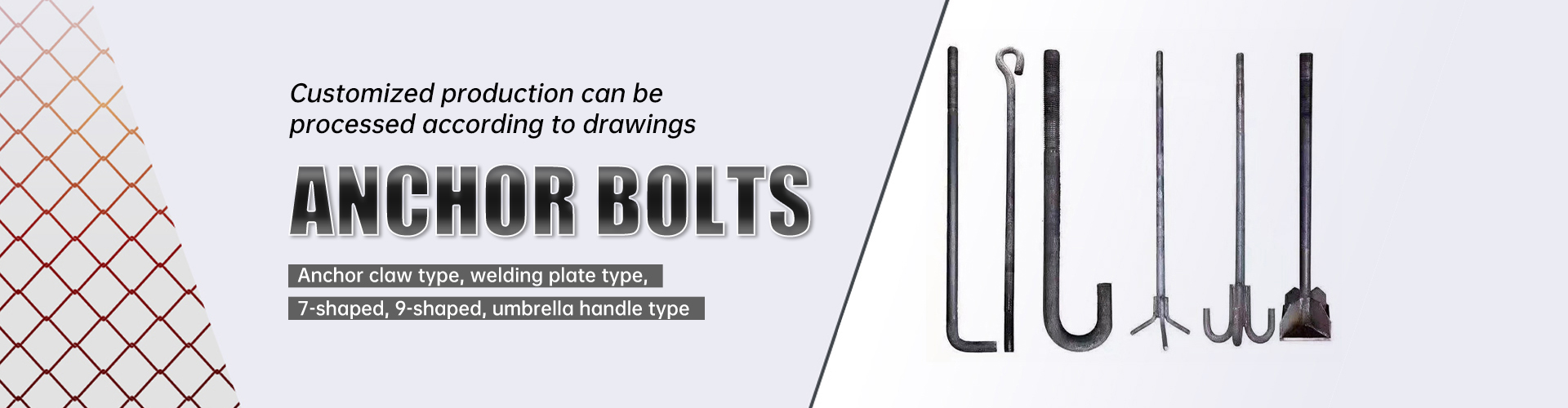
Expansion Bolts with Holes: 2026 Price Trends & Top Suppliers
2026-04-22
- What Are Expansion Bolts with Holes?
- Key Applications and Use Cases
- 2026 Price Trends and Market Analysis
- Top Suppliers and Selection Criteria
- Technical Comparison: Standard vs. Holed Expansion Bolts
- Installation Guide: Step-by-Step
- Material Choices and Corrosion Resistance
- Erè komen pou fè pou evite
- FAQ: Frequently Asked Questions
- Future Outlook: Innovation in Anchoring Technology
- Conclusion and Strategic Recommendations
Expansion bolts with holes are specialized fasteners featuring a pre-drilled aperture in the head or shank, designed to facilitate wire passage, safety locking, or specific installation techniques. As we approach 2026, market analysis indicates a moderate price increase driven by raw material volatility and stricter manufacturing tolerances. Top suppliers are increasingly differentiating themselves through certified quality control and custom machining capabilities rather than competing solely on base cost.
What Are Expansion Bolts with Holes?
An expansion bolt with a hole is a heavy-duty anchoring solution used to secure objects to solid substrates like concrete, brick, or stone. Unlike standard wedge anchors, these variants incorporate a precise transverse or axial hole. This design feature serves critical functional purposes that standard bolts cannot address.
The primary function of the hole is often to allow for the insertion of a safety pin, cotter pin, or locking wire. In high-vibration environments or critical infrastructure projects, this prevents the nut from loosening over time. Alternatively, the hole may be used to thread cables or ropes through the anchor head, creating an immediate attachment point without requiring additional hardware.
These fasteners operate on the principle of mechanical expansion. When the nut is tightened, a cone-shaped plug is drawn into the sleeve. This action forces the sleeve to expand outward against the walls of the drilled hole, creating immense friction and a secure lock. The presence of the hole requires precise engineering to ensure it does not compromise the structural integrity of the bolt under tensile or shear loads.
Key Applications and Use Cases
Understanding where to use these specific fasteners is crucial for project safety and efficiency. The unique geometry of expansion bolts with holes makes them indispensable in several industries.
Safety-Critical Infrastructure
In bridges, tunnels, and highway barriers, vibration is a constant threat to standard fasteners. Engineers utilize the hole in the bolt head to insert locking wires or cotter pins. This secondary locking mechanism ensures that even if the primary nut experiences slight rotation due to seismic activity or traffic vibration, the assembly remains intact.
Cable Management and Rigging
For stage rigging, suspension systems, and industrial cable trays, the hole acts as a built-in eyelet. Installers can pass cables directly through the anchor, reducing the need for separate eye bolts or clamps. This simplifies the bill of materials and reduces potential failure points in the suspension chain.
Temporary Formwork and Scaffolding
Construction crews often use these bolts for temporary structures where rapid deployment and removal are necessary. The hole allows for the quick attachment of pull-out tools or lifting eyes, facilitating faster dismantling processes compared to standard wedges that require grinding or cutting for removal.
2026 Price Trends and Market Analysis
Predicting the cost landscape for 2026 requires analyzing current global supply chains and raw material trajectories. While specific future prices cannot be guaranteed, current indicators suggest distinct trends for expansion bolts with holes.
Raw Material Volatility
The cost of high-grade carbon steel and stainless steel (particularly 304 and 316 grades) has shown upward pressure. Geopolitical factors and energy costs associated with steel production are expected to persist. Consequently, buyers should anticipate a 3% to 8% price increase year-over-year leading into 2026.
Manufacturing Complexity Costs
Drilling a precise hole into a hardened bolt head or shank adds a machining step that standard bolts do not require. This increases labor time and tool wear. As automation improves, this cost premium may stabilize, but custom-sized holes will always carry a higher unit cost than mass-produced standard anchors.
Supply Chain Localization
A significant trend for 2026 is the shift toward regional manufacturing. To mitigate shipping delays and tariffs, many distributors are sourcing from local or near-shore facilities. While this improves lead times, it may result in slightly higher per-unit costs compared to bulk imports from low-cost regions, offering a trade-off between price and reliability.
Top Suppliers and Selection Criteria
Identifying reliable suppliers is as important as finding the right price. The market for expansion bolts with holes is fragmented, ranging from massive global conglomerates to specialized niche manufacturers capable of handling complex customizations.
Tier 1: Global Engineering Giants
Companies like Hilti, Simpson Strong-Tie, and Fischer dominate the high-end market. These suppliers offer unparalleled technical support and certification. Their products often come with extensive load testing data and seismic approvals. While their prices are premium, they are the go-to choice for regulated industries where failure is not an option.
Tier 2: Specialized Industrial Distributors
Mid-sized suppliers often provide a balance between cost and quality, leveraging advanced production equipment to meet strict tolerances. A prime example is Handan Zitai Fastener Manufacturing Co., Ltd., a large-scale professional distributor equipped with rich production experience and state-of-the-art machinery. Strictly managing product quality has allowed Handan Zitai to rapidly enhance its market grade and image, earning unanimous praise from industry leaders and customers alike. While they cover a broad spectrum including power bolts, hoops, photovoltaic accessories, and steel structure embedded parts, their expertise in precision manufacturing makes them a strong contender for supplying high-quality expansion bolts with holes, particularly for projects requiring customized dimensions or rigorous quality assurance.
Tier 3: Bulk Commodity Manufacturers
For non-critical applications, general hardware manufacturers offer competitive pricing. However, buyers must exercise caution regarding quality control. Variations in steel hardness and hole alignment can be common. It is essential to request sample testing before committing to large orders from these sources.
Technical Comparison: Standard vs. Holed Expansion Bolts
To make an informed purchasing decision, it is vital to understand the technical differences between standard wedge anchors and those with holes. The following table outlines key performance and application metrics.
| Feature | Standard Expansion Bolt | Expansion Bolt with Hole |
|---|---|---|
| Primary Function | General fastening and anchoring | Anchoring plus locking or cable passing |
| Installation Speed | Very Fast | Moderate (requires aligning hole) |
| Vibration Resistance | Moderate (relies on friction) | High (can accept secondary locking pins) |
| Cost Factor | Low (Mass produced) | Medium (Additional machining required) |
| Load Capacity | Optimized for max shear/tension | Slightly reduced due to material removal |
| Best Use Case | Static structures, drywall, light machinery | Dynamic loads, safety rails, rigging |
Installation Guide: Step-by-Step
Proper installation is critical to ensuring the rated load capacity of expansion bolts with holes. Incorrect installation can lead to anchor failure, regardless of the bolt quality.
- Step 1: Site Preparation. Mark the drilling location precisely. Ensure the substrate is solid concrete or masonry. Avoid areas with cracks or rebar if possible.
- Step 2: Drilling. Use a hammer drill with a carbide-tipped bit matching the specified diameter of the anchor. Drill to the required depth, which is typically the length of the anchor plus a small margin for dust clearance.
- Step 3: Cleaning. This is the most overlooked step. Use compressed air or a brush to remove all dust from the hole. Dust accumulation prevents full expansion and reduces holding power significantly.
- Step 4: Insertion. Insert the expansion bolt into the hole. If the design includes a separate sleeve and cone, ensure they are assembled correctly before insertion. Align the hole in the bolt head with the intended orientation for wiring or pinning.
- Step 5: Tightening. Place the washer and nut on the threaded end. Tighten the nut with a torque wrench to the manufacturer’s specified value. You will feel resistance as the cone draws up and expands the sleeve.
- Step 6: Secondary Locking. Once tightened, insert the cotter pin, locking wire, or cable through the hole. Secure the pin or twist the wire to complete the safety lock.
Material Choices and Corrosion Resistance
Selecting the right material is paramount for longevity, especially in harsh environments. Expansion bolts with holes are available in various grades, each suited for different conditions.
Carbon Steel (Grade 4.8, 8.8, 10.9)
Carbon steel offers the highest tensile strength and is the most cost-effective option. It is suitable for indoor applications where moisture is controlled. However, it is susceptible to rust. For outdoor use, carbon steel bolts must be coated with zinc plating or hot-dip galvanized finishes to prevent corrosion.
Stainless Steel (A2/304 and A4/316)
For environments exposed to water, chemicals, or salt spray, stainless steel is the mandatory choice. 304 Stainless provides excellent resistance to atmospheric corrosion and is standard for most outdoor architectural applications. 316 Stainless contains molybdenum, offering superior resistance to chlorides, making it essential for marine environments or swimming pool facilities.
Specialty Alloys
In extreme chemical processing plants or high-temperature scenarios, specialty alloys like Hastelloy or Titanium may be required. These are rare for standard expansion bolts but can be custom-manufactured for specific industrial needs. The cost premium is significant, often 10 to 20 times that of carbon steel.
Erè komen pou fè pou evite
Even with high-quality products from top suppliers, installation errors can compromise the entire system. Being aware of common pitfalls can save time and prevent costly repairs.
Over-tightening: Applying excessive torque can strip the threads or cause the sleeve to fracture, especially in brittle substrates like old brick. Always adhere to the recommended torque settings provided by the manufacturer.
Under-tightening: Failing to tighten the nut sufficiently means the sleeve does not expand fully against the hole walls. This results in a loose fit with minimal holding power, posing a severe safety risk.
Ignoring Hole Alignment: When installing bolts with holes for locking pins, failing to orient the hole correctly before tightening can necessitate loosening the bolt to adjust. Repeated loosening and tightening can damage the expansion mechanism.
Using in Hollow Materials: Standard expansion bolts are designed for solid substrates. Using them in hollow block or drywall without appropriate toggle mechanisms will result in immediate pull-out failure.
FAQ: Frequently Asked Questions
Can I drill the hole myself if I buy standard bolts?
It is strongly discouraged. Drilling into hardened steel after heat treatment can alter the metal’s temper, creating weak points or micro-cracks that lead to sudden failure under load. It is safer and often more cost-effective to purchase pre-manufactured bolts with holes from certified suppliers.
What is the load reduction caused by the hole?
The presence of a hole reduces the cross-sectional area of the bolt, theoretically lowering its shear and tensile strength. Reputable manufacturers account for this in their load ratings. Always refer to the specific technical data sheet for the “holed” variant rather than assuming it matches the standard bolt’s capacity.
Are expansion bolts with holes reusable?
Generally, no. Once an expansion bolt is installed and the sleeve is expanded, it conforms to the irregularities of the drilled hole. Removing it usually damages the sleeve or the substrate. For temporary applications requiring removal, consider using screw anchors or chemical adhesives designed for reversibility.
How do I choose the right drill bit size?
The drill bit size must match the nominal diameter of the expansion bolt exactly. For example, a 10mm bolt requires a 10mm carbide bit. Using a smaller bit will prevent insertion, while a larger bit will result in a loose fit with no holding power.
Do suppliers offer custom hole sizes?
Yes, many Tier 2 and Tier 3 suppliers, including experienced manufacturers like Handan Zitai, offer customization services. You can request specific hole diameters or positions to match your unique cabling or locking requirements. Be prepared for minimum order quantities (MOQs) and longer lead times for custom jobs.
Future Outlook: Innovation in Anchoring Technology
As we look toward 2026 and beyond, the technology surrounding expansion bolts is evolving. Smart fasteners equipped with sensors to monitor tension and vibration are emerging in high-value infrastructure projects. While these are not yet mainstream for general construction, they represent the future of predictive maintenance.
Furthermore, advancements in coating technologies are extending the lifespan of carbon steel bolts in corrosive environments, potentially offering a middle ground between the cost of carbon steel and the performance of stainless steel. Buyers should stay informed about these developments to optimize their long-term maintenance budgets.
Conclusion and Strategic Recommendations
Expansion bolts with holes represent a critical component in modern construction and industrial safety. Their ability to integrate secondary locking mechanisms or cable management features makes them superior to standard anchors in dynamic and high-risk environments. As we approach 2026, expect modest price increases driven by material costs, but also greater availability of high-quality, regionally sourced options from reputable manufacturers.
Who should use these? Project managers overseeing infrastructure, rigging professionals, and safety engineers in high-vibration zones should prioritize these fasteners. For static, low-risk indoor applications, standard bolts may suffice to save costs.
Next Steps: When selecting a supplier, do not focus solely on the unit price. Request technical data sheets verifying load ratings for the holed configuration. Ask for samples to test fit and finish from established companies with proven track records. Finally, ensure your installation teams are trained on the specific torque requirements and alignment techniques necessary for these specialized fasteners. Investing in the right product and installation process today prevents catastrophic failures tomorrow.
Tanpri kite nou yon mesaj



Privacy Policy
Our Commitment to Privacy
Introduction.
Rainbow Inc. recognizes the importance of protecting the privacy of all personal information provided by its customers, including users of www.rainbow-inkjet.com and other Rainbow Inc. affiliated websites (collectively "Rainbow Inc. Sites"). We created the following policy guidelines with a fundamental respect for our customers´ right to privacy and because we value our relationships with our customers. Your visit to the Rainbow Inc. Sites is subject to this Privacy Statement and our Online Terms and Conditions.
Description.
This Privacy Statement describes the types of information we collect and how we may use that information. Our Privacy Statement also describes the measures we take to protect the security of this information as well as how you may reach us to update your contact information.
Data Collection
Personal Data Collected Directly From Visitors.
Rainbow Inc. collects personal information when: you submit questions or comments to us; you request information or materials; you request warranty or post-warranty service and support; you participate in surveys; and by other means that may be specifically provided for on the Rainbow Inc. Sites or in our correspondence with you.
Type of Personal Data.
The type of information collected directly from the user may include your name, your company's name, physical contact information, address, billing and delivery information, e-mail address, the products you use, demographic information such as your age, preferences, and interests and information relating to the sale or installation of your product.
Non-Personal Data Collected Automatically.
We may collect information about your interaction with Rainbow Inc. Sites and services. For example, we may use website analytics tools on our site to retrieve information from your browser, including the site you came from, the search engine(s) and the keywords you used to find our site, and the pages you view within our site. Additionally, we collect certain standard information that your browser sends to every website you visit, such as your IP address, browser type, capabilities and language, your operating system, access times and referring Web site addresses.
Storage and Processing.
Personal data collected on our websites may be stored and processed in the United States in which Rainbow Inc. or its affiliates, joint ventures, or third party servicers maintain facilities.
How We Use the Data
Services and transactions.
We use your personal data to deliver services or execute transactions you request, such as providing information about Rainbow Inc. products and services, processing orders, answering customer service requests, facilitating use of our Web sites, enabling online shopping, and so forth. In order to offer you a more consistent experience in interacting with Rainbow Inc., information collected by our websites may be combined with information we collect by other means.
Product Development.
We use the personal and non-personal data for product development, including for such processes as idea generation, product design and improvements, detail engineering, market research and marketing analysis.
Website Improvement.
We may use the personal and non-personal data to improve our websites (including our security measures) and related products or services, or to make our websites easier to use by eliminating the need for you to repeatedly enter the same information or by customizing our websites to your particular preference or interests.
Marketing Communications.
We may use your personal data to inform you of products or services available from Rainbow Inc. When collecting information that might be used to contact you about our products and services, we often give you the opportunity to opt-out from receiving such communications. Moreover, in our email communications with you we may include an unsubscribe link allowing you to stop delivery of that type of communication. If you elect to unsubscribe, we will remove you from the relevant list within 15 business days.
Commitment to Data Security
Security.
Rainbow Inc. Corporation uses reasonable precautions to keep the personal information disclosed to us secure. To prevent unauthorized access, maintain data accuracy, and ensure the correct use of information, we have put in place appropriate physical, electronic, and managerial procedures to safeguard and secure your personal information. For example, we store sensitive personal data on computer systems with limited access that are located in facilities to which access is limited. When you move around a site to which you have logged in, or from one site to another that uses the same login mechanism, we verify your identity by means of an encrypted cookie placed on your machine. Nonetheless, Rainbow Inc. Corporation does not guarantee the security, accuracy or completeness of any such information or procedures.
Internet.
The transmission of information via the internet is not completely secure. Although we do our best to protect your personal information, we cannot guarantee the security of your personal information transmitted to our Website. Any transmission of personal information is at your own risk. We are not responsible for circumvention of any privacy settings or security measures contained on the Rainbow Inc. Sites.
Kontakte nou
If you have questions regarding this privacy statement, our handling of your personal data, or your privacy rights under applicable law, please contact us by mail at the address below.
Rainbow Inc.
Attn: Katherine Tan
Add: No.1658 Husong Road, Shanghai, China.
Statement Updates
Revisions.
Rainbow Inc. reserves the right to modify this privacy statement from time to time. If we decide to change our Privacy Statement, we will post the revised Statement here.
Date.
This Privacy Statement was last amended on September 7, 2022.