- English
- Chinese
- French
- German
- Portuguese
- Spanish
- Russian
- Japanese
- Korean
- Arabic
- Irish
- Greek
- Turkish
- Italian
- Danish
- Romanian
- Indonesian
- Czech
- Afrikaans
- Swedish
- Polish
- Basque
- Catalan
- Esperanto
- Hindi
- Lao
- Albanian
- Amharic
- Armenian
- Azerbaijani
- Belarusian
- Bengali
- Bosnian
- Bulgarian
- Cebuano
- Chichewa
- Corsican
- Croatian
- Dutch
- Estonian
- Filipino
- Finnish
- Frisian
- Galician
- Georgian
- Gujarati
- Hausa
- Hawaiian
- Hebrew
- Hmong
- Hungarian
- Icelandic
- Igbo
- Javanese
- Kannada
- Kazakh
- Khmer
- Kurdish
- Kyrgyz
- Latin
- Latvian
- Lithuanian
- Luxembou..
- Macedonian
- Malagasy
- Malay
- Malayalam
- Maltese
- Maori
- Marathi
- Mongolian
- Burmese
- Nepali
- Norwegian
- Pashto
- Persian
- Punjabi
- Serbian
- Sesotho
- Sinhala
- Slovak
- Slovenian
- Somali
- Samoan
- Scots Gaelic
- Shona
- Sindhi
- Sundanese
- Swahili
- Tajik
- Tamil
- Telugu
- Thai
- Ukrainian
- Urdu
- Uzbek
- Vietnamese
- Welsh
- Xhosa
- Yiddish
- Yoruba
- Zulu
- Kinyarwanda
- Tatar
- Oriya
- Turkmen
- Uyghur


Need 4 inch wide u countersunk cross bolts?
2026-03-04
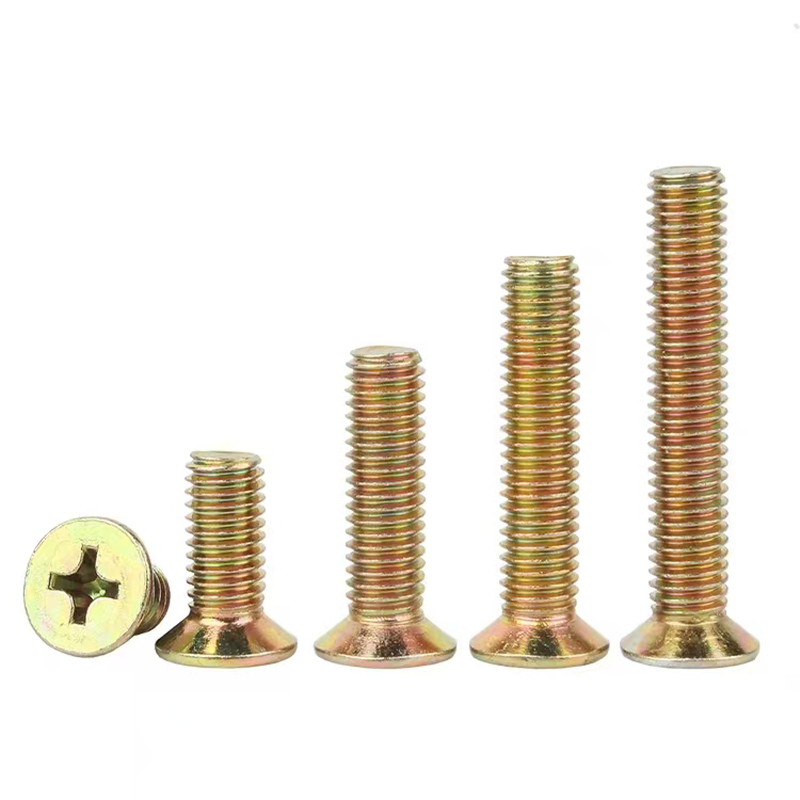
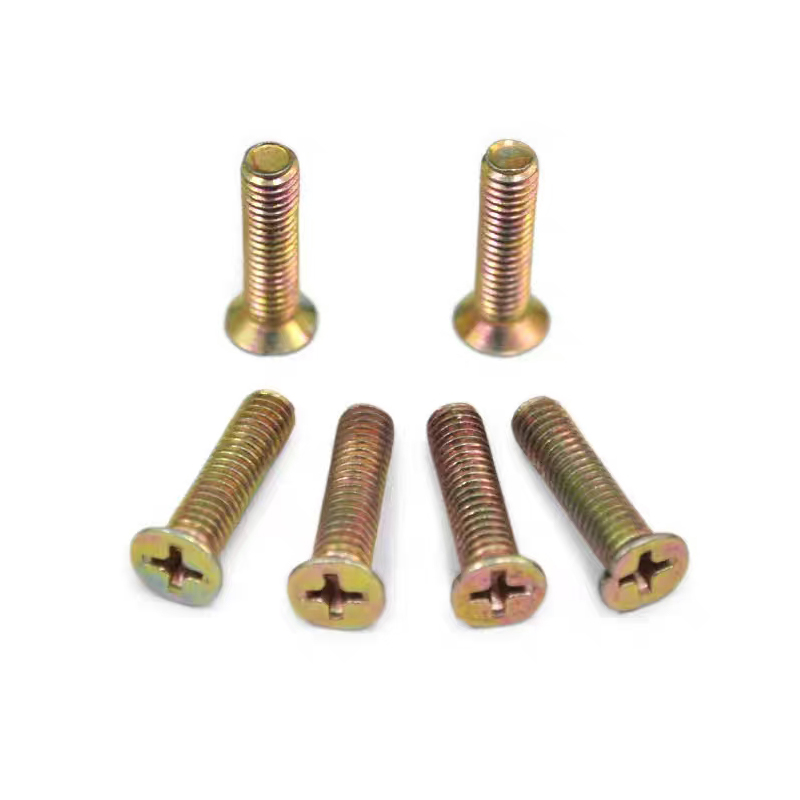
If you’re asking that, you’re probably already in a bit of a bind. The phrasing itself is a red flag—it mixes dimensions and styles in a way that tells me you might be looking at a drawing spec from an engineer who assumes hardware is magic, or you’re trying to match something old and odd. Let’s break it down. 4 inch wide likely refers to the inside width or leg span of the U-bolt. Countersunk cross bolts? That’s the tricky bit. Usually, you have the U-bolt itself and a crosspiece or saddle that goes over it, secured by nuts. But a countersunk head on the cross bolts? That implies a flush finish, maybe for clearance or safety. This isn’t a shelf item at most places. You’re not just buying a bolt; you’re looking for a specific assembly.
The Reality of Special Fasteners
In this game, need is a strong word. I’ve had projects where the print called for something like this, and the immediate reaction from procurement was to ask if we could modify the design. A standard U-bolt with a regular square or round saddle is easy. The moment you introduce countersunk cross bolts, you’re talking about machining that saddle plate to accept the conical heads, which adds cost and lead time. Or worse, you need the bolts themselves to be countersunk, meaning they’re likely shoulder bolts or something custom-turned. The width—4 inches—isn’t the issue. It’s the combination.
I remember a retrofit job on some conveyor support frames. The old ones used these exact assemblies. The U-bolt wrapped around a beam, and the cross bolts with countersunk heads sat flush against a metal guard. Trying to find direct replacements was a nightmare. We sourced the U-bolts easily enough from a specialist like Handan Zitai Fastener, but the cross bolts had to be custom-made. Their team knew exactly what I was talking about when I sent the sketch—that’s the value of a manufacturer deep in a production base like Yongnian, rather than just a distributor.
The takeaway? Always get a sample or a detailed drawing. 4 inch wide u countersunk cross bolts could mean three different mechanical configurations. Clarify if the countersink is on the bolt head bearing against the crosspiece, or if the crosspiece itself is countersunk. That detail changes everything.
Sourcing and the Pitfalls of Good Enough
Where do you even look? Big-box industrial suppliers often fail here. Their catalogs are built for volume. For something this specific, you go straight to manufacturers in regions that specialize in fastener production. Handan Zitai Fastener Manufacturing Co., Ltd., for instance, is situated in Hebei’s Yongnian District, a hub for this stuff. Their location near major transport routes means they’re set up for both standard and non-standard orders, and they can handle the material questions—is this for high vibration? Outdoor exposure? Need a specific grade like 316 stainless or Grade 8?
I made the mistake once of trying to substitute. The project called for these bolts in a marine application. We found U-bolts of the right width and thought we could just use standard hex head bolts for the crosspiece. Bad idea. The protruding heads caught on rigging and created a corrosion trap. The flush requirement of the countersunk head was there for function, not just aesthetics. We ended up having to machine the heads down on-site, which looked terrible and compromised the plating.
That’s why I often point people to a manufacturer’s direct site, like https://www.zitaifasteners.com. You need the technical back-and-forth. A product page won’t have this. You need to talk to an engineer or a sales rep who understands fabrication tolerances and can ask, What’s the application?
Material and Finish – It’s Never Just Steel
Let’s assume you’ve nailed the geometry. Next trap: material spec. If the request doesn’t specify, you’re guessing. For a 4 inch wide u bolt, the material thickness (diameter of the rod) is critical for load. But the finish on the countersunk heads is another layer. Hot-dip galvanizing is common, but it adds thickness. If your countersink is machined to a tight angle (82° or 90°), that galvanizing can throw off the fit, preventing the head from sitting flush. You might need to specify galvanize before threading, or mask the head, or choose a different finish like mechanical plating.
I’ve seen assemblies fail inspection because the painted finish on the countersunk head was too thick, creating a gap. The installer just cranked the nut down harder, which either stripped threads or distorted the saddle. The solution sometimes is to specify that the countersink be machined after coating, which, again, adds cost. A good manufacturer will flag this when you submit the drawing.
Companies embedded in a major production base, like Zitai Fastener in Handan, typically have the in-house capability or local partner network to handle these sequential processes—bending, machining, threading, coating—without shipping parts all over the country. That logistics advantage is huge for lead time and quality control.
Application Stories: Where These Actually Get Used
You don’t find these in your average hardware store because their use is niche. Think heavy equipment, agricultural machinery, structural pipe clamping, or specialized material handling. The U-bolt provides a wrap-around clamp, and the crosspiece with countersunk cross bolts distributes the load and provides a smooth surface.
One specific case was on a forestry equipment rebuild. The U-bolt clamped a hydraulic line bracket to a chassis. The countersunk bolts on the crosspiece were essential because branches and debris would snag on anything protruding. We sourced a batch from a Chinese manufacturer—the communication was key. We provided a CAD file, they came back with a production sample for fit-check. The fact that they were located near the Beijing-Guangzhou Railway meant the sample and final shipment moved quickly.
Another time, it was for securing vibration isolators on an industrial generator. The flush bolt head prevented stress concentrations on the rubber isolator. In that case, the 4-inch width was non-negotiable to clear the mounting pad. The lesson? The more constrained the application, the more precise your sourcing needs to be. Close enough leads to callbacks and safety concerns.
Practical Advice for Getting What You Need
So, you need these. Here’s what to do, based on painful experience. First, stop searching for the whole phrase as a single SKU. You likely won’t find it. Break it into components: the U-bolt and the saddle/crosspiece assembly. Source them together from a custom fastener maker.
Second, prepare a sketch. Even a hand-drawn one with critical dimensions: inside width (4), rod diameter, thread length and size, the angle and major/minor diameter of the countersink on the cross bolts, center-to-center distance of the cross bolt holes on the saddle. Material and finish. This sketch is your bible.
Third, reach out to a manufacturing-focused company. When you look at a site like Zitai Fastener’s, you’re not looking to buy online. You’re looking for contact info or a quote request form. Their company profile, stating they’re in the largest standard part base in China, is a signal of capability, not just marketing. It means they have access to the raw material, the tooling, and the skilled labor for both standard and non-standard parts. Explain the application. A good supplier will ask smart questions about load, environment, and installation torque.
Finally, budget for a sample. Pay for the first article. Fit it, test it. It’s cheaper than a batch of wrong parts. The quest for a 4 inch wide u countersunk cross bolts assembly is a journey into custom hardware. It’s frustrating, but doable if you approach it with the right details and the right partner. Don’t just buy parts; engineer the solution with your supplier.