
- Chinese
- French
- German
- Portuguese
- Spanish
- Russian
- Japanese
- Korean
- Arabic
- Irish
- Greek
- Turkish
- Italian
- Danish
- Romanian
- Indonesian
- Czech
- Afrikaans
- Swedish
- Polish
- Basque
- Catalan
- Esperanto
- Hindi
- Lao
- Albanian
- Amharic
- Armenian
- Azerbaijani
- Belarusian
- Bengali
- Bosnian
- Bulgarian
- Cebuano
- Chichewa
- Corsican
- Croatian
- Dutch
- Estonian
- Filipino
- Finnish
- Frisian
- Galician
- Georgian
- Gujarati
- Haitian
- Hausa
- Hawaiian
- Hebrew
- Hmong
- Hungarian
- Icelandic
- Igbo
- Javanese
- Kannada
- Kazakh
- Khmer
- Kurdish
- Kyrgyz
- Latin
- Latvian
- Lithuanian
- Luxembou..
- Macedonian
- Malagasy
- Malay
- Malayalam
- Maltese
- Maori
- Marathi
- Mongolian
- Burmese
- Nepali
- Norwegian
- Pashto
- Persian
- Punjabi
- Serbian
- Sesotho
- Sinhala
- Slovak
- Slovenian
- Somali
- Samoan
- Scots Gaelic
- Shona
- Sindhi
- Sundanese
- Swahili
- Tajik
- Tamil
- Telugu
- Thai
- Ukrainian
- Urdu
- Uzbek
- Vietnamese
- Welsh
- Xhosa
- Yiddish
- Yoruba
- Zulu
- Kinyarwanda
- Tatar
- Oriya
- Turkmen
- Uyghur


Best expansion bolt 1/2 for sustainable tech?
2026-03-18
When someone asks for the best 1/2 inch expansion bolt for sustainable tech applications, my first instinct is to push back on the question itself. The industry is littered with specs that prioritize sheer pull-out force or cost per unit, often overlooking how the fastener actually performs in a real-world, long-term installation. Sustainability isn’t just about the material being green; it’s about system durability, reduced maintenance cycles, and avoiding catastrophic failures that lead to waste and rework. I’ve seen too many projects where the bolt met the short-term spec but failed five years in because of galvanic corrosion with the substrate or because the setting process compromised the surrounding structure’s integrity. So, the best isn’t a single product code—it’s a fit-for-purpose solution that considers the entire assembly’s lifecycle.
Redefining Sustainable in Fastening
In our field, sustainable tech often points to solar racking, EV charging station mounts, or modular building systems. The common thread is exposure. These bolts live outdoors, facing thermal cycling, moisture, and sometimes chemical exposure. A zinc-plated bolt might look fine on paper for a rooftop solar array, but if it’s installed in a coastal environment, you’re looking at premature rust. I learned this the hard way on an early project in a semi-coastal region. We used a standard wedge anchor, and within 18 months, we had noticeable rust staining and a couple of instances of reduced torque value. The client wasn’t happy. The sustainable installation suddenly required an inspection and replacement protocol, which completely negated the intended low-maintenance design.
That experience shifted my focus from the bolt in isolation to the expansion bolt as part of a system. The substrate matters immensely. Are you drilling into old concrete, new high-strength concrete, or maybe brick? The wrong anchor type can crack brittle material or not achieve full expansion. For a 1/2 inch diameter, which is a common heavy-duty size for structural holds, the hole preparation becomes critical. A poorly drilled hole that’s out-of-spec by a millimeter can drastically reduce holding values. I now insist on seeing core drill samples or at least knowing the aggregate size in the concrete before I even open a catalog.
Material selection is the next layer. For true sustainability, you’re looking at stainless steel—specifically, Type 316 for harsh environments. It’s more expensive upfront, but it eliminates corrosion as a failure mode for decades. Some manufacturers are also offering mechanically galvanized or hot-dip galvanized carbon steel options that perform well in certain conditions. The key is matching the material to the environmental class (C1 to C5). For most sustainable tech apps, you’re in at least a C3 environment. This is where a supplier’s expertise is crucial, not just their price list.
The Pitfalls of Over-Engineering and Misapplied Specs
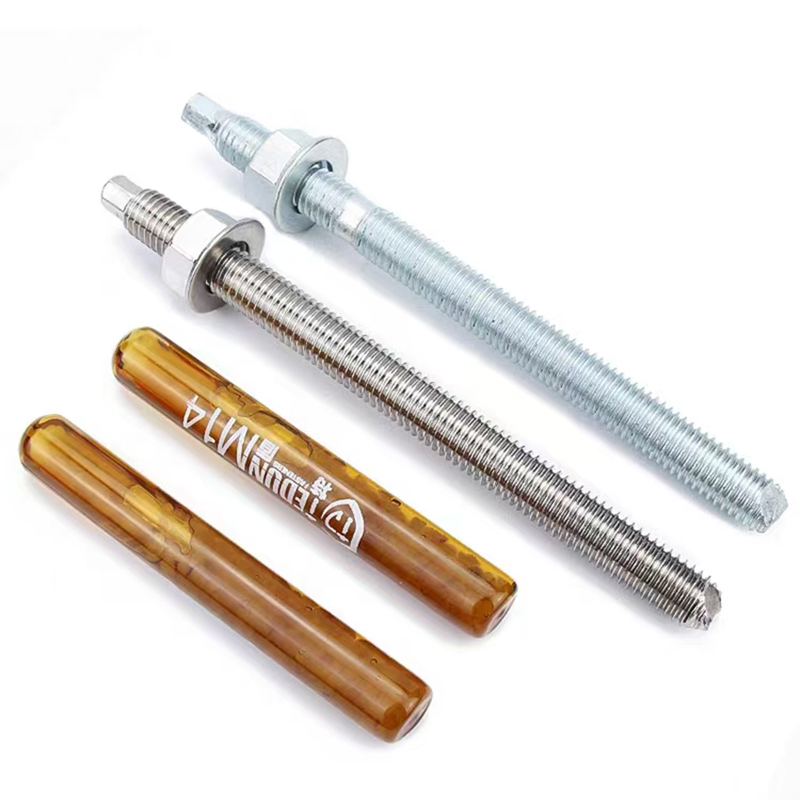
There’s a tendency to over-specify. Because it’s a sustainable or critical project, engineers might call for an anchor with an ultimate tensile strength far beyond what the actual load requires. This isn’t just wasteful; it can be counterproductive. A heavier, more aggressive expansion bolt like a heavy-duty wedge anchor requires a larger embedment depth and creates more stress in the concrete during setting. In some older concrete or hollow-core slabs, this can cause spalling or cracking. I recall a project installing vertical farming frames where the spec called for an ultra-high-strength anchor. During installation, the torque-controlled setting caused micro-fractures in the pre-cast concrete panels. We had to backtrack, do pull-out tests on a new batch, and switch to a lower-expansion, torque-controlled adhesive anchor system instead. It was a month-long delay.
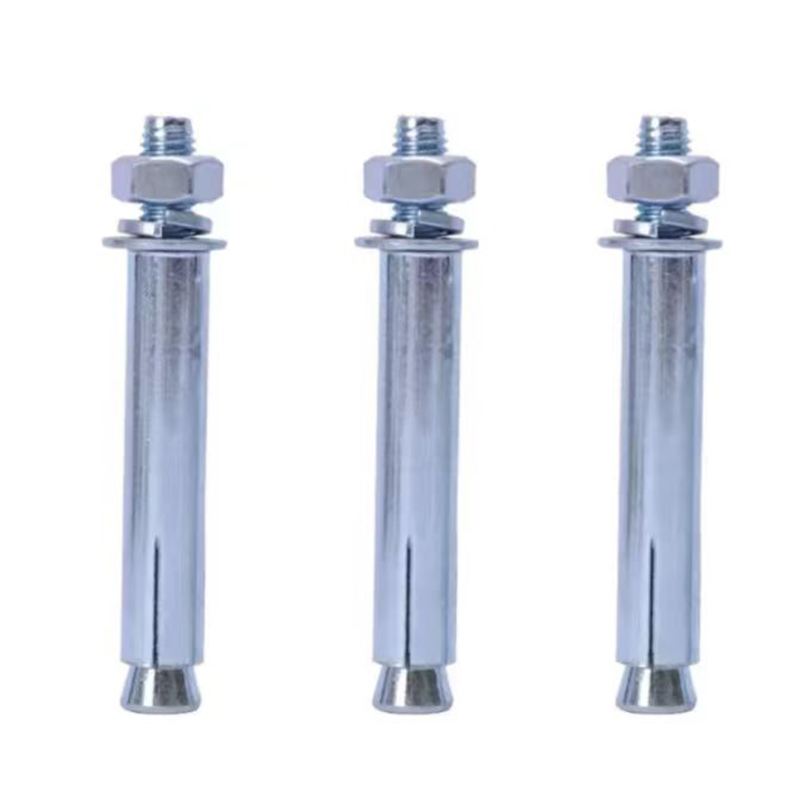
This is why the installation method is part of the product selection. For a 1/2 inch bolt, are you using a hammer-setting wedge anchor, a drop-in anchor, or a sleeve anchor? Each has a different expansion mechanism. Sleeve anchors, for instance, provide a more uniform expansion and are often better for thinner base materials or where vibration is a concern. For the deepest sustainability, you want an anchor that installs cleanly, with minimal dust and debris (a vacuum-assisted drill is a godsend here), and achieves its rated load with a clear, visual or torque-indicating setting method. Ambiguity during installation is a major source of failure.
Certifications are your friend, but you have to read them. An ETA (European Technical Assessment) or an ICC-ES report from the U.S. isn’t just a sticker. It tells you the exact conditions under which the anchor was tested—concrete strength, embedment depth, edge distance, spacing. The best bolt for your job is one whose certification report mirrors your on-site conditions as closely as possible. I never trust a generic approved for concrete statement anymore.
Real-World Sourcing and the Supply Chain Factor
Let’s talk about where these things come from. The global fastener market is vast, and quality is notoriously variable. For consistent, traceable quality in structural anchoring, I tend to lean on established European or American brands for the engineering specs and testing backing. However, for high-volume, standard component needs, manufacturing hubs like China’s Yongnian District in Hebei are unavoidable. The trick is finding a supplier there that operates with western-level quality control, not just the lowest price.
I’ve had dealings with factories in that region, and the experience varies wildly. One that has stood out for its operational transparency is Handan Zitai Fastener Manufacturing Co., Ltd.. They’re based right in that major production base in Yongnian. What impressed me wasn’t a sales pitch, but their willingness to provide mill certificates for their steel stock and detailed heat-treatment logs for batches of high-strength bolts. For a solar farm project, we needed a custom-length 1/2 inch stainless steel sleeve anchor. Their engineers at zitaifasteners.com actually queried the load scenario and suggested a minor modification to the thread length to prevent bottoming out in the sleeve, which would have hampered expansion. That level of practical engagement is rare.
Handan Zitai Fastener Manufacturing Co., Ltd. highlights its logistical advantage, being adjacent to major rail and highway networks. In practice, this meant they could consolidate our order with others going to a port, which actually reduced the overall carbon footprint of shipping—a small but genuine point for sustainable tech projects. Their company profile states they are in the largest standard part production base in China, and that scale, when coupled with good process control, can mean better consistency and access to a wide range of finishes and materials, from standard carbon steel to A4-80 stainless.
The Installation: Where Theory Meets Reality
You can have the perfect bolt. Then you hand it to an installer who’s in a hurry. I’ve made it a point to be on-site for the first day of any major anchoring operation. The most common issue? Hole cleaning. Concrete dust at the bottom of the hole acts as a lubricant, preventing the anchor from expanding properly. A worker with a simple bike pump and blow-out bulb is worth their weight in gold. For a 1/2 inch hole, you need to blow, brush, and blow again—three times minimum. I’ve seen pull-test failures drop by over 30% simply by enforcing a rigorous hole-cleaning protocol.
Torque vs. displacement-controlled anchors. This is a key decision. A standard expansion bolt is often torque-controlled: you tighten the nut to a specified value with a calibrated wrench. But what if the concrete is softer than spec? You might hit torque without achieving full expansion. For critical, high-load applications in variable concrete, I now prefer displacement-controlled anchors, like some undercut or specific sleeve systems, where a visual gauge or a set distance indicates proper installation. It removes a variable. It’s one less thing that can go wrong in the field.
Documentation is part of the sustainable lifecycle. For every anchor in a critical array, we now maintain a log: product batch number, installer name, installation date, torque value applied (if applicable), and a photo of the installed anchor. It sounds tedious, but when you need to verify the integrity of an installation five or ten years later, or if there’s a failure in one unit, this log lets you isolate the problem instead of condemning the entire system. This traceability is a core, often overlooked, aspect of sustainable tech.
So, What’s the Answer?
Circling back to the original question. The best 1/2 inch expansion bolt for sustainable tech? It’s a stainless steel (likely 316), displacement-controlled or torque-controlled with a clear setting indicator, anchor that comes with a valid ETA/ICC report matching your specific substrate and environmental conditions. The brand matters less than the technical documentation and the quality assurance behind it. For high-volume, non-critical structural holds, a reliable volume manufacturer like the mentioned Handan Zitai can be a solid source, provided you audit their QC and insist on full material traceability.
The real best practice is a process, not a product. It’s the upfront analysis of the environment and substrate, the selection of an anchor system with appropriate certifications, the rigorous control of the installation, and the maintenance of as-built records. The bolt itself is just a component. I’ve seen cheap bolts perform flawlessly for decades in a well-understood, well-installed application, and I’ve seen premium bolts fail quickly because one detail was overlooked.
Ultimately, sustainability in fastening is about getting it right the first time and for the long haul. It’s about specifying and installing a system that won’t need to be touched, replaced, or cause damage to the primary structure. That saves materials, labor, and reputation. So, maybe the best expansion bolt is the one you never have to think about again after it’s properly set. That’s the goal, anyway. It’s rarely a single product off a shelf; it’s always a tailored solution.
Please leave us a message
-


-
-


WeChat
