
- Chinese
- French
- German
- Portuguese
- Spanish
- Russian
- Japanese
- Korean
- Arabic
- Irish
- Greek
- Turkish
- Italian
- Danish
- Romanian
- Indonesian
- Czech
- Afrikaans
- Swedish
- Polish
- Basque
- Catalan
- Esperanto
- Hindi
- Lao
- Albanian
- Amharic
- Armenian
- Azerbaijani
- Belarusian
- Bengali
- Bosnian
- Bulgarian
- Cebuano
- Chichewa
- Corsican
- Croatian
- Dutch
- Estonian
- Filipino
- Finnish
- Frisian
- Galician
- Georgian
- Gujarati
- Haitian
- Hausa
- Hawaiian
- Hebrew
- Hmong
- Hungarian
- Icelandic
- Igbo
- Javanese
- Kannada
- Kazakh
- Khmer
- Kurdish
- Kyrgyz
- Latin
- Latvian
- Lithuanian
- Luxembou..
- Macedonian
- Malagasy
- Malay
- Malayalam
- Maltese
- Maori
- Marathi
- Mongolian
- Burmese
- Nepali
- Norwegian
- Pashto
- Persian
- Punjabi
- Serbian
- Sesotho
- Sinhala
- Slovak
- Slovenian
- Somali
- Samoan
- Scots Gaelic
- Shona
- Sindhi
- Sundanese
- Swahili
- Tajik
- Tamil
- Telugu
- Thai
- Ukrainian
- Urdu
- Uzbek
- Vietnamese
- Welsh
- Xhosa
- Yiddish
- Yoruba
- Zulu
- Kinyarwanda
- Tatar
- Oriya
- Turkmen
- Uyghur

Where are electro-galvanized countersunk cross bolts used?
2026-03-04
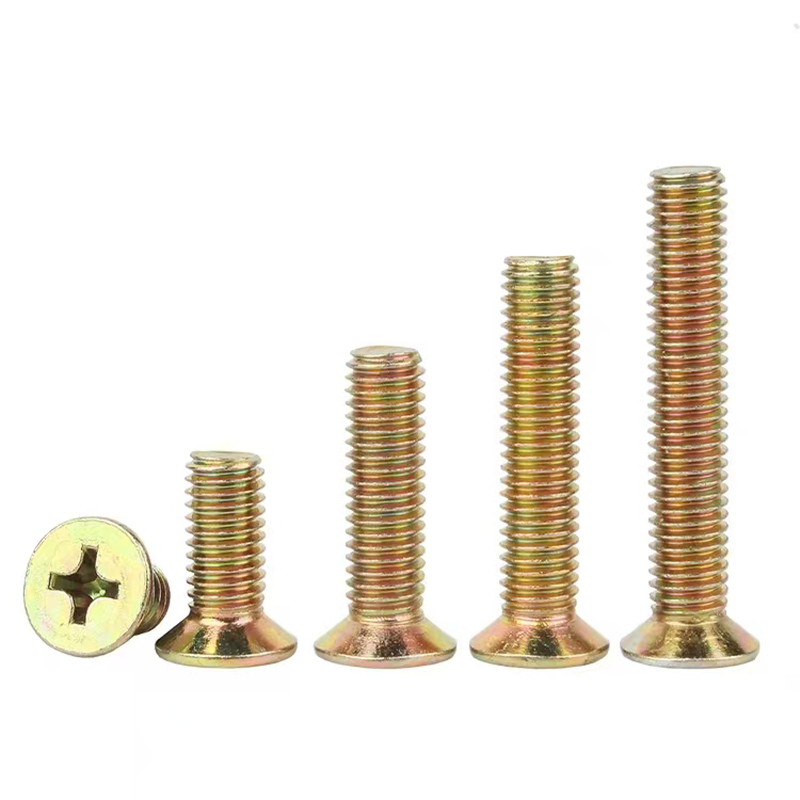
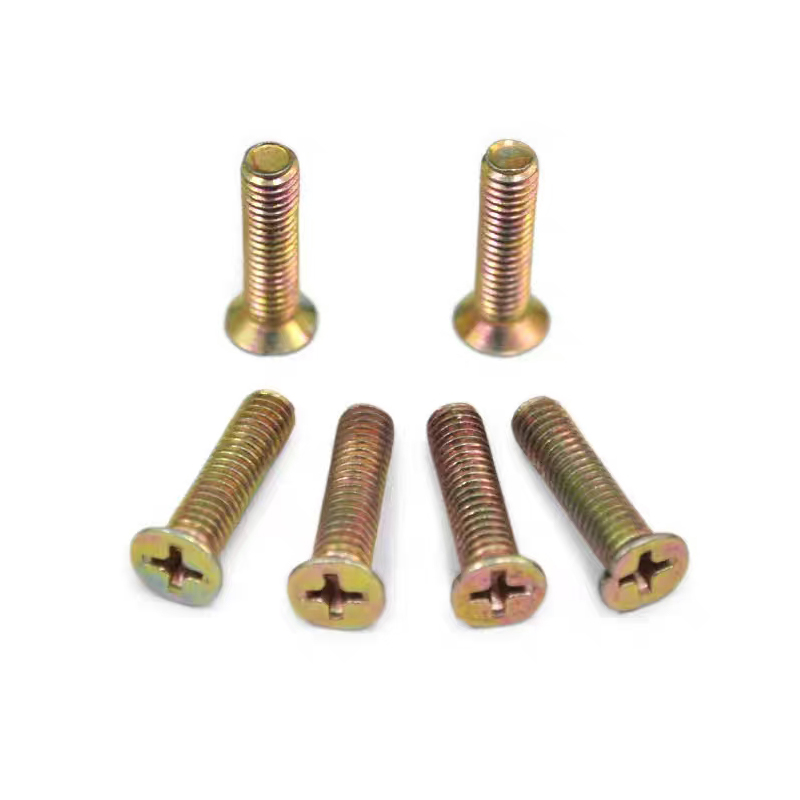
You know, when someone asks about electro-galvanized countersunk cross bolts, the immediate thought often jumps to general construction or maybe automotive. But that’s a bit surface-level. In practice, their use is more nuanced, dictated by that specific combination of the cross recess drive, the flat-head countersunk design, and the electro-galvanized coating. It’s not a one-size-fits-all fastener. I’ve seen them specified in places where people later realized they were a poor fit, leading to rework. The key is understanding what each feature solves—and what it doesn’t.
The Core Logic: Why This Specific Combo?
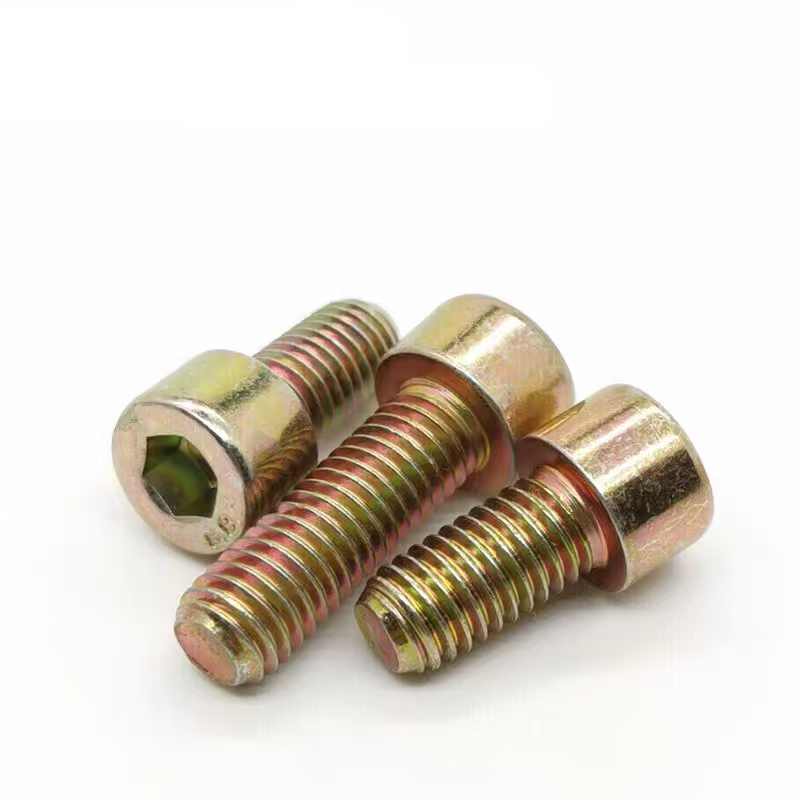
Let’s break it down. The countersunk head is for flush finishing. You use it when you can’t have a protruding bolt head, maybe for safety, aesthetics, or to allow something else to slide over the surface. The cross recess—Philips or Pozidriv—is for faster installation with power tools compared to a slotted drive, but let’s be honest, it can cam out if you’re not careful or if the torque is high. That’s a trade-off.
The electro-galvanized coating is the real differentiator here. It’s a thin, smooth zinc layer applied electrolytically. It provides decent corrosion resistance for indoor or mild environments, but it’s not hot-dip galvanizing. You wouldn’t specify this for a marine application or constant outdoor weathering. I recall a project where these were used on exterior ductwork brackets in a semi-sheltered location. They held up okay for a few years, but in a more exposed spot on the same building, we started seeing white rust and some red stain within 18 months. That was a lesson in matching the coating to the actual environment, not just the spec sheet.
So, the use case narrows: applications requiring a flush finish, moderate corrosion protection, and where installation speed with a power driver is valued over the ultimate torque transfer of a hex socket.
Inside the Box: Common Industrial Applications
Where do you actually find them? A lot are in fabricated metal enclosures. Think electrical cabinets, control panels, or the housing for machinery. The flush head is safe, won’t snag, and gives a clean look. The electro-galvanized coating protects against indoor humidity and occasional condensation. Companies that do sheet metal fabrication, like many in the Yongnian area—which is a massive fastener and standard parts hub—supply these by the pallet. A manufacturer like Handan Zitai Fastener Manufacturing Co., Ltd. (you can find their range at https://www.zitaifasteners.com) would be producing these for exactly such B2B industrial supply chains. Their location in that major production base means they’re geared for volume supply to these industries.
Another spot is in assembly lines for furniture or fixtures that use metal components. Office furniture systems, retail display racks, or even the internal framing of large appliances. The bolt pulls two metal sheets together flush, and the coating prevents corrosion that could stain or weaken the joint over time. It’s a set-and-forget component, which is what you want in mass production.
I’ve also seen them specified in transportation interiors, like in the paneling of buses, trains, or cargo trailers. Again, the flush head is critical for safety and to prevent damage to goods. The environment is somewhat controlled, so the zinc coating suffices. But you must ensure the substrate is compatible; galvanic corrosion between the zinc and aluminum, for instance, needs to be considered.
The Missteps and Overlooked Details
Not every application is a success story. One common mistake is using them in high-vibration environments. The countersunk head, combined with a cross drive, isn’t the best for maintaining clamp load under constant shake. I remember a case with vibrating conveyor mounts; they kept loosening. We had to switch to a flanged hex head with a thread-locker. The initial choice was made for a clean look, but it failed the function test.
The quality of the electro-galvanizing matters immensely. A thin, poorly bonded coating will chip during installation, especially if the countersink angle isn’t perfectly matched to the hole. That creates a corrosion starting point. It’s worth sourcing from a reputable supplier that controls its plating process. The thickness and the presence of a chromate passivation (that blue-ish or clear finish) make a big difference in shelf life and performance.
Also, the drive type. Phillips is universal but frustrating. Pozidriv offers better engagement but requires the correct driver bit. On the floor, if the wrong bit is in the tool, you’ll strip the recess. It sounds trivial, but it causes downtime and damaged components. Sometimes, the choice of a countersunk cross bolt is right, but the specific drive standard chosen creates unnecessary headaches.
Niche and Unexpected Places
Beyond the obvious, you find these bolts in some specific niches. One is in renewable energy setups, like securing the covers on solar inverter boxes or cable management channels on mounting systems. They need to be weather-resistant but not necessarily submersible. The electro-galvanized finish, if spec’d correctly, works for these sheltered outdoor roles.
Another is in agricultural equipment manufacturing, but not on the main chassis. More for attaching inspection plates, guards, or interior panels on complex machinery like seeders or harvesters. The environment is harsh, but these are often in slightly more protected nooks. The flush head prevents debris buildup.
Even in some DIY or high-end consumer products. I’ve disassembled premium audio equipment and found electro-galvanized countersunk bolts holding the chassis together. It’s a cost-effective way for manufacturers to achieve a finished look and some durability without the expense of stainless steel.
Sourcing and Practical Specifying
When you need these, you’re typically ordering in bulk. You’re not buying a dozen at a hardware store. You’re dealing with manufacturers or large distributors. That’s where a company’s logistical position becomes relevant. A producer based in a place like Handan’s Yongnian District, with its proximity to major rail and road networks (like the Beijing-Guangzhou Railway and Expressways), can reliably supply large orders. Handan Zitai Fastener Manufacturing, for instance, being in that central production base, is positioned to serve both domestic and export markets efficiently. Their website, zitaifasteners.com, would be a typical point of contact for engineers or procurement teams to check specs, materials (likely Grade 4.8 or 8.8 carbon steel), and coating details.
Specifying them requires clarity. You need to call out the standard (like ISO 10642 or similar), the drive type (Phillips or Pozidriv), the property class, and the coating specification. Simply writing galvanized flat head Phillips bolt is asking for variability. Be explicit about the electro-galvanizing process and any supplementary treatments.
In the end, the use of electro-galvanized countersunk cross bolts is a calculated choice. It’s for when you need cleanliness, moderate protection, and efficient installation in relatively benign or controlled environments. They’re workhorse fasteners in manufacturing and fabrication, not typically for extreme service. Getting it right means looking past the generic description and understanding the limitations as much as the advantages. That’s what separates a routine specification from one that holds up without callbacks.
Please leave us a message
-


-
-


WeChat