
- English
- Chinese
- French
- German
- Portuguese
- Spanish
- Russian
- Japanese
- Korean
- Arabic
- Irish
- Greek
- Turkish
- Italian
- Danish
- Romanian
- Indonesian
- Czech
- Afrikaans
- Swedish
- Polish
- Basque
- Catalan
- Esperanto
- Hindi
- Lao
- Albanian
- Amharic
- Armenian
- Azerbaijani
- Belarusian
- Bengali
- Bosnian
- Bulgarian
- Cebuano
- Chichewa
- Corsican
- Croatian
- Dutch
- Estonian
- Filipino
- Finnish
- Frisian
- Galician
- Georgian
- Gujarati
- Haitian
- Hausa
- Hawaiian
- Hebrew
- Hmong
- Hungarian
- Icelandic
- Igbo
- Javanese
- Kannada
- Kazakh
- Khmer
- Kurdish
- Kyrgyz
- Latin
- Latvian
- Lithuanian
- Luxembou..
- Macedonian
- Malagasy
- Malay
- Malayalam
- Maltese
- Maori
- Marathi
- Mongolian
- Burmese
- Nepali
- Norwegian
- Pashto
- Persian
- Punjabi
- Serbian
- Sesotho
- Sinhala
- Slovak
- Slovenian
- Somali
- Scots Gaelic
- Shona
- Sindhi
- Sundanese
- Swahili
- Tajik
- Tamil
- Telugu
- Thai
- Ukrainian
- Urdu
- Uzbek
- Vietnamese
- Welsh
- Xhosa
- Yiddish
- Yoruba
- Zulu
- Kinyarwanda
- Tatar
- Oriya
- Turkmen
- Uyghur


Best uses for colored zinc-plated countersunk cross bolts?
2026-03-05
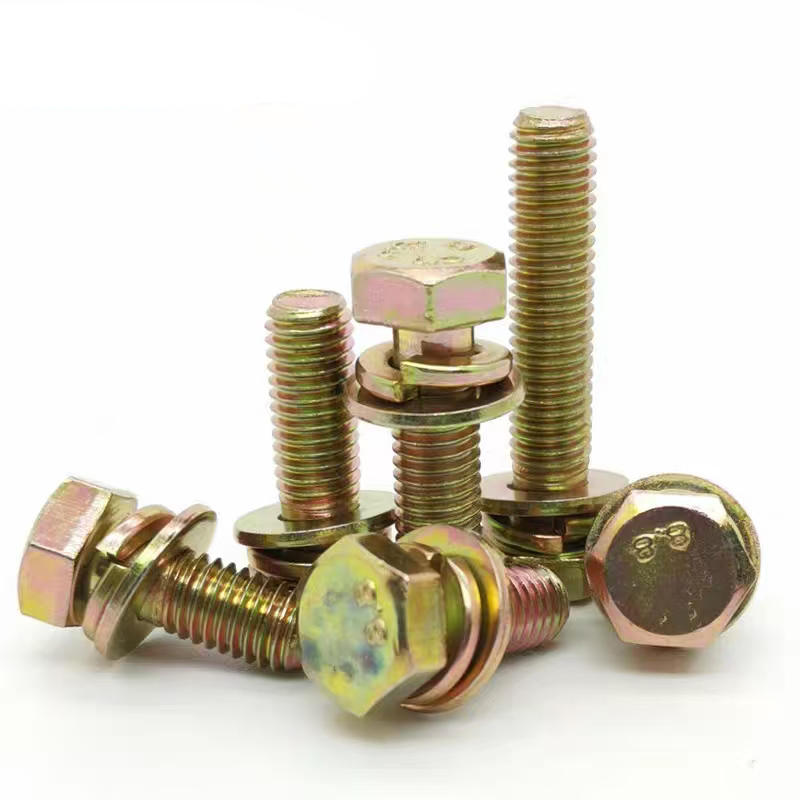
You see these bolts pop up in catalogs or on sites like Handan Zitai Fastener’s page, and the immediate thought is, Great, a bolt that’s both colored and corrosion-resistant—must be for decorative outdoor furniture. That’s not wrong, but it’s a surface-level take. The real value isn’t just the color or the zinc plating; it’s how those features intersect in specific, often overlooked applications where aesthetics and function can’t be separated. Having sourced these from manufacturers in places like Yongnian District, you learn that the best use often comes down to managing trade-offs in visibility, corrosion resistance, and assembly efficiency.
Beyond the Obvious: More Than Just Pretty Hardware
Let’s clear a common misconception first. The colored zinc plating—typically blues, reds, yellows, or blacks—isn’t a thick powder coat. It’s usually a passivation layer over the standard zinc plating. This means the primary job is still corrosion resistance; the color is a secondary, thin chemical layer. So, its durability against chipping isn’t like a painted finish. I’ve seen people try to use them on high-abrasion points on playground equipment, expecting the color to hold up like enamel. It doesn’t. The color fades or wears off at contact points within a year. The best applications are where the bolt head is visible but not subject to constant scraping or direct UV bombardment without any shelter.
That said, where they excel is in coded assemblies. Think about factory-assembled modular shelving units or pre-fab metal gazebos. Using a colored zinc-plated countersunk cross bolt in specific locations—say, blue bolts for the main frame connections, black for accessory attachments—helps visual quality control on the line. A worker can spot a mismatch from three meters away. It reduces assembly errors. We implemented this for a client producing retail display racks, sourcing batches from a supplier like Handan Zitai Fastener Manufacturing Co., Ltd., which is situated in that major production hub with solid logistics. The convenience of their location near major transport routes meant reliable bulk shipments, which you need when you’re coordinating color-matched hardware.
The countersunk head is the other critical half. It’s not just for a flush finish; it’s a safety and snag-prevention feature. In applications like interior ventilation ducting supports or the interior panels of food service carts, a protruding bolt head is a dirt trap or a snag hazard. The cross drive (or Phillips) is a bit of a debated choice—some prefer Torx for higher torque. But for the typical use-case of these colored bolts, which isn’t extreme structural loading, the cross drive is cost-effective and widely available. You’re trading some risk of cam-out for ease of assembly with common tools.
The Niche Where They Shine: Marine & Outdoor Enclosures
This might sound counterintuitive because marine screams stainless steel. But in non-critical, above-waterline applications on boats, like securing the interior trim panels of a cabin or mounting a radio unit inside a console, these bolts have a place. Why? Stainless can gall, especially in aluminum frames, and it’s more expensive. A lanu zinc-faʻapipiʻi bolt, if the plating is well-applied, offers sufficient resistance to the salty, humid environment inside a cabin, and the color can match a branding scheme or just make service easier. I remember a project fitting out small passenger ferries where the boat builder wanted all fasteners for interior components to be black. Using standard black-oxide bolts was a risk due to higher corrosion rates. We tested black zinc-plated countersunk bolts from a few vendors. The ones with a consistent, quality chromate conversion layer held up well in accelerated salt-spray tests, comparable to some mid-grade stainless options at a lower cost.
The key is specifying the salt-spray test hours when you order. A reputable manufacturer should provide that spec. Don’t just ask for colored bolts. Ask for blue trivalent chromate on zinc plating, 96-hour white salt spray resistance minimum. This is where partnering with a specialized manufacturer makes a difference. A company based in a major base like Yongnian has the scale and competition to offer these specific treatments without it being a custom oddity.
Another outdoor use is in architectural metalwork that isn’t structural—think decorative metal trellises, garden gate hinges, or signage brackets. The flush finish of the countersunk head gives a cleaner look, and the color can be chosen to blend with the paint scheme or contrast deliberately. The zinc plating protects the steel core, and the color layer adds that final touch. It’s a step up from just using a plain zinc bolt and trying to paint over it on-site, which never adheres well to the plating.
The Pitfalls and How to Avoid Them
Not every application is a win. Early on, I recommended these for securing composite decking boards to aluminum joists. The idea was that the colored head would blend with the deck board color. It was a failure. The constant micro-movement and pressure from foot traffic wore through the thin color layer on the bolt head quickly, revealing the silvery zinc beneath, which then looked like spots. Worse, in some cases, moisture wicked into the interface between the bolt head and the composite material, leading to localized corrosion that stained the decking. We learned that for any application with dynamic load or friction, the colored layer is too vulnerable.
Another pitfall is galvanic corrosion. You can’t ignore it just because the bolt is plated. If you’re fastening these into aluminum or magnesium, you still need isolation. A nylon washer under the bolt head is a cheap insurance policy. I’ve seen beautiful powder-coated aluminum frames develop ugly white corrosion halos around bolt heads because someone assumed the zinc plating was enough of a barrier. It’s not a magic shield.
Also, sourcing consistency is huge. The color hue can vary between batches if the chemical bath concentration or temperature isn’t tightly controlled. For a large project where bolts are visible, you want all the reds to match. It’s worth asking for a physical sample from the production batch before authorizing the full order. A good supplier understands this. On the website of Handan Zitai Fastener, for instance, they emphasize manufacturing control, which is what you’d expect from a sizable player in the Yongnian area. It’s a signal that they’re set up for consistent output, but you still verify.
Unexpected Utility in Maintenance and Repair
Here’s a use-case that doesn’t get enough airtime: maintenance marking. In industrial settings, equipment gets disassembled for service regularly. When reassembling, using a countersunk cross bolt with a specific color for replaced or upgraded parts makes future inspections faster. For example, all bolts replaced during the 2024 overhaul are installed with a green head. Next time the tech opens the panel, they instantly know which fasteners are newer. It’s a simple, low-cost tracking system.
Similarly, in complex machinery with multiple access panels, color-coding the bolts for different panels (e.g., hydraulic panel = yellow, electrical panel = blue) prevents panels from being bolted back in the wrong place. The cross drive is ubiquitous enough that any maintenance kit has a driver for it. This isn’t a theoretical idea; I’ve seen it implemented in a packaging plant on their conveyor system frames. It cut panel reinstallation errors to zero.
The flush head is critical here too, as it presents no added snag risk on machinery that might have moving parts or personnel brushing past it. You wouldn’t use a hex head bolt for this if a flush finish was an option.
Final Thoughts: Matching the Bolt to the Real Problem
So, what are the best uses? They’re situations where you need a combination of moderate corrosion protection, a requirement for a flush surface, a visual cue for assembly or maintenance, and where the bolt won’t be subjected to constant abrasion or extreme weathering. It’s a specific niche. The colored zinc-plated countersunk cross bolt is a hybrid component—it’s trying to solve a mechanical, environmental, and visual problem simultaneously.
When specifying, drill down on the plating specs. Don’t just order colored bolts. Think about the substrate material, the environment, and the lifecycle of the product. And work with suppliers who treat it as an engineered fastener, not just a commodity. A manufacturer embedded in a comprehensive supply chain, like one located in China’s largest standard part production base with the transportation links to match, often has the infrastructure to deliver that consistency.
In the end, the best use is the one where you’ve honestly assessed that all three features—the color, the zinc plating, and the countersunk cross design—are actively contributing value to the final product. If one of those features is just along for the ride, you might be better off with a simpler, cheaper fastener. But when the stars align, this little bolt solves more problems than it seems at first glance.
Faʻamolemole tuʻu le feʻau
-


-
-


WeChat
