
- English
- Chinese
- French
- German
- Portuguese
- Spanish
- Russian
- Japanese
- Korean
- Arabic
- Irish
- Greek
- Turkish
- Italian
- Danish
- Romanian
- Indonesian
- Czech
- Afrikaans
- Swedish
- Polish
- Basque
- Catalan
- Esperanto
- Hindi
- Lao
- Albanian
- Amharic
- Armenian
- Azerbaijani
- Belarusian
- Bengali
- Bosnian
- Bulgarian
- Cebuano
- Chichewa
- Corsican
- Croatian
- Dutch
- Estonian
- Filipino
- Finnish
- Frisian
- Galician
- Georgian
- Gujarati
- Haitian
- Hausa
- Hawaiian
- Hebrew
- Hmong
- Hungarian
- Icelandic
- Igbo
- Javanese
- Kannada
- Kazakh
- Khmer
- Kurdish
- Kyrgyz
- Latin
- Latvian
- Lithuanian
- Luxembou..
- Macedonian
- Malagasy
- Malay
- Malayalam
- Maltese
- Maori
- Marathi
- Mongolian
- Burmese
- Nepali
- Norwegian
- Pashto
- Persian
- Punjabi
- Serbian
- Sesotho
- Sinhala
- Slovak
- Slovenian
- Somali
- Scots Gaelic
- Shona
- Sindhi
- Sundanese
- Swahili
- Tajik
- Tamil
- Telugu
- Thai
- Ukrainian
- Urdu
- Uzbek
- Vietnamese
- Welsh
- Xhosa
- Yiddish
- Yoruba
- Zulu
- Kinyarwanda
- Tatar
- Oriya
- Turkmen
- Uyghur

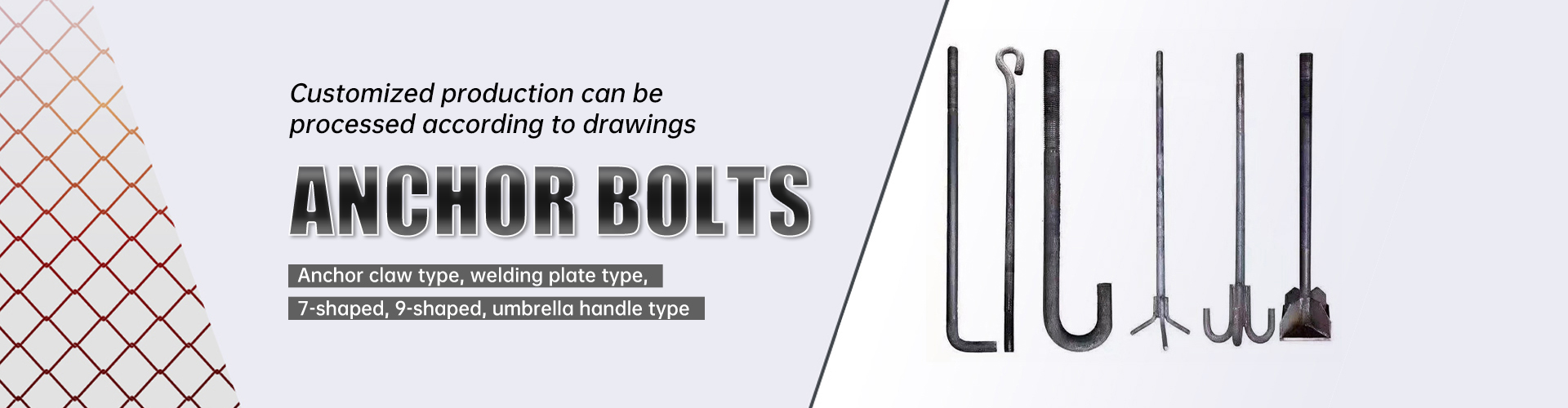
How are welding nails advancing industry tech?
2026-01-02
Welding nails, not exactly the flashiest of topics, but ask anyone deep in construction or manufacturing, and they’ll tell you—it’s an area ripe with innovation. There’s this common misconception that welding nails are just simple hardware, but dive into their role in modern industry tech, and you’ll uncover a narrative of subtle yet significant advancements. A narrative that those on the ground, like ourselves at Handan Zitai Fastener Manufacturing Co., Ltd., live and breathe daily.
The Misunderstood Nail
These aren’t your run-of-the-mill nails. Welding nails, by merging metallurgy with precision engineering, have steadily transformed how we approach structural integrity. At our company, situated conveniently near major transportation routes, we’ve seen firsthand how the choice of fastening can affect both the durability and the cost-effectiveness of projects.
You might think, A nail is a nail, but that’s a bit shortsighted. Different coatings, altered alloys, and modified shank designs have made these tiny components surprising hotbeds of tech innovation. Industry partners often tell us how these tweaks optimize their workflows, reduce material fatigue, and in some cases, eliminate redundant processes.
For example, within the high-performance sector—think aerospace or automotive—the demand for welding nails that ensure structural cohesion under extreme conditions is non-negotiable. Our factory, strategically placed in Hebei’s largest production base, is constantly testing innovations in this area.
Integrating Technology and Tradition
Innovation doesn’t mean throwing out everything old. There’s a delicate dance between implementing cutting-edge tech and respecting the time-tested techniques. I’ve personally seen projects where a flashy new tool promises the moon but fails to deliver in the field. However, welding nails have quietly integrated new manufacturing processes without disrupting established workflows, which is key.
At Handan Zitai, leveraging advanced manufacturing techniques involves a lot of careful planning. Automated production lines, high-precision quality checks—these complement, rather than replace, the foundational knowledge our craftsmen have honed over decades.
There was this project where we had to integrate a new type of welding nail into an existing structure. Sounds simple, right? Not quite. The margins for error in accepted stress levels were minimal. With a bit of calibration, the implementation was successful, showcasing how modern tech meshes seamlessly with traditional understanding.
Material Science in Fastening Tech
The role of material science cannot be overstated in this context. Advances here have allowed companies like ours to produce welding nails with improved strength-to-weight ratios and corrosion resistance. These aren’t just buzzwords thrown around; they’re crucial, especially in industries where safety is paramount.
Take the offshore construction industry, for instance. The challenges faced by these projects are unique, largely due to the salty, corrosive environment. Welding nails used here have to meet rigorous standards, with a focus on materials that can withstand these harsh conditions without compromising structural integrity.
I remember our team spending weeks in material trials just to ensure the welding nails maintained their integrity under specific environmental simulations. It’s the kind of research that, while demanding, truly underscores the symbiotic relationship between material science and practical application.
The Digital Turn
More recently, digital technology in manufacturing has started to leave an undeniable mark. Adopting IoT technology in monitoring production lines for real-time data analysis is something we’ve explored extensively at Handan Zitai. It might sound abstract, but consider this: if you can ensure that every nail is engineered to optimal specifications, predict product fatigue, and preemptively address defects, you transform the product’s reliability track record.
It’s not sci-fi; it’s what competitive manufacturers are moving towards. However, integrating this tech requires careful consideration. Our approach was gradual, testing small changes before larger rollouts, observing, learning, and adjusting as needed.
Real-world application has sometimes been rocky—network issues, learning curves—but the payoff in product quality and consistency is hard to argue against. Plus, there’s something thrilling about bringing a traditional industry into the future, step by step.
Fia vaai iai
So where does this all leave us? In a space where knowledge, tradition, and innovation intersect. As someone deeply embedded in this industry, my takeaway is clear: Adaptation is key. We can’t move forward by clinging to old ways, nor can we blindly rush towards change without a plan.
At Handan Zitai Fastener Manufacturing Co., Ltd. (https://www.zitaifasteners.com), nestled in one of China’s fastener production hubs, our journey with welding nails is reflective of broader industry trends. The future holds further advancements—smart materials, augmented reality in design—but these will always be built on today’s efforts.
It’s an intricate dance of progress, where minute innovations in products like welding nails hold the potential to reshape industries comprehensively. Not always visible, these tiny powerhouses quietly revolutionize the way we build tomorrow.
Faʻamolemole tuʻu le feʻau
-


-
-


WeChat