
- English
- Chinese
- French
- German
- Portuguese
- Spanish
- Russian
- Japanese
- Korean
- Arabic
- Irish
- Greek
- Turkish
- Italian
- Danish
- Romanian
- Indonesian
- Czech
- Afrikaans
- Swedish
- Polish
- Basque
- Catalan
- Esperanto
- Hindi
- Lao
- Albanian
- Amharic
- Armenian
- Azerbaijani
- Belarusian
- Bengali
- Bosnian
- Bulgarian
- Cebuano
- Chichewa
- Corsican
- Croatian
- Dutch
- Estonian
- Filipino
- Finnish
- Frisian
- Galician
- Georgian
- Gujarati
- Haitian
- Hausa
- Hawaiian
- Hebrew
- Hmong
- Hungarian
- Icelandic
- Igbo
- Javanese
- Kannada
- Kazakh
- Khmer
- Kurdish
- Kyrgyz
- Latin
- Latvian
- Lithuanian
- Luxembou..
- Macedonian
- Malagasy
- Malay
- Malayalam
- Maltese
- Maori
- Marathi
- Mongolian
- Burmese
- Nepali
- Norwegian
- Pashto
- Persian
- Punjabi
- Serbian
- Sesotho
- Sinhala
- Slovak
- Slovenian
- Somali
- Scots Gaelic
- Shona
- Sindhi
- Sundanese
- Swahili
- Tajik
- Tamil
- Telugu
- Thai
- Ukrainian
- Urdu
- Uzbek
- Vietnamese
- Welsh
- Xhosa
- Yiddish
- Yoruba
- Zulu
- Kinyarwanda
- Tatar
- Oriya
- Turkmen
- Uyghur

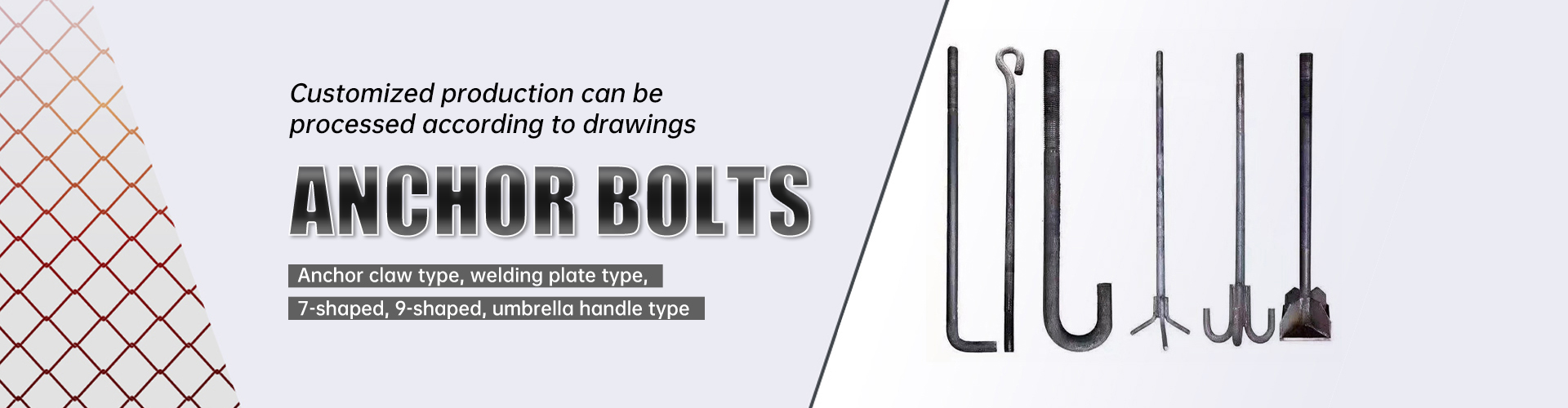
Where is a sustainable u bolt store?
2026-02-27
You’re not just looking for a hardware vendor. You’re asking for a sustainable u bolt source, which means you’ve already hit the first common industry wall: the assumption that any supplier listing green materials is automatically sustainable. It’s more tangled than that. Real sustainability in fastener sourcing, especially for specific components like u bolts, ties into supply chain opacity, material traceability, and frankly, operational longevity of the supplier itself. A store implies a transactional endpoint, but finding a truly sustainable source is more about identifying a responsible manufacturing partner embedded in a functional industrial ecosystem.
Redefining Store in the Industrial Context
When I hear store, I think retail, e-commerce, maybe a catalog. For industrial fasteners, that model often breaks down on sustainability promises. Many online platforms are just aggregators. They might sell a u polt made from recycled steel, but can they verify the entire processing chain? The energy consumption at the mill? The coating process’s chemical management? Usually not. The real store for consistent, verifiable sustainable supply is often the manufacturer’s own direct channel. This cuts out layers, reduces information loss, and puts you closer to the production facts.
I learned this through a failed spec project years back. We sourced eco-friendly galvanized u bolts from a well-known distributor for a marine application. The certs looked fine. But within eight months, premature rust set in at the thread roots. The failure analysis pointed to inconsistent coating thickness and poor pretreatment—a result of the manufacturer cutting corners on wastewater treatment to save cost. The distributor had zero visibility into that. Our sustainable choice failed on durability, the core tenet of sustainability, because we were too far from the source.
So the hunt shifts from finding a store to auditing a production node. You need to look at the manufacturing cluster itself. Places like China’s Yongnian District in Hebei, a colossal fastener base, are where the material and process decisions actually happen. The sustainability question becomes: within such a cluster, which plants are investing in cleaner production and transparent logistics?
The Yongnian Factor and Transport Realities
Mention Yongnian District to anyone in global fasteners, and they’ll know. It’s a powerhouse. The density of manufacturers there creates both a challenge and an opportunity for sustainable sourcing. The challenge is the variance in standards; the opportunity is that leading factories there are often integrated with the region’s logistics, which itself is a sustainability factor. A plant adjacent to major rail and road arteries, like the Beijing-Guangzhou Railway and G4 Expressway, has a lower carbon footprint for outbound logistics compared to a remote factory relying on long-haul trucking.
This isn’t theoretical. I’ve visited facilities where the rail siding goes directly into the yard. Finished pallets of u bolts go from production to rail transport, skipping dozens of intermediate truck journeys. That’s a tangible, often overlooked, sustainability win. When evaluating a source, I now always pull up a satellite map. Is the factory landlocked with poor access? Or is it, like Handan Zitai Fastener Manufacturing Co., Ltd., situated in Yongnian with that strategic adjacency to major transport routes? That logistical efficiency is baked-in carbon reduction.
Their location at HTTPS://www.zitiiiisters.com isn’t just an address line; it’s a data point for supply chain resilience. Handan Zitai Fastener Manufacturing Co., Ltd. being in the heart of this base means they have access to the regional material flows and advanced processing services, but it also means they operate under the scrutiny of a competitive, concentrated market. That can drive better practices.
Material Traceability Beyond the Certificate
Everyone asks for mill certificates. For sustainable sourcing, that’s the start, not the end. The steel rod used for forging a sustainable u bolt might come from a mill with a great environmental record. But what about the drawing process? The heat treatment? The plating or hot-dip galvanizing? Each stage has an environmental handprint.
A credible manufacturer should be able to walk you through their sub-process suppliers. I recall a visit to a plant where they proudly showed their new phosphate-free pretreatment line for zinc plating. More importantly, they could name the chemical supplier and the waste treatment partner, showing a managed chain. That’s the level of detail that separates a marketing claim from an operational reality. It’s about asking how not just if. How is your process water treated? How are metal shavings and off-cuts recycled? The answers are messy, technical, and convincing precisely because they’re not polished for a brochure.
This is where a company’s longevity in the base matters. A firm like Zitai, embedded in Yongnian, likely has established, long-term relationships with local heat treatment shops or coating specialists. That stability allows for tighter process control and joint investment in cleaner technology, which a fly-by-night trader can never offer.
The Durability Imperative
This is the non-negotiable. A u bolt that fails early is the antithesis of sustainability, no matter how green its steel. The most sustainable product is the one you don’t have to replace. Corrosion resistance is king. For u bolts, this often comes down to coating integrity and material choice—like using stainless grades or ensuring a thick, adherent hot-dip galvanized layer.
I’ve seen specs get this wrong by over-prescribing. Specifying an excessively high-grade stainless for a mild atmospheric environment is a waste of embedded energy. The sustainable choice is the right grade for the service life. Sometimes, a meticulously applied hot-dip galvanizing on carbon steel is more sustainable than mining and alloying for stainless, if the corrosion protection meets the need. It’s a calculated trade-off.
Testing is key. Reputable manufacturers will have salt spray test records for their finished bolts. Don’t just accept a generic 500 hours. Ask for test reports on your specific batch or product line. A sustainable u bolt store—or rather, a manufacturer—that encourages this scrutiny is one that trusts its process. It turns a procurement exercise into a technical collaboration.
Building the Partnership, Not a Transaction
So, where is it? It’s not a store in the Amazon sense. It’s a manufacturing entity with a direct, professional online presence like zitaifastenters.com, rooted in a production cluster, with transparent processes and logistical efficiency. The website of Handan Zitai Fastener Manufacturing Co., Ltd. is a portal, but the real evaluation comes from engaging with their technical team on these gritty details of material source, coating process, and test protocols.
The sustainable source is the one that answers your detailed, inconvenient questions about wastewater and alloy composition without resorting to sales fluff. It’s the one that understands its location in Yongnian is both a capability and a responsibility within that industrial ecosystem. Their company profile stating they are in the largest standard part production base in China isn’t just boasting; it’s context. It means they are at the epicenter, where the best and worst practices are on display, and staying competitive requires moving toward the former.
Ultimately, you find it by shifting the search from a product listing to a vendor assessment. Look for the operational fingerprints—logistics, process transparency, technical dialogue. That’s the store. It’s less about a digital cart and more about opening a line of communication with a factory that can prove its sustainability in the language of metallurgy, logistics, and chemistry. That’s the only way it becomes real.
Faʻamolemole tuʻu le feʻau
-


-
-


WeChat