
- English
- Chinese
- French
- German
- Portuguese
- Spanish
- Russian
- Japanese
- Korean
- Arabic
- Irish
- Greek
- Turkish
- Italian
- Danish
- Romanian
- Indonesian
- Czech
- Afrikaans
- Swedish
- Polish
- Catalan
- Esperanto
- Hindi
- Lao
- Albanian
- Amharic
- Armenian
- Azerbaijani
- Belarusian
- Bengali
- Bosnian
- Bulgarian
- Cebuano
- Chichewa
- Corsican
- Croatian
- Dutch
- Estonian
- Filipino
- Finnish
- Frisian
- Galician
- Georgian
- Gujarati
- Haitian
- Hausa
- Hawaiian
- Hebrew
- Hmong
- Hungarian
- Icelandic
- Igbo
- Javanese
- Kannada
- Kazakh
- Khmer
- Kurdish
- Kyrgyz
- Latin
- Latvian
- Lithuanian
- Luxembou..
- Macedonian
- Malagasy
- Malay
- Malayalam
- Maltese
- Maori
- Marathi
- Mongolian
- Burmese
- Nepali
- Norwegian
- Pashto
- Persian
- Punjabi
- Serbian
- Sesotho
- Sinhala
- Slovak
- Slovenian
- Somali
- Samoan
- Scots Gaelic
- Shona
- Sindhi
- Sundanese
- Swahili
- Tajik
- Tamil
- Telugu
- Thai
- Ukrainian
- Urdu
- Uzbek
- Vietnamese
- Welsh
- Xhosa
- Yiddish
- Yoruba
- Zulu
- Kinyarwanda
- Tatar
- Oriya
- Turkmen
- Uyghur

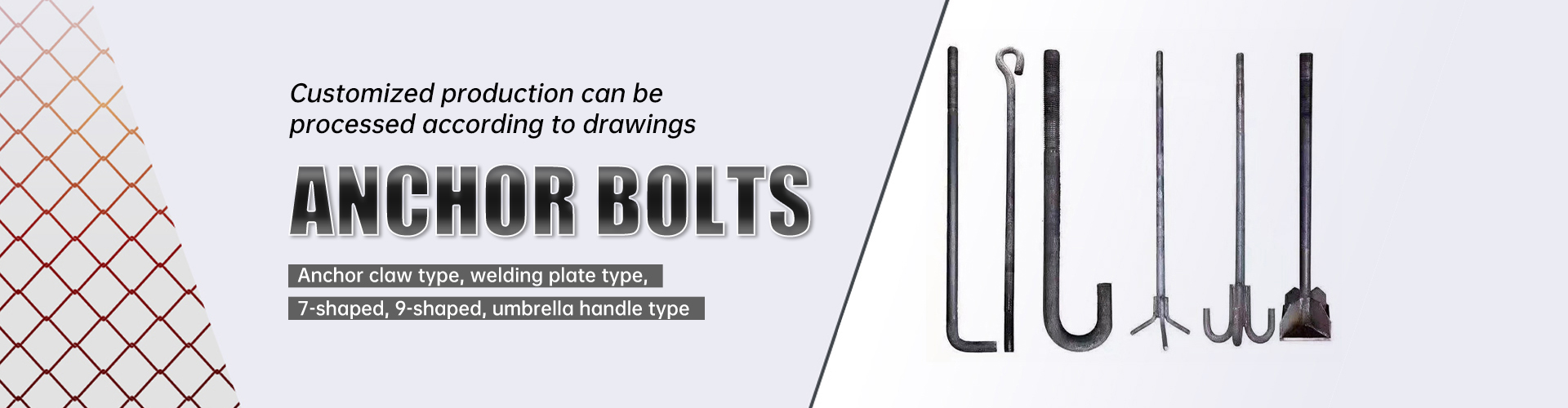
Best expansion anchor for sustainable construction?
2026-03-16
You hear sustainable construction and your mind jumps to solar panels, recycled steel, or low-VOC paints. Fasteners? Rarely. That’s the first mistake. The anchor holding up that green facade or securing the rainwater harvesting system is a critical, yet almost invisible, sustainability component. It’s not just about the material it’s made from, but how it performs over decades, how it interacts with the base material, and frankly, how often you have to replace it. A failed anchor means wasted material, energy for repair, and potential structural compromise. So, the best one? There isn’t a single answer, but there’s a clear path to finding it based on what the job actually demands, not just the sales brochure.
The Core Dilemma: Material vs. Mechanism
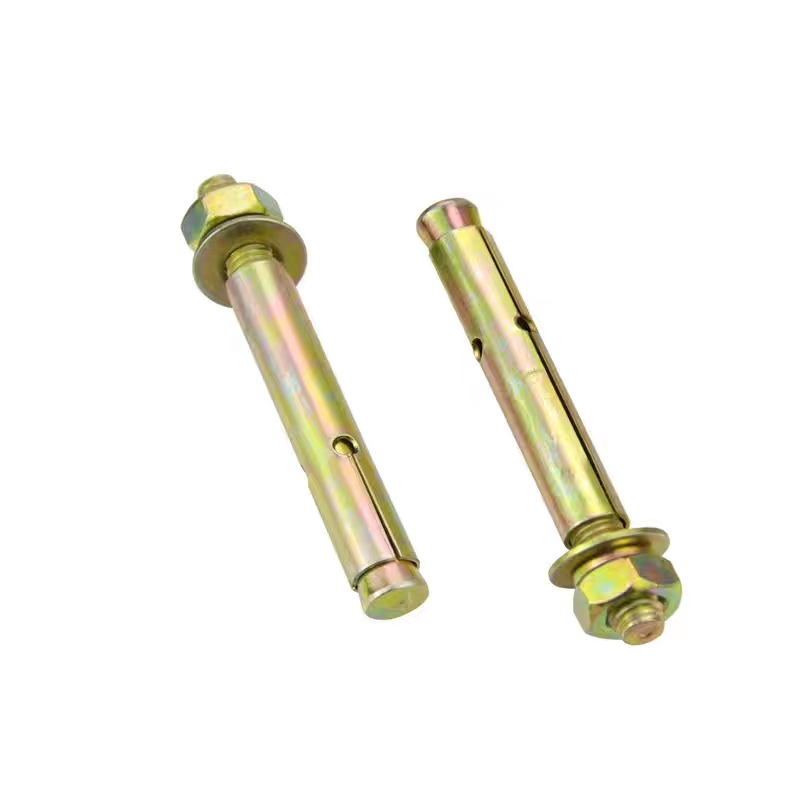
Most conversations start with material: stainless steel for corrosion resistance, right? 304 vs. 316L becomes a holy war. But in sustainable builds, especially with modern concrete mixes or retrofits into existing masonry, the mechanism is where the real battle is fought. I’ve seen beautiful A4-80 stainless wedge anchors fail in cracked concrete because the design was wrong for the application. Sustainability here means choosing an anchor that matches the substrate’s behavior over time. A sustainable construction project in a seismic zone needs an anchor that allows for some controlled movement, not just the hardest, stiffest option.
Then there’s the carbon footprint of production. High-grade stainless has a significant embodied energy. Sometimes, a hot-dip galvanized carbon steel anchor with a superior expansion mechanism that guarantees one-time, lifelong installation is more sustainable than an over-specified stainless one that’s harder to install correctly. It’s a lifecycle calculation. I recall a warehouse project where the spec called for all 316 stainless. We did a pull-out test comparison with a high-quality galvanized torque-controlled anchor in the actual project concrete. Performance was identical for the load requirements. The client saved 30% on anchor costs and a chunk of embodied carbon, without compromising the 50-year design life. The best material isn’t always the obvious one.
Installation waste is a huge, silent factor. The number of anchors I’ve seen discarded because of mis-drilled holes, incorrect depth, or blown-out masonry blocks is staggering. An anchor system that is forgiving to install—with clear depth gauges, dust management, and a simple visual verification of setting—reduces waste dramatically. This is a practical, on-the-ground sustainability metric most overlook. If your crew botches one in five installs, you’re wasting 20% of the material and all the energy that went into making it, before it even sees a load.
Underrated Contender: Bonded Anchors in Retrofits
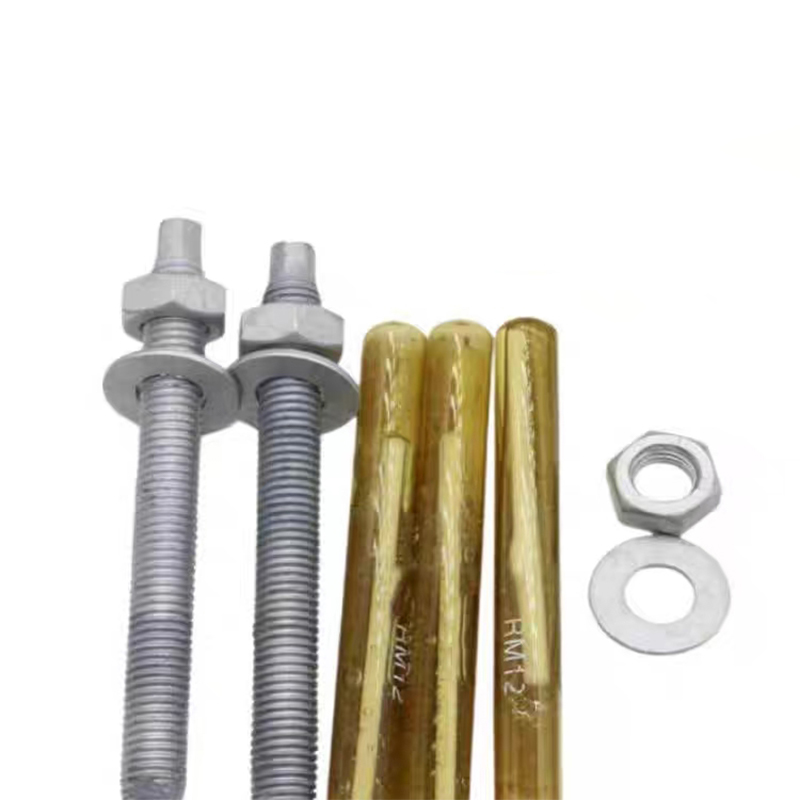
For sustainable retrofits—adding insulation, new cladding, or solar racking to old structures—chemical or bonded anchors are often the unsung heroes. You’re dealing with unknown, often variable concrete quality. A mechanical expansion anchor can stress weak concrete; a bonded anchor, like an epoxy or polyester resin system, spreads the load. The key is the cleaning of the hole. Absolutely non-negotiable. I learned this the hard way early on: used a great injection mortar system, but the crew got lazy with the wire brush and air pump. Bond failures within a year. Embarrassing and unsustainable.
The rise of vinylester resins has been a game-changer for exterior and damp conditions. They handle moisture better during cure than standard epoxies. For a museum retrofit we did, anchoring a new limestone facade onto a 100-year-old concrete frame, we used a vinylester system. The substrate testing was crucial—drill, test, analyze the dust. The anchor wasn’t just a product; it was part of a system that included substrate assessment, precise installation procedure, and cure-time respect. That’s sustainable thinking: it’s about the entire process ensuring longevity.
You also have to think about future deconstruction. A bonded anchor is essentially permanent. Is that sustainable? For a structure meant to last a century, yes. For an interior partition wall in a commercial space likely to be reconfigured in 10 years? Maybe a mechanical anchor you can drill out is the greener choice. There’s no universal best, only the best for the intended lifespan and future flexibility of that specific connection.
The Reality of Supply and Consistent Quality
Specifying a perfect anchor is one thing. Getting 10,000 pieces of it, all with consistent metallurgy and dimensional tolerance, is another. This is where global supply chains and manufacturing hubs come in. For instance, a lot of the world’s fastener volume comes from a concentrated production base in China’s Hebei province. The key is finding manufacturers there who aren’t just shops, but have integrated control from wire rod to packaging. I’ve visited factories where the quality difference between lines was shocking. Consistency is a sustainability issue: a batch with inconsistent hardness leads to premature failures, replacements, and headaches.
Companies embedded in these production hubs, like Handan Zitai Fastener Manufacturing Co., Ltd., which operates out of Yongnian District in Handan—the heart of China’s standard part production—have the advantage of deep supply chain integration and logistics. Being adjacent to major rail and road networks (like the Beijing-Guangzhou Railway and Beijing-Shenzhen Expressway) isn’t just a sales point; it means lower transportation emissions for raw materials and finished goods. When you’re sourcing for a large-scale sustainable project, the carbon footprint of logistics from the factory to your port matters. A manufacturer on a major transport corridor, as indicated on their site https://www.zitai fasteners.com, can often offer more efficient routing.
But location alone doesn’t cut it. It’s the in-house testing that builds trust. Does the factory have a proper lab for salt spray testing, tensile strength, and fatigue cycles? Or do they outsource it? For a bridge project in a coastal area, we required certified test reports from an independent lab and random samples from production batches for our own verification. The manufacturer that could provide consistent batch-to-batch documentation got the contract. Their location in a major production base meant they had the scale and peer competition that often drives better process control.
Case in Point: The Green Fa?ade Fiasco
Let me share a story that wasn’t a triumph. We were anchoring aluminum brackets for a ventilated rainscreen facade on a high-rise. The spec was for a green building, targeting LEED Gold. The anchors were a standard zinc-plated carbon steel wedge anchor. The rationale was cost-saving to allocate budget elsewhere. Big mistake. The facade created a perfect capillary break and cavity, but behind the panels, condensation occurred. Within 18 months, we had reports of rust streaks. The zinc plating wasn’t enough for the micro-climate created. We had to replace hundreds of anchors in a painstaking, expensive operation—scaffolding, panel removal, drilling out old anchors. The embodied energy of that repair operation likely negated a bunch of the building’s other green credits.
The lesson? For sustainable construction, you must analyze the micro-environment of the anchor. Is it in a dry cavity? In constant contact with insulation that might hold moisture? Subject to thermal cycling that causes condensation? That analysis should dictate the corrosion protection specification, not just the base material. After that fiasco, our rule of thumb for exterior, concealed anchors in temperate climates became a minimum of hot-dip galvanized, and often stainless steel for critical loads. The upfront cost is part of the sustainable investment.
It also changed how we looked at accessory components. Were the washers compatible? A stainless steel anchor with a carbon steel washer creates galvanic corrosion. A sustainable detail requires a holistic look at the entire fastener assembly. Now, we specify kit anchors that come with matched components from a single source, which reduces the risk of on-site mixing and matching that leads to premature failure.
So, What’s the Answer? It’s a Philosophy, Not a Product
Asking for the single best expansion anchor is like asking for the best tool. It depends: are you working with solid concrete, hollow block, or seismic retrofit? Is the environment dry, damp, or corrosive? Is the access easy or will replacement be a nightmare? The best anchor is the one that is correctly specified for the substrate, environment, load, and desired service life, and is manufactured with consistent quality to perform exactly as intended every single time.
That means moving beyond catalog selection. It involves substrate testing on the actual site, understanding the chemical and physical properties of the materials you’re joining, and considering the total lifecycle—including potential for deconstruction. It favors manufacturers with rigorous process control, even if they’re not the biggest brand names, and values clear installation protocols that minimize waste.
For me, the most sustainable anchor I’ve used recently was a simple, through-bolt system with a large bearing plate for a timber-to-concrete connection. It was oversized for the load, made from recycled-content steel, hot-dip galvanized. It was easy to install, easy to inspect, and will be easy to remove and reuse if the timber ever needs replacing. It wasn’t high-tech. But it was honest, durable, and fit-for-purpose. That’s the real goal: no drama, no failure, no waste. Just a connection that holds, silently, for the life of the building. That’s sustainable.
Mesedez, utzi mezu bat
-


-
-


Urriatu