
- English
- Chinese
- French
- German
- Portuguese
- Spanish
- Russian
- Japanese
- Korean
- Arabic
- Irish
- Greek
- Turkish
- Italian
- Danish
- Romanian
- Indonesian
- Czech
- Afrikaans
- Swedish
- Polish
- Catalan
- Esperanto
- Hindi
- Lao
- Albanian
- Amharic
- Armenian
- Azerbaijani
- Belarusian
- Bengali
- Bosnian
- Bulgarian
- Cebuano
- Chichewa
- Corsican
- Croatian
- Dutch
- Estonian
- Filipino
- Finnish
- Frisian
- Galician
- Georgian
- Gujarati
- Haitian
- Hausa
- Hawaiian
- Hebrew
- Hmong
- Hungarian
- Icelandic
- Igbo
- Javanese
- Kannada
- Kazakh
- Khmer
- Kurdish
- Kyrgyz
- Latin
- Latvian
- Lithuanian
- Luxembou..
- Macedonian
- Malagasy
- Malay
- Malayalam
- Maltese
- Maori
- Marathi
- Mongolian
- Burmese
- Nepali
- Norwegian
- Pashto
- Persian
- Punjabi
- Serbian
- Sesotho
- Sinhala
- Slovak
- Slovenian
- Somali
- Samoan
- Scots Gaelic
- Shona
- Sindhi
- Sundanese
- Swahili
- Tajik
- Tamil
- Telugu
- Thai
- Ukrainian
- Urdu
- Uzbek
- Vietnamese
- Welsh
- Xhosa
- Yiddish
- Yoruba
- Zulu
- Kinyarwanda
- Tatar
- Oriya
- Turkmen
- Uyghur

Colored zinc nuts: sustainable for industry?
2026-02-20
You see ‘colored zinc nuts’ on a spec sheet and the immediate question isn’t about load-bearing or thread pitch—it’s whether that blue or red finish is just a gimmick or if it actually adds value in a real-world, cost-driven, and now increasingly eco-conscious industrial setting. There’s a common misconception that coloring is purely cosmetic, a way to charge a premium for organization or branding. But from the factory floor up, the conversation is more nuanced, tangled in trade-offs between corrosion resistance, identification efficiency, supply chain complexity, and the very real environmental footprint of adding another process step. Let’s peel back the layers.
The Finish Isn’t Just Paint
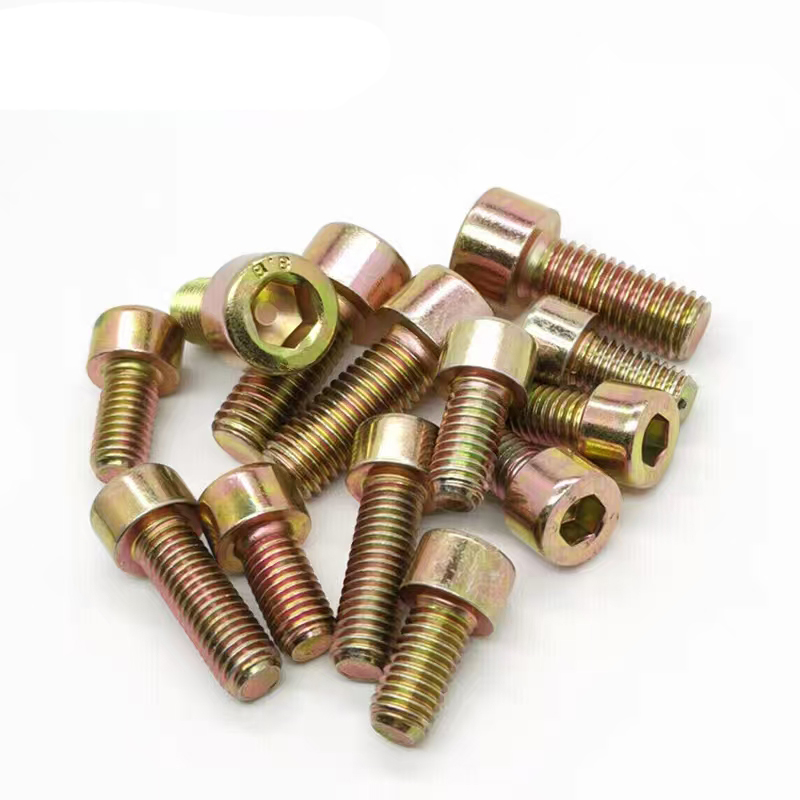
First, clarify what we’re talking about. These aren’t painted. The color on a zinc nut typically comes from a post-plating process, often a chromate conversion coating with dye or a specific sealed-dye system. So you start with the baseline corrosion protection of zinc plating—maybe a blue-white or yellow iridescent chromate—and then you add the color layer. This immediately introduces a sustainability checkpoint: you’re adding energy, water, and chemical baths to the standard zinc plating line. Is the benefit worth the resource cost?
In automotive assembly, I’ve seen colored nuts used for dedicated positions—say, red for high-torque suspension points, blue for interior trim. The theory is foolproof visual verification, reducing assembly errors. But the practice? If the color batch has a slight variance, or if the lighting on the line is poor, the benefit shrinks. More than once, we had issues where a supplier’s ‘red’ looked too much like the ‘copper’ batch under factory LEDs, causing a line stoppage for verification. The sustainability angle here is indirect but massive: preventing misassembly avoids waste, rework, and potential recalls down the line. So the color’s consistency and durability under different lights become a critical, often overlooked, quality parameter.
Then there’s the coating integrity. A poor dye process can micro-crack the underlying chromate layer. I recall a batch from a few years back where the vibrant green nuts for an outdoor electrical enclosure project started showing white corrosion spots within six months. The problem wasn’t the zinc plating; it was the aggressive dye bath that compromised the seal. The failure created a mountain of waste—replacement labor, scrapped units, and the nuts themselves becoming non-recyclable mixed metal waste. That’s the antithesis of industrial sustainability.
The Supply Chain and Cost Reality
Adopting colored fasteners isn’t just a technical decision; it’s a supply chain one. You’re moving from a commodity item (standard zinc nuts) to a semi-custom one. This impacts minimum order quantities, lead times, and inventory complexity. For a project, we specified yellow zinc nuts for grounding points across a series of telecom cabinets. The idea was brilliant for maintenance crews. But when a design change eliminated one cabinet model, we were left with three pallets of a specific yellow nut with no other application. They sat for years before being sold as scrap at a loss. The embodied energy in those perfectly functional nuts was wasted. Sustainability in industry isn’t just about green processes; it’s about logistical efficiency and minimizing dead stock.
This is where partnering with a manufacturer that understands both production and application pays off. A company like Handan Zitai Fastener Manufacturing Co., Ltd., based in China’s largest standard part production base in Yongnian, often has the scale to handle custom runs like colored finishes more efficiently. Their proximity to major transport links like the Beijing-Guangzhou Railway and National Highway 107 isn’t just a sales point—it translates to lower logistical carbon footprint for raw materials and finished goods. When you’re adding a process like coloring, choosing a supplier integrated into a robust industrial ecosystem can mitigate some of the added environmental drag.
Cost per piece always gets attention. The coloring adds 15-30% to the base zinc-plated nut cost. The justification has to be concrete: reduced assembly time, eliminated painting steps downstream, or enhanced safety through color-coded critical components. If the color merely matches a corporate logo, it’s hard to defend as sustainable. It becomes an aesthetic choice with an environmental tax.
End-of-Life and Recyclability
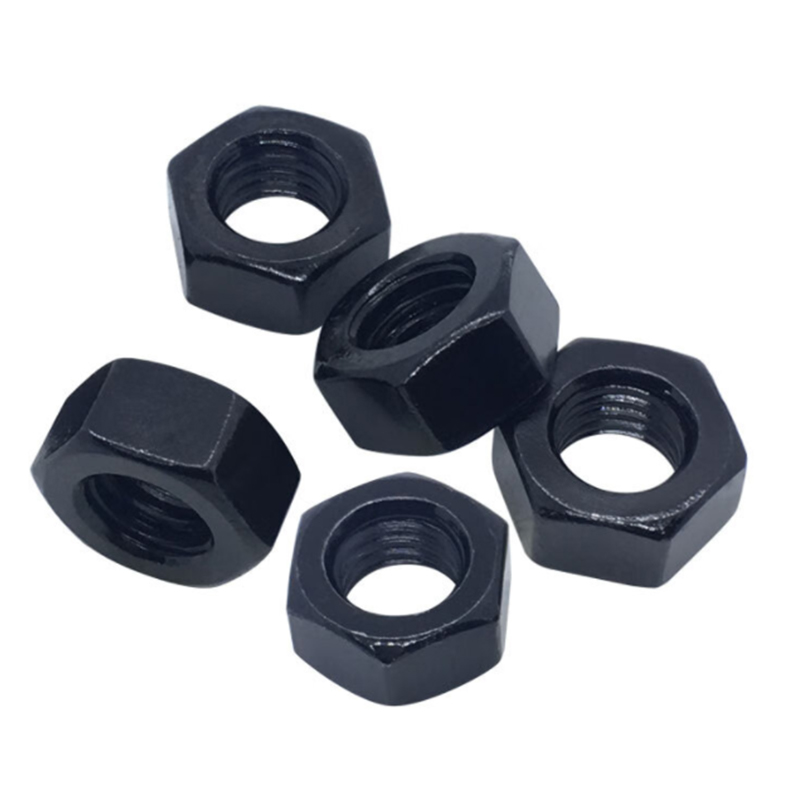
This is the elephant in the room. A standard zinc-plated steel nut is relatively straightforward to recycle—magnet separation, then into the steel melt. The zinc coating vaporizes. But the organic dyes and additional sealants in colored versions? They become contaminants in the melt or create off-gassing. While the metal mass is ultimately recovered, the process is dirtier.
In Europe, with stricter WEEE and ELV directives, this is becoming a real design consideration. We worked on a consumer product where the marketing team insisted on black zinc screws for a sleek look. The recycling consultant on the project flagged it as a complication for end-of-life material recovery. We had to run tests to prove the dye volume was below a certain threshold. It was a hassle that ate up time and money. The lesson: if you’re designing for true circularity, think twice before specifying a colored finish without understanding its decommissioning impact.
There are innovations here, like developing dye systems that burn off cleanly or using inorganic pigments that are less problematic. But these are often proprietary and add further cost. The mainstream market, driven by price, still uses the older chemistries. So when you source, asking the manufacturer about the composition of the dye and its high-temperature behavior isn’t academic—it’s due diligence for lifecycle sustainability.
Case in Point: When Color Adds Real Value
Let’s talk about a positive example, moving beyond theory. In modular construction—pre-fab wall panels, utility racks—different modules use different bolt grades or sizes. Using color to distinguish a Grade 8.8 nut from a 10.9 on-site, especially in dusty or rushed conditions, prevents catastrophic mixing. Here, the color isn’t a nice-to-have; it’s a critical safety and quality control feature. The sustainability payoff is in avoided structural failures, material waste from disassembly, and potential liability.
Another is in maintenance-heavy environments like chemical plants. Piping systems often use color codes for media (yellow for gas, blue for water, etc.). Having nuts and bolts that match the pipe color code aids in rapid, correct maintenance and modifications. The alternative is painting fasteners on-site, which is messy, uses volatile organic compounds, and the paint chips easily. A properly applied colored zinc finish is more durable and eliminates that painting step. In this scenario, the colored nut is the more sustainable choice over its lifecycle.
The key is intentionality. The spec sheet should read not just red zinc nut, but red zinc nut for visual identification of high-strength connections per ASTM F1941 or something similar. The purpose and standard must be documented. This discipline turns a subjective choice into an engineered, and justifiable, component of the design.
So, Are They Sustainable?
There’s no blanket yes or no. The sustainability of colored zinc nuts is entirely application-dependent. They can be a tool for waste prevention and efficiency, or they can be a source of unnecessary complexity and contamination. The judgment call sits with the engineer or specifier.
My rule of thumb, forged from a few expensive lessons: First, challenge the need for color. Is there a non-chemical way to achieve the same goal (like a different head marking)? Second, if color is necessary, invest in quality. A cheap, inconsistent finish will fail and create waste. Partner with a proven manufacturer that controls its process. Third, consider the full lifecycle—from the extra baths in Hebei to the recycling mill in Dortmund. Does the benefit in use phase outweigh the front-end and back-end environmental costs?
In the end, industrial sustainability is about precision. It’s about adding processes only where they deliver disproportionate value. A colored zinc nut, in the right place, is a smart, sustainable choice. In the wrong place, it’s just greenwashing in a very literal, and ironically, non-green sense. The industry’s move should be towards more intelligent specification, not blanket adoption or rejection. It’s in these gritty, component-level decisions that real sustainable manufacturing is built.
Mesedez, utzi mezu bat
-


-
-


Urriatu