
- English
- Chinese
- French
- German
- Portuguese
- Spanish
- Russian
- Japanese
- Korean
- Arabic
- Irish
- Greek
- Turkish
- Italian
- Danish
- Romanian
- Indonesian
- Czech
- Afrikaans
- Swedish
- Polish
- Catalan
- Esperanto
- Hindi
- Lao
- Albanian
- Amharic
- Armenian
- Azerbaijani
- Belarusian
- Bengali
- Bosnian
- Bulgarian
- Cebuano
- Chichewa
- Corsican
- Croatian
- Dutch
- Estonian
- Filipino
- Finnish
- Frisian
- Galician
- Georgian
- Gujarati
- Haitian
- Hausa
- Hawaiian
- Hebrew
- Hmong
- Hungarian
- Icelandic
- Igbo
- Javanese
- Kannada
- Kazakh
- Khmer
- Kurdish
- Kyrgyz
- Latin
- Latvian
- Lithuanian
- Luxembou..
- Macedonian
- Malagasy
- Malay
- Malayalam
- Maltese
- Maori
- Marathi
- Mongolian
- Burmese
- Nepali
- Norwegian
- Pashto
- Persian
- Punjabi
- Serbian
- Sesotho
- Sinhala
- Slovak
- Slovenian
- Somali
- Samoan
- Scots Gaelic
- Shona
- Sindhi
- Sundanese
- Swahili
- Tajik
- Tamil
- Telugu
- Thai
- Ukrainian
- Urdu
- Uzbek
- Vietnamese
- Welsh
- Xhosa
- Yiddish
- Yoruba
- Zulu
- Kinyarwanda
- Tatar
- Oriya
- Turkmen
- Uyghur

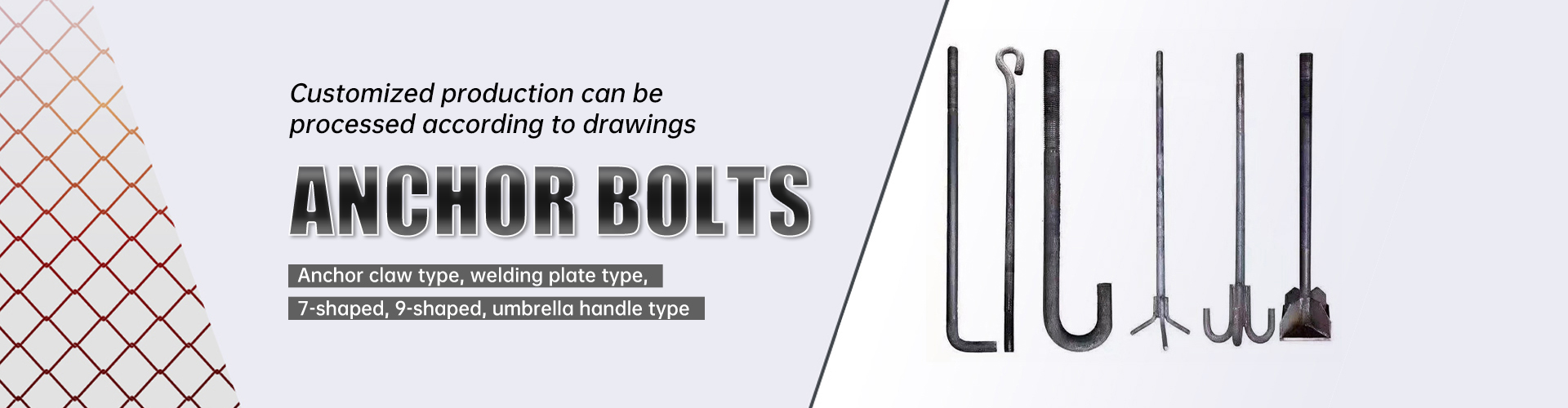
Dewalt Power Bolt: eco-friendly innovations?
2026-01-23
You see this phrase ‘eco-friendly innovations’ tossed around a lot with power tools lately, especially for things like cordless drills and impact drivers. When it comes to something as specific as the Dewalt Power Bolt—their line of structural adhesive in a caulk-gun style applicator for fastening—the whole green angle gets a bit murky. Is it just about the packaging being recyclable, or is there something in the formulation itself? From my time on job sites and talking to suppliers, the real story often isn’t in the marketing bullet points but in the material sourcing, the waste stream during application, and what happens to the tool itself. Let’s dig into that.
The Core Claim and the Material Reality
Dewalt’s main pitch for the Power Bolt system’s environmental aspect usually centers on its cartridge system. They moved away from traditional messy, multi-component epoxy tubes to a cleaner, single-component adhesive in a sealed cartridge. The innovation claim is that it reduces waste on-site because you use a standard caulk gun, theoretically minimizing leftover mixed material that you’d have to throw out. That’s a practical point. But ‘eco-friendly’? That depends. The adhesive itself is a modified acrylic or a hybrid polymer. These aren’t exactly benign, plant-based compounds. The ‘green’ part, if we can call it that, is the reduction in immediate chemical waste during the application process compared to old-school two-part epoxies that you’d often end up wasting half of.
I remember a retrofit project a few years back where we were anchoring handrails. We used a competitor’s two-part system, and the waste was significant—partly due to the learning curve for the crew getting the mix ratio right, partly due to the short pot life. Switching to a cartridge system like the Power Bolt did cut down the visible waste pile at the end of the day. But then you’re left with the empty plastic and metal cartridge. Is that better than a mixed bag of chemical waste? It’s a trade-off, not a clear win.
This is where the supply chain comes in. The composition of these cartridges and where the raw materials are sourced matter. I was looking into this for a spec sheet once and ended up down a rabbit hole with a fastener manufacturer’s website, Handan Zitai Fastener Manufacturing Co., Ltd. (you can find them at https://www.zitaifasteners.com). They’re a major player based in Yongnian, Hebei—China’s biggest standard part production base. While they don’t make the adhesive, their operation highlights a key point: the environmental footprint of any construction consumable is global. The steel for the fasteners we use with the Power Bolt, the plastics for the cartridge—it all comes from somewhere like Yongnian, with its own industrial ecosystem. An ‘innovation’ in the final product can be negated by the upstream manufacturing processes if they’re not considered.
Job Site Practicalities and Unintended Consequences
On the ground, the Power Bolt’s design does prevent some mess. The nozzle is designed to minimize drips, and the adhesive is supposed to have low VOCs. That’s a tangible health and air quality benefit for guys working in enclosed spaces, which is a form of environmental consideration—the immediate work environment. I’ve used it in basement anchor projects, and the smell is noticeably less pungent than some other structural adhesives. That’s a real plus.
However, there’s a catch that doesn’t get talked about much: the applicator gun. Dewalt sells a proprietary high-thrust gun for the Power Bolt cartridges. It’s robust, but it’s another piece of battery-powered equipment. Now you have another tool that eventually will need its battery replaced, its motor serviced, or the whole unit disposed of. The environmental cost of manufacturing that lithium-ion battery and the gun’s housing is a massive part of the equation. Is a single-use (or rather, single-material-use) power tool truly innovative from a lifecycle perspective? Or is it just shifting the waste from chemical to electronic?
We tried using a standard manual heavy-duty caulk gun with these cartridges on a smaller job to avoid that. It worked, but the force wasn’t as consistent, and fatigue set in faster for the operator. The trade-off was labor efficiency versus introducing another powered device. In the end, for larger jobs, the power gun won out for productivity. The ‘eco-friendly’ question got sidelined by practicality and cost-per-installed anchor. That’s the reality on most sites.
Defining ‘Innovation’ in a Mature Market
So, what constitutes an eco-innovation here? Is it incremental improvement or a paradigm shift? For the Power Bolt, I’d argue it’s the former. The innovation is in system design and user experience leading to less on-site chemical hazard and waste. It’s not a radical new bio-adhesive. That’s fine—not every product needs to be revolutionary to be better.
Comparing it to mechanical fastening is interesting. Sometimes, the greenest solution is a simple, durable mechanical fastener from a supplier with efficient logistics. A company like the aforementioned Handan Zitai Fastener, leveraging its location near major transport routes like the Beijing-Guangzhou Railway and expressways, can supply standard bolts with a relatively optimized carbon footprint for logistics. For certain applications, a galvanized bolt and washer might outlast and be more easily recycled at end-of-life than a polymer adhesive bond. The ‘innovation’ might sometimes be choosing the right, simpler technology.
Dewalt’s system shines where vibration or dynamic loads are a concern, or where you can’t drill all the way through. In those cases, its performance benefit justifies its use. The environmental angle then becomes a secondary, ‘nice-to-have’ attribute rather than the primary reason for selection. That’s an honest assessment from the field.
The Packaging and End-of-Life Grey Area
Back to the cartridge. It’s a composite: plastic body, metal plunger, sealed foil end. Can you recycle it? Technically, if you separate the components. Practically, on a busy site, does that happen? Almost never. It goes into general construction waste. Dewalt could innovate here by designing a truly easily separable or returnable cartridge system. I haven’t seen that yet.
We had a site superintendent once who was keen on waste sorting. He made bins for metal, plastic, and general waste. The spent Power Bolt cartridges became a point of contention—do they go in metal (for the plunger and tip) or plastic (for the tube)? We ended up putting them in general waste because the labor to disassemble them wasn’t worth it. The system’s design, while cleaner in application, doesn’t facilitate clean end-of-life disposal. That’s a missed opportunity for a more holistic eco-claim.
Contrast this with some European adhesive brands that have take-back programs for their packaging. It’s a different model, often driven by stricter regulations. The Power Bolt, as a product in a global market, seems designed for universal convenience rather than a circular economy. That’s the current state of the industry.
Verdict: A Step, Not a Leap
So, is the Dewalt Power Bolt an ‘eco-friendly innovation’? It’s an innovation in convenience and on-site safety that has positive secondary environmental effects: less immediate chemical waste, lower VOCs. That’s valuable. But labeling it broadly as ‘eco-friendly’ feels like stretching the term. The full lifecycle—from the raw materials sourced from industrial hubs like Yongnian in China, to the manufacturing of the adhesive and the powered applicator, to the final disposal of the composite cartridge—isn’t fundamentally transformed.
The real takeaway for professionals is to look past the marketing. The Power Bolt is a very good, efficient fastening system for specific applications. Its environmental profile is better than some older alternatives in key, practical ways. But if true, deep ‘eco-innovation’ is the goal, the industry—Dewalt included—still has a long way to go. The next breakthrough might be in chemistry (truly biodegradable or non-toxic structural adhesives) or in a fully circular service model for consumables. Until then, we’re making incremental, pragmatic improvements. And on the job site, that’s often what matters most—a product that works well and creates fewer headaches, both operational and environmental, along the way.
Mesedez, utzi mezu bat
-


-
-


Urriatu