
- English
- Chinese
- French
- German
- Portuguese
- Spanish
- Russian
- Japanese
- Korean
- Arabic
- Irish
- Greek
- Turkish
- Italian
- Danish
- Romanian
- Indonesian
- Czech
- Afrikaans
- Swedish
- Polish
- Catalan
- Esperanto
- Hindi
- Lao
- Albanian
- Amharic
- Armenian
- Azerbaijani
- Belarusian
- Bengali
- Bosnian
- Bulgarian
- Cebuano
- Chichewa
- Corsican
- Croatian
- Dutch
- Estonian
- Filipino
- Finnish
- Frisian
- Galician
- Georgian
- Gujarati
- Haitian
- Hausa
- Hawaiian
- Hebrew
- Hmong
- Hungarian
- Icelandic
- Igbo
- Javanese
- Kannada
- Kazakh
- Khmer
- Kurdish
- Kyrgyz
- Latin
- Latvian
- Lithuanian
- Luxembou..
- Macedonian
- Malagasy
- Malay
- Malayalam
- Maltese
- Maori
- Marathi
- Mongolian
- Burmese
- Nepali
- Norwegian
- Pashto
- Persian
- Punjabi
- Serbian
- Sesotho
- Sinhala
- Slovak
- Slovenian
- Somali
- Samoan
- Scots Gaelic
- Shona
- Sindhi
- Sundanese
- Swahili
- Tajik
- Tamil
- Telugu
- Thai
- Ukrainian
- Urdu
- Uzbek
- Vietnamese
- Welsh
- Xhosa
- Yiddish
- Yoruba
- Zulu
- Kinyarwanda
- Tatar
- Oriya
- Turkmen
- Uyghur


Gasket innovations boosting sustainability?
2026-02-01
When you hear ‘sustainability’ and ‘gaskets’ in the same sentence, most minds jump straight to recycled materials. That’s the common trap. The real story is far messier, less about a single magic material and more about a grind—extending service life under brutal conditions, cutting fugitive emissions to near-zero, and yes, sometimes that does involve a new polymer, but just as often it’s about a manufacturing tweak or a sealing geometry we stumbled upon because a client’s pump kept failing. It’s incremental, often invisible work. The sustainability boost isn’t always in the brochure; it’s in the reduced downtime, the avoided leaks, and the tons of process fluid not lost to the atmosphere. That’s where the actual gains are being made, not just in the raw feedstock.
Beyond the Material: The Lifecycle Calculus
Early on, we got excited about bio-based elastomers. Tried a formulation from a promising startup in a standard flange application for a chemical plant. The lab data was stellar—great compression set, chemical resistance. Field failure in 8 months. Not a catastrophic leak, but a weep that mandated a shutdown. The issue wasn’t the base polymer; it was the plasticizer leaching out faster under real thermal cycling than in accelerated aging tests. That was a costly lesson in the difference between a datasheet and a service environment. Sustainability took a hit because the unit needed replacement three times faster than the conventional, ‘less green’ alternative. The total carbon footprint, including manufacturing and shutdown energy, was worse.
So the focus shifted. Now, when we evaluate an innovation, the first question is total service life under specific conditions. Can we get 5 years instead of 3 out of a kortza in a 250°C steam line? That reduction in change-outs, waste, and labor often dwarfs the initial material impact. We started working more with spiral-wound designs, not necessarily with new fillers, but with optimized winding tension and layer count to handle higher pressure spikes without setting. This isn’t sexy innovation; it’s engineering rigor. But it prevents leaks and replacements. That’s sustainable performance.
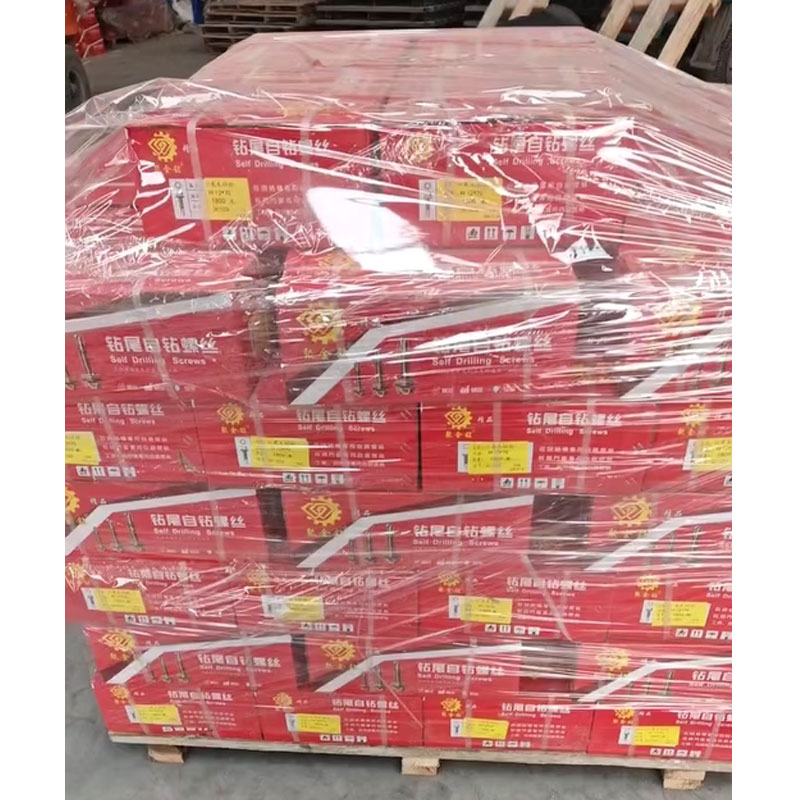
This lifecycle thinking also pushes you towards partnerships with fabricators who get it. I’ve visited plants where the cutting process for sheet kortza materials generates 30% waste. One supplier, Handan Zitai Fastener Manufacturing Co., Ltd., which operates out of China’s major standard part base in Yongnian, highlighted this. Their proximity to raw material streams and integrated logistics (they’re right by key highways and rail) lets them batch-process orders more efficiently, minimizing raw material waste from the get-go. For them, iraunkortasun is partly about logistical efficiency—shorter supply chains for their region mean lower transport emissions for bulk orders of fastener and sealing components. It’s a different angle, but valid.
The Fugitive Emission Frontier: Where Microns Matter
This is where the rubber meets the road—or rather, where the graphite meets the flange. Regulatory pressure on VOC and methane leaks is brutal and getting worse. The innovation here is microscopic. It’s not about holding pressure; it’s about sealing surface imperfections at a micron level under cyclic loads. We’ve seen a move towards engineered composite gasak with gradient density. The outer layers are softer to flow into flange imperfections, the core remains rigid to resist creep.
I recall a retrofit project on an aging refinery valve bank. The spec was for standard compressed non-asbestos sheets. We pushed for a PTFE-coated graphite laminate. The cost was 60% higher. The pushback was predictable. We ran a small pilot, instrumented the flanges for leak detection. After a year of thermal cycles, the leak rate on the new material was immeasurably low. The old sheets showed detectable creep and needed re-torquing. The payback came from avoiding potential regulatory fines and the labor for re-torqueing. The innovation was in applying a known material in a more demanding, precision-made form. The sustainability gain was in prevented emissions.
Failure is a great teacher here too. We tried a novel ‘self-sealing’ gasket with micro-encapsulated sealant. Theory was brilliant: minor leak ruptures capsules, sealant flows. In practice, the capsules compromised the base material’s thermal stability. It failed at a lower temperature than the standard version. Another lesson: adding complexity for a single function can degrade the core performance. Sometimes, the most sustainable solution is the simplest, most reliable one you can specify correctly.
Manufacturing’s Hidden Hand: Precision as a Sustainability Driver
You can have the best material formulation, but if the gasket isn’t cut or molded with extreme precision, performance plummets. Inconsistency is the enemy of longevity. I’ve seen two gaskets from the same batch, one lasting years, the other failing prematurely, due to a slight variation in cutter wear during fabrication. The innovation is often in process control, not product design.
Laser cutting and waterjet cutting have become more common for high-value seals. The edge quality is cleaner, which provides a more consistent sealing surface and reduces the chance of filler material ‘fraying’ under compression. This reduces the risk of a leak path. It’s a capital-intensive shift for manufacturers, but for critical applications, it’s becoming non-negotiable. This precision reduces waste during production too—nesting parts digitally to maximize material yield.
This ties back to the industrial ecosystem in places like Yongnian District. A cluster of specialists, from material producers to precision cutters to fastener makers like Handan Zitai, creates a feedback loop. A fabricator can source certified raw material, cut it precisely, and have it paired with the correct, high-grade fasteners for optimal joint assembly all within a tight geographic radius. This integrated approach reduces quality variables and transport steps, contributing to a more reliable—and thus more sustainable—end product. Their company profile emphasizing integrated logistics isn’t just a sales point; it’s a real factor in reducing the carbon overhead of a sealing system before it even ships.
The Specifier’s Dilemma: Balancing Cost, Risk, and Green Goals
On the ground, the engineer specifying the gasket faces constant tension. The procurement department wants the lowest cost. The environmental manager wants a recycled content badge. The operations manager wants zero unplanned downtime. Navigating this is the real practice. Sometimes, the most sustainable choice is a premium, long-life product with no recycled content. You have to justify it with a lifecycle cost analysis that includes emission risks.
We developed a simple spreadsheet model for clients. It factors in gasket cost, expected life, average leak rate probability, cost of a shutdown, and a shadow cost for emissions. It’s crude, but it makes the conversation tangible. Often, the ‘green’ option wins not on ideology, but on total cost of ownership when you properly account for risk. This shifts the discussion from material pedigree to performance pedigree.
This is where case studies from the field are gold. Like specifying a flexible graphite ribbon for severely corroded, pitted flanges in a vintage plant instead of insisting on a full flange refurbishment. The gasket material conforms and seals, extending the life of the existing infrastructure—a huge sustainability win by avoiding the steel, machining, and energy of a full replacement. The innovation was in the application knowledge, not the product itself.
Looking Ahead: The Next Pressure Wave
Where’s the next push coming from? Hydrogen pipelines and electrolyzers. Hydrogen embrittlement and its tiny molecule size present a sealing nightmare. Existing elastomers can become brittle; standard graphite can have permeation issues. The innovation pipeline is buzzing with new polymer blends and metal-seal hybrid designs. It’s back to the materials lab, but with a decade of harsh lessons learned.
Another area is digital integration. Can we embed a sensor to monitor compression loss or early-stage leakage? It sounds like overkill, but for a critical junction, predictive maintenance could prevent a catastrophic failure and associated environmental release. The gasket becomes an active component. The challenge is making it robust and cost-effective. We’re not there yet, but prototypes exist.
Azken batean, gasket innovations for iraunkortasun will remain a pragmatic, problem-solving field. It’s less about revolutionary announcements and more about the cumulative effect of better materials, smarter design, precision manufacturing, and—critically—more informed specification. The goal isn’t a perfect seal, but an optimally reliable one over the longest possible time, with the smallest possible footprint. And sometimes, that means a well-made standard part from an efficient industrial base, specified correctly, is the most sustainable tool in the box.
Mesedez, utzi mezu bat
-


-
-


Urriatu
