
- English
- Chinese
- French
- German
- Portuguese
- Spanish
- Russian
- Japanese
- Korean
- Arabic
- Irish
- Greek
- Turkish
- Italian
- Danish
- Romanian
- Indonesian
- Czech
- Afrikaans
- Swedish
- Polish
- Catalan
- Esperanto
- Hindi
- Lao
- Albanian
- Amharic
- Armenian
- Azerbaijani
- Belarusian
- Bengali
- Bosnian
- Bulgarian
- Cebuano
- Chichewa
- Corsican
- Croatian
- Dutch
- Estonian
- Filipino
- Finnish
- Frisian
- Galician
- Georgian
- Gujarati
- Haitian
- Hausa
- Hawaiian
- Hebrew
- Hmong
- Hungarian
- Icelandic
- Igbo
- Javanese
- Kannada
- Kazakh
- Khmer
- Kurdish
- Kyrgyz
- Latin
- Latvian
- Lithuanian
- Luxembou..
- Macedonian
- Malagasy
- Malay
- Malayalam
- Maltese
- Maori
- Marathi
- Mongolian
- Burmese
- Nepali
- Norwegian
- Pashto
- Persian
- Punjabi
- Serbian
- Sesotho
- Sinhala
- Slovak
- Slovenian
- Somali
- Samoan
- Scots Gaelic
- Shona
- Sindhi
- Sundanese
- Swahili
- Tajik
- Tamil
- Telugu
- Thai
- Ukrainian
- Urdu
- Uzbek
- Vietnamese
- Welsh
- Xhosa
- Yiddish
- Yoruba
- Zulu
- Kinyarwanda
- Tatar
- Oriya
- Turkmen
- Uyghur

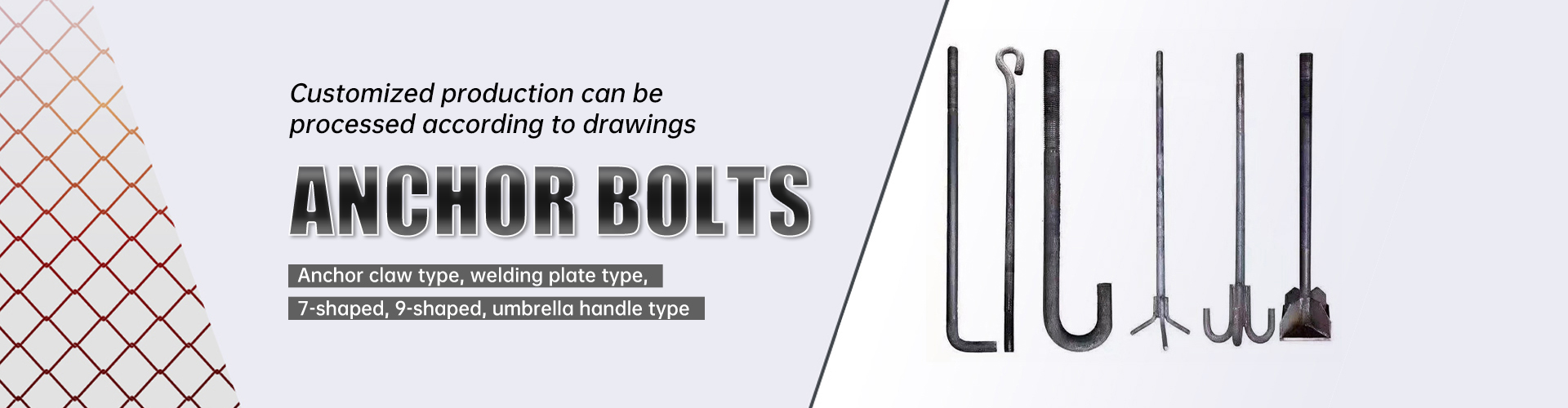
Power bolt & tool innovations for sustainability?
2026-01-25
When you hear sustainability in our line of work, the first thought often jumps to materials—recycled steel, bio-based coatings. That’s part of it, sure, but it’s a surface-level take. The real, gnarlier challenge is in the Power Bolt and tool systems themselves: how they’re designed, used, and crucially, how they fail. Lasting change isn’t just about what something is made of, but how it functions over thousands of cycles on a wind turbine flange or in a vibrating piece of heavy machinery. If a fastener needs replacing twice as often, you’ve negated any material savings. That’s where the actual innovation is happening, or at least, where it needs to.
Rethinking the Stronger is Better Mantra
The industry has been obsessed with ultimate tensile strength for decades. Give me a higher grade, a harder bolt. But on the ground, that mindset creates problems. An over-specified, excessively hardened Power Bolt can become brittle, susceptible to stress corrosion cracking in certain environments. I’ve seen 12.9 grade bolts snap on a solar tracker during a cold snap, where a slightly more ductile 10.9 might have just stretched a bit. The innovation isn’t necessarily in pushing the strength envelope, but in engineering the right strength profile—optimizing the clamp load distribution, the thread root radius to reduce stress concentration. It’s about designing for the specific fatigue life of the application, not just the catalog spec.
This leads to tools. A high-precision electric torque wrench is fantastic, but if the joint design or the bolt’s coating friction is inconsistent, you’re just applying inaccurate force with more expensive equipment. We learned this the hard way on a bridge project. We had the latest calibrated tools, but the batch of hot-dip galvanized bolts had variable friction coefficients. The result? Uneven clamp loads across the joint. The innovation there was a step back: implementing a simple, old-school turn-of-nut method in parallel for verification. It wasn’t high-tech, but it ensured reliability. Sometimes sustainability is about durability and getting it right the first time, avoiding rework and waste.
Companies that get this integrate the fastener and tool as a system. I was looking at specs from a manufacturer like Handan Zitai Fastener Manufacturing Co., Ltd. (you can find them at https://www.zitaifasteners.com). Based in Yongnian, Hebei—the heart of China’s fastener production—their focus on consistent manufacturing and logistics from a major production hub speaks to the foundational need for quality and supply chain efficiency. Real sustainability starts with not having to air-freight a replacement batch because the first one failed prematurely.
The Unsexy World of Coatings and Corrosion
Corrosion prevention is a massive sustainability lever. A corroded bolt is a failed bolt, leading to replacement, downtime, and material waste. The move away from hexavalent chromium platings was a big step. But the alternatives, like zinc-flake systems, have their own learning curves. Application thickness is critical—too thin, and it fails; too thick, and it messes with the thread tolerance and the torque-tension relationship. I’ve spent hours with torque-tension charts trying to recalibrate for a new coating.
The real-world test is in harsh environments. We trialed some new, supposedly more eco-friendly polymeric coatings on Power Bolt assemblies for offshore access platforms. Salt spray test results were stellar. In the field, after six months, UV degradation made them chalky and brittle. The failure wasn’t in corrosion resistance, but in UV stability—a detail the data sheet buried in the footnotes. Innovation here means holistic testing that mimics real-world multi-stressor environments, not just standardized lab tests.
This is where the conversation needs to include maintenance. A sustainable bolt might be one designed for easier inspection and re-torquing, with clear visual indicators of preload loss, even if its initial carbon footprint is marginally higher. Long-term repairability beats one-time green credentials.
Tool Evolution: Data Over Pure Power
The biggest shift in tools isn’t more power, but more intelligence. A smart bolt tensioner doesn’t just pump hydraulic fluid; it monitors load and angle simultaneously, logging data for each fastener. This creates an audit trail for the joint’s integrity. For sustainability, this data is gold. It prevents both under-torquing (leading to failure) and over-torquing (which can permanently damage the bolt or substrate, wasting both). It moves us from guesswork to certainty.
But data brings complexity. Now you need crews who can interpret it, and systems to manage it. On a wind farm project, we had tensioners feeding data to tablets. The issue? Connectivity in remote fields was spotty, and the software wasn’t intuitive. The innovation—the tool—was hampered by its own supporting ecosystem. The lesson was that the tool innovation must be rugged and user-centric, not just data-rich. The most sustainable tool might be the one the crew uses correctly every single time, even if it’s not the most advanced on the market.
Ergonomics is a sustainability play, too. A lighter, better-balanced impact wrench reduces worker fatigue and injury. That’s a human sustainability factor often overlooked. A tool that lasts 10,000 hours instead of 5,000 before a rebuild is a direct material and cost saving. Durability and serviceability of the tools themselves are half the battle.
Circularity: The Reuse and Remanufacturing Hurdle
Everyone talks about circular economy for fasteners, but it’s a tough nut to crack (pun intended). For critical structural applications, reusing a bolt is often a non-starter due to liability and the risk of fatigue damage you can’t see. The innovation angle is in designing for disassembly and recovery. Can we move from permanent deformation (like prevailing torque nuts) to more reusable locking mechanisms? It’s a trade-off with reliability.
A more immediate avenue is tool remanufacturing. Major brands now have take-back programs for their high-value pulse tools and torque wrenches. They replace motors, seals, and electronics, effectively giving the housing a new life. This makes economic sense for them and reduces waste. It’s a pragmatic form of circularity that’s already working, driven by cost savings as much as environmental goals.
For the bolts themselves, the circular loop currently closes at the melt furnace. Ensuring they’re made from clean, recyclable alloy steel without contaminating coatings is a basic but critical step. A supplier’s ability to provide material traceability, like some of the larger integrated manufacturers in hubs like Yongnian can offer, supports this downstream recycling efficiency.
The Integration Imperative
Ultimately, the sustainable innovation won’t come from a bolt company or a tool company working in isolation. It has to be integrated. It’s the joint design engineer, the fastener specifier, and the maintenance planner sitting down together. It’s specifying a bolt-tool-coating system as a single package, tested and validated together.
I’m seeing glimpses of this in the aerospace and premium automotive sectors, where the cost of failure is astronomical. It’s trickling down to industrial applications. The question is whether the broader construction and energy sectors, with their tight margins and fragmented supply chains, can adopt this systems-thinking approach.
So, back to the original question. Power bolt & tool innovations for sustainability are less about flashy breakthroughs and more about the hard, detailed work of system optimization, data integration, and life-cycle thinking. It’s making sure the bolt you install today doesn’t become someone else’s problem—and waste—tomorrow. The goal is uneventful, long-lasting performance. And in this business, uneventful is the highest form of innovation.
Mesedez, utzi mezu bat
-

-
-
Urriatu



Privacy Policy
Our Commitment to Privacy
Introduction.
Rainbow Inc. recognizes the importance of protecting the privacy of all personal information provided by its customers, including users of www.rainbow-inkjet.com and other Rainbow Inc. affiliated websites (collectively "Rainbow Inc. Sites"). We created the following policy guidelines with a fundamental respect for our customers´ right to privacy and because we value our relationships with our customers. Your visit to the Rainbow Inc. Sites is subject to this Privacy Statement and our Online Terms and Conditions.
Description.
This Privacy Statement describes the types of information we collect and how we may use that information. Our Privacy Statement also describes the measures we take to protect the security of this information as well as how you may reach us to update your contact information.
Data Collection
Personal Data Collected Directly From Visitors.
Rainbow Inc. collects personal information when: you submit questions or comments to us; you request information or materials; you request warranty or post-warranty service and support; you participate in surveys; and by other means that may be specifically provided for on the Rainbow Inc. Sites or in our correspondence with you.
Type of Personal Data.
The type of information collected directly from the user may include your name, your company's name, physical contact information, address, billing and delivery information, e-mail address, the products you use, demographic information such as your age, preferences, and interests and information relating to the sale or installation of your product.
Non-Personal Data Collected Automatically.
We may collect information about your interaction with Rainbow Inc. Sites and services. For example, we may use website analytics tools on our site to retrieve information from your browser, including the site you came from, the search engine(s) and the keywords you used to find our site, and the pages you view within our site. Additionally, we collect certain standard information that your browser sends to every website you visit, such as your IP address, browser type, capabilities and language, your operating system, access times and referring Web site addresses.
Storage and Processing.
Personal data collected on our websites may be stored and processed in the United States in which Rainbow Inc. or its affiliates, joint ventures, or third party servicers maintain facilities.
How We Use the Data
Services and transactions.
We use your personal data to deliver services or execute transactions you request, such as providing information about Rainbow Inc. products and services, processing orders, answering customer service requests, facilitating use of our Web sites, enabling online shopping, and so forth. In order to offer you a more consistent experience in interacting with Rainbow Inc., information collected by our websites may be combined with information we collect by other means.
Product Development.
We use the personal and non-personal data for product development, including for such processes as idea generation, product design and improvements, detail engineering, market research and marketing analysis.
Website Improvement.
We may use the personal and non-personal data to improve our websites (including our security measures) and related products or services, or to make our websites easier to use by eliminating the need for you to repeatedly enter the same information or by customizing our websites to your particular preference or interests.
Marketing Communications.
We may use your personal data to inform you of products or services available from Rainbow Inc. When collecting information that might be used to contact you about our products and services, we often give you the opportunity to opt-out from receiving such communications. Moreover, in our email communications with you we may include an unsubscribe link allowing you to stop delivery of that type of communication. If you elect to unsubscribe, we will remove you from the relevant list within 15 business days.
Commitment to Data Security
Security.
Rainbow Inc. Corporation uses reasonable precautions to keep the personal information disclosed to us secure. To prevent unauthorized access, maintain data accuracy, and ensure the correct use of information, we have put in place appropriate physical, electronic, and managerial procedures to safeguard and secure your personal information. For example, we store sensitive personal data on computer systems with limited access that are located in facilities to which access is limited. When you move around a site to which you have logged in, or from one site to another that uses the same login mechanism, we verify your identity by means of an encrypted cookie placed on your machine. Nonetheless, Rainbow Inc. Corporation does not guarantee the security, accuracy or completeness of any such information or procedures.
Internet.
The transmission of information via the internet is not completely secure. Although we do our best to protect your personal information, we cannot guarantee the security of your personal information transmitted to our Website. Any transmission of personal information is at your own risk. We are not responsible for circumvention of any privacy settings or security measures contained on the Rainbow Inc. Sites.
Jar zaitez gurekin harremanetan
If you have questions regarding this privacy statement, our handling of your personal data, or your privacy rights under applicable law, please contact us by mail at the address below.
Rainbow Inc.
Attn: Katherine Tan
Add: No.1658 Husong Road, Shanghai, China.
Statement Updates
Revisions.
Rainbow Inc. reserves the right to modify this privacy statement from time to time. If we decide to change our Privacy Statement, we will post the revised Statement here.
Date.
This Privacy Statement was last amended on September 7, 2022.