
- English
- Chinese
- French
- German
- Portuguese
- Spanish
- Russian
- Japanese
- Korean
- Arabic
- Irish
- Greek
- Turkish
- Italian
- Danish
- Romanian
- Indonesian
- Czech
- Afrikaans
- Swedish
- Polish
- Catalan
- Esperanto
- Hindi
- Lao
- Albanian
- Amharic
- Armenian
- Azerbaijani
- Belarusian
- Bengali
- Bosnian
- Bulgarian
- Cebuano
- Chichewa
- Corsican
- Croatian
- Dutch
- Estonian
- Filipino
- Finnish
- Frisian
- Galician
- Georgian
- Gujarati
- Haitian
- Hausa
- Hawaiian
- Hebrew
- Hmong
- Hungarian
- Icelandic
- Igbo
- Javanese
- Kannada
- Kazakh
- Khmer
- Kurdish
- Kyrgyz
- Latin
- Latvian
- Lithuanian
- Luxembou..
- Macedonian
- Malagasy
- Malay
- Malayalam
- Maltese
- Maori
- Marathi
- Mongolian
- Burmese
- Nepali
- Norwegian
- Pashto
- Persian
- Punjabi
- Serbian
- Sesotho
- Sinhala
- Slovak
- Slovenian
- Somali
- Samoan
- Scots Gaelic
- Shona
- Sindhi
- Sundanese
- Swahili
- Tajik
- Tamil
- Telugu
- Thai
- Ukrainian
- Urdu
- Uzbek
- Vietnamese
- Welsh
- Xhosa
- Yiddish
- Yoruba
- Zulu
- Kinyarwanda
- Tatar
- Oriya
- Turkmen
- Uyghur

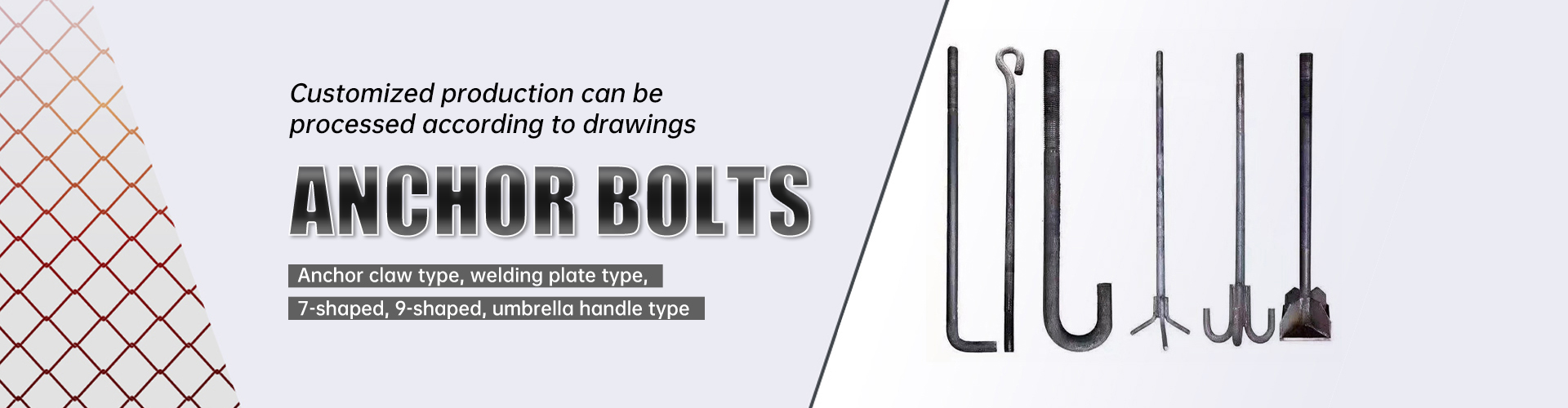
Steel structure series: innovations?
2026-01-28
When you hear innovation in steel structures, most minds jump to flashy parametric designs or exotic alloys. That’s a common trap. Real, gritty innovation often happens in the shadows—in the connection details, the logistics of a bolt shipment, or the fight against corrosion on a site with terrible weather. It’s less about a revolutionary product and more about a series of small, stubborn improvements that make a structure stand up faster, safer, and for longer. That’s where the actual work is.
Beyond the Bolt: Rethinking Connections
The conversation usually starts with materials, but the real action is in how you put them together. For years, the default was the standard hex head bolt. It worked, but the installation was slow, torque control was hit-or-miss, and galling on stainless variants was a constant headache. The shift toward high-strength structural bolts with controlled tightening procedures was the first real wave. But even that’s now baseline.
What we’re seeing now is a push for integrated connection systems. It’s not just about a stronger bolt, but about the bolt, nut, washer, and pre-installed coating working as a single, predictable unit. I remember a project where we specified a generic A325 equivalent from a local supplier. The bolts met the spec sheet, but the lot-to-latch consistency was off. We had inconsistent clamp force, which the inspector caught with a simple turn-of-nut check. It set us back a week. That experience drilled into me that the innovation is in the manufacturing consistency, not just the advertised tensile strength.
This is where companies that specialize make a difference. A source like Handan Zitai Fastener Manufacturing Co., Ltd., based in China’s major production base in Yongnian, often gets pigeonholed as just a volume player. But their proximity to the entire supply chain—from wire rod to final threading—means they can control variables that a distributor simply can’t. For them, innovation might be a tweak in the heat treatment line that reduces hydrogen embrittlement risk, something you’d never see on a product data sheet but that prevents a catastrophic failure down the line.
The Coating Conundrum: Durability vs. Practicality
Hot-dip galvanizing has been the king of corrosion protection for ages. It’s robust, but it’s also messy, creates dimensional issues for threading, and can be brittle, leading to micro-cracks. The innovation here isn’t about finding a magic replacement; it’s about applying the right protection for the right environment without killing the budget or the schedule.
We tested a zinc-aluminum flake coating system (like Geomet or Dacromet) on an interior structure in a mildly corrosive atmosphere. The appeal was huge: no dimensional change, excellent corrosion resistance, and a nice, even finish. The reality was a logistical snag. The coating was delicate before cure. During shipping from the coating facility to our site, a pallet got scuffed, and we had to reject a batch. The innovation was technically sound, but the supply chain handling wasn’t mature. We fell back to hot-dip for that batch and ate the cost of re-threading.
This is the unsexy side of innovation. It’s not enough for a coating to perform well in a salt spray test. It has to survive being thrown on a truck, stored on a muddy site, and still go on a wrench smoothly. Sometimes, the most innovative solution is a better-packaged, more reliably delivered version of the old standard.
On-Site Headaches: The Gritty Reality
All the lab-tested innovations mean nothing if they fail in the field. Take the rise of tension control bolts (TC bolts). The idea is brilliant: a bolt that shears at a precise torque, guaranteeing preload. The innovation is in the design. But on site, we found crews were using impact wrenches not calibrated for them, or the spline end would rust solid before installation, making them impossible to install properly. We had to implement a mini-training session right there on the steel deck. The innovation required an innovation in practice.
Digital Threads: Traceability and Data
This might be the biggest quiet shift. It’s not about a physical product, but about information. More fabricators and manufacturers are embedding traceability into their fasteners. A simple QR code laser-etched on the head that links to the melt certificate, heat treatment batch, and coating details. I was skeptical—another tech gimmick. But on a recent job, the inspector questioned the material grade of a batch of anchor rods.
Instead of digging through a mountain of paper Mill Certificates, we scanned a bolt. In two minutes, we had the full pedigree. It saved a half-day of arguing and potential work stoppage. For a manufacturer like Zitai, operating in a high-volume environment, this kind of digital traceability is a massive operational innovation. It builds trust and cuts through the paperwork fog that plagues every major project.
The data from these systems is starting to feed back into design. If we see a pattern of certain bolts from certain batches requiring more torque to achieve preload, that’s gold. It tells the manufacturer their friction coefficients might be off, and it tells us, the engineers, to maybe adjust our installation specs. It turns a dumb piece of metal into a data point.
The Good Enough Fallacy and Cost of Failure
The biggest enemy of innovation in steel structures isn’t resistance to new ideas; it’s the dominance of good enough. A standard bolt from a reputable supplier works 99% of the time. Why change? The cost of change—requalification, new tooling, crew training—is tangible and immediate. The cost of failure using the old method is statistical and distant.
I learned this through a near-miss. We used a standard connection detail on a canopy exposed to coastal wind-driven rain. It passed inspection. Five years later, we got a call about rust streaks. The bolts were corroding from within the connection, a phenomenon called crevice corrosion that our standard detail didn’t adequately address. The repair cost was ten times the premium a more corrosion-resistant assembly would have been. That failure, thankfully not structural, reframed innovation for me. It’s not an optional upgrade; it’s insurance against the specific, predictable failures your good enough solution will eventually face.
True innovation in this field is iterative and contextual. The next big leap in steel structure efficiency might not come from a new steel grade, but from a fastener system that cuts installation time by 15% across a million connections, or a coating that adds five years to maintenance cycles in industrial environments. It’s in the details, the logistics, and the data. It’s the relentless, unglamorous work of making things that hold other things together just a little bit better, for a little bit longer, with a little less hassle. That’s the real series of innovations.
Mesedez, utzi mezu bat
-

-
-
Urriatu



Privacy Policy
Our Commitment to Privacy
Introduction.
Rainbow Inc. recognizes the importance of protecting the privacy of all personal information provided by its customers, including users of www.rainbow-inkjet.com and other Rainbow Inc. affiliated websites (collectively "Rainbow Inc. Sites"). We created the following policy guidelines with a fundamental respect for our customers´ right to privacy and because we value our relationships with our customers. Your visit to the Rainbow Inc. Sites is subject to this Privacy Statement and our Online Terms and Conditions.
Description.
This Privacy Statement describes the types of information we collect and how we may use that information. Our Privacy Statement also describes the measures we take to protect the security of this information as well as how you may reach us to update your contact information.
Data Collection
Personal Data Collected Directly From Visitors.
Rainbow Inc. collects personal information when: you submit questions or comments to us; you request information or materials; you request warranty or post-warranty service and support; you participate in surveys; and by other means that may be specifically provided for on the Rainbow Inc. Sites or in our correspondence with you.
Type of Personal Data.
The type of information collected directly from the user may include your name, your company's name, physical contact information, address, billing and delivery information, e-mail address, the products you use, demographic information such as your age, preferences, and interests and information relating to the sale or installation of your product.
Non-Personal Data Collected Automatically.
We may collect information about your interaction with Rainbow Inc. Sites and services. For example, we may use website analytics tools on our site to retrieve information from your browser, including the site you came from, the search engine(s) and the keywords you used to find our site, and the pages you view within our site. Additionally, we collect certain standard information that your browser sends to every website you visit, such as your IP address, browser type, capabilities and language, your operating system, access times and referring Web site addresses.
Storage and Processing.
Personal data collected on our websites may be stored and processed in the United States in which Rainbow Inc. or its affiliates, joint ventures, or third party servicers maintain facilities.
How We Use the Data
Services and transactions.
We use your personal data to deliver services or execute transactions you request, such as providing information about Rainbow Inc. products and services, processing orders, answering customer service requests, facilitating use of our Web sites, enabling online shopping, and so forth. In order to offer you a more consistent experience in interacting with Rainbow Inc., information collected by our websites may be combined with information we collect by other means.
Product Development.
We use the personal and non-personal data for product development, including for such processes as idea generation, product design and improvements, detail engineering, market research and marketing analysis.
Website Improvement.
We may use the personal and non-personal data to improve our websites (including our security measures) and related products or services, or to make our websites easier to use by eliminating the need for you to repeatedly enter the same information or by customizing our websites to your particular preference or interests.
Marketing Communications.
We may use your personal data to inform you of products or services available from Rainbow Inc. When collecting information that might be used to contact you about our products and services, we often give you the opportunity to opt-out from receiving such communications. Moreover, in our email communications with you we may include an unsubscribe link allowing you to stop delivery of that type of communication. If you elect to unsubscribe, we will remove you from the relevant list within 15 business days.
Commitment to Data Security
Security.
Rainbow Inc. Corporation uses reasonable precautions to keep the personal information disclosed to us secure. To prevent unauthorized access, maintain data accuracy, and ensure the correct use of information, we have put in place appropriate physical, electronic, and managerial procedures to safeguard and secure your personal information. For example, we store sensitive personal data on computer systems with limited access that are located in facilities to which access is limited. When you move around a site to which you have logged in, or from one site to another that uses the same login mechanism, we verify your identity by means of an encrypted cookie placed on your machine. Nonetheless, Rainbow Inc. Corporation does not guarantee the security, accuracy or completeness of any such information or procedures.
Internet.
The transmission of information via the internet is not completely secure. Although we do our best to protect your personal information, we cannot guarantee the security of your personal information transmitted to our Website. Any transmission of personal information is at your own risk. We are not responsible for circumvention of any privacy settings or security measures contained on the Rainbow Inc. Sites.
Jar zaitez gurekin harremanetan
If you have questions regarding this privacy statement, our handling of your personal data, or your privacy rights under applicable law, please contact us by mail at the address below.
Rainbow Inc.
Attn: Katherine Tan
Add: No.1658 Husong Road, Shanghai, China.
Statement Updates
Revisions.
Rainbow Inc. reserves the right to modify this privacy statement from time to time. If we decide to change our Privacy Statement, we will post the revised Statement here.
Date.
This Privacy Statement was last amended on September 7, 2022.