
- English
- Chinese
- French
- German
- Portuguese
- Spanish
- Russian
- Japanese
- Korean
- Arabic
- Irish
- Greek
- Turkish
- Italian
- Danish
- Romanian
- Indonesian
- Czech
- Afrikaans
- Swedish
- Polish
- Basque
- Catalan
- Esperanto
- Hindi
- Lao
- Albanian
- Amharic
- Armenian
- Azerbaijani
- Belarusian
- Bengali
- Bosnian
- Bulgarian
- Cebuano
- Chichewa
- Corsican
- Croatian
- Dutch
- Estonian
- Filipino
- Finnish
- Frisian
- Galician
- Georgian
- Gujarati
- Hausa
- Hawaiian
- Hebrew
- Hmong
- Hungarian
- Icelandic
- Igbo
- Javanese
- Kannada
- Kazakh
- Khmer
- Kurdish
- Kyrgyz
- Latin
- Latvian
- Lithuanian
- Luxembou..
- Macedonian
- Malagasy
- Malay
- Malayalam
- Maltese
- Maori
- Marathi
- Mongolian
- Burmese
- Nepali
- Norwegian
- Pashto
- Persian
- Punjabi
- Serbian
- Sesotho
- Sinhala
- Slovak
- Slovenian
- Somali
- Samoan
- Scots Gaelic
- Shona
- Sindhi
- Sundanese
- Swahili
- Tajik
- Tamil
- Telugu
- Thai
- Ukrainian
- Urdu
- Uzbek
- Vietnamese
- Welsh
- Xhosa
- Yiddish
- Yoruba
- Zulu
- Kinyarwanda
- Tatar
- Oriya
- Turkmen
- Uyghur


How do turnbuckle bolts enhance sustainability?
2026-03-09
When you hear ‘sustainability’ in construction or rigging, most minds jump to solar panels or recycled steel. Rarely does anyone think about a humble turnbuckle bolt. That’s the first misconception. The real link isn’t about the material itself, but how its design alters the entire lifecycle of a structure. It’s about precision tensioning, longevity, and reducing waste through adjustability—things you only appreciate after seeing a project fail because someone used a fixed-length solution where movement was inevitable.
The Core Principle: Adjustability Over Replacement
In practice, sustainability often boils down to using less and for longer. A turnbuckle’s primary function is to provide fine-tuning of tension in cables, rods, or structural ties. Without this adjustability, systems are static. When thermal expansion, settling, or dynamic loads occur—and they always do—the options are limited: either the component is over-engineered with massive safety margins (wasting material) or it fails, requiring partial or full replacement. I recall a warehouse canopy project where the client insisted on fixed brackets for the support cables. Within two years, seasonal movement caused fatigue cracks at the connection points. The retrofit used turnbuckle bolts to allow for seasonal adjustment. That canopy is still standing fifteen years later. The initial ‘cheaper’ fix generated tons of waste from the replaced steel and concrete.
The adjustability factor extends the service life dramatically. It turns a static assembly into a maintainable one. You’re not just building; you’re building in a maintenance and adaptation protocol. This is a fundamental shift in thinking for many engineers who are trained to calculate for a fixed state. The sustainable gain is in the avoided emissions from manufacturing, transporting, and installing replacement parts down the line.
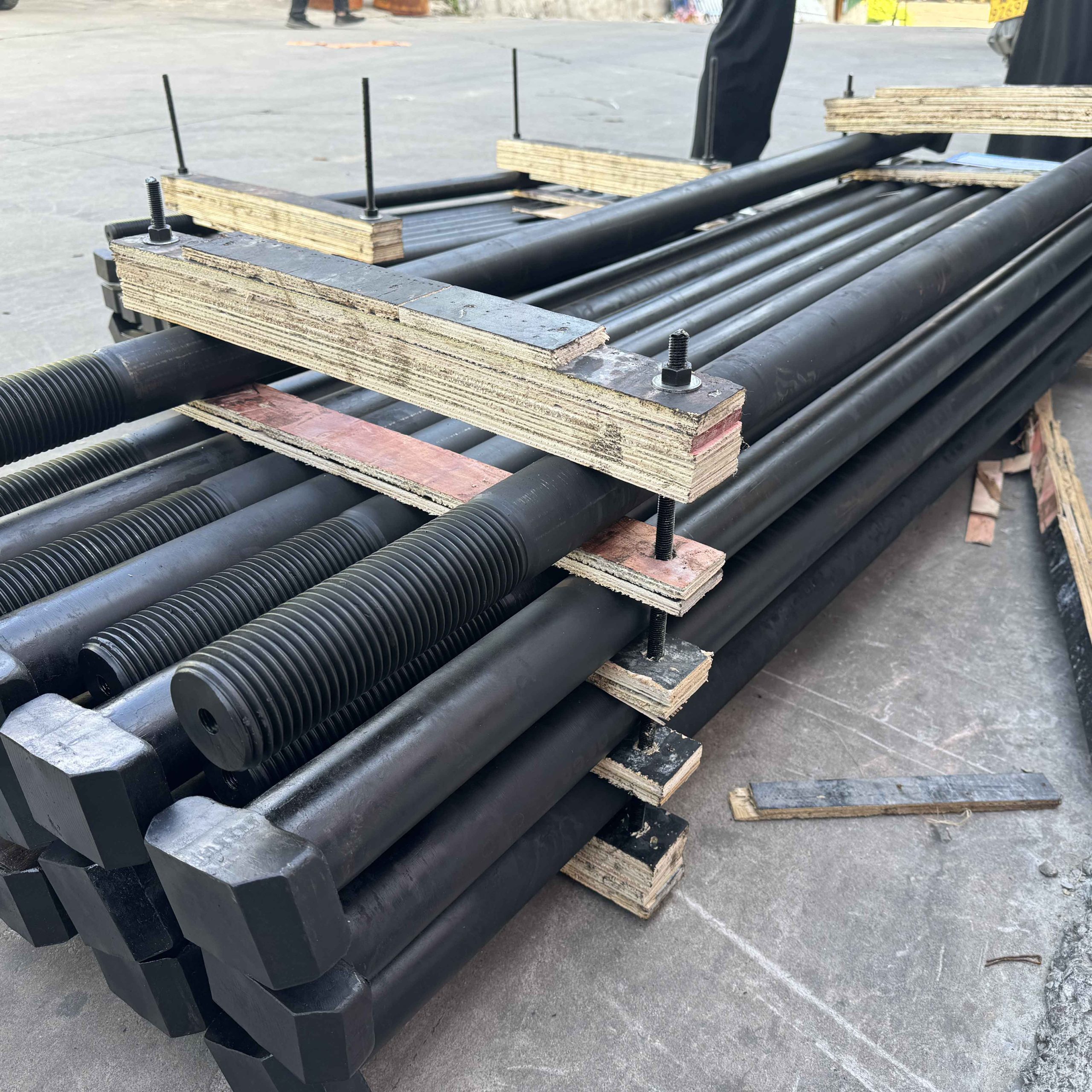
There’s a nuance here often missed: the quality of the threading and the corrosion protection. An adjuster that seizes up is worse than useless. We’ve all encountered cheap turnbuckles that corrode shut after one winter, rendering their key feature null. That’s why sourcing from specialized manufacturers matters. For instance, in a region like Yongnian in Hebei, which is a colossal hub for fastener production, the focus on process and material quality is intense due to sheer market competition. A company like Handan Zitai Fastener Manufacturing Co., Ltd., operating from that major production base, typically has the infrastructure to produce the consistent, high-grade threads and coatings—like hot-dip galvanizing—that prevent seizure. This reliability is a silent sustainability driver.
Material Efficiency and Load Optimization
Let’s talk about material use. In a traditional fixed-length tension system, you often have to overspecify the diameter of rods or cables to account for imperfect installation or uncalculated load shifts. This is inefficient. A turnbuckle allows you to install the system and then dial in the exact, optimal tension. This means each component in the chain can be sized more accurately for its actual duty, not a hypothetical worst-case that adds 20-30% extra material. I’ve seen this in tower guying applications. By using a turnbuckle to achieve perfect tension post-installation, we could often downgrade cable diameter by a size, saving hundreds of kilos of steel per tower.
This optimization ripples through the supply chain. Less raw material mined, less energy for processing and rolling, less fuel for transportation. It’s a classic ‘less is more’ scenario, but it requires the confidence that the adjustment mechanism won’t be the weak point. The forging and machining quality of the turnbuckle body and its bolts are critical. A failure here negates all theoretical gains.
There’s a practical challenge, though. Achieving this optimization requires skilled installation. An installer who cranks the turnbuckle to its mechanical limit thinking ‘tighter is better’ can induce premature failure. Training is part of the sustainable equation too. It’s not just about the product in the box.
Facilitating Deconstruction and Reuse
A more forward-thinking aspect is design for deconstruction (DfD). How many structural systems are welded or grouted into place, destined for the landfill at end-of-life? A connection using a turnbuckle bolt is inherently demountable. In temporary structures—stage rigging, exhibition halls, event tents—this is standard. But the principle is creeping into permanent building design. We’re exploring systems where structural cross-bracing in adaptive reuse projects is tensioned with turnbuckles. When the building needs to be reconfigured in 30 years, those steel members can be unbolted, retensioned, and reused elsewhere. The turnbuckle is the key that unlocks that reuse loop.
This isn’t just theoretical. I was involved in a project dismantling an old transmission tower for a rail upgrade. The original turnbuckles in the guy wires, though rusted, were still functional. After cleaning and re-galvanizing, about 70% were redeployed on the new alignment. The client saved costs, but more importantly, the embodied carbon in those forged steel pieces was preserved for another lifecycle. That’s a tangible sustainability win.
The barrier is often accounting. The initial capital cost of a reusable, high-quality turnbuckle system is higher. Convincing a project owner to pay more now for benefits 30 years out is the eternal struggle. You have to frame it as risk mitigation and future asset value, not just an eco-feel-good add-on.
Resilience and Adaptive Capacity
Sustainability is also about resilience—withstanding shocks without catastrophic failure. A turnbuckle provides a system with a degree of ‘give’ and, more importantly, a means of recovery. After an extreme event like a minor seismic tremor or a storm, a tensioned system can go out of spec. With fixed connections, you’d need to assess and potentially replace. With turnbuckles, a crew can go in, measure the tension, and readjust it to the original design parameters. The structure is brought back to optimal performance without new materials.
This adaptive capacity is crucial for infrastructure in changing climates. Consider a footbridge with cable railings. Temperature swings can slacken or over-tension the cables. Regular maintenance with turnbuckles is simple. Without them, the stress cycles lead to fatigue at the terminal ends, requiring welded repairs or complete cable replacement far sooner.
It sounds simple, but the engineering mindset needs to shift from ‘design, build, abandon’ to ‘design, build, monitor, and maintain.’ The turnbuckle is a physical emblem of that maintenance mindset. It’s a point of intervention built into the structure.
The Supply Chain and Localized Production Angle
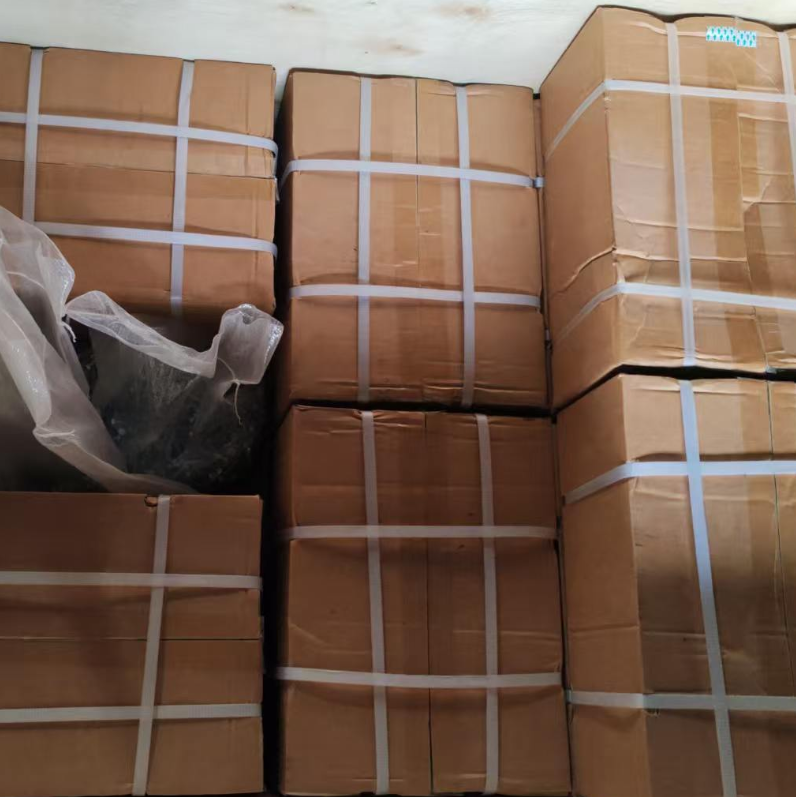
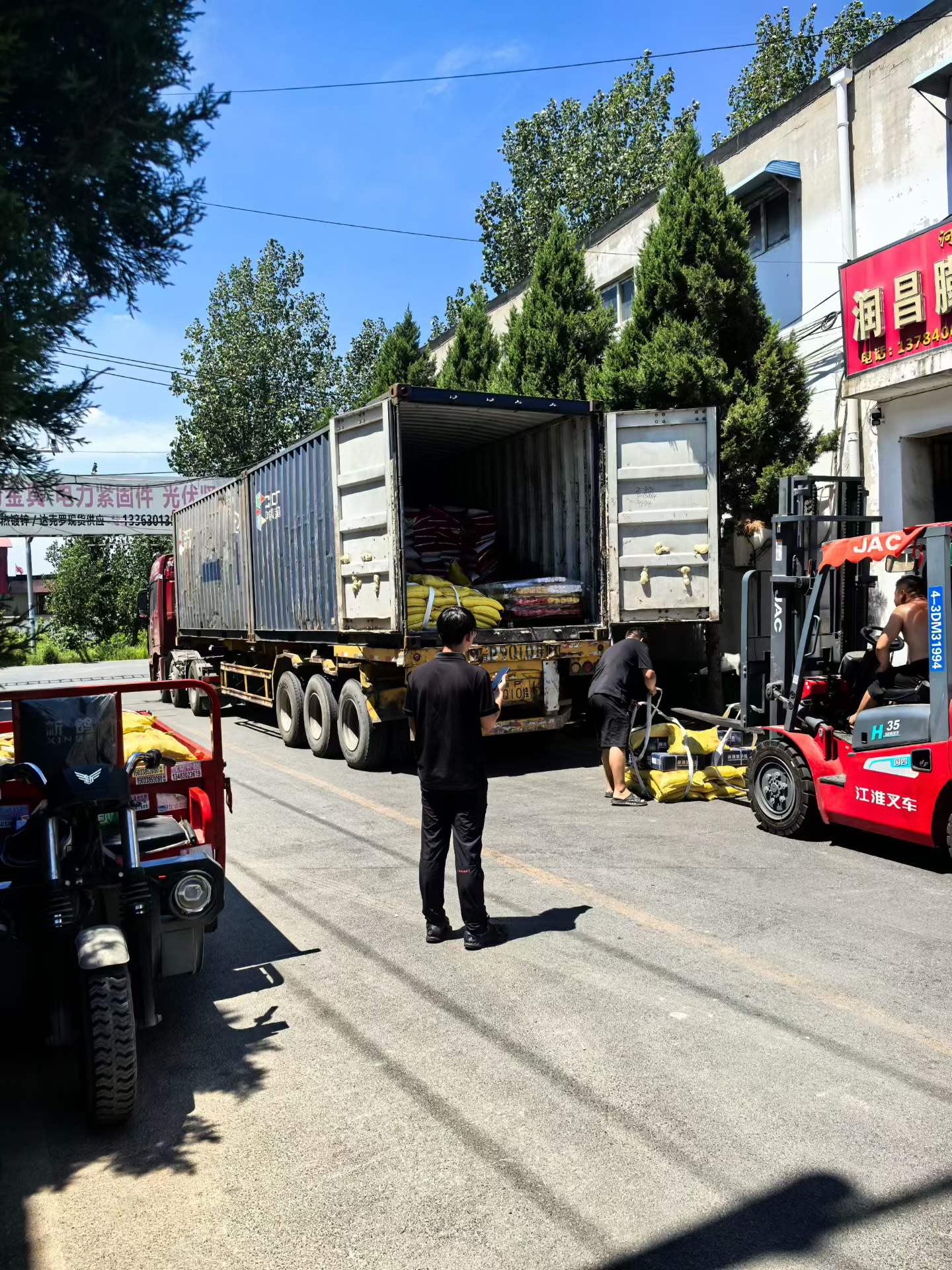
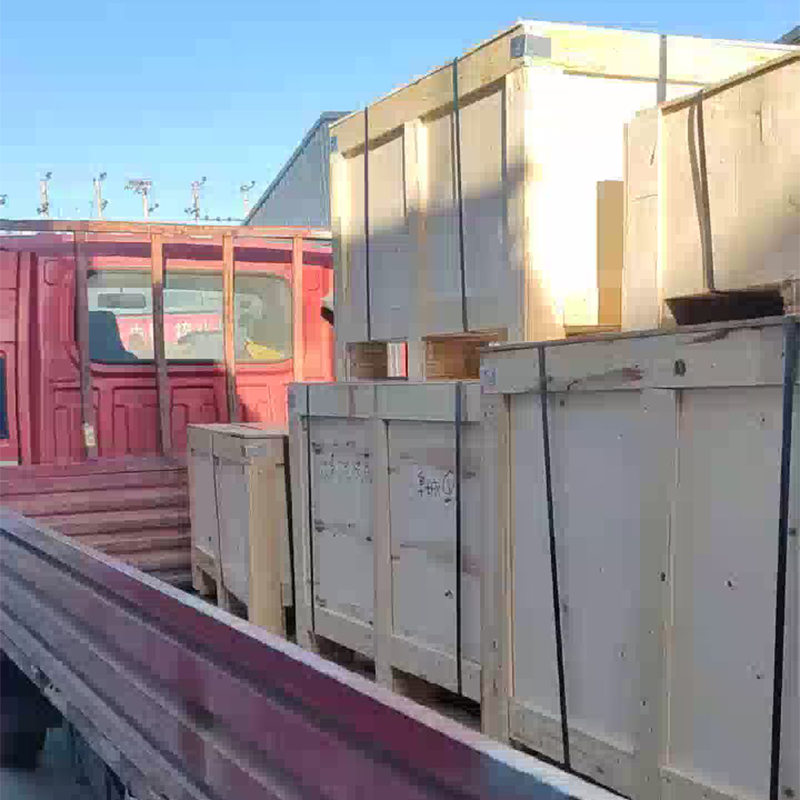
Finally, the sustainability of the component itself matters. A turnbuckle shipped halfway around the world from a generic supplier has a huge carbon footprint before it’s even installed. This is where localized, specialized manufacturing plays a role. Sourcing from a major production cluster like Yongnian District, where Handan Zitai Fastener Manufacturing Co., Ltd. is based, can reduce transport miles for projects within Asia, if not globally. Their location near major rail and road networks (like the Beijing-Guangzhou Railway and G4 Expressway) isn’t just a sales point—it translates to lower logistical emissions for getting heavy, dense fasteners to job sites.
Consolidated production bases also tend to have better recycling streams for metal scrap and more efficient energy use per unit due to scale. When you visit these industrial zones, you see the closed-loop systems for steel wire and rod. The sustainability isn’t in the brochure; it’s in the efficiency of the production ecosystem that a company like Zitai is part of. They might not market themselves as a ‘green’ company, but their operational context inherently reduces waste compared to fragmented, small-scale production.
Nan fen a, la turnbuckle bolt enhances sustainability not through a single revolutionary feature, but through a combination of intelligent design enabling longevity, material efficiency, reuse potential, and resilience. It’s a testament to the idea that sometimes the most sustainable solution is the one that lets you fix, adjust, and adapt, rather than rip out and replace. The trick is specifying the right grade from a maker that understands these aren’t just commodity items, but critical, longevity-defining components. That’s the real-world judgement call.
Tanpri kite nou yon mesaj



Privacy Policy
Our Commitment to Privacy
Introduction.
Rainbow Inc. recognizes the importance of protecting the privacy of all personal information provided by its customers, including users of www.rainbow-inkjet.com and other Rainbow Inc. affiliated websites (collectively "Rainbow Inc. Sites"). We created the following policy guidelines with a fundamental respect for our customers´ right to privacy and because we value our relationships with our customers. Your visit to the Rainbow Inc. Sites is subject to this Privacy Statement and our Online Terms and Conditions.
Description.
This Privacy Statement describes the types of information we collect and how we may use that information. Our Privacy Statement also describes the measures we take to protect the security of this information as well as how you may reach us to update your contact information.
Data Collection
Personal Data Collected Directly From Visitors.
Rainbow Inc. collects personal information when: you submit questions or comments to us; you request information or materials; you request warranty or post-warranty service and support; you participate in surveys; and by other means that may be specifically provided for on the Rainbow Inc. Sites or in our correspondence with you.
Type of Personal Data.
The type of information collected directly from the user may include your name, your company's name, physical contact information, address, billing and delivery information, e-mail address, the products you use, demographic information such as your age, preferences, and interests and information relating to the sale or installation of your product.
Non-Personal Data Collected Automatically.
We may collect information about your interaction with Rainbow Inc. Sites and services. For example, we may use website analytics tools on our site to retrieve information from your browser, including the site you came from, the search engine(s) and the keywords you used to find our site, and the pages you view within our site. Additionally, we collect certain standard information that your browser sends to every website you visit, such as your IP address, browser type, capabilities and language, your operating system, access times and referring Web site addresses.
Storage and Processing.
Personal data collected on our websites may be stored and processed in the United States in which Rainbow Inc. or its affiliates, joint ventures, or third party servicers maintain facilities.
How We Use the Data
Services and transactions.
We use your personal data to deliver services or execute transactions you request, such as providing information about Rainbow Inc. products and services, processing orders, answering customer service requests, facilitating use of our Web sites, enabling online shopping, and so forth. In order to offer you a more consistent experience in interacting with Rainbow Inc., information collected by our websites may be combined with information we collect by other means.
Product Development.
We use the personal and non-personal data for product development, including for such processes as idea generation, product design and improvements, detail engineering, market research and marketing analysis.
Website Improvement.
We may use the personal and non-personal data to improve our websites (including our security measures) and related products or services, or to make our websites easier to use by eliminating the need for you to repeatedly enter the same information or by customizing our websites to your particular preference or interests.
Marketing Communications.
We may use your personal data to inform you of products or services available from Rainbow Inc. When collecting information that might be used to contact you about our products and services, we often give you the opportunity to opt-out from receiving such communications. Moreover, in our email communications with you we may include an unsubscribe link allowing you to stop delivery of that type of communication. If you elect to unsubscribe, we will remove you from the relevant list within 15 business days.
Commitment to Data Security
Security.
Rainbow Inc. Corporation uses reasonable precautions to keep the personal information disclosed to us secure. To prevent unauthorized access, maintain data accuracy, and ensure the correct use of information, we have put in place appropriate physical, electronic, and managerial procedures to safeguard and secure your personal information. For example, we store sensitive personal data on computer systems with limited access that are located in facilities to which access is limited. When you move around a site to which you have logged in, or from one site to another that uses the same login mechanism, we verify your identity by means of an encrypted cookie placed on your machine. Nonetheless, Rainbow Inc. Corporation does not guarantee the security, accuracy or completeness of any such information or procedures.
Internet.
The transmission of information via the internet is not completely secure. Although we do our best to protect your personal information, we cannot guarantee the security of your personal information transmitted to our Website. Any transmission of personal information is at your own risk. We are not responsible for circumvention of any privacy settings or security measures contained on the Rainbow Inc. Sites.
Kontakte nou
If you have questions regarding this privacy statement, our handling of your personal data, or your privacy rights under applicable law, please contact us by mail at the address below.
Rainbow Inc.
Attn: Katherine Tan
Add: No.1658 Husong Road, Shanghai, China.
Statement Updates
Revisions.
Rainbow Inc. reserves the right to modify this privacy statement from time to time. If we decide to change our Privacy Statement, we will post the revised Statement here.
Date.
This Privacy Statement was last amended on September 7, 2022.