- English
- Chinese
- French
- German
- Portuguese
- Spanish
- Russian
- Japanese
- Korean
- Arabic
- Irish
- Greek
- Turkish
- Italian
- Danish
- Romanian
- Indonesian
- Czech
- Afrikaans
- Swedish
- Polish
- Basque
- Catalan
- Esperanto
- Hindi
- Lao
- Albanian
- Amharic
- Armenian
- Azerbaijani
- Belarusian
- Bengali
- Bosnian
- Bulgarian
- Cebuano
- Chichewa
- Corsican
- Croatian
- Dutch
- Estonian
- Filipino
- Finnish
- Frisian
- Galician
- Georgian
- Gujarati
- Hausa
- Hawaiian
- Hebrew
- Hmong
- Hungarian
- Icelandic
- Igbo
- Javanese
- Kannada
- Kazakh
- Khmer
- Kurdish
- Kyrgyz
- Latin
- Latvian
- Lithuanian
- Luxembou..
- Macedonian
- Malagasy
- Malay
- Malayalam
- Maltese
- Maori
- Marathi
- Mongolian
- Burmese
- Nepali
- Norwegian
- Pashto
- Persian
- Punjabi
- Serbian
- Sesotho
- Sinhala
- Slovak
- Slovenian
- Somali
- Samoan
- Scots Gaelic
- Shona
- Sindhi
- Sundanese
- Swahili
- Tajik
- Tamil
- Telugu
- Thai
- Ukrainian
- Urdu
- Uzbek
- Vietnamese
- Welsh
- Xhosa
- Yiddish
- Yoruba
- Zulu
- Kinyarwanda
- Tatar
- Oriya
- Turkmen
- Uyghur


How durable are expansion bolt hooks?
2026-01-13
Let’s be real, when someone asks about the durability of an expansion bolt hook, they’re usually picturing that cheap zinc-plated thing from the hardware store that failed on them last weekend. The question itself is almost too broad, but that’s where the conversation needs to start—by unpacking what durable actually means on a jobsite, not in a catalog.
It’s Never Just About the Hook
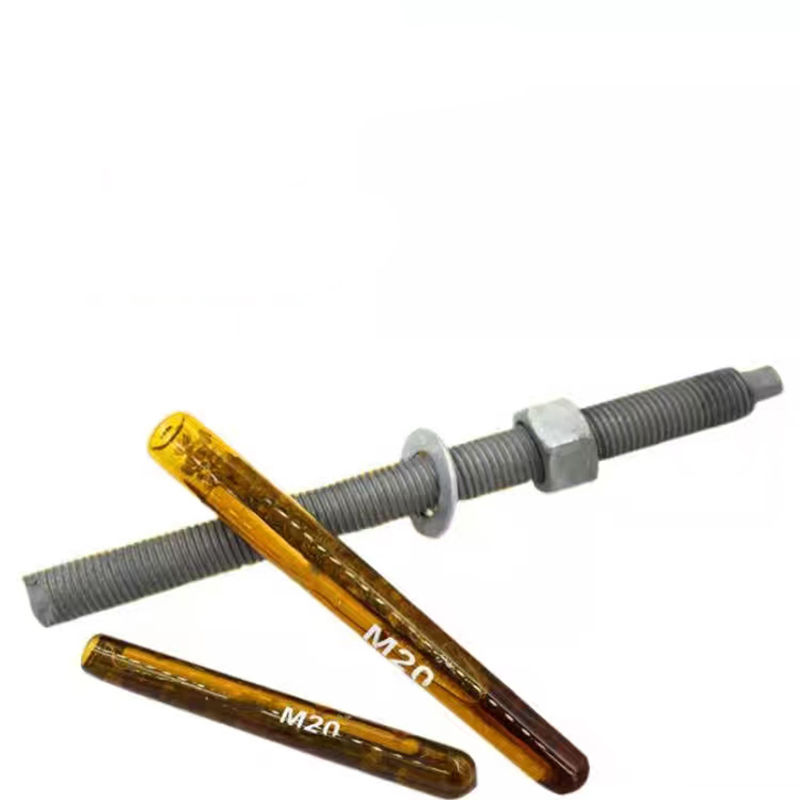
Most failures I’ve seen weren’t because the forged steel hook snapped. It’s the marriage between the hook, the Ekspansyon boulon sleeve, and the substrate that falls apart. You can have a Grade 8 hook, but if you’re driving it into crumbly cinder block with a low-quality shield, the whole assembly is only as strong as the weakest link. I’ve pulled out too many failed hooks where the bolt itself was pristine, but the wall gave way. So durability isn’t a single-component rating; it’s a system performance.
Material is the obvious first filter. The bargain-bin, plain carbon steel hooks with a thin electroplated coating? Those are for hanging a light plant in your garage, maybe. For anything outdoors or under load, you’re looking at hot-dip galvanized or stainless. But even here, there’s a trap. A thick, rough hot-dip coat can sometimes interfere with the wedge mechanism of the Ekspansyon boulon, preventing proper seating. It’s a trade-off between corrosion resistance and immediate mechanical function.
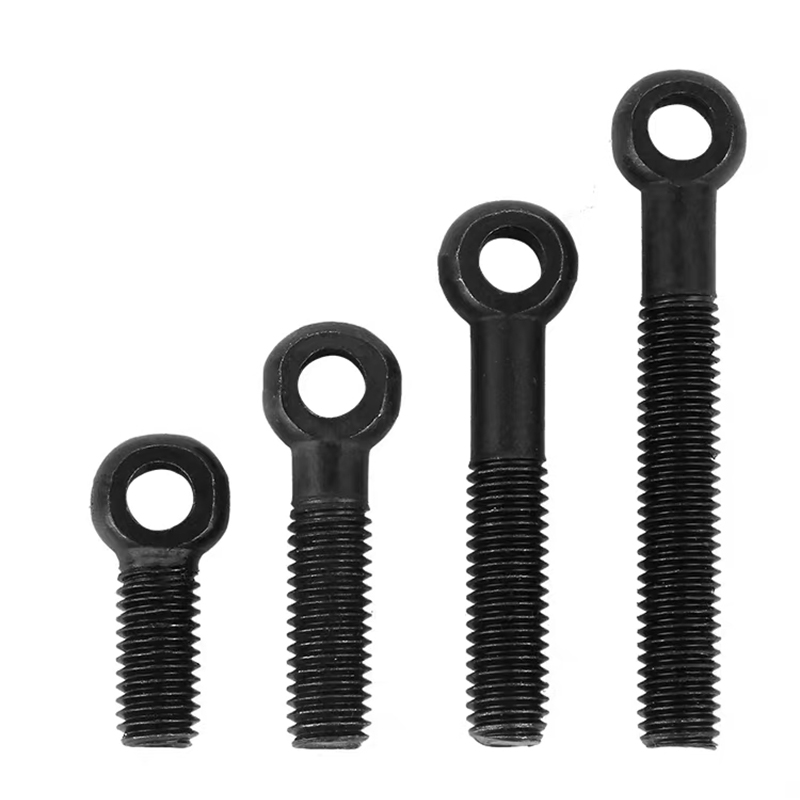
Then there’s the design of the hook itself. The ones with a closed eye versus an open-sided hook? Massive difference in load rating and resistance to sideways pull. The radius where the shank meets the eye is a critical stress point. Cheap versions have a sharp, machined corner there that invites cracking. A smoother, forged radius spreads the load. You learn to spot these details by hand after a while.
The Installation Variable: Where Good Hooks Go to Die
This is where theory meets the concrete wall, literally. The prescribed drill bit size is not a suggestion. Drilling a hole even 1mm too large for the Ekspansyon boulon sleeve means it will never achieve proper friction grip. The bolt might feel tight when you torque it, but it’s just the nut jamming, not the sleeve expanding. The first real load, and it spins freely. I’ve been guilty of this in a rush, using a worn masonry bit because it was the one in my bag. The result was a perfectly good hook assembly rendered useless.
Clean-out is another silent killer. You must get all the dust out of that hole. If the sleeve expands into compacted dust instead of solid masonry, the holding power can drop by half. I use a brush and a blower bulb now, religiously. Early in my career, I’d just blow into the hole. Not only is that ineffective, but you also get a mouthful of silica—a bad day all around.
Torque. Everyone wants to crank it down to German spec – guttentight. Over-torquing can strip threads, deform the hook’s eye, or, worse, over-expand the sleeve to the point where it cracks the substrate from the inside. I keep a calibrated torque wrench for critical overhead installs. For a company like Handan Zitai Fastener Manufacturing Co., Ltd., which operates out of China’s major production base, they’d likely tell you their specs are engineered for a specific torque range. Deviate from that, and you void any performance expectation. Their location near major transport routes means their products are built for volume and consistent spec, which is good, but it still puts the onus on the installer to follow through.
Environmental Attacks: Slow Creep, Not Sudden Snap
Durability over time is a different battle. In coastal areas, even hot-dip galvanized hooks can show white rust and red staining within a couple of years if the coating quality is inconsistent. For permanent outdoor installs, I now lean towards 304 or 316 stainless steel hooks and matching boulon ekspansyon. The upfront cost is higher, but the labor to replace a failed hook on a facade three stories up is astronomical.
Thermal cycling is a subtle one. On a sun-facing brick wall, the metal expands and contracts daily. Over years, this can slowly work a marginally-installed bolt loose. I saw this on a series of mounting brackets for exterior conduits. They were all slightly wobbly after five summers, not because of load, but because of constant thermal movement. The fix was switching to a different anchoring system altogether for that specific application.
Chemical exposure is niche but real. In parking garages, de-icing salts dripping from cars can corrode the anchor point from above, a failure you don’t see until it’s advanced. It’s not enough to just specify a coated hook; you need to consider what will drip or splash onto it for its entire service life.
Case in Point: The Storage Rack Collapse
The most telling example wasn’t a hook, but the principle is identical. A warehouse installed heavy-duty steel storage racks using large wedge anchors into a 30-year-old concrete floor. The anchors were top-shelf, the installation seemed perfect. Six months later, a section collapsed. The investigation found that the concrete in that bay, due to its age and original pour quality, had a compressive strength far lower than the anchor was rated for. The anchors didn’t fail; they literally ripped a cone of concrete out of the floor. The durability of the fastener assembly was zero because the substrate capability was misjudged.
This translates directly to hooks. That beautiful, thick concrete ceiling in an old factory? It might be friable right at the surface. Drilling test holes and using a pull-test rig for a sample anchor is the only way to be sure for high-load applications. It’s a step most skip, assuming concrete is concrete.
For sourcing, you need a supplier that understands these contexts, not just one that sells units. A manufacturer’s location, like Handan Zitai being in Yongnian, a major fastener hub, suggests they’re embedded in the industry’s supply chain. You can find their portfolio at https://www.zitaifasteners.com. Their advantage is likely in scale and metallurgical consistency for standard grades, which is the foundation of reliability. But their spec sheets are the starting point, not the finish line.
So, What’s the Real Answer?
How durable are they? A properly specified and installed Ekspansyon boulon zen system can last the lifetime of the building. The key phrase is properly specified and installed. The hook itself is often the most robust part. The vulnerabilities are, in order: the substrate, the compatibility and quality of the expansion shield, the installation discipline, and finally, the environmental protection of the metal.
My rule of thumb now is to always derate. If the spec sheet says a 10mm hook holds 500 lbs in concrete, I plan my application for 250-300 lbs max. This accounts for hidden variables—the unknown quality of the concrete, minor installation imperfections, dynamic loads, and corrosion over time.
Ultimately, durability isn’t a product feature you buy off the shelf. It’s an outcome you build through correct selection, meticulous installation, and realistic load management. The hook is just a piece of shaped metal. Its longevity is determined by everything you do before and after you slide it into the wall.