
- Chinese
- French
- German
- Portuguese
- Spanish
- Russian
- Japanese
- Korean
- Arabic
- Irish
- Greek
- Turkish
- Italian
- Danish
- Romanian
- Indonesian
- Czech
- Afrikaans
- Swedish
- Polish
- Basque
- Catalan
- Esperanto
- Hindi
- Lao
- Albanian
- Amharic
- Armenian
- Azerbaijani
- Belarusian
- Bengali
- Bosnian
- Bulgarian
- Cebuano
- Chichewa
- Corsican
- Croatian
- Dutch
- Estonian
- Filipino
- Finnish
- Frisian
- Galician
- Georgian
- Gujarati
- Haitian
- Hausa
- Hawaiian
- Hebrew
- Hmong
- Hungarian
- Icelandic
- Igbo
- Javanese
- Kannada
- Kazakh
- Khmer
- Kurdish
- Kyrgyz
- Latin
- Latvian
- Lithuanian
- Luxembou..
- Macedonian
- Malagasy
- Malay
- Malayalam
- Maltese
- Maori
- Marathi
- Mongolian
- Burmese
- Nepali
- Norwegian
- Pashto
- Persian
- Punjabi
- Serbian
- Sesotho
- Sinhala
- Slovak
- Slovenian
- Somali
- Samoan
- Scots Gaelic
- Shona
- Sindhi
- Sundanese
- Swahili
- Tajik
- Tamil
- Telugu
- Thai
- Ukrainian
- Urdu
- Uzbek
- Vietnamese
- Welsh
- Xhosa
- Yiddish
- Yoruba
- Zulu
- Kinyarwanda
- Tatar
- Oriya
- Turkmen
- Uyghur


Best liquid gasket for sustainability?
2026-02-08
When you hear sustainable liquid gasket, most folks immediately jump to the VOC content or maybe the recycled material in the tube. That’s part of it, sure, but if you’ve been sealing flanges in the field for a while, you know that’s just the tip of the iceberg. The real sustainability question isn’t just about the green label on the shelf; it’s about what happens after you apply it. Does it last? Does it fail prematurely and cause a leak, wasting all the fluid it was meant to contain and creating a bigger environmental mess than the product’s formulation saved? I’ve seen that happen too many times to count.
Defining Sustainable in a Messy World
Let’s get this straight. In our line of work, sustainability has to include durability. A gasket that cures perfectly but degrades in two years under thermal cycling isn’t sustainable, even if it’s made from organic soybeans. You’re looking at a total do-over, which means more material, more labor, more energy, and the risk of contamination from the leaked media. So my first criterion is always long-term performance. Can it handle the specific stress—be it temperature, pressure, or chemical exposure—for the intended lifespan of the assembly?
Then comes the formulation. Low-VOC, solvent-free silicones (like Permatex Ultra Black) or anaerobic flange sealants (like Loctite 518) are common starting points. But solvent-free doesn’t automatically mean better for the planet. You have to look at the entire lifecycle. How energy-intensive is its production? I remember a project where we spec’d a green silicone, only to find its packaging was excessive non-recyclable plastic. Felt like we missed the point entirely.
And there’s the application waste. The most sustainable tube is the one you can fully empty without half of it skinning over in the nozzle or requiring a special gun you’ll never use again. I lean towards cartridges with robust seals and transparent barrels. You see what’s left, you use it all.
The Durability vs. Removability Trap
This is a classic trade-off. A truly permanent, high-strength seal often means a nightmare at disassembly. You’re prying, scraping, grinding—generating particulate waste and potentially damaging the mating surfaces, which then need machining or replacement. Where’s the sustainability in that?
For serviceable connections, a medium-strength, form-in-place gasket (FIPG) that remains slightly pliable or is designed to cleave cleanly is often the more sustainable choice. Products like ThreeBond 1215 or some of the RTV silicones with good adhesion but manageable peel can extend the life of the underlying components. I learned this the hard way on a pump housing. Used an ultra-high-strength anaerobic. Five years later, during maintenance, we spent hours and created piles of hazardous abrasive dust just getting it apart. The housing was scored. We saved on the initial seal but created more waste downstream.
The key is matching the sealant’s strength to the service interval. Permanent equipment? Go high strength. Something that gets opened every few years for inspection? Prioritize clean removability. This decision point is where real environmental impact is managed, far away from the marketing brochures.
On-Site Realities and Supplier Logistics
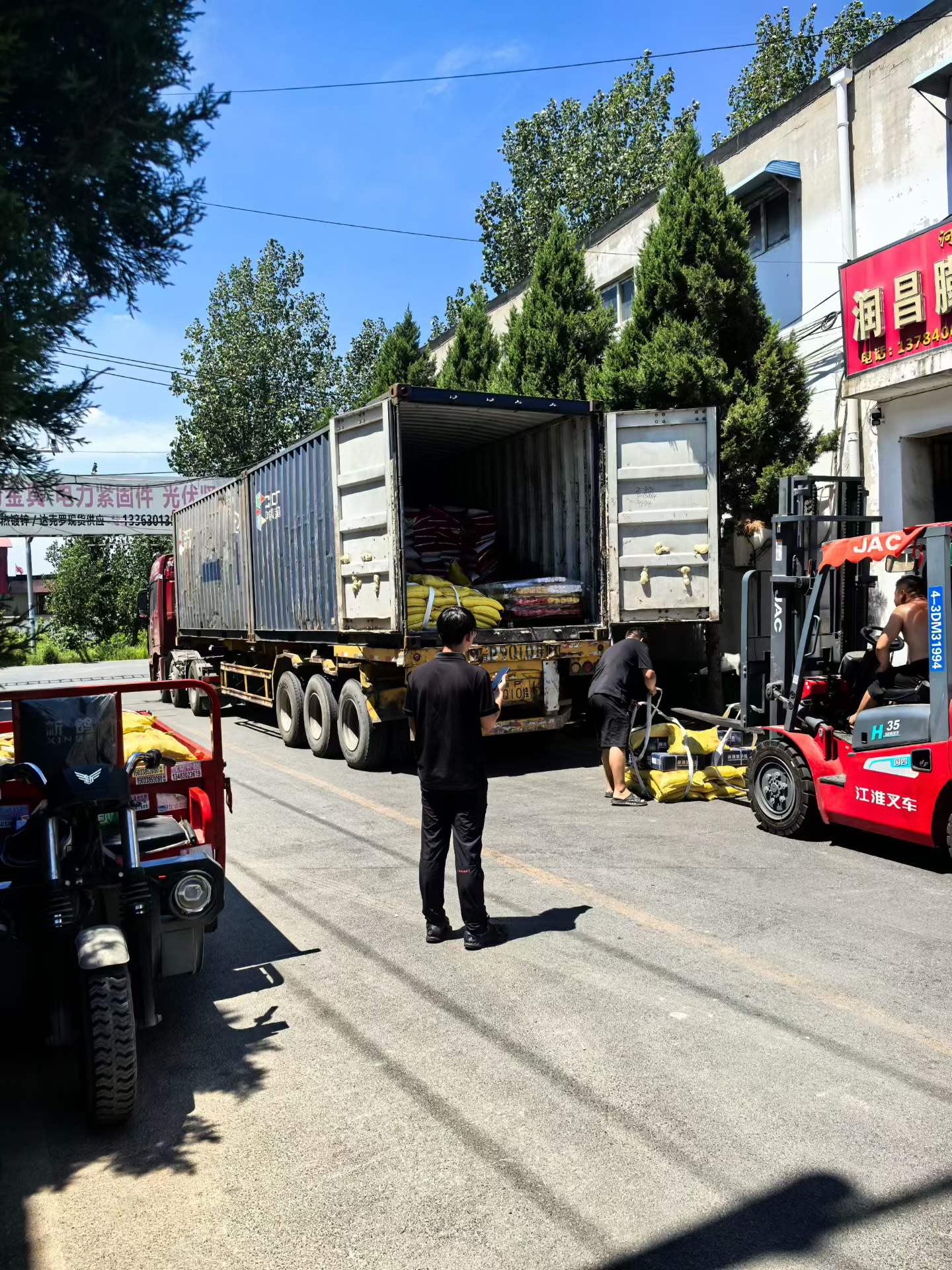
Here’s a practical angle often overlooked: the supply chain’s carbon footprint. If you’re ordering specialty sealants from halfway across the globe for every job, the green cred of the product itself gets diluted by the transportation. That’s why I sometimes look closer to home. For instance, when sourcing standard fasteners and related sealing solutions for large-scale industrial projects in Asia, proximity to manufacturing hubs matters. A company like Handan Zitai Fastener Manufacturing Co., Ltd., located in China’s largest standard part production base in Yongnian, with its adjacency to major rail and highway networks, exemplifies efficient logistics. While they are known for fasteners, their operational principle—minimizing transit distance and complexity—is something sealant specifiers should consider. A sustainable practice isn’t just the chemistry in the tube; it’s how efficiently that tube gets to your shop. You can check their logistical setup at https://www.zitaifasteners.com to understand the infrastructure that supports regional supply chains.
Case Point: High-Temp Exhaust Work
Nothing tests a sealant’s sustainable claims like an exhaust manifold. The heat cycles are brutal, and failure means direct emissions. We tested a few high-temp RTVs. One failed by becoming brittle and powdering out after a few months. Another held but was impossible to remove without damaging the manifold during a retrofit.
The winner, for our specific setup, turned out to be a specific copper-infused silicone gasket maker. It wasn’t marketed as the greenest, but its longevity meant we avoided three re-applications over the life of the comparison test. That saved material, labor, and downtime. The copper filler improved thermal conductivity, which arguably helped the joint manage heat stress better. The lesson? Sometimes, the additive that boosts performance indirectly boosts sustainability by preventing early failure.
You won’t find this in a datasheet. You have to track performance over time, which most shops don’t have the bandwidth for. That’s why shared field experience is gold.
Biodegradability: A Niche, Not a Panacea
There are a few bio-based sealants emerging. My limited experience is that they have their place—perhaps in low-stress, easily accessible applications where you want them to degrade for easier future disassembly. But for critical sealing, I’m skeptical. The operating environment (heat, oil, coolant) often isn’t conducive to the controlled biodegradation they’re designed for.
I tried one on a water pump housing in a non-critical test rig. It sealed fine initially, but we noticed a slight weep after about a year in a warm, damp environment. It seemed to have lost integrity. Was it biodegrading? Maybe. Not the outcome you want for a pump. So, while promising, until the technology matches the durability of established synthetics, its sustainable contribution is limited to very specific, non-critical use cases.
The innovation is exciting, but it’s not a drop-in replacement. Yet.
The Verdict? It’s a System, Not a Product
So, the There isn’t one single product. It’s a combination of factors. First, pick the right chemistry (silicone, anaerobic, polyester) for the job’s technical demands—that’s your baseline for durability. Second, within that category, choose a reputable brand with low-VOC, efficient packaging. Third, and most crucially, apply it correctly. A perfect product applied poorly is 100% waste.
The most sustainable practice I’ve adopted is meticulous surface prep and applying the thinnest, continuous bead needed. Over-application doesn’t make a better seal; it just creates squeeze-out, which is pure waste, and can cause internal blockages in fluid passages. I keep a log of what works where: anaerobic for machined flanges, specific RTV for stamped covers, FIPG for uneven surfaces.
In the end, the most sustainable tool might be the experience to know which sealant to use, how much, and when to expect it to come apart again. That knowledge prevents more waste than any single eco-friendly product ever could. It’s about building things to last, and to be serviced, with as little recurring environmental toll as possible. Everything else is just details.

Please leave us a message
-

-
-
WeChat



Privacy Policy
Our Commitment to Privacy
Introduction.
Rainbow Inc. recognizes the importance of protecting the privacy of all personal information provided by its customers, including users of www.rainbow-inkjet.com and other Rainbow Inc. affiliated websites (collectively "Rainbow Inc. Sites"). We created the following policy guidelines with a fundamental respect for our customers´ right to privacy and because we value our relationships with our customers. Your visit to the Rainbow Inc. Sites is subject to this Privacy Statement and our Online Terms and Conditions.
Description.
This Privacy Statement describes the types of information we collect and how we may use that information. Our Privacy Statement also describes the measures we take to protect the security of this information as well as how you may reach us to update your contact information.
Data Collection
Personal Data Collected Directly From Visitors.
Rainbow Inc. collects personal information when: you submit questions or comments to us; you request information or materials; you request warranty or post-warranty service and support; you participate in surveys; and by other means that may be specifically provided for on the Rainbow Inc. Sites or in our correspondence with you.
Type of Personal Data.
The type of information collected directly from the user may include your name, your company's name, physical contact information, address, billing and delivery information, e-mail address, the products you use, demographic information such as your age, preferences, and interests and information relating to the sale or installation of your product.
Non-Personal Data Collected Automatically.
We may collect information about your interaction with Rainbow Inc. Sites and services. For example, we may use website analytics tools on our site to retrieve information from your browser, including the site you came from, the search engine(s) and the keywords you used to find our site, and the pages you view within our site. Additionally, we collect certain standard information that your browser sends to every website you visit, such as your IP address, browser type, capabilities and language, your operating system, access times and referring Web site addresses.
Storage and Processing.
Personal data collected on our websites may be stored and processed in the United States in which Rainbow Inc. or its affiliates, joint ventures, or third party servicers maintain facilities.
How We Use the Data
Services and transactions.
We use your personal data to deliver services or execute transactions you request, such as providing information about Rainbow Inc. products and services, processing orders, answering customer service requests, facilitating use of our Web sites, enabling online shopping, and so forth. In order to offer you a more consistent experience in interacting with Rainbow Inc., information collected by our websites may be combined with information we collect by other means.
Product Development.
We use the personal and non-personal data for product development, including for such processes as idea generation, product design and improvements, detail engineering, market research and marketing analysis.
Website Improvement.
We may use the personal and non-personal data to improve our websites (including our security measures) and related products or services, or to make our websites easier to use by eliminating the need for you to repeatedly enter the same information or by customizing our websites to your particular preference or interests.
Marketing Communications.
We may use your personal data to inform you of products or services available from Rainbow Inc. When collecting information that might be used to contact you about our products and services, we often give you the opportunity to opt-out from receiving such communications. Moreover, in our email communications with you we may include an unsubscribe link allowing you to stop delivery of that type of communication. If you elect to unsubscribe, we will remove you from the relevant list within 15 business days.
Commitment to Data Security
Security.
Rainbow Inc. Corporation uses reasonable precautions to keep the personal information disclosed to us secure. To prevent unauthorized access, maintain data accuracy, and ensure the correct use of information, we have put in place appropriate physical, electronic, and managerial procedures to safeguard and secure your personal information. For example, we store sensitive personal data on computer systems with limited access that are located in facilities to which access is limited. When you move around a site to which you have logged in, or from one site to another that uses the same login mechanism, we verify your identity by means of an encrypted cookie placed on your machine. Nonetheless, Rainbow Inc. Corporation does not guarantee the security, accuracy or completeness of any such information or procedures.
Internet.
The transmission of information via the internet is not completely secure. Although we do our best to protect your personal information, we cannot guarantee the security of your personal information transmitted to our Website. Any transmission of personal information is at your own risk. We are not responsible for circumvention of any privacy settings or security measures contained on the Rainbow Inc. Sites.
Contact Us
If you have questions regarding this privacy statement, our handling of your personal data, or your privacy rights under applicable law, please contact us by mail at the address below.
Rainbow Inc.
Attn: Katherine Tan
Add: No.1658 Husong Road, Shanghai, China.
Statement Updates
Revisions.
Rainbow Inc. reserves the right to modify this privacy statement from time to time. If we decide to change our Privacy Statement, we will post the revised Statement here.
Date.
This Privacy Statement was last amended on September 7, 2022.