
- Chinese
- French
- German
- Portuguese
- Spanish
- Russian
- Japanese
- Korean
- Arabic
- Irish
- Greek
- Turkish
- Italian
- Danish
- Romanian
- Indonesian
- Czech
- Afrikaans
- Swedish
- Polish
- Basque
- Catalan
- Esperanto
- Hindi
- Lao
- Albanian
- Amharic
- Armenian
- Azerbaijani
- Belarusian
- Bengali
- Bosnian
- Bulgarian
- Cebuano
- Chichewa
- Corsican
- Croatian
- Dutch
- Estonian
- Filipino
- Finnish
- Frisian
- Galician
- Georgian
- Gujarati
- Haitian
- Hausa
- Hawaiian
- Hebrew
- Hmong
- Hungarian
- Icelandic
- Igbo
- Javanese
- Kannada
- Kazakh
- Khmer
- Kurdish
- Kyrgyz
- Latin
- Latvian
- Lithuanian
- Luxembou..
- Macedonian
- Malagasy
- Malay
- Malayalam
- Maltese
- Maori
- Marathi
- Mongolian
- Burmese
- Nepali
- Norwegian
- Pashto
- Persian
- Punjabi
- Serbian
- Sesotho
- Sinhala
- Slovak
- Slovenian
- Somali
- Samoan
- Scots Gaelic
- Shona
- Sindhi
- Sundanese
- Swahili
- Tajik
- Tamil
- Telugu
- Thai
- Ukrainian
- Urdu
- Uzbek
- Vietnamese
- Welsh
- Xhosa
- Yiddish
- Yoruba
- Zulu
- Kinyarwanda
- Tatar
- Oriya
- Turkmen
- Uyghur


Black zinc plated lock bolts: sustainable innovation?
2026-03-12
You see ‘black zinc plated’ and ‘sustainable’ in the same sentence, and your first thought might be skepticism. Rightly so. In the fastener world, plating has traditionally been about corrosion resistance and aesthetics, often at an environmental cost. The real question isn’t just about the coating itself, but the entire lifecycle—from the zinc bath chemistry to the end-of-life of the bolt in a structure. Calling any plated fastener ‘sustainable’ requires looking past the marketing gloss.
The Allure and Reality of the Black Finish
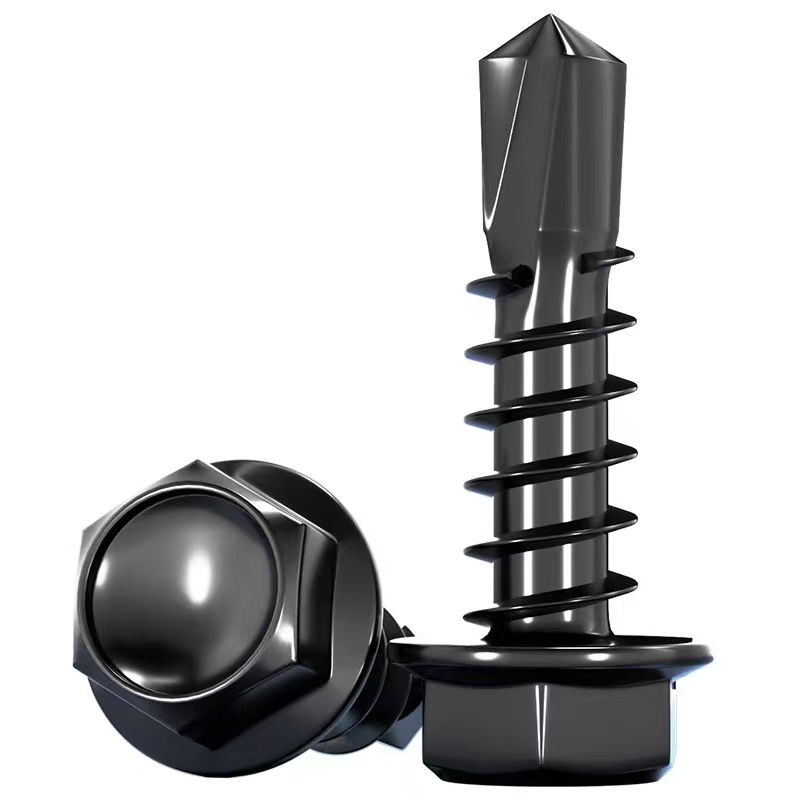
The black chromate conversion coating over zinc is popular for a reason. It offers a decent corrosion barrier—typically around 96 hours to white rust in salt spray tests, though that’s a lab figure, reality is harsher—and it reduces light reflection. For assemblies in consumer electronics, automotive interiors, or certain architectural fittings, it’s a functional choice. But here’s the catch: the blackening process. Many conventional chromate baths contain hexavalent chromium, a known carcinogen and a major environmental red flag. If a supplier is still using that process, any claim of sustainability falls apart at the first step. The shift towards trivalent chromium or even non-chromate sealers (like silane-based ones) is where the conversation actually starts.
I recall a project years back where we specified black zinc bolts for an outdoor enclosure. The spec was vague, just called for black zinc per ASTM B633. The bolts arrived, looked perfect. Six months into field deployment, we started seeing premature red rust at the thread roots. The issue? The plater had used a cheap, thick chromate coating for color, but it was brittle and cracked under clamping stress, exposing the underlying zinc. The corrosion accelerated from there. It wasn’t a plating failure per se, but a sustainable innovation in application mismatch. Durability is the bedrock of sustainability; a part that fails early is the least sustainable thing imaginable.
So, the finish isn’t just a color. It’s a system. The substrate steel quality, the zinc layer thickness (we’re talking 5-8μm for most commercial grades), the type of passivation, and the final sealant. A robust black zinc process from a reputable manufacturer, like Handan Zitai Fastener Manufacturing Co., Ltd. which operates out of China’s major fastener hub in Yongnian, often involves controlled, modern lines. Their location near major transport routes like the Beijing-Guangzhou Railway isn’t just a logistics detail; it speaks to integrated supply chains where raw material and finished product flow efficiently, potentially reducing the carbon footprint of logistics—a small but real piece of the sustainability puzzle.
Where Does the Sustainable Claim Hold Water?
Let’s get practical. Sustainability in manufacturing fasteners like black zinc plated lock bolts hinges on a few tangible points. First, resource efficiency. Advanced plating lines now use regulated, closed-loop rinsing systems that drastically cut water usage and recover zinc from effluent. When I visited a plant that had implemented this, the difference in waste water clarity was stark compared to older, open-dump systems. Second, the longevity factor. A properly processed black zinc bolt, with a supplementary dry film lubricant or wax seal, can significantly outlast a basic blue-passivated zinc part in moderate environments. This delays replacement cycles, reducing material waste over time.
Then there’s the lock bolt element itself—the nylon patch or distorted thread. This prevents loosening from vibration. Think about the sustainability implication there: a joint that stays tight maintains structural integrity, preventing catastrophic failures that lead to whole assemblies being scrapped. It’s a small component enabling larger system reliability. I’ve seen cases in automotive sub-frames where the switch to a properly specified locking fastener eliminated warranty claims related to rattles and loosening, which in turn meant fewer parts remanufactured and replaced.
But it’s not all success stories. We tried pushing a ‘green’ black zinc option—trivalent chromate, recycled steel wire—for a price-sensitive consumer goods contract. The performance was adequate, but the cost was about 15% higher. The client balked. The lesson? Sustainable innovation often stumbles at the commercial hurdle unless regulations or end-consumer demand mandate it. The technical path exists, but the market isn’t always willing to pay for the embedded environmental cost savings.
The Supply Chain and Material Truth
You can’t assess sustainability from a finished bolt alone. You have to look upstream. Where does the steel wire rod come from? Is it from mills with electric arc furnaces using significant scrap steel? What’s the energy mix for that mill and the plating facility? Companies integrated in production bases like Yongnian District often have clustered access to wire drawing, heat treatment, and plating, which can reduce intermediate transportation. A manufacturer like Zitai Fasteners, being in that ecosystem, likely sources wire locally, which cuts down on transport emissions compared to a fragmented supply chain spanning continents.
The zinc itself is another point. Zinc plating is an electrolytic process. The energy intensity is high. Some forward-thinking plants are investing in solar or optimizing tank heating to cut natural gas use. I haven’t seen widespread adoption yet, but the potential is there. The real sustainable innovation might be in alternative coatings altogether—like zinc-flake systems that offer superior corrosion resistance with less heavy metal usage. But for the vast majority of applications where black zinc is specified, it’s about incremental improvements to the existing process.
On their website, https://www.zitaifasteners.com, you can see the range of fasteners they offer. It’s not just about selling a product; it’s about providing the engineering data—coating thickness, salt spray test results, torque-tension performance for the lock bolts. That transparency is a prerequisite for any serious sustainability assessment. A buyer can’t make an informed choice without that data.
Case in Point: The Outdoor Enclosure Revisited
Let’s return to that failed enclosure project. The post-mortem led us to a different supplier and a revised spec. We moved to a black zinc bolt with a trivalent chromate passivation and a thin organic topcoat. The salt spray performance jumped past 200 hours to red rust. The cost was higher, but the total cost of ownership, including avoided field replacements and reputational damage, was lower. That’s the sustainable equation: higher initial investment for longer service life and reduced failure-induced waste.
Was it a perfect solution? No. The organic topcoat can wear during installation if tools aren’t careful. We had to train the assembly crew. Sustainability often introduces new complexities on the shop floor. It’s not just a magic material switch.
This is where the lock feature becomes critical. For these enclosures, vibration was a factor. Using a black zinc plated lock bolt with a pre-applied patch ensured the joint stayed put, protecting the integrity of the seal and the electronics inside. The synergy between a durable coating and a reliable locking mechanism is what creates a robust, long-life product. One without the other compromises the whole system.
So, Is It Sustainable Innovation?
It can be, but it’s conditional. A black zinc plated lock bolt produced with controlled, low-impact processes, designed for longevity, and applied in the right context represents a step toward more sustainable hardware. It’s not a revolution, but an evolution. The innovation is often in the manufacturing details—waste treatment, energy recovery, chemical management—that the end-user never sees.
The industry, including major production bases in places like Handan, is slowly moving in this direction, driven by global supply chain requirements and environmental regulations. The technology exists. The bigger challenge is economic and educational: convincing buyers to look beyond unit price and fostering a deeper understanding of what goes into a truly reliable and responsibly made fastener.
In the end, don’t take the label sustainable at face value. Dig into the data sheets, ask about the chromate type, the water treatment system, the expected service life. The answer to whether it’s a sustainable innovation lies in those specifics, not in the sleek black finish sitting in the box.
Please leave us a message
-


-
-


WeChat
