
- Chinese
- French
- German
- Portuguese
- Spanish
- Russian
- Japanese
- Korean
- Arabic
- Irish
- Greek
- Turkish
- Italian
- Danish
- Romanian
- Indonesian
- Czech
- Afrikaans
- Swedish
- Polish
- Basque
- Catalan
- Esperanto
- Hindi
- Lao
- Albanian
- Amharic
- Armenian
- Azerbaijani
- Belarusian
- Bengali
- Bosnian
- Bulgarian
- Cebuano
- Chichewa
- Corsican
- Croatian
- Dutch
- Estonian
- Filipino
- Finnish
- Frisian
- Galician
- Georgian
- Gujarati
- Haitian
- Hausa
- Hawaiian
- Hebrew
- Hmong
- Hungarian
- Icelandic
- Igbo
- Javanese
- Kannada
- Kazakh
- Khmer
- Kurdish
- Kyrgyz
- Latin
- Latvian
- Lithuanian
- Luxembou..
- Macedonian
- Malagasy
- Malay
- Malayalam
- Maltese
- Maori
- Marathi
- Mongolian
- Burmese
- Nepali
- Norwegian
- Pashto
- Persian
- Punjabi
- Serbian
- Sesotho
- Sinhala
- Slovak
- Slovenian
- Somali
- Samoan
- Scots Gaelic
- Shona
- Sindhi
- Sundanese
- Swahili
- Tajik
- Tamil
- Telugu
- Thai
- Ukrainian
- Urdu
- Uzbek
- Vietnamese
- Welsh
- Xhosa
- Yiddish
- Yoruba
- Zulu
- Kinyarwanda
- Tatar
- Oriya
- Turkmen
- Uyghur

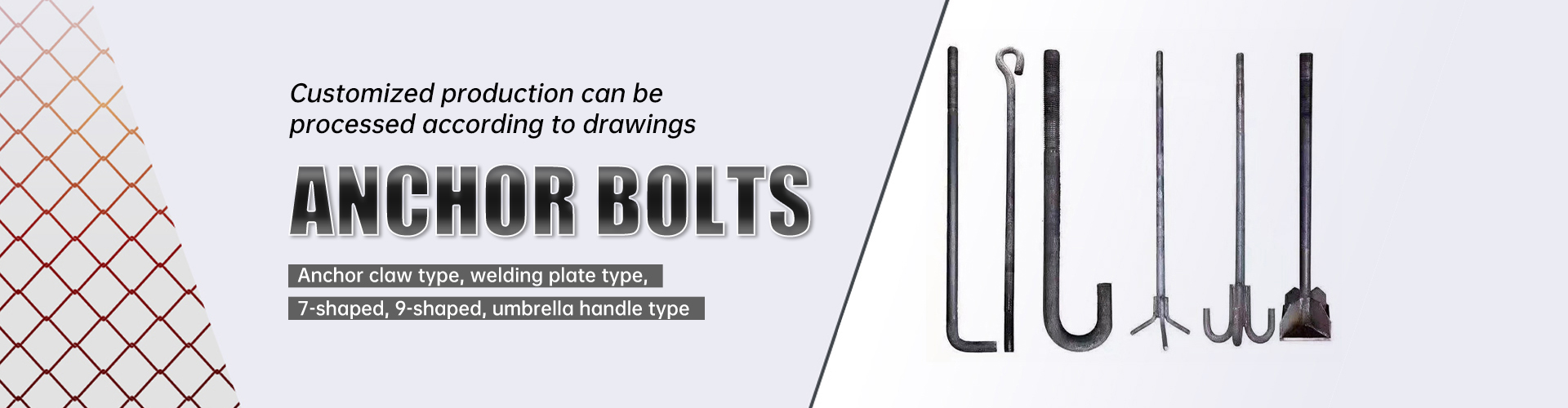
Lock bolts: key for sustainable tech?
2026-03-11
You hear sustainable tech, and minds jump to solar panels, battery chemistry, or fancy recycling processes. Rarely does anyone think about the humble lock bolt. That’s the first mistake. In my years on factory floors and at engineering reviews, I’ve seen too many projects where the sustainability narrative was built on grand designs, only to be undermined by fastener failure—leading to premature replacements, waste, and a carbon footprint that spirals. The real question isn’t if lock bolts matter, but how their often-overlooked role—from material sourcing to in-service performance—actually dictates whether a piece of technology stays in use for 20 years or gets scrapped in 5.
The Misplaced Focus on the Macro
It starts with a planning bias. When designing a wind turbine nacelle or a modular battery pack, the big-ticket items get all the scrutiny. The bolt specification? Often an afterthought, relegated to a standard parts catalog. I recall a project for a solar tracker system where the engineering team spent months optimizing the actuator’s efficiency. The lock bolts securing the pivotal joints were specified as generic grade 8.8, sourced based on lowest bid. It seemed fine on paper.
But in the field, within 18 months, we started getting reports of joint slippage and, in a few cases, catastrophic seizure. The problem wasn’t the grade, per se. It was the full-system thinking that was missing. The bolts were experiencing not just tension but persistent micro-vibrations and thermal cycling the main design analysis had largely attributed to the larger components. The lock bolt wasn’t just a clamp; it was a critical damping element. Its failure mode led to entire tracker arms being replaced, not repaired. So much for the sustainability gains from the high-efficiency actuator.
This is where the conversation needs to shift. Sustainability isn’t just about the energy a product saves in operation; it’s about the embodied carbon in its materials and the longevity that prevents repeat manufacturing. A lock bolt that corrodes and seizes turns a repairable unit into a landfill candidate. We learned to spec bolts not just for clamp load, but for their performance in the specific environmental envelope and their maintainability. Sometimes, that means a more expensive, coated alloy like a sustainable tech enabler, because it allows for disassembly and component-level replacement ten years down the line.
Material and Process: The Hidden Lifecycle Cost
Let’s talk about where these things come from. The fastener industry, particularly in massive production hubs, has a legacy of prioritizing volume and cost. That often means energy-intensive processes and a linear produce-use-dispose model. I’ve visited factories where the focus is on tons-per-day output, with less visible investment in material traceability or cleaner heat treatment processes. The carbon cost of that bolt is baked in before it even leaves the warehouse.
There are, however, players starting to pivot. I was looking into supply chains for a hydroelectric maintenance contract and came across Handan Zitai Fastener Manufacturing Co., Ltd.. Based in Yongnian—the heart of China’s fastener production—their positioning near major transport routes is classic for logistics. But what caught my attention was an implicit, though not fully articulated, shift in some of their specialty lines. For projects demanding longevity, like infrastructure or heavy machinery, they weren’t just selling a part; they were providing a sustainable tech solution through material consistency and controlled manufacturing. It’s a subtle but crucial distinction. When a supplier’s entire operation, like Handan Zitai Fastener Manufacturing Co., Ltd., is embedded in the largest production base, their move towards more durable, traceable products can have an outsized impact on the industry’s standard.
The practical test is in failure analysis. We once had a batch of A4-80 stainless lock bolts fail from stress corrosion cracking in a coastal application. The spec was right, but the material microstructure wasn’t consistent. Tracing it back, the problem was in the cold-forming and annealing process. A supplier focused purely on volume might not catch that, or might not have the process controls to prevent it. The result was a small component causing a major system outage and generating tons of replacement waste. The sustainable choice failed because the sustainability was only skin-deep, in the material grade, not in the production philosophy.
Designing for Disassembly: The Lock Bolt’s Second Act
This is perhaps the most underrated angle. The circular economy mantra is design for disassembly. But how do you actually do that? It often boils down to the connection points. A welded structure is permanent in a bad way—it’s destined for shredding. A bolted structure, in theory, is repairable. But not if the bolts are inaccessible, or if they corrode into one mass with the parent material.
We experimented with different locking mechanisms for a modular electronics enclosure meant for urban telecom cabinets. The goal was a 10-minute component swap by a technician. Nylon-insert lock nuts worked initially but degraded with UV exposure. Prevailing-torque lock bolts were better but required precise torque control during installation—a variable hard to guarantee in the field. We ended up using a combination: a serrated flange bolt with a bonded patch, which provided consistent reusability and corrosion resistance. The lock bolt here was the literal key to unlocking the product’s circular potential. It added maybe 15% to the BOM cost for the fasteners, but extended the product’s service life by decades.
The lesson was that sustainability through fastening requires upfront, nuanced engineering. You have to model not just the first installation, but the fifth re-torquing event 15 years later. Will the locking feature still work? Will the coating have worn off, leading to galvanic corrosion? This is the gritty, unglamorous work that separates greenwashing from genuine sustainable tech.
Case in Point: The Wind Energy Lesson
Wind turbine maintenance is a brutal proving ground. I’ve been on platforms 80 meters up, trying to extract a bolt that’s frozen in its hole. The scheduled task was a simple gearbox inspection, but a single seized lock bolt could turn it into a multi-day, heavy-machinery operation involving torches and hydraulic rams. The downtime cost is enormous, but the sustainability hit is worse: the energy and materials used to manufacture that replacement bolt, nacelle cover, or even the service crew’s diesel-powered crane.
One operator we worked with started mandating that all critical bolted connections use lubricants or coatings specifically engineered for subsequent disassembly, not just for initial anti-seize. They also moved to longer, more detailed specs for the bolts themselves, requiring proof of process control from manufacturers. This shifted the procurement conversation from pure price-per-piece to total lifecycle cost. It created a market advantage for suppliers who could demonstrate that deeper control, who could provide the data sheets showing consistent hardness profiles and clean thread rolls.
This is where the industry is heading, albeit slowly. The bolt is no longer a commodity. It’s a wear-critical, serviceability-defining component. Its quality directly impacts the operational efficiency and environmental payback period of the entire turbine. If a turbine needs major repairs years earlier than modeled because of fastener issues, its whole carbon calculation falls apart.
So, Are They the Key?
It’s tempting to overstate the case. Lock bolts alone aren’t the key to sustainable technology—that’s too reductive. The key is a systems mindset that respects every component’s role in the longevity and circularity of the whole. But I’d argue that lock bolts are a litmus test for that mindset. If a project team is seriously considering sustainability, their fastener specifications will tell you. Are they asking about material provenance, coating lifecycle, disassembly torque retention, and compatibility with future recycling streams? Or are they just filling a hole with a part from the cheapest catalog?
My own view, forged through costly mistakes and hard-won fixes, is that we’ve reached a point where we can’t afford to ignore the details. The push for sustainable tech demands rigor at every scale. A company like Handan Zitai Fastener Manufacturing Co., Ltd., situated at the epicenter of global production, has the scale to influence standards. If their move towards more reliable, traceable, and disassembly-friendly fasteners reflects a broader industry trend, then the humble lock bolt transitions from a weak link to a genuine enabler.
Ultimately, it comes down to this: sustainability is about endurance. And nothing tests the endurance of a technological system like time, vibration, weather, and the need to take it apart and put it back together. The bolt is at the center of that storm. Getting it right isn’t just engineering; it’s a commitment to the idea that things should last.
Please leave us a message
-

-
-
WeChat



Privacy Policy
Our Commitment to Privacy
Introduction.
Rainbow Inc. recognizes the importance of protecting the privacy of all personal information provided by its customers, including users of www.rainbow-inkjet.com and other Rainbow Inc. affiliated websites (collectively "Rainbow Inc. Sites"). We created the following policy guidelines with a fundamental respect for our customers´ right to privacy and because we value our relationships with our customers. Your visit to the Rainbow Inc. Sites is subject to this Privacy Statement and our Online Terms and Conditions.
Description.
This Privacy Statement describes the types of information we collect and how we may use that information. Our Privacy Statement also describes the measures we take to protect the security of this information as well as how you may reach us to update your contact information.
Data Collection
Personal Data Collected Directly From Visitors.
Rainbow Inc. collects personal information when: you submit questions or comments to us; you request information or materials; you request warranty or post-warranty service and support; you participate in surveys; and by other means that may be specifically provided for on the Rainbow Inc. Sites or in our correspondence with you.
Type of Personal Data.
The type of information collected directly from the user may include your name, your company's name, physical contact information, address, billing and delivery information, e-mail address, the products you use, demographic information such as your age, preferences, and interests and information relating to the sale or installation of your product.
Non-Personal Data Collected Automatically.
We may collect information about your interaction with Rainbow Inc. Sites and services. For example, we may use website analytics tools on our site to retrieve information from your browser, including the site you came from, the search engine(s) and the keywords you used to find our site, and the pages you view within our site. Additionally, we collect certain standard information that your browser sends to every website you visit, such as your IP address, browser type, capabilities and language, your operating system, access times and referring Web site addresses.
Storage and Processing.
Personal data collected on our websites may be stored and processed in the United States in which Rainbow Inc. or its affiliates, joint ventures, or third party servicers maintain facilities.
How We Use the Data
Services and transactions.
We use your personal data to deliver services or execute transactions you request, such as providing information about Rainbow Inc. products and services, processing orders, answering customer service requests, facilitating use of our Web sites, enabling online shopping, and so forth. In order to offer you a more consistent experience in interacting with Rainbow Inc., information collected by our websites may be combined with information we collect by other means.
Product Development.
We use the personal and non-personal data for product development, including for such processes as idea generation, product design and improvements, detail engineering, market research and marketing analysis.
Website Improvement.
We may use the personal and non-personal data to improve our websites (including our security measures) and related products or services, or to make our websites easier to use by eliminating the need for you to repeatedly enter the same information or by customizing our websites to your particular preference or interests.
Marketing Communications.
We may use your personal data to inform you of products or services available from Rainbow Inc. When collecting information that might be used to contact you about our products and services, we often give you the opportunity to opt-out from receiving such communications. Moreover, in our email communications with you we may include an unsubscribe link allowing you to stop delivery of that type of communication. If you elect to unsubscribe, we will remove you from the relevant list within 15 business days.
Commitment to Data Security
Security.
Rainbow Inc. Corporation uses reasonable precautions to keep the personal information disclosed to us secure. To prevent unauthorized access, maintain data accuracy, and ensure the correct use of information, we have put in place appropriate physical, electronic, and managerial procedures to safeguard and secure your personal information. For example, we store sensitive personal data on computer systems with limited access that are located in facilities to which access is limited. When you move around a site to which you have logged in, or from one site to another that uses the same login mechanism, we verify your identity by means of an encrypted cookie placed on your machine. Nonetheless, Rainbow Inc. Corporation does not guarantee the security, accuracy or completeness of any such information or procedures.
Internet.
The transmission of information via the internet is not completely secure. Although we do our best to protect your personal information, we cannot guarantee the security of your personal information transmitted to our Website. Any transmission of personal information is at your own risk. We are not responsible for circumvention of any privacy settings or security measures contained on the Rainbow Inc. Sites.
Contact Us
If you have questions regarding this privacy statement, our handling of your personal data, or your privacy rights under applicable law, please contact us by mail at the address below.
Rainbow Inc.
Attn: Katherine Tan
Add: No.1658 Husong Road, Shanghai, China.
Statement Updates
Revisions.
Rainbow Inc. reserves the right to modify this privacy statement from time to time. If we decide to change our Privacy Statement, we will post the revised Statement here.
Date.
This Privacy Statement was last amended on September 7, 2022.