
- Chinese
- French
- German
- Portuguese
- Spanish
- Russian
- Japanese
- Korean
- Arabic
- Irish
- Greek
- Turkish
- Italian
- Danish
- Romanian
- Indonesian
- Czech
- Afrikaans
- Swedish
- Polish
- Basque
- Catalan
- Esperanto
- Hindi
- Lao
- Albanian
- Amharic
- Armenian
- Azerbaijani
- Belarusian
- Bengali
- Bosnian
- Bulgarian
- Cebuano
- Chichewa
- Corsican
- Croatian
- Dutch
- Estonian
- Filipino
- Finnish
- Frisian
- Galician
- Georgian
- Gujarati
- Haitian
- Hausa
- Hawaiian
- Hebrew
- Hmong
- Hungarian
- Icelandic
- Igbo
- Javanese
- Kannada
- Kazakh
- Khmer
- Kurdish
- Kyrgyz
- Latin
- Latvian
- Lithuanian
- Luxembou..
- Macedonian
- Malagasy
- Malay
- Malayalam
- Maltese
- Maori
- Marathi
- Mongolian
- Burmese
- Nepali
- Norwegian
- Pashto
- Persian
- Punjabi
- Serbian
- Sesotho
- Sinhala
- Slovak
- Slovenian
- Somali
- Samoan
- Scots Gaelic
- Shona
- Sindhi
- Sundanese
- Swahili
- Tajik
- Tamil
- Telugu
- Thai
- Ukrainian
- Urdu
- Uzbek
- Vietnamese
- Welsh
- Xhosa
- Yiddish
- Yoruba
- Zulu
- Kinyarwanda
- Tatar
- Oriya
- Turkmen
- Uyghur

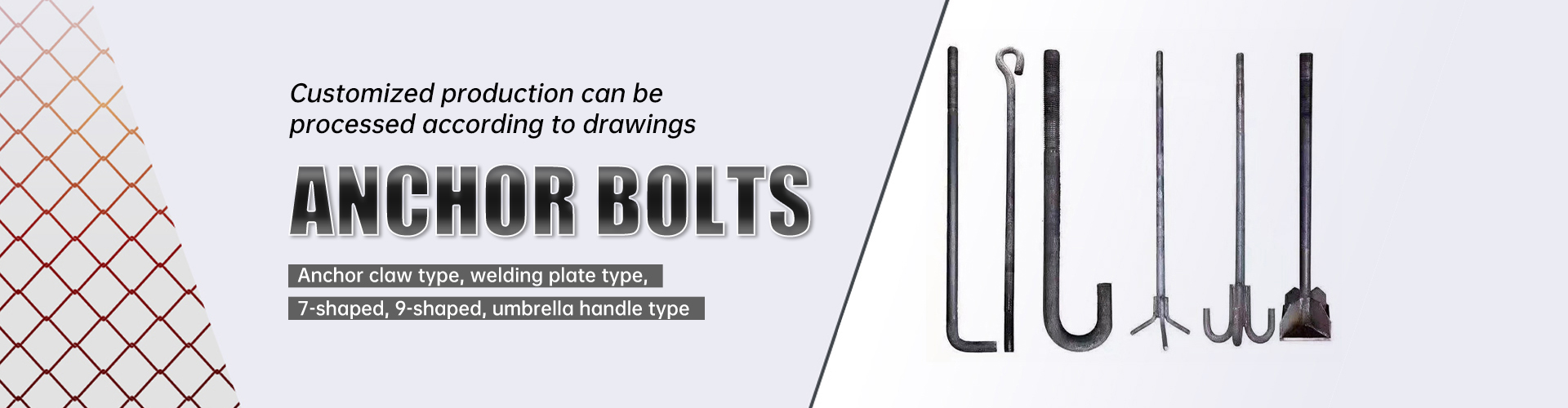
Colored zinc-plated bolts: sustainable innovation?
2026-03-13
You see ‘colored zinc-plated bolts’ on a spec sheet or a supplier’s website, and the immediate reaction in a lot of procurement or engineering circles is skepticism. Is it just a marketing gimmick? A way to charge a premium for a standard fastener with a bit of dye in the bath? I’ve been in fastener sourcing and application long enough to have shared that cynicism. The leap from seeing it as pure aesthetics to recognizing it as a potential, albeit nuanced, sustainable innovation requires digging into the actual process, the failures, and the real-world trade-offs that spec sheets never tell you.
The Misconception: It’s Just Paint
The biggest hurdle is the assumption that the color is a topcoat, like a spray paint. That would be a disaster for corrosion resistance and thread tolerance. The process we’re talking about is colored zinc plating, specifically post-plating chromate conversion coating where dyes are integrated. The bolt gets its standard zinc layer for sacrificial protection, then undergoes a chemical passivation bath. It’s in this bath that metallic salts form a complex layer, and organic dyes can be absorbed into that matrix. The color isn’t sitting on top; it’s part of the corrosion-inhibiting layer itself.
I remember a project years back for outdoor electrical enclosures. The architect wanted black bolts to match the fixture, and the maintenance team insisted on galvanized for corrosion. The contractor, trying to save time, used standard galvanized bolts and spray-painted them black on-site. Within 18 months, we had callbacks for seized fasteners. The paint chipped at installation, creating micro-gaps, moisture got underneath, and the zinc couldn’t do its job properly. It was a classic case of solving for color the wrong way, undermining the primary function.
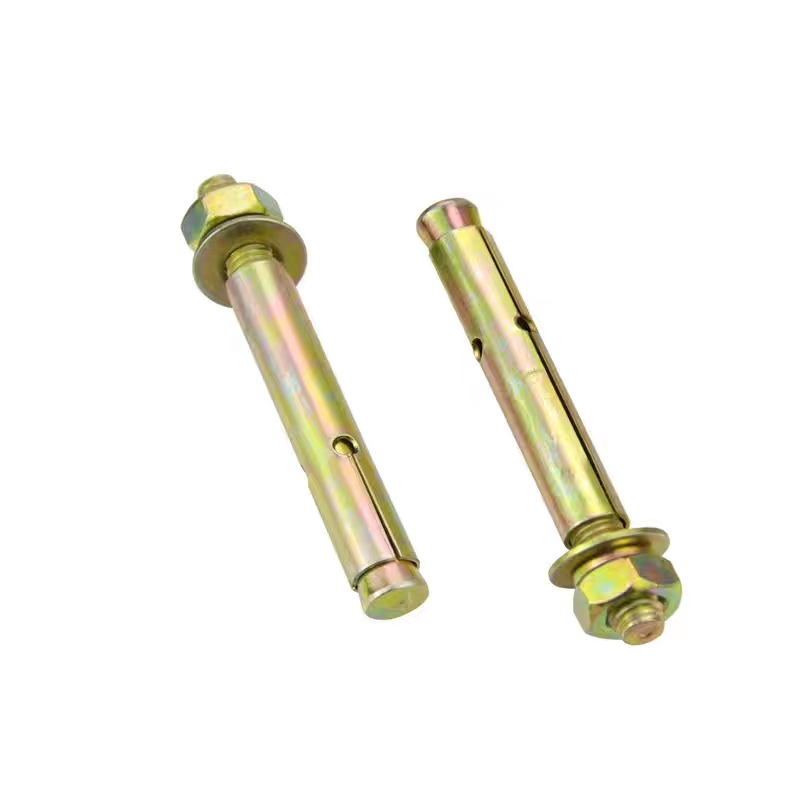
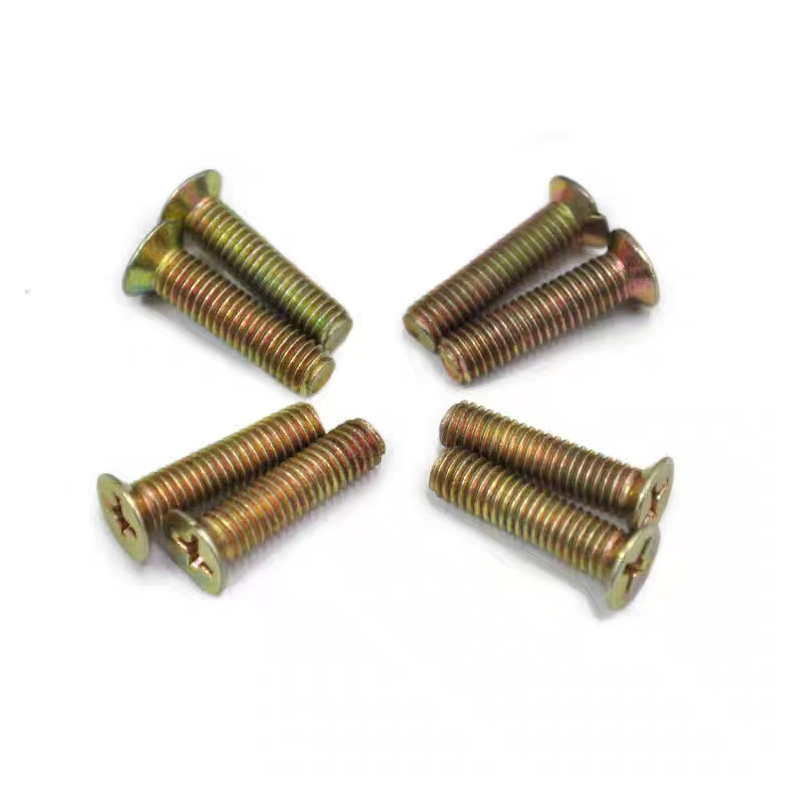
That’s where the proper colored zinc process shows its first practical value: it combines color coding or aesthetic matching with maintained, and sometimes even enhanced, corrosion performance. The chromate layer, whether clear, yellow, black, or green, adds an extra barrier. So the innovation isn’t the color per se; it’s the integration without functional compromise.
The Sustainability Angle: More Than Meets the Eye
When we talk sustainability in fasteners, it’s usually about material (recycled steel) or coating processes (reducing hexavalent chromium). The colored zinc-plated bolts angle is subtler. Think about asset management in a large factory or utility plant. You have miles of piping, different systems (water, gas, chemical lines), all held together with thousands of bolts. If every bolt is silver zinc, identification for maintenance, inspection, or replacement is a nightmare. You’re relying on faded tags or memory.
Now, specify blue bolts for potable water lines, red for high-pressure steam, green for safety harness anchor points. Suddenly, visual management is intrinsic. This reduces errors during repairs. A technician won’t accidentally remove a critical structural bolt thinking it’s for a non-essential duct. This extends asset life, prevents unnecessary replacements, and reduces the remove-and-discard cycle. That’s a tangible, though often overlooked, sustainability benefit—waste reduction through improved longevity and accuracy.
There’s also the hexavalent chromium issue. The traditional bright yellow zinc finish often uses hexavalent chromate, which is heavily regulated (RoHS, REACH). The colored processes, particularly the black and some darker shades, often use trivalent chromate alternatives to achieve the hue. Trivalent chrome is far less toxic and environmentally hazardous. So, specifying a color can sometimes be the path of least resistance to move a project toward a more environmentally compliant coating without a fight about performance specs.
The Practical Hiccups and Supply Chain Realities
It’s not all straightforward. Consistency is a beast. Getting the exact same shade of blue from batch to batch, or even within a single batch, is challenging. The dye absorption depends on minute variations in the passivation bath chemistry, temperature, and time. I’ve had shipments where the color variation was noticeable enough that an architect rejected them for a visible facade application. We had to eat the cost. For most industrial applications, a slight hue shift is irrelevant, but you must know your application’s tolerance for variance.
Another hiccup is wear resistance. The chromate layer with dye can be slightly less abrasion-resistant than some thicker, clear layers. During installation with power tools or if the bolt is dragged through a steel channel, you might see faint scratch marks showing the underlying zinc. It’s purely cosmetic and doesn’t affect corrosion, but it’s a point of contention with finicky clients. You learn to specify hand-tightening for final assembly or use protective washers in visible areas.
This is where working with a specialized manufacturer makes a difference. A company like Handan Zitai Fastener Manufacturing Co., Ltd., based in China’s largest standard part production base in Yongnian, has the volume and process control to manage these variables better than a small job shop. Their location near major transport routes like the Beijing-Guangzhou Railway and Beijing-Shenzhen Expressway isn’t just a logistics boast; it means they’re geared for the consistent, large-volume output that stabilizes chemical processes. You can find their approach to specialized finishes like this on their site at https://www.zitaifasteners.com. They’re not just making bolts; they’re managing chemistry baths at an industrial scale, which is what you need for color consistency.
Case in Point: A Failed Experiment and a Success
We once tried to use black zinc-plated bolts for a coastal boardwalk railing system. The spec called for a dark finish and high corrosion resistance. We got a beautiful, uniform black sample. But in the salt spray tests (ASTM B117), the black coating showed white corrosion products (zinc salts) much more visibly and quickly than a standard yellow zinc counterpart. The corrosion performance, by the numbers, was similar, but the visual failure was accelerated. The client panicked at the photos, thinking the coating had failed entirely. We learned that for highly corrosive, high-visibility environments, the aesthetic degradation of colored coatings must be part of the evaluation, not just the red rust endpoint. Sometimes, a less visually sensitive coating is the wiser choice.
Contrast that with a success in modular interior construction. A company building prefab hospital rooms used color-coded bolts: orange for electrical conduit supports, blue for medical gas line brackets, grey for structural wall ties. All were zinc-plated bolts with the appropriate chromate color. During off-site fabrication, workers could quickly verify they were grabbing the right fastener for the right bracket. On-site, inspectors could verify systems at a glance. The initial cost premium was offset by reduced assembly errors and faster installation. The sustainability win was in reduced rework, less material waste from wrong installations, and easier future modifications because the system was intuitively mapped.
So, Is It Truly an Innovation?
Calling it a groundbreaking, world-changing innovation would be overkill. It’s an incremental, application-driven refinement. The sustainable innovation label fits when you consider the whole lifecycle: the potential to use less toxic trivalent chromates, the waste reduction through improved identification and maintenance, and the extended service life by ensuring the correct fastener is used in the correct environment from the start.
It’s not for every application. For the bulk of fasteners buried inside a machine or a structure, it’s an unnecessary cost. But where color adds function—safety, identification, system management—it moves beyond decoration. It becomes a tool for efficiency and longevity.
The key for engineers and specifiers is to move past the why would I want a colored bolt? mindset to asking could a color solve a hidden cost or risk in this assembly? That’s the shift. It’s a small part, but as anyone in manufacturing knows, the devil, and sometimes the salvation, is in the details. The technology, like the ones honed by producers in hubs like Yongnian, is mature. The innovation is in our thinking about how to use it.
Please leave us a message
-


-
-


WeChat