
- Chinese
- French
- German
- Portuguese
- Spanish
- Russian
- Japanese
- Korean
- Arabic
- Irish
- Greek
- Turkish
- Italian
- Danish
- Romanian
- Indonesian
- Czech
- Afrikaans
- Swedish
- Polish
- Basque
- Catalan
- Esperanto
- Hindi
- Lao
- Albanian
- Amharic
- Armenian
- Azerbaijani
- Belarusian
- Bengali
- Bosnian
- Bulgarian
- Cebuano
- Chichewa
- Corsican
- Croatian
- Dutch
- Estonian
- Filipino
- Finnish
- Frisian
- Galician
- Georgian
- Gujarati
- Haitian
- Hausa
- Hawaiian
- Hebrew
- Hmong
- Hungarian
- Icelandic
- Igbo
- Javanese
- Kannada
- Kazakh
- Khmer
- Kurdish
- Kyrgyz
- Latin
- Latvian
- Lithuanian
- Luxembou..
- Macedonian
- Malagasy
- Malay
- Malayalam
- Maltese
- Maori
- Marathi
- Mongolian
- Burmese
- Nepali
- Norwegian
- Pashto
- Persian
- Punjabi
- Serbian
- Sesotho
- Sinhala
- Slovak
- Slovenian
- Somali
- Samoan
- Scots Gaelic
- Shona
- Sindhi
- Sundanese
- Swahili
- Tajik
- Tamil
- Telugu
- Thai
- Ukrainian
- Urdu
- Uzbek
- Vietnamese
- Welsh
- Xhosa
- Yiddish
- Yoruba
- Zulu
- Kinyarwanda
- Tatar
- Oriya
- Turkmen
- Uyghur


Colored zinc plated gasket durability?
2026-02-17
Let’s cut through the marketing fluff. When someone asks about the durability of a colored zinc plated gasket, they’re usually picturing that nice blue, yellow, or black finish holding up forever. Reality check: the color is often the weakest link. It’s not a magic armor; it’s a topcoat over a base zinc layer, and its failure modes are specific and, in my experience, frequently misunderstood in procurement specs.
The Core Misconception: Color as Performance
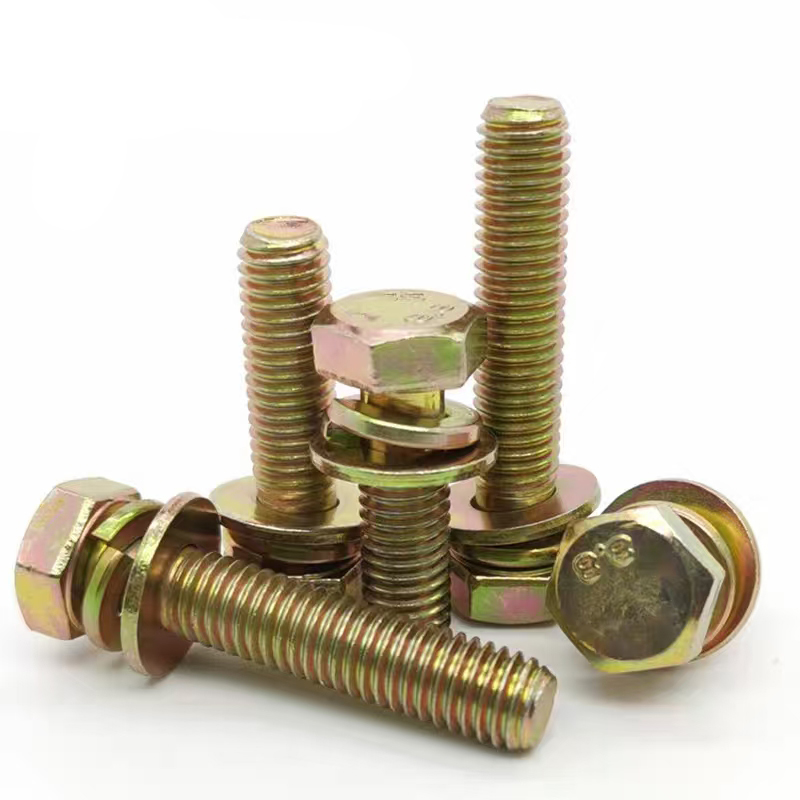
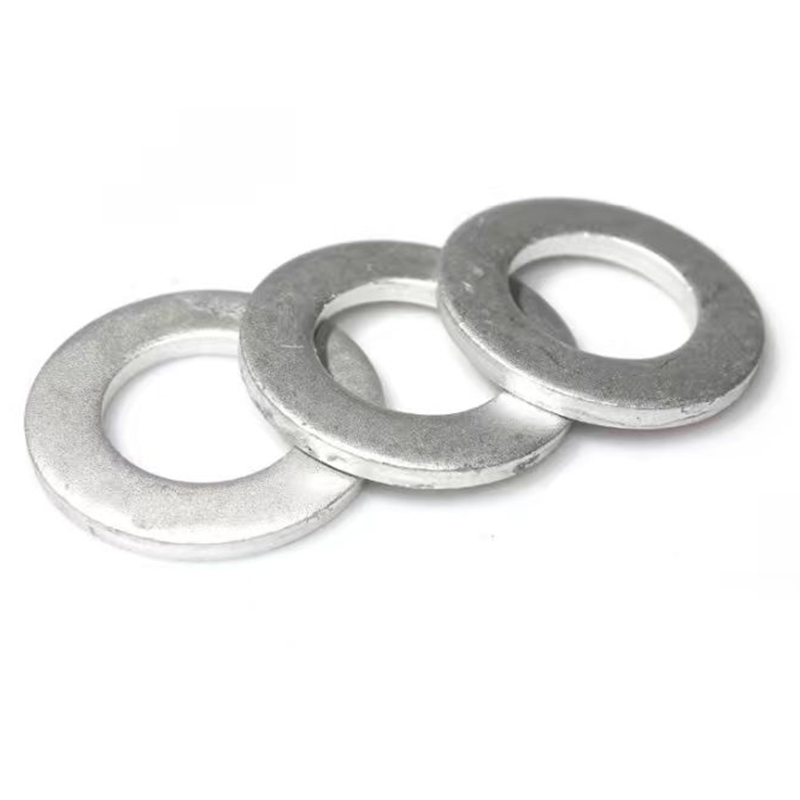
I’ve seen too many drawings that just call for a blue zinc gasket, assuming the color itself denotes a higher grade of corrosion resistance. It doesn’t. The foundation is always the zinc plating—typically a blue iridescent chromate conversion coating on top of that. The color comes from dyes or secondary treatments soaked into that porous chromate layer. So, durability breaks down into two battles: the zinc’s sacrificial corrosion protection, and the color layer’s resistance to wear, UV, and chemical exposure.
Where it gets tricky is in assembly. A worker tightening a bolt, or the gasket rubbing against a housing during installation, can easily scratch off that colored layer. Suddenly, you have a shiny silver spot where the base zinc is exposed. It’s not a failure of the corrosion protection yet, but it looks like one, and aesthetics matter in consumer-facing applications. I recall a batch of black zinc plated flange gaskets for an outdoor electrical enclosure where the installers used power drivers. The socket contact wore rings into the black finish right on the bolt head seats before the unit even saw rain. Client wasn’t happy about the pre-rusted look.
The salt spray test results tell a nuanced story. A standard blue chromate over zinc might hit 96 hours to white rust. The colored versions, especially darker ones like black or olive drab, might show color fading or staining even earlier, though the underlying zinc is still active. If your spec only cares about red rust, you’re okay for a while longer. But if the color integrity is part of the product spec—for coding or branding—you’ve already failed.
Environmental Realities vs. Catalog Claims
Forget the lab. Let’s talk about a hot, humid engine bay, or an outdoor structure near the coast. The UV exposure is a killer for organic dyes. That vibrant blue on a plated washer for a solar bracket can turn a milky, chalky pale blue in one season. The chromate underneath is doing its job, but the visual cue is gone. Chemical exposure is another beast. I’ve seen red-colored zinc gaskets used in machinery where occasional hydraulic fluid spray turned the color into a streaky, pinkish mess. The fluid didn’t attack the zinc, but it dissolved the dye.
This is where material choice bites you. A colored zinc plated gasket is often chosen as a cost-effective alternative to stainless steel or hot-dip galvanizing for moderate environments. But moderate is key. In a dry, indoor panel where it’s mostly for identification? Excellent choice. For anything with condensation, frequent thermal cycling, or abrasion, you’re on borrowed time. The decision tree shouldn’t start with we want blue, but with what will it actually touch?
We ran a comparative test a few years back with parts from a major production base like Yongnian in Hebei. We had standard zinc, blue chromate, and black-oxidized gaskets on a test rack in a semi-sheltered outdoor area. The black coating showed blotchy fading within 4 months. The blue held color better but developed white corrosion products at the edges faster. The plain zinc looked uniformly dull but hadn’t progressed to red rust much quicker. It was a clear lesson: the added layer for color can sometimes inadvertently create micro-cracks or variations in the chromate layer that become initiation points for corrosion.
The Manufacturing Variable: It’s All in the Process
Durability isn’t just about the material spec; it’s deeply tied to process control. A well-known supplier like Handan Zitai Fastener Manufacturing Co., Ltd., leveraging its location in China’s largest standard part base, typically has the scale and process flow down. But even there, the devil’s in the details. The critical steps are surface preparation before plating, the thickness and evenness of the zinc deposit, the time and concentration in the chromate bath, and the temperature and sealing of the dye bath.
A rushed chromate step or an improperly sealed dye will lead to premature failure. I’ve received batches where the color rubbed off with finger pressure. That’s a post-plating sealing issue. The substrate matters too. A gasket stamped from low-carbon steel versus one from a higher-grade alloy will have a different surface texture after cleaning, affecting plating adhesion. Handan Zitai Fastener Manufacturing Co., Ltd. and similar large-scale producers have the advantage of consistent raw material streams and automated lines, which reduces this variability compared to smaller job shops.
One practical tip I always give: ask for a cross-section or a simple tape test (per ASTM D3359) on samples. It’s not standard for fasteners, but it tells you about adhesion. Press a piece of strong adhesive tape onto the colored surface, rip it off. If color comes with it, you’ve got a bonding problem that will show up in transit or assembly.
When to Use It, and When to Walk Away
So, is it all bad? No. It’s about managed expectations. For internal components in dry, controlled environments—think server racks, office furniture assemblies, or internal machinery panels—colored zinc plating is fantastic for part identification and looks professional. Its durability is perfectly adequate. Also, for applications requiring some EMI/RFI shielding, the zinc base provides conductivity, and the color can be used to denote specific grounding or signal paths.
The failure comes from misapplication. I advised against using them for an automotive underbody trim component once, but the design team was set on the black finish for aesthetics. They tested it in a chamber and it passed the short-cycle corrosion test. Real-world? Road salt, gravel chipping, and constant moisture led to cosmetic failure in under a year. We switched to a mechanical galvanizing with a black topcoat, which was more expensive but lasted. The lesson: match the specification to the actual, harshest environment, not the ideal one.
Another niche but important point: galvanic compatibility. A zinc-plated steel gasket against an aluminum housing creates a galvanic couple, but zinc is closer to aluminum on the nobility scale, so it’s less aggressive than, say, a plain steel gasket. The color coating adds a thin, non-conductive barrier, which can slightly reduce the galvanic current if it’s intact. But once worn through, you’re back to zinc-aluminum contact. It’s a minor factor, but in sensitive electronics enclosures, it’s on the checklist.
Beyond the Plate: Alternative Paths
When the environment demands color but also serious durability, you have to look beyond standard electroplated color zinc. Geometries like gaskets, with their edges and often complex stamped shapes, are challenging to coat evenly. One alternative is mechanical plating with color, which can offer better thickness on edges. Another is powder coating, but that adds significant thickness and can affect compression in a gasket application—it’s more for covers or brackets.
For the highest durability, the answer often is to decouple the function from the color. Use a highly durable finish like Geomet? or Dacromet? for corrosion protection, and then add a colored patch, anodized aluminum washer, or a painted mark for identification. It’s more expensive, but it’s honest engineering. Sometimes, the best solution is to use a plain, high-quality zinc-nickel plated gasket and accept a neutral silver-gray color. Its salt spray resistance can be 500+ hours, dwarfing any colored chromate.
In the end, specifying a colored zinc plated gasket is a balance of cost, aesthetics, and real-world exposure. It’s a perfectly valid finish when applied with clear eyes. Don’t trust the catalog’s high corrosion resistance claim at face value. Get samples, subject them to your own realistic conditioning—a humidity chamber, a UV box, a bit of solvent wipe—and see what fails first. Your eyes and a simple magnifying glass will tell you more than any generic data sheet from a supplier, even a solid one based in a major hub like Handan Zitai. Their consistency gets you a good starting point, but your application defines the finish line.
Please leave us a message
-


-
-


WeChat
