
- Chinese
- French
- German
- Portuguese
- Spanish
- Russian
- Japanese
- Korean
- Arabic
- Irish
- Greek
- Turkish
- Italian
- Danish
- Romanian
- Indonesian
- Czech
- Afrikaans
- Swedish
- Polish
- Basque
- Catalan
- Esperanto
- Hindi
- Lao
- Albanian
- Amharic
- Armenian
- Azerbaijani
- Belarusian
- Bengali
- Bosnian
- Bulgarian
- Cebuano
- Chichewa
- Corsican
- Croatian
- Dutch
- Estonian
- Filipino
- Finnish
- Frisian
- Galician
- Georgian
- Gujarati
- Haitian
- Hausa
- Hawaiian
- Hebrew
- Hmong
- Hungarian
- Icelandic
- Igbo
- Javanese
- Kannada
- Kazakh
- Khmer
- Kurdish
- Kyrgyz
- Latin
- Latvian
- Lithuanian
- Luxembou..
- Macedonian
- Malagasy
- Malay
- Malayalam
- Maltese
- Maori
- Marathi
- Mongolian
- Burmese
- Nepali
- Norwegian
- Pashto
- Persian
- Punjabi
- Serbian
- Sesotho
- Sinhala
- Slovak
- Slovenian
- Somali
- Samoan
- Scots Gaelic
- Shona
- Sindhi
- Sundanese
- Swahili
- Tajik
- Tamil
- Telugu
- Thai
- Ukrainian
- Urdu
- Uzbek
- Vietnamese
- Welsh
- Xhosa
- Yiddish
- Yoruba
- Zulu
- Kinyarwanda
- Tatar
- Oriya
- Turkmen
- Uyghur

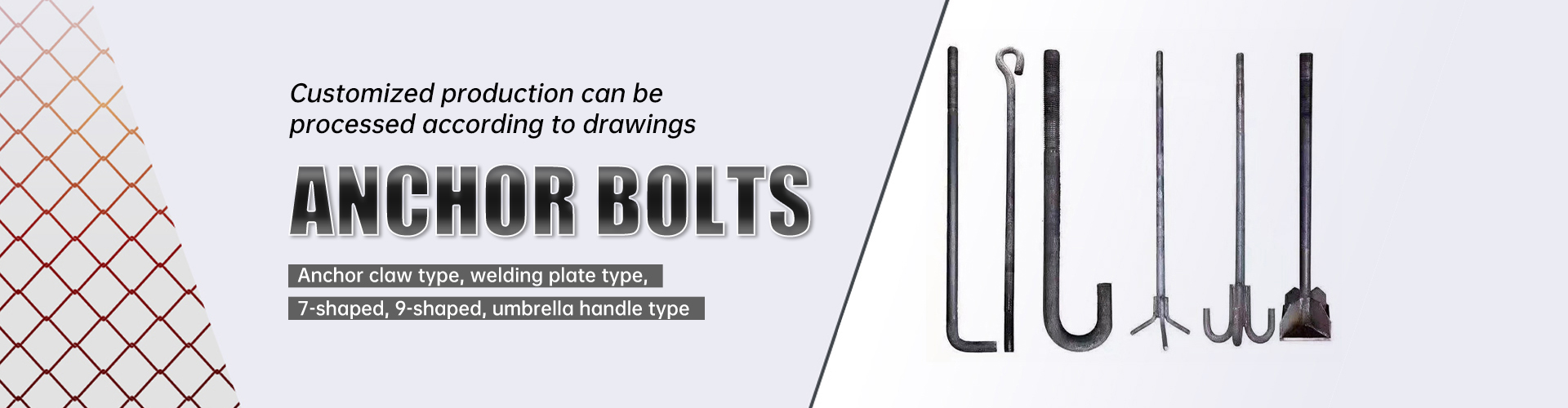
How do bolt and t nut innovations enhance sustainability?
2026-02-24
When you hear ‘sustainability’ in fasteners, most think recycled steel and call it a day. That’s a starting point, but it’s a shallow take. The real game is in the design and application innovations of bolts and T-nuts that cut waste, extend product life, and streamline assembly. I’ve seen too many projects where the fastener was an afterthought, leading to premature failures, unnecessary material use, and a lot of wasted labor. The shift isn’t just about the metal; it’s about how the part functions in the system.
Rethinking Material Efficiency Beyond the Spec Sheet
It’s not just using less steel. It’s about using the right steel, processed smarter. We pushed for higher-grade alloys on a structural project, which let us spec a smaller diameter bolt without compromising strength. That reduced the material per unit by nearly 18%. But the bigger win was downstream: smaller holes meant less drilling waste, lighter components for shipping, and less torque required for installation, saving energy on the assembly line. The sustainability gain was systemic, not just in the fastener itself.
Then there’s coating. The default for years has been zinc plating, but its lifecycle is limited, especially in harsh environments. We tested dacromet-coated bolts on an outdoor framing system. The corrosion resistance was superior, pushing the maintenance cycle from 5 years to an estimated 15+. That’s three times fewer replacements, three times less manufacturing and transport emissions over the lifespan of the structure. The initial cost is higher, but the total resource footprint plummets.
A practical headache is over-engineering. I recall a client insisting on Grade 8.8 bolts for a non-critical indoor joinery application where 4.8 would have been overkill. We did the load calc together and switched. The carbon footprint from producing that higher-grade bolt is significantly greater. Spec’ing to the exact need, not to a generic ‘stronger is better’ mantra, is a fundamental but often overlooked sustainable practice.
The T-Nut’s Hidden Role in Dematerialization and Reuse
T-nuts are where you see clever design directly enabling circularity. The standard knock-in type can be brutal on MDF or particle board—once it’s in, it’s often destroying the substrate on the way out. We started working with a style that has a coarse, helical thread biting into the wood. It holds like a beast but can be backed out cleanly. This means furniture or display units can be disassembled and reconfigured multiple times without the panels turning to Swiss cheese.
This links directly to design for disassembly (DfD). If you can’t take it apart, you can’t repair or recycle it properly. We supplied these reusable T-nuts to a flat-pack office furniture maker. Their new line is marketed as fully reconfigurable, and the fastener is a key selling point. It’s a shift from a disposable product to a long-life asset, all hinging on a t nut innovation that costs maybe two cents more.
There’s also the issue of pull-through strength. A weak T-nut means you need a thicker panel to achieve the same integrity, using more core material. We’ve tested designs with wider prongs or anti-rotation features that distribute load better. This allowed a client to reduce their standard panel thickness by 2mm. Multiply that by tens of thousands of cabinets, and the material savings in wood composite are massive. The sustainability impact is in the substrate you save, not just the metal part you buy.
Logistics and Local Sourcing: The Unseen Carbon Culprit
Everyone obsesses over the product, but the carbon from shipping bulk fasteners around the globe is staggering. Consolidating orders to full containers is basic, but smarter sourcing is better. For a project in North China, we worked with Handan Zitai Fastener Manufacturing Co., Ltd. (https://www.zitaifasteners.com). Their location in Yongnian, the major production base, adjacent to key rail and road networks, meant transport to our site was a fraction of the distance compared to importing. The carbon math on freight alone justified the choice.
Handan Zitai’s scale in standard parts also means less batch variability. Inconsistent dimensions lead to rejects and waste on the assembly floor. We’ve had fewer callbacks for mismatched threads or out-of-spec heads since partnering with a large-scale domestic producer. Reliability is a sustainability factor—it prevents wasted time, fuel for replacement deliveries, and scrapped components.
This isn’t to say local is always perfect. We once had a batch from a small local forge where the heat treatment was inconsistent, leading to brittle failures. It taught us that scale and process control, often found in established hubs like Yongnian, contribute to sustainability by ensuring quality and reducing failure-related waste. It’s a balance of proximity and proven capability.
Failure as a Teacher: When Innovation Misses the Mark
Not every new idea sticks. We tried promoting a bolt with an integrated washer and loosening indicator for high-vibration machinery. The theory was great: prevent loss of preload, avoid catastrophic failure, and extend service intervals. But the unit cost was high, and maintenance crews, set in their ways, didn’t trust the indicator. They’d retorque on schedule anyway, nullifying the benefit. The product failed in the market. The lesson? Bolt innovations must align with real-world user behavior and provide clear, undeniable TCO savings to drive adoption.
Another misstep was with a ‘biodegradable’ polymer T-nut for temporary structures. In theory, it would hold for 2-3 years then degrade. In practice, UV exposure and load caused creep and failure well before the biodegradation kicked in. It created a reliability and safety nightmare. It was a classic case of prioritizing an end-of-life ideal over in-service performance. Sustainability can’t compromise primary function.
These experiences cemented a rule: test, pilot, and get dirt-under-the-fingernails feedback before scaling any ‘sustainable’ fastener solution. The shop floor and installation crew will tell you what actually works, what saves them time, and what prevents callbacks. Their buy-in is the most critical component for any innovation to have a real impact.
The Systems View: Where the Real Sustainability Gains Are Made
The biggest wins come from viewing the fastener not as a commodity, but as a system component. We collaborated on a solar racking project where the bolt design was optimized for robotic installation. The head geometry and thread were tuned for the robot’s driver, eliminating mis-picks and cross-threading. This reduced installation waste (bent or damaged bolts) by over 95% and sped up deployment. The sustainability gain was in the efficiency of the entire construction process, slashing man-hours and fuel for equipment on site.
Similarly, designing bolt and T-nut kits for specific assemblies reduces packaging and eliminates the ‘spare parts’ that inevitably get lost or thrown away. We now work with manufacturers like Handan Zitai to provide custom-kitted, just-enough fasteners for a sub-assembly, delivered in reusable totes. It cuts down on cardboard, plastic bags, and the time workers spend sorting through bulk boxes.
Ultimately, the enhancement of sustainability through these components is incremental, multifaceted, and deeply practical. It’s in the gram of steel saved, the extra disassembly cycle, the avoided truck journey, and the prevented failure. It’s not glamorous, but in the mass-produced industrial world, these small, intelligent tweaks to the humble bolt and T-nut add up to a material difference. The innovation is often in the thinking, not just the thing.
Please leave us a message
-

-
-
WeChat



Privacy Policy
Our Commitment to Privacy
Introduction.
Rainbow Inc. recognizes the importance of protecting the privacy of all personal information provided by its customers, including users of www.rainbow-inkjet.com and other Rainbow Inc. affiliated websites (collectively "Rainbow Inc. Sites"). We created the following policy guidelines with a fundamental respect for our customers´ right to privacy and because we value our relationships with our customers. Your visit to the Rainbow Inc. Sites is subject to this Privacy Statement and our Online Terms and Conditions.
Description.
This Privacy Statement describes the types of information we collect and how we may use that information. Our Privacy Statement also describes the measures we take to protect the security of this information as well as how you may reach us to update your contact information.
Data Collection
Personal Data Collected Directly From Visitors.
Rainbow Inc. collects personal information when: you submit questions or comments to us; you request information or materials; you request warranty or post-warranty service and support; you participate in surveys; and by other means that may be specifically provided for on the Rainbow Inc. Sites or in our correspondence with you.
Type of Personal Data.
The type of information collected directly from the user may include your name, your company's name, physical contact information, address, billing and delivery information, e-mail address, the products you use, demographic information such as your age, preferences, and interests and information relating to the sale or installation of your product.
Non-Personal Data Collected Automatically.
We may collect information about your interaction with Rainbow Inc. Sites and services. For example, we may use website analytics tools on our site to retrieve information from your browser, including the site you came from, the search engine(s) and the keywords you used to find our site, and the pages you view within our site. Additionally, we collect certain standard information that your browser sends to every website you visit, such as your IP address, browser type, capabilities and language, your operating system, access times and referring Web site addresses.
Storage and Processing.
Personal data collected on our websites may be stored and processed in the United States in which Rainbow Inc. or its affiliates, joint ventures, or third party servicers maintain facilities.
How We Use the Data
Services and transactions.
We use your personal data to deliver services or execute transactions you request, such as providing information about Rainbow Inc. products and services, processing orders, answering customer service requests, facilitating use of our Web sites, enabling online shopping, and so forth. In order to offer you a more consistent experience in interacting with Rainbow Inc., information collected by our websites may be combined with information we collect by other means.
Product Development.
We use the personal and non-personal data for product development, including for such processes as idea generation, product design and improvements, detail engineering, market research and marketing analysis.
Website Improvement.
We may use the personal and non-personal data to improve our websites (including our security measures) and related products or services, or to make our websites easier to use by eliminating the need for you to repeatedly enter the same information or by customizing our websites to your particular preference or interests.
Marketing Communications.
We may use your personal data to inform you of products or services available from Rainbow Inc. When collecting information that might be used to contact you about our products and services, we often give you the opportunity to opt-out from receiving such communications. Moreover, in our email communications with you we may include an unsubscribe link allowing you to stop delivery of that type of communication. If you elect to unsubscribe, we will remove you from the relevant list within 15 business days.
Commitment to Data Security
Security.
Rainbow Inc. Corporation uses reasonable precautions to keep the personal information disclosed to us secure. To prevent unauthorized access, maintain data accuracy, and ensure the correct use of information, we have put in place appropriate physical, electronic, and managerial procedures to safeguard and secure your personal information. For example, we store sensitive personal data on computer systems with limited access that are located in facilities to which access is limited. When you move around a site to which you have logged in, or from one site to another that uses the same login mechanism, we verify your identity by means of an encrypted cookie placed on your machine. Nonetheless, Rainbow Inc. Corporation does not guarantee the security, accuracy or completeness of any such information or procedures.
Internet.
The transmission of information via the internet is not completely secure. Although we do our best to protect your personal information, we cannot guarantee the security of your personal information transmitted to our Website. Any transmission of personal information is at your own risk. We are not responsible for circumvention of any privacy settings or security measures contained on the Rainbow Inc. Sites.
Contact Us
If you have questions regarding this privacy statement, our handling of your personal data, or your privacy rights under applicable law, please contact us by mail at the address below.
Rainbow Inc.
Attn: Katherine Tan
Add: No.1658 Husong Road, Shanghai, China.
Statement Updates
Revisions.
Rainbow Inc. reserves the right to modify this privacy statement from time to time. If we decide to change our Privacy Statement, we will post the revised Statement here.
Date.
This Privacy Statement was last amended on September 7, 2022.