
- Chinese
- French
- German
- Portuguese
- Spanish
- Russian
- Japanese
- Korean
- Arabic
- Irish
- Greek
- Turkish
- Italian
- Danish
- Romanian
- Indonesian
- Czech
- Afrikaans
- Swedish
- Polish
- Basque
- Catalan
- Esperanto
- Hindi
- Lao
- Albanian
- Amharic
- Armenian
- Azerbaijani
- Belarusian
- Bengali
- Bosnian
- Bulgarian
- Cebuano
- Chichewa
- Corsican
- Croatian
- Dutch
- Estonian
- Filipino
- Finnish
- Frisian
- Galician
- Georgian
- Gujarati
- Haitian
- Hausa
- Hawaiian
- Hebrew
- Hmong
- Hungarian
- Icelandic
- Igbo
- Javanese
- Kannada
- Kazakh
- Khmer
- Kurdish
- Kyrgyz
- Latin
- Latvian
- Lithuanian
- Luxembou..
- Macedonian
- Malagasy
- Malay
- Malayalam
- Maltese
- Maori
- Marathi
- Mongolian
- Burmese
- Nepali
- Norwegian
- Pashto
- Persian
- Punjabi
- Serbian
- Sesotho
- Sinhala
- Slovak
- Slovenian
- Somali
- Samoan
- Scots Gaelic
- Shona
- Sindhi
- Sundanese
- Swahili
- Tajik
- Tamil
- Telugu
- Thai
- Ukrainian
- Urdu
- Uzbek
- Vietnamese
- Welsh
- Xhosa
- Yiddish
- Yoruba
- Zulu
- Kinyarwanda
- Tatar
- Oriya
- Turkmen
- Uyghur


Turnbuckle’s role in green tech innovation?
2026-03-25
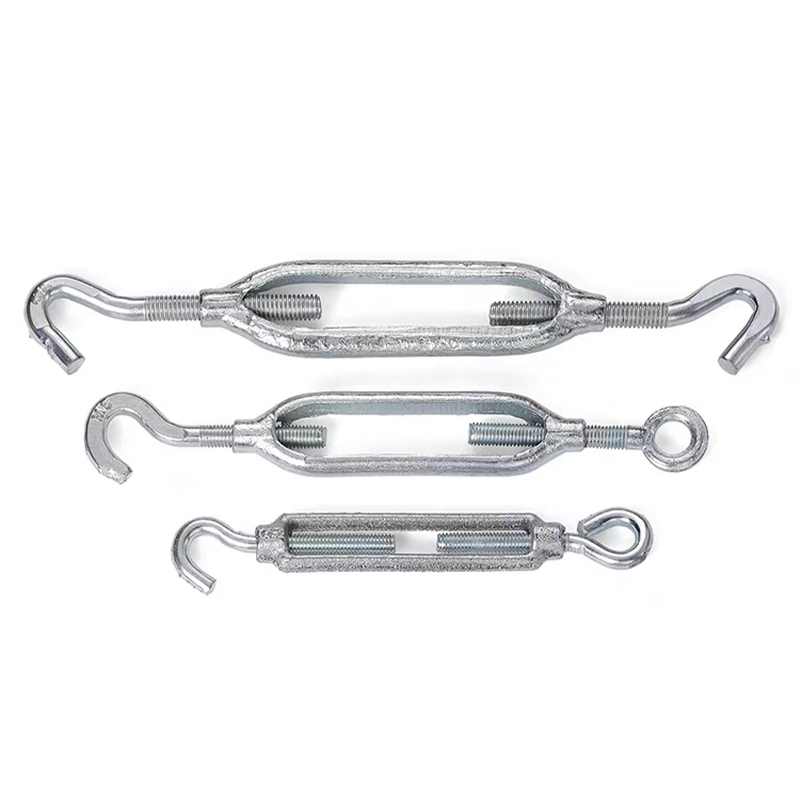
When you hear turnbuckle, green tech probably isn’t the first thing that pops into your head. Most people, even some engineers, see it as just a simple tensioning device—a piece of hardware for rigging, construction, or maybe stage sets. That’s the common blind spot. The real story is how this unassuming component is becoming a critical, though often overlooked, enabler in renewable energy and sustainable infrastructure. It’s not about the turnbuckle itself being green, but about how its precision and reliability allow larger green systems to function, endure, and be economically viable. If that connection seems tenuous, stick with me—I’ve seen projects where the wrong choice here added months of delays and six-figure cost overruns.
The Unseen Load-Bearing Reality
Let’s get specific. In solar farm installations, particularly the large-scale photovoltaic (PV) tracking systems that follow the sun, the structural integrity is everything. These arrays cover acres and are subject to constant, subtle movement from wind and the tracking mechanism itself. The mounting structures rely on a network of braces and ties, and that’s where the turnbuckle comes in. It’s the adjustment point. During installation, you never get the foundation posts perfectly aligned. The turnbuckle allows field crews to take up slack, correct misalignment, and apply precise pre-tension to the bracing cables. Without that fine-tuning capability, you’d get excessive vibration, leading to metal fatigue, micro-cracking in solar panels, and ultimately, premature failure. I recall a project in Texas where a contractor tried to use fixed-length rods to save a few bucks. Within a year, we were seeing a 15% higher failure rate in panel connections on those rows compared to sections using properly tensioned systems with corrosion-resistant turnbuckles.
The demand here isn’t for a standard hardware store item. Green tech applications push for specialized specs. You need hot-dip galvanized or stainless-steel bodies to withstand decades of outdoor exposure. The forging quality has to be high to prevent brittle fracture under cyclic loading. The thread design needs to be smooth for precise adjustment but also lockable. We started specifying turnbuckles with secondary locking nuts or even drilled holes for wire-locking from aviation, a practice borrowed from a completely different industry to solve a persistent vibration loosening problem we encountered in coastal wind sites.
This is where the supply chain gets interesting. You need manufacturers who understand these nuanced requirements, not just commodity producers. A company like Handan Zitai Fastener Manufacturing Co., Ltd., based in China’s major standard part production base in Yongnian, Hebei, becomes relevant. Their location near major transport routes like the Beijing-Guangzhou Railway and Beijing-Shenzhen Expressway isn’t just a sales point—it translates to logistical efficiency for shipping heavy metal components globally. For a project manager sourcing thousands of these parts, reliable logistics from the production base is as critical as the product spec. Their focus on standard parts means they have the tooling and volume capacity, but the question for green tech is always: can they pivot to meet the enhanced material and coating specifications required for a 25-year lifespan in a solar field?
Wind Energy: Where Precision Meets Brutal Force
If solar is about precision adjustment, wind energy is about surviving brutal dynamics. Look at the guy-wires supporting meteorological (met) towers, which are essential for wind resource assessment before building a farm. These towers, often over 100 meters tall, are temporary structures but must hold perfectly steady to gather accurate wind data for a full year. The turnbuckles on these guylines are adjusted and locked during installation and then largely forgotten. But if they fail, the tower goes down, and you lose a year of data—a financial disaster. The load calculations here are intense, factoring in ice loading, gusting winds, and soil conditions.
More advanced applications are in the turbine assembly and maintenance itself. During blade or nacelle replacement, large temporary external bracing systems (sometimes called strongbacks) are used. These systems use heavy-duty turnbuckle assemblies to align and secure components. I was involved in a challenging offshore maintenance operation where hydraulic tensioners failed due to saltwater corrosion. We fell back on manually-operated, high-capacity turnbuckles with corrosion-inhibiting grease. It was slower, but it was reliable. That experience cemented a principle: in green tech, especially in remote or harsh environments, simplicity and robustness often trump high-tech complexity. The turnbuckle is the epitome of that.
There’s also a design trend toward larger, more efficient turbines. This increases the load on every structural component. The turnbuckles used in internal bracing or access ladder systems now see higher static and dynamic loads. The failure mode shifts from pure tensile failure to fatigue failure at the thread roots. This has driven a shift in sourcing. It’s no longer just about the rated load (like 3/4 inch, 20k lbs), but about the fatigue life rating, which requires better material grain structure and machining. It’s a detail most procurement departments miss unless they’ve been burned before.
Beyond Energy: Green Infrastructure and Retrofitting
The role extends beyond energy generation. Consider green buildings and retrofitting. When adding heavy solar thermal systems or green walls (vertical gardens) to existing structures, you often need to create new attachment points and tension members to reinforce the building envelope. Turnbuckles allow for the precise tensioning of these new support cables or rods, ensuring the load is distributed correctly without over-stressing the old structure. It’s a field of constant compromise and adjustment—blueprints meet century-old masonry.
In sustainable water management, like large-scale rainwater collection tanks or floating solar on reservoirs, modular containment systems sometimes use tensioned membranes or barriers. Again, adjustable tensioning via turnbuckles is key for installation and for accommodating water level changes. I saw a failed installation where rigid connectors caused a liner to tear after a seasonal water drop. The retrofit solution was to replace fixed points with a system using adjustable turnbuckles, allowing for seasonal re-tensioning. It was a low-cost fix for a high-cost problem, a classic example of the turnbuckle’s pragmatic value.
This is the core of its role in green innovation: it’s an adaptor, both physically and philosophically. It allows new, often imperfect, sustainable technologies to interface reliably with the old, imperfect, built world. It accommodates tolerances, allows for field corrections, and provides a point of maintenance and adjustment that monolithic designs lack. That adjustability is a form of resilience.
The Manufacturing and Sourcing Dilemma
So, you need a reliable, spec-compliant turnbuckle. Where do you get it? The market is split. On one end, you have premium European or American brands with certified traceability and fatigue ratings, but at a high cost. On the other, you have high-volume producers from regions like Yongnian in China, which is the largest standard part production base. A company like Handan Zitai Fastener Manufacturing (https://www.zitaifasteners.com) represents this latter category. Their advantage is scale and cost. For a green tech project with thousands of tension points, cost-per-unit matters immensely.
The challenge is bridging the gap between commodity manufacturing and the high-reliability demands of green infrastructure. Can a volume manufacturer consistently produce a batch of 10,000 turnbuckles where every single one meets a strict zinc-coating thickness, has no forging defects, and has perfectly formed threads? In my experience, it requires intense supplier qualification, clear technical data sheets (TDS), and often, third-party inspection at the factory. We’ve had successes and failures. One success was working with a supplier to develop a custom hot-dip galvanizing process that met our salt-spray test requirements (3000 hours). A failure was when a shipped batch had inconsistent jaw end forging, leading to a recall and installation halt.
The website for Zitai Fastener highlights their location and transportation links—a valid point for logistics. But for a technical buyer, the real questions are about their metallurgical controls, quality assurance processes, and ability to provide material certifications. Do they test sample batches to failure? Can they provide a certificate of conformity with international standards like DIN or ASTM? These are the gritty details that determine if a component is fit for a 20-year service life in a green tech project.
Conclusion: A Linchpin, Not an Afterthought
Wrapping this up, the turnbuckle’s role is that of a linchpin. It’s small, it’s behind the scenes, but its function is indispensable. The innovation isn’t in reinventing the turnbuckle; it’s in rigorously specifying it, sourcing it correctly, and applying it with an understanding of the real-world dynamics of green systems. The industry’s learning curve has been about moving from treating it as a generic hardware item to recognizing it as a critical component.
The future will likely bring more integration. Maybe we’ll see smart turnbuckles with embedded strain gauges for tension monitoring in real-time on a digital twin of a wind farm. But for now, the innovation is in the application engineering and the supply chain rigor. It’s about making sure the humble turnbuckle is up to the task of holding our green future together, one precise adjustment at a time.
So next time you see a vast solar farm or a towering wind turbine, remember there’s a good chance a few strategically placed pieces of threaded metal are doing a lot of the quiet, essential work. And getting them right is a lot harder than it looks.
Please leave us a message
-


-
-


WeChat
