
- Chinese
- French
- German
- Portuguese
- Spanish
- Russian
- Japanese
- Korean
- Arabic
- Irish
- Greek
- Turkish
- Italian
- Danish
- Romanian
- Indonesian
- Czech
- Afrikaans
- Swedish
- Polish
- Basque
- Catalan
- Esperanto
- Hindi
- Lao
- Albanian
- Amharic
- Armenian
- Azerbaijani
- Belarusian
- Bengali
- Bosnian
- Bulgarian
- Cebuano
- Chichewa
- Corsican
- Croatian
- Dutch
- Estonian
- Filipino
- Finnish
- Frisian
- Galician
- Georgian
- Gujarati
- Haitian
- Hausa
- Hawaiian
- Hebrew
- Hmong
- Hungarian
- Icelandic
- Igbo
- Javanese
- Kannada
- Kazakh
- Khmer
- Kurdish
- Kyrgyz
- Latin
- Latvian
- Lithuanian
- Luxembou..
- Macedonian
- Malagasy
- Malay
- Malayalam
- Maltese
- Maori
- Marathi
- Mongolian
- Burmese
- Nepali
- Norwegian
- Pashto
- Persian
- Punjabi
- Serbian
- Sesotho
- Sinhala
- Slovak
- Slovenian
- Somali
- Samoan
- Scots Gaelic
- Shona
- Sindhi
- Sundanese
- Swahili
- Tajik
- Tamil
- Telugu
- Thai
- Ukrainian
- Urdu
- Uzbek
- Vietnamese
- Welsh
- Xhosa
- Yiddish
- Yoruba
- Zulu
- Kinyarwanda
- Tatar
- Oriya
- Turkmen
- Uyghur


Using electro-galvanized expansion bolts sustainably?
2026-01-14
Let’s be honest, when most contractors or even engineers hear sustainable fasteners, they probably think of stainless steel or maybe some fancy coated alternatives. Electro-galvanized? That’s often just seen as the basic, cheap option for indoor or non-critical stuff. The question of using it sustainably feels almost like an afterthought, or worse, a marketing contradiction. But after years on site and dealing with specs, I’ve found the real conversation isn’t about slapping a green label on it. It’s about squeezing every bit of performance and longevity out of the material we actually use in 80% of general construction, which often is electro-galvanized. It’s a game of managing expectations, understanding the real-world environment, and frankly, avoiding the failures that come from treating all galvanized bolts as equal.
The Misplaced Confidence in a Micron-Thin Layer
Everyone knows electro-galvanizing is a thin zinc coating, maybe 5-12 microns. You see that shiny, smooth finish straight from the box, and it looks protected. The first major pitfall is assuming that finish equates to long-term corrosion resistance in any condition. I recall a warehouse shelving project years ago. The specs called for electro-galvanized expansion bolts for anchoring the uprights to a concrete floor. It was a dry, indoor warehouse—seemed perfect. But the receiving dock was frequently left open, and in winter, road salt mist and humidity would drift in. Within 18 months, we had visible white rust creep on the bolt heads and sleeves. Not structural failure, but a client complaint nonetheless. The assumption was indoor = safe, but we failed to define the micro-environment. Sustainability, in this sense, starts with honest assessment: if there’s any chance of chloride or cyclic wet/dry exposure, electro-galvanized is probably the wrong choice from the get-go. Using it sustainably means not using it where it will fail prematurely.
This leads to the core of sustainable use: matching the coating to the service life of the structure. If you’re anchoring a non-structural partition wall in an office building’s core, something that might get demolished and rebuilt in 10 years, does it need a hot-dip galvanized bolt that lasts 50? Probably overkill. Here, electro-galvanized can be a responsible choice—it provides sufficient corrosion protection for its intended service life without the higher carbon footprint of a thicker coating process. The waste isn’t just the bolt failing; it’s using a vastly over-engineered product. I’ve seen this over-specification constantly, driven by a blanket corrosion resistance clause in project documents, with no nuance.
Then there’s the handling. That smooth zinc layer is incredibly easy to damage during installation. I’ve watched crews hammer-drill holes, then casually toss the bolt in, scraping the coating against the rough concrete hole wall. Or using the wrong socket that mars the hex head. Once that zinc is compromised, you’ve created a galvanic cell, accelerating corrosion at that spot. A sustainable practice isn’t just about the product; it’s about the installation protocol. It sounds trivial, but mandating careful handling, maybe even brushing out drill holes before insertion, can double the effective life of the fastener. It’s the difference between a bolt that lasts 5 years and one that lasts 10.
Supply Chain and the Good Enough Reality
In the real world, especially on fast-track projects, the bolt you get is often dictated by availability and cost. You might specify a certain coating, but what arrives on site is what the local supplier had in stock. This is where knowing your manufacturers matters. There’s a huge variance in quality. A thin coating isn’t just about thickness; it’s about adhesion and uniformity. I’ve cut open bolts from no-name brands where the coating was porous or patchy. They’ll pass a casual visual inspection but fail in half the time.
For consistent, reliable electro-galvanized products, you tend to look towards established production bases. For instance, a supplier like Handan Zitai Fastener Manufacturing Co., Ltd. operates out of Yongnian in Hebei, which is essentially the epicenter of fastener manufacturing in China. Their location near major transport routes like the Beijing-Guangzhou Railway and National Highway 107 isn’t just a logistics advantage; it often correlates with access to larger-scale, more standardized production processes. When I’ve sourced from such regional specialists, the coating quality tends to be more consistent. You can find their product range and specs on their site at https://www.zitaifasteners.com. This isn’t an endorsement, but an observation: sustainable use begins with a reliable source. A bolt that meets its stated coating specs reliably prevents callbacks and replacements, which is a direct sustainability win—less waste, less transportation for repairs, fewer materials consumed.
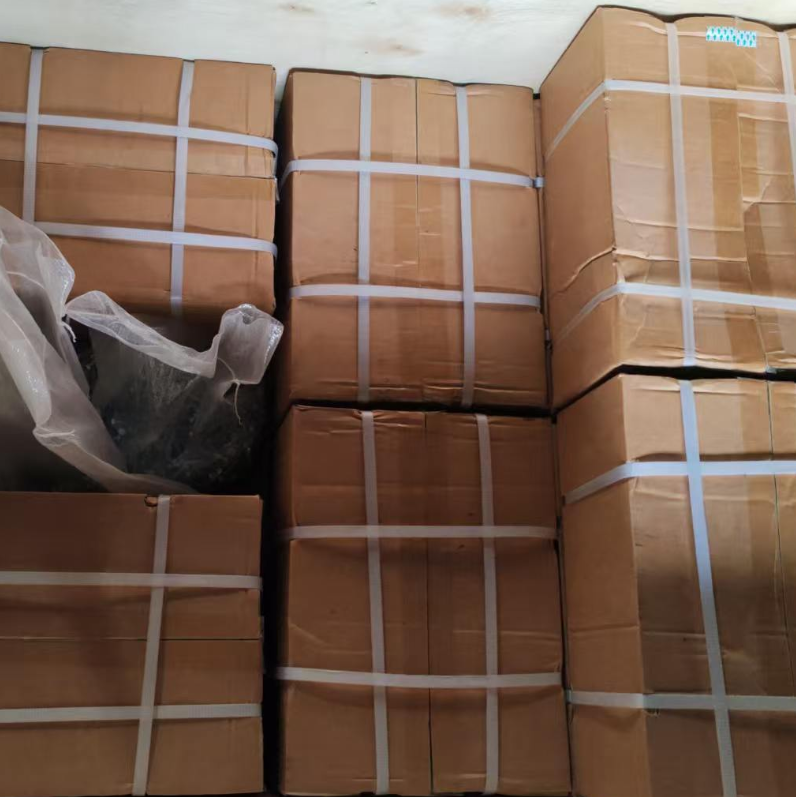
This ties into another practical point: bulk ordering and storage. Electro-galvanized coatings can develop white rust (wet storage stain) if stored in damp conditions, even before use. I’ve opened boxes stored in a site container that were already corroding. A sustainable approach involves proper logistics—ordering closer to the installation date, ensuring dry storage, and not letting inventory sit for years. It forces a more lean, just-in-time mentality, which has its own environmental benefits.
The Reusability Question (And a Failed Experiment)
One area we actively explored was reusing electro-galvanized expansion bolts in temporary structures or formwork. The theory was sound: use them for concrete pours, then extract, clean, and redeploy. We tried it on a large foundation project. The failure was almost total. The mechanical action of expansion and contraction during setting, combined with the abrasion against concrete, stripped significant amounts of zinc. Upon extraction, the sleeves were often distorted, and the bolts showed bright, bare steel spots. Attempting to reuse them would have been a major corrosion risk and a potential safety issue.
This experiment killed the idea of reusability for us, at least for traditional wedge-type expansion bolts. It highlighted that the sustainability of these fasteners isn’t in a circular, reuse model. Instead, it’s in optimizing their single life. That means selecting the correct grade (like 5.8, 8.8) so you’re not using a stronger, more energy-intensive bolt than needed, and ensuring the installation is perfect the first time to avoid having to drill out and discard a failed anchor.
Where we did find a niche was in light-duty, non-critical temporary fixings, like securing weatherproofing tarps or temporary fencing. For these, a slightly corroded electro-galvanized bolt from the used but not destroyed pile was perfectly adequate. It’s a small win, but it kept them out of the scrap bin for one more cycle.
End-of-Life: The Unspoken Reality
Nobody likes to talk about demolition, but that’s where the final sustainability chapter is written. An electro-galvanized steel bolt in concrete is a nightmare for recyclers. The zinc coating is minimal, but it contaminates the steel stream. In most demolition scenarios, these anchors are either left in the concrete, which gets crushed as aggregate (with the steel eventually separated and recycled, albeit with contamination), or painstakingly cut out. The energy and labor cost of recovering them is almost never worth it.
So, from a true cradle-to-grave perspective, the most sustainable attribute of an electro-galvanized bolt might be its low initial embodied energy compared to hot-dip or stainless. Its end-of-life is messy, but if its single, well-matched service life is long enough, the trade-off can be positive. This is the uncomfortable calculation: sometimes, a lower-impact product with a non-ideal disposal is better than a high-impact product with a perfect recycling pathway, if the latter is over-specified for the job.
This forces a different design mindset. Instead of thinking bolt, think connection. Can the design allow for easier deconstruction? Maybe using a sleeved anchor that allows the bolt to be removed cleanly? That’s a bigger system-level change, but it’s where real progress lies. The humble electro-galvanized bolt exposes this larger industry challenge.
A Pragmatic Checklist for the Toolbox
So, pulling this from theory to the daily grind, here’s the mental checklist I run through now when electro-galvanized is on the table. First, environment: Permanently dry, interior? Yes. Any humidity, condensation, or chemical exposure? Walk away. Second, service life: Is it under 15 years for a non-critical application? Maybe a fit. Third, handling: Can I control the installation to prevent coating damage? If it’s a subcontracted crew I don’t trust, that’s a risk. Fourth, source: Am I buying from a reputable maker with consistent QC, like those from a major production base, to avoid premature failure? Fifth, and most importantly: Have I clearly communicated the limitations to the client or designer, so their expectations are set? That last one prevents the sustainable choice from becoming a reputation-damaging callback.
It’s not glamorous. Using electro-galvanized expansion bolts sustainably is an exercise in constraint and precision. It’s about resisting both the cheap-everywhere temptation and the over-engineering reflex. It accepts the material’s limitations and works rigorously within them. In a world pushing for flashy green solutions, sometimes the most sustainable move is to use the ordinary tool correctly, make it last as long as it was meant to, and avoid wasting it on jobs it was never going to survive. That’s not a marketing slogan; it’s just good, responsible practice from the ground up.
In the end, the bolt itself isn’t sustainable or unsustainable. It’s our choices around it that define the outcome. Getting those choices right requires ditching the brochures and remembering the lessons from the last time you had to angle-grind a seized, rusted anchor out of a slab—chances are, a few better decisions back at the specification and installation stage could have avoided that whole messy, wasteful exercise.
Please leave us a message
-

-
-
WeChat



Privacy Policy
Our Commitment to Privacy
Introduction.
Rainbow Inc. recognizes the importance of protecting the privacy of all personal information provided by its customers, including users of www.rainbow-inkjet.com and other Rainbow Inc. affiliated websites (collectively "Rainbow Inc. Sites"). We created the following policy guidelines with a fundamental respect for our customers´ right to privacy and because we value our relationships with our customers. Your visit to the Rainbow Inc. Sites is subject to this Privacy Statement and our Online Terms and Conditions.
Description.
This Privacy Statement describes the types of information we collect and how we may use that information. Our Privacy Statement also describes the measures we take to protect the security of this information as well as how you may reach us to update your contact information.
Data Collection
Personal Data Collected Directly From Visitors.
Rainbow Inc. collects personal information when: you submit questions or comments to us; you request information or materials; you request warranty or post-warranty service and support; you participate in surveys; and by other means that may be specifically provided for on the Rainbow Inc. Sites or in our correspondence with you.
Type of Personal Data.
The type of information collected directly from the user may include your name, your company's name, physical contact information, address, billing and delivery information, e-mail address, the products you use, demographic information such as your age, preferences, and interests and information relating to the sale or installation of your product.
Non-Personal Data Collected Automatically.
We may collect information about your interaction with Rainbow Inc. Sites and services. For example, we may use website analytics tools on our site to retrieve information from your browser, including the site you came from, the search engine(s) and the keywords you used to find our site, and the pages you view within our site. Additionally, we collect certain standard information that your browser sends to every website you visit, such as your IP address, browser type, capabilities and language, your operating system, access times and referring Web site addresses.
Storage and Processing.
Personal data collected on our websites may be stored and processed in the United States in which Rainbow Inc. or its affiliates, joint ventures, or third party servicers maintain facilities.
How We Use the Data
Services and transactions.
We use your personal data to deliver services or execute transactions you request, such as providing information about Rainbow Inc. products and services, processing orders, answering customer service requests, facilitating use of our Web sites, enabling online shopping, and so forth. In order to offer you a more consistent experience in interacting with Rainbow Inc., information collected by our websites may be combined with information we collect by other means.
Product Development.
We use the personal and non-personal data for product development, including for such processes as idea generation, product design and improvements, detail engineering, market research and marketing analysis.
Website Improvement.
We may use the personal and non-personal data to improve our websites (including our security measures) and related products or services, or to make our websites easier to use by eliminating the need for you to repeatedly enter the same information or by customizing our websites to your particular preference or interests.
Marketing Communications.
We may use your personal data to inform you of products or services available from Rainbow Inc. When collecting information that might be used to contact you about our products and services, we often give you the opportunity to opt-out from receiving such communications. Moreover, in our email communications with you we may include an unsubscribe link allowing you to stop delivery of that type of communication. If you elect to unsubscribe, we will remove you from the relevant list within 15 business days.
Commitment to Data Security
Security.
Rainbow Inc. Corporation uses reasonable precautions to keep the personal information disclosed to us secure. To prevent unauthorized access, maintain data accuracy, and ensure the correct use of information, we have put in place appropriate physical, electronic, and managerial procedures to safeguard and secure your personal information. For example, we store sensitive personal data on computer systems with limited access that are located in facilities to which access is limited. When you move around a site to which you have logged in, or from one site to another that uses the same login mechanism, we verify your identity by means of an encrypted cookie placed on your machine. Nonetheless, Rainbow Inc. Corporation does not guarantee the security, accuracy or completeness of any such information or procedures.
Internet.
The transmission of information via the internet is not completely secure. Although we do our best to protect your personal information, we cannot guarantee the security of your personal information transmitted to our Website. Any transmission of personal information is at your own risk. We are not responsible for circumvention of any privacy settings or security measures contained on the Rainbow Inc. Sites.
Contact Us
If you have questions regarding this privacy statement, our handling of your personal data, or your privacy rights under applicable law, please contact us by mail at the address below.
Rainbow Inc.
Attn: Katherine Tan
Add: No.1658 Husong Road, Shanghai, China.
Statement Updates
Revisions.
Rainbow Inc. reserves the right to modify this privacy statement from time to time. If we decide to change our Privacy Statement, we will post the revised Statement here.
Date.
This Privacy Statement was last amended on September 7, 2022.