
- English
- Chinese
- French
- German
- Portuguese
- Spanish
- Russian
- Japanese
- Korean
- Arabic
- Irish
- Greek
- Turkish
- Italian
- Danish
- Romanian
- Indonesian
- Czech
- Afrikaans
- Swedish
- Polish
- Basque
- Catalan
- Esperanto
- Hindi
- Lao
- Albanian
- Amharic
- Armenian
- Azerbaijani
- Belarusian
- Bengali
- Bosnian
- Bulgarian
- Cebuano
- Chichewa
- Corsican
- Croatian
- Dutch
- Estonian
- Filipino
- Finnish
- Frisian
- Galician
- Georgian
- Gujarati
- Haitian
- Hausa
- Hawaiian
- Hebrew
- Hmong
- Hungarian
- Icelandic
- Igbo
- Javanese
- Kannada
- Kazakh
- Khmer
- Kurdish
- Kyrgyz
- Latin
- Latvian
- Lithuanian
- Luxembou..
- Macedonian
- Malagasy
- Malay
- Malayalam
- Maltese
- Maori
- Marathi
- Mongolian
- Burmese
- Nepali
- Norwegian
- Pashto
- Persian
- Punjabi
- Serbian
- Sesotho
- Sinhala
- Slovak
- Slovenian
- Somali
- Scots Gaelic
- Shona
- Sindhi
- Sundanese
- Swahili
- Tajik
- Tamil
- Telugu
- Thai
- Ukrainian
- Urdu
- Uzbek
- Vietnamese
- Welsh
- Xhosa
- Yiddish
- Yoruba
- Zulu
- Kinyarwanda
- Tatar
- Oriya
- Turkmen
- Uyghur


Color-plated galvanized gaskets: sustainable innovation?
2026-03-31
Honestly, when I first heard the term tossed around at a trade show a few years back, my immediate reaction was skepticism. Another marketing buzzword, I thought. The gasket world is full of claims about longevity and eco-friendliness that often don’t hold up under real pressure, chemical exposure, or just plain old weather. Everyone talks about galvanized gaskets for corrosion resistance, but slapping a color coating on top? That always felt like a cosmetic trick, a way to charge more for a part that might fail because the plating chips or interferes with the seal. The common industry assumption – one I shared – was that you were either getting a functional seal or a pretty one. The idea that the color layer itself could contribute to performance and sustainability seemed like a stretch.
The Core Misconception: Color as Just a Finish
This is where the practical experience kicks in. The mistake is viewing the color plating as a passive, decorative layer. In standard zinc plating, you get the sacrificial corrosion protection, sure. But the color, typically achieved through chromate conversion coatings (blues, yellows, blacks, etc.), isn’t just for identifying parts or matching machinery. That thin chromate layer actually enhances the corrosion resistance of the underlying zinc. It’s a sealant for the galvanized layer. So, a color-plated galvanized gasket isn’t galvanized + paint. It’s a more complete surface treatment system. The sustainability angle starts here: if this combo extends the service life significantly in moderately aggressive environments (think offshore platforms with salt spray or chemical plant atmospheres), you’re reducing replacement frequency, downtime, and material waste over the asset’s lifetime.
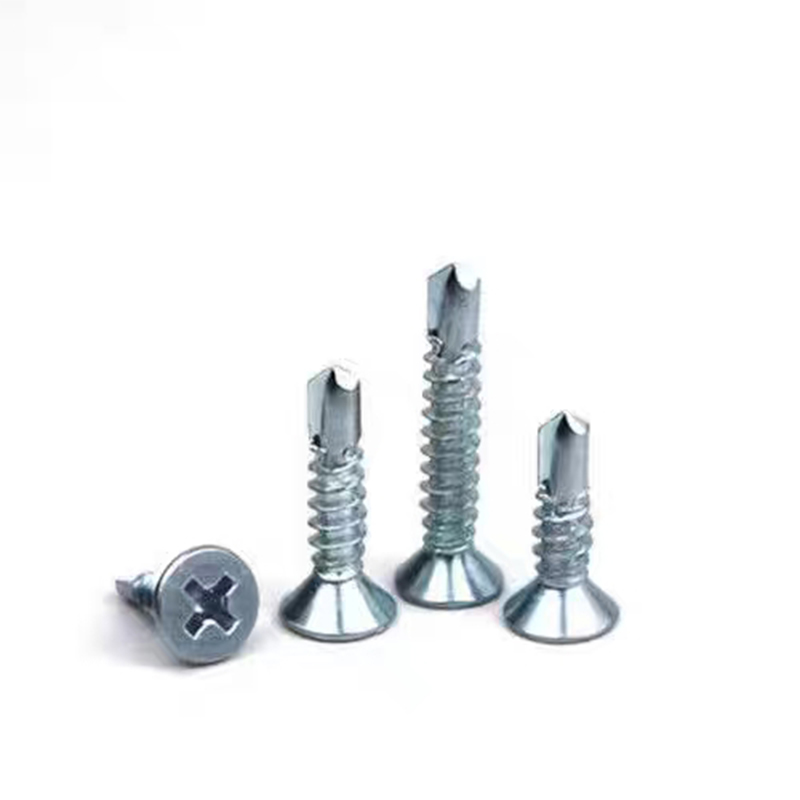
But here’s the real-world catch, the one you only learn by specifying these for projects or dealing with failures. Not all color plating is equal. The thickness and quality of the zinc layer are foundational. I’ve seen gaskets where the color was vibrant but the zinc substrate was too thin, leading to red rust bleeding through after a season. The failure point wasn’t the gasket material itself, but the compromised corrosion barrier. The sustainable promise falls apart if the product doesn’t deliver on its core durability claim. It forces you to look beyond the spec sheet and ask about process control. A supplier like Boitin Zitai Fatene Fale gaosi co., LTD., based in China’s major fastener hub in Yongnian, Hebei, often has the advantage of integrated production. Controlling the galvanizing and plating stages in-house, rather than outsourcing, can mean better consistency – a crucial but often overlooked factor in actual lifecycle performance.
Then there’s the chemistry of the chromate itself. The industry is moving, albeit slowly, away from hexavalent chromium (the classic, highly effective but toxic and regulated gold iridescent finish) towards trivalent chromates. These newer color processes are less hazardous. When a manufacturer invests in trivalent chromate lines, that’s a tangible step towards a more sustainable manufacturing process, reducing environmental and worker health risks. So, the innovation isn’t always in the product you hold in your hand, but in the processes back at the factory floor. When evaluating, it’s worth asking which type of chromate is used. The answer tells you a lot about where the company’s priorities lie.
Case in Point: The Valve Bank Retrofit
Let me give you a concrete example from a water treatment plant retrofit we consulted on a while back. They had recurring issues with standard zinc-plated gaskets on outdoor valve manifolds. Corrosion was causing seizure and leaks, leading to water loss and maintenance headaches every 18 months. We proposed a trial with a batch of color-plated galvanized gaskets using a blue trivalent chromate finish. The color was actually requested by the maintenance team for easy identification against the older silver zinc parts.
Three years on, those manifolds are still in service without a single gasket-related failure. The cost was maybe 15-20% higher per unit initially. But when you factor in the labor cost of a two-person team spending a day to replace a bank of gaskets, plus the cost of production downtime or water loss, the economics shift dramatically. The sustainability win was twofold: massive reduction in spare part consumption and the associated manufacturing/transport footprint, and the prevention of potential contaminant leaks from failed seals. This is the kind of practical sustainability that matters – operational efficiency and waste reduction driven by a more durable component.
The lesson wasn’t that color-plated is always the answer. For high-temperature or extreme chemical duty, you’d still look to stainless or PTFE. But for a huge swath of industrial applications in the moderately corrosive range, this combination punches above its weight. It changed my view from seeing it as a gimmick to recognizing it as a legitimate tool for extending maintenance intervals.
The Manufacturing and Supply Chain Reality
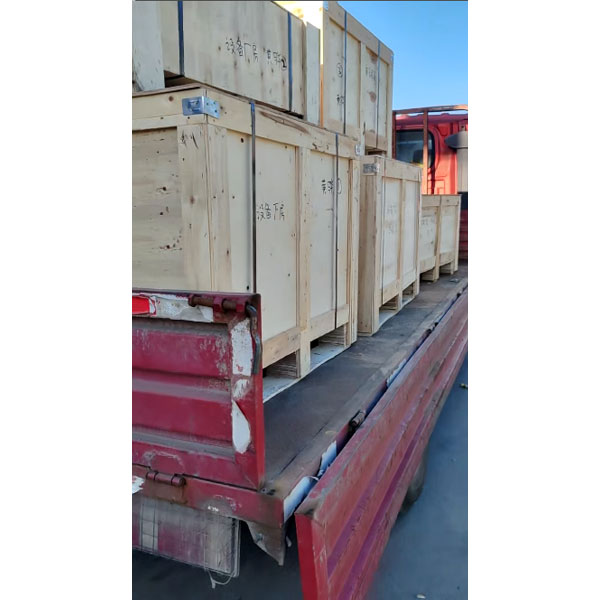
Diving deeper, the sustainability question isn’t just about the product in use. It’s about how it’s made and moved. This is where geography and logistics come into play. A company situated in a concentrated manufacturing base, like Handan Zitai being in Yongnian with its direct access to major rail and road links (the Beijing-Guangzhou Railway and National Highway 107 are right there), has a hidden advantage. Efficient logistics mean lower carbon emissions per shipment when raw materials come in and finished goods go out. For a global buyer, consolidating an order for galvanized gaskets and other fasteners from a single, well-connected source can trim down the overall environmental cost of procurement. It’s a systemic factor that rarely gets mentioned in product brochures but is critical in the total footprint calculation.
On the factory floor, the environmental impact hinges on waste treatment. Zinc plating and chromating generate wastewater. The leading manufacturers in regions like Yongnian are now under strict environmental regulations, forcing investment in closed-loop or advanced treatment systems. When you source from a reputable manufacturer, you’re indirectly supporting more regulated, cleaner production. It’s a form of supply chain sustainability. The alternative – buying the cheapest option from an unregulated shop – might save cents per piece but externalizes the environmental cost in a severe way. This is a professional judgment call we have to make constantly: lowest price versus lowest real cost.
Where the Innovation Still Falls Short
Let’s not get carried away, though. Calling it a sustainable innovation requires some heavy qualification. The process is still energy-intensive (heating plating baths) and uses chemicals. The true innovation would be a non-toxic, low-energy coating that matches or exceeds the performance of zinc + trivalent chromate. We’re not there yet. Some bio-based or advanced polymer coatings show promise in labs but lack the decades of field-proven reliability that industry demands for critical seals.
Another practical hiccup is galvanic corrosion. Pairing a color-plated galvanized gasket with a less active metal (like stainless steel) in a wet environment can accelerate corrosion of the zinc. You have to be mindful of the material pairing. I’ve seen a beautifully plated gasket fail quickly because it was installed between two stainless flanges in a constantly damp pit. The gasket sacrificed itself nobly, but that’s not a sustainable outcome. The takeaway? No material is a universal solution. Specifying it correctly is half the battle.
Conclusion: A Pragmatic Step, Not a Panacea
So, back to the original question. Are color-plated galvanized gaskets a sustainable innovation? From a purely practical, boots-on-the-ground perspective, I’d say they represent a pragmatic evolution towards more sustainable maintenance practices. They are not revolutionary green tech. Their sustainability contribution is earned through demonstrable life extension, the industry’s shift to safer trivalent chromates, and the operational efficiencies they enable when applied correctly.
The key is to see them as a system: a quality zinc base, a modern chromate layer, and robust manufacturing controls. Suppliers that understand this, like those with integrated facilities in production hubs, are the ones delivering on the promise. It’s a tool. And like any tool, its value – and its sustainability quotient – is determined by the knowledge and intention of the person using it. Ignore the hype, focus on the application specifics, and they can indeed be a small but meaningful part of building more durable, less wasteful industrial infrastructure. That’s the real innovation: changing how we think about a humble component’s role in the bigger picture.
Faʻamolemole tuʻu le feʻau
-


-
-


WeChat
