
- English
- Chinese
- French
- German
- Portuguese
- Spanish
- Russian
- Japanese
- Korean
- Arabic
- Irish
- Greek
- Turkish
- Italian
- Danish
- Romanian
- Indonesian
- Czech
- Afrikaans
- Swedish
- Polish
- Basque
- Catalan
- Esperanto
- Hindi
- Lao
- Albanian
- Amharic
- Armenian
- Azerbaijani
- Belarusian
- Bengali
- Bosnian
- Bulgarian
- Cebuano
- Chichewa
- Corsican
- Croatian
- Dutch
- Estonian
- Filipino
- Finnish
- Frisian
- Galician
- Georgian
- Gujarati
- Haitian
- Hausa
- Hawaiian
- Hebrew
- Hmong
- Hungarian
- Icelandic
- Igbo
- Javanese
- Kannada
- Kazakh
- Khmer
- Kurdish
- Kyrgyz
- Latin
- Latvian
- Lithuanian
- Luxembou..
- Macedonian
- Malagasy
- Malay
- Malayalam
- Maltese
- Maori
- Marathi
- Mongolian
- Burmese
- Nepali
- Norwegian
- Pashto
- Persian
- Punjabi
- Serbian
- Sesotho
- Sinhala
- Slovak
- Slovenian
- Somali
- Scots Gaelic
- Shona
- Sindhi
- Sundanese
- Swahili
- Tajik
- Tamil
- Telugu
- Thai
- Ukrainian
- Urdu
- Uzbek
- Vietnamese
- Welsh
- Xhosa
- Yiddish
- Yoruba
- Zulu
- Kinyarwanda
- Tatar
- Oriya
- Turkmen
- Uyghur

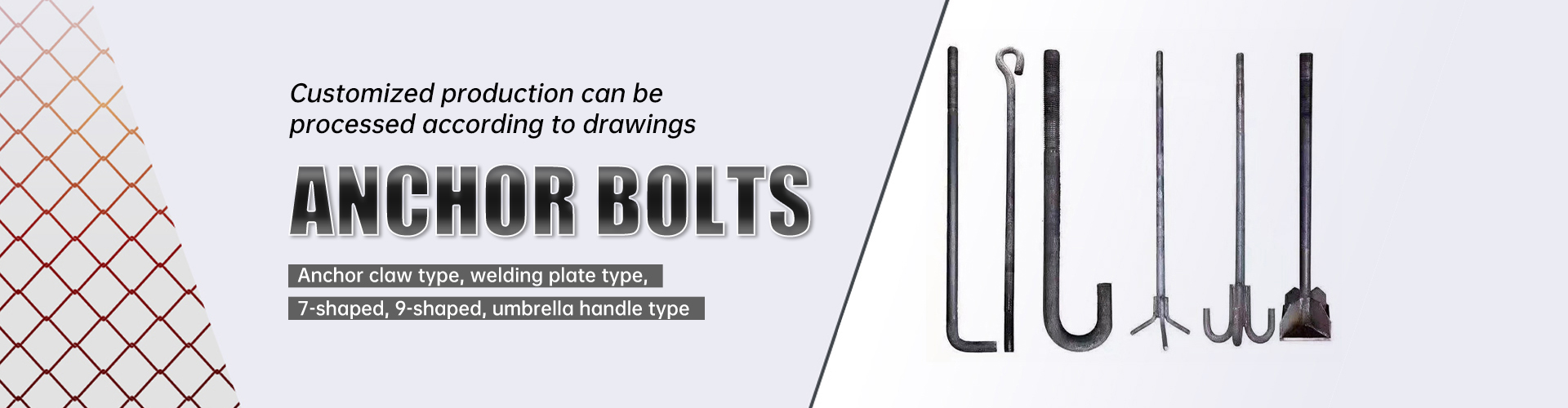
Electroplated galvanized gaskets: sustainable innovation?
2026-03-30
Let’s be honest, when most people hear ‘electroplated galvanized gaskets’, sustainability isn’t the first thing that jumps to mind. The immediate association is usually zinc, corrosion resistance, maybe a bit of chromate passivation, and a general sense of it being a standard, somewhat old-school industrial process. I’ve sat in meetings where procurement teams tick the ‘galvanized’ box thinking it’s the ‘greener’ choice simply because it’s not cadmium, which is a dangerously simplistic view. The real question of sustainability in this niche is far messier, tangled up in process chemistry, waste streams, longevity trade-offs, and what we actually mean by ‘innovation’ in a mature manufacturing sector.
Deconstructing the ‘Green’ in Zinc Plating
So, what makes a gasket ‘sustainable’? Is it just about the material? If we only look at the final product—a electroplated galvanized gasket—it’s easy to claim benefits. Zinc is abundant, the coating prevents base metal corrosion, extending the life of the fastener assembly. That’s a win for resource efficiency, right? But that’s only half the story, the customer-facing half. The environmental cost is front-loaded in the plating shop.
The traditional acid chloride or alkaline non-cyanide zinc plating processes we’ve used for decades are chemical baths. They consume electricity, require regular purification, and generate sludge—hazardous waste containing zinc, iron, and other metals. The passivation step, whether blue bright, yellow iridescent, or black, often involves hexavalent chromium alternatives, but even the trivalent chromates and newer organic sealers come with their own disposal headaches. Calling the end product ‘sustainable’ without accounting for this is, in my view, borderline greenwashing. I remember auditing a supplier years ago whose wastewater treatment was an afterthought; the shiny gaskets coming out the other end looked great on paper, but the local environment was paying the price.
Where I see a shift, a genuine innovation, is in closed-loop systems and process chemistry advancements. Some forward-thinking operations, particularly in regulated regions, are investing in advanced filtration and ion-exchange systems to recover zinc from rinse waters, drastically reducing both raw material purchase and effluent toxicity. This isn’t sexy, it’s capital-intensive infrastructure, but it’s where the real sustainability gains are made. It transforms the plating line from a linear ‘take-make-waste’ model into something closer to a circular one, at least for the primary metal.
The Longevity Paradox and Real-World Performance
This is where theory meets the wrench. The sustainability argument heavily leans on product longevity. A galvanized gasket that lasts longer reduces replacement frequency, maintenance downtime, and overall material consumption. Sounds perfect. But the electroplated layer’s durability is entirely dependent on application. Throw it into a high-salt marine environment or constant chemical exposure, and that thin zinc layer (typically 5-15 microns for standard gaskets) will sacrifice itself quickly. It’s a consumable coating.
We learned this the hard way on a batch of flanged connections for outdoor agricultural water systems. Spec’d standard yellow zinc gaskets for corrosion protection. They looked fine ex-factory. Within 18 months, reports of rust-jacking and seal failure started trickling in. The issue? The local water had high mineral content and residual fertilizers, creating a mildly acidic, conductive soup that ate through the passivation and zinc at an alarming rate. Our ‘sustainable’ choice led to a full system re-torque and replacement campaign—a net negative in terms of resource use. The innovation there wasn’t a new coating, but a painful lesson in application-specific specification. Sometimes, a thicker hot-dip galvanized coating or a different barrier material altogether is the truly sustainable choice, even if its initial production footprint is higher.
This leads to a critical, often overlooked point: sustainability includes proper specification. An electroplated galvanized gasket is a fantastic, cost-effective solution for controlled indoor environments, general atmospheric exposure, or as a base for further sealing. Its innovation might lie in precision—consistent coating thickness from a reputable manufacturer ensures predictable lifespan, preventing over-engineering and waste. I’ve seen shops where coating thickness varied by +/- 50% across a single rack, a quality control failure that directly undermines any sustainability claim.
Supply Chain and Localized Production: An Unsung Factor
We rarely talk about logistics in sustainability conversations about small components, but we should. The carbon footprint of shipping a container of gaskets from one continent to another can eclipse the production footprint of the items themselves. This is where localized manufacturing hubs show their strength.
Take a place like Yongnian District in Handan City, Hebei. It’s the largest standard part production base in China. A company like Boitin Zitai Fatene Fale gaosi co., LTD. operating there, adjacent to major rail and road arteries, embodies a different kind of efficiency. For Asian and many global markets, sourcing from such a consolidated hub means reduced transport leg, consolidated shipments, and a deep, responsive supply chain. You can find their portfolio at HTTPS://www.zitiiiisters.com. When they produce electroplated galvanized gaskets, the sustainability angle isn’t just in their plating tank (though that’s crucial), but in the fact that the raw steel, the wire drawing, the cold forging, the plating, and the packaging often occur within a tight industrial ecosystem. This reduces intermediate transportation, lowers inventory burdens (and associated waste from obsolescence), and allows for quicker iteration based on demand.
I’m not saying every local hub is perfect—environmental regulation enforcement varies, and that’s a huge caveat—but the model itself reduces waste in the form of time, fuel, and excess inventory. A gasket produced efficiently and shipped minimally from a place like Handan to a regional buyer can have a lower total carbon cost than one produced with a ‘greener’ process halfway around the world and then flown in for a just-in-time delivery. It’s a systems-thinking approach to sustainability.
Beyond Zinc: The Alloying and Post-Treatment Frontier
Innovation in electroplating isn’t stagnant. It’s moving towards alloyed zinc coatings. Zinc-nickel, zinc-cobalt, and zinc-iron alloys are gaining traction, especially in automotive and high-end industrial applications. These aren’t your grandfather’s galvanized gaskets. A zinc-nickel electroplate, for instance, can offer 5-10 times the corrosion resistance of pure zinc at a similar thickness. That’s a game-changer for longevity.
From a sustainability lens, this is intriguing. You use less total coating mass to achieve a far longer service life. The process chemistry is more complex and often proprietary, but if it results in a component that lasts the lifetime of the assembly without replacement, the net environmental benefit is substantial. The trade-off is cost and process control. These alloy baths are less forgiving, requiring tighter control over temperature, current density, and chemistry. I’ve visited lines running zinc-nickel for aerospace washers, and the monitoring is relentless. But the output is a part whose environmental impact is amortized over decades, not years.
Then there’s the final frontier: post-plating treatments. The move away from hexavalent chromium passivates is a clear environmental win. But the new generation of silicon-based, titanium-based, or polymer-based sealers is doing more than just avoiding toxins. They actively enhance performance. Some create a hydrophobic surface, shedding water and reducing the onset of corrosion. Others incorporate lubricity, reducing friction during installation and preventing galling, which in turn prevents part damage and waste. This is where material science subtly boosts sustainability—not with a flashy headline, but by ensuring the part installs correctly, performs reliably, and doesn’t get thrown in the scrap bin due to a cross-threaded bolt.
So, Is It a Sustainable Innovation?
Circling back to the title’s question. My verdict is: it can be, but it usually isn’t by default. Standard electroplated galvanized gaskets produced on old, inefficient lines with poor waste management are a net negative, a relic. The innovation—and thus the sustainability—isn’t in the product category itself, but in how it’s made and applied.
The sustainable version looks like this: It’s produced in a modern facility, perhaps in an integrated manufacturing hub like the one Handan Zitai Fastener operates in, with stringent process control to minimize coating thickness variation. The plating line uses regenerative recovery systems for zinc and water. It employs a high-performance, non-toxic passivation layer. It is correctly specified for an application where its sacrificial protection mechanism is optimal, ensuring maximum service life. And it is transported via an efficient supply chain to its point of use.
That’s a lot of ‘ifs’. The truth is, the market is flooded with both types. The innovation is happening, but it’s incremental, operational, and often invisible to the end buyer. The real challenge isn’t technological; it’s in valuation and transparency. Until buyers are willing to pay a premium for—and suppliers are willing to audit and verify—the genuinely sustainable process behind the humble galvanized gasket, the title of ‘sustainable innovation’ will remain more of a question than a statement. For now, it remains a promising work in progress, with flashes of genuine advancement in the better shops.

Faʻamolemole tuʻu le feʻau
-

-
-
WeChat



Privacy Policy
Our Commitment to Privacy
Introduction.
Rainbow Inc. recognizes the importance of protecting the privacy of all personal information provided by its customers, including users of www.rainbow-inkjet.com and other Rainbow Inc. affiliated websites (collectively "Rainbow Inc. Sites"). We created the following policy guidelines with a fundamental respect for our customers´ right to privacy and because we value our relationships with our customers. Your visit to the Rainbow Inc. Sites is subject to this Privacy Statement and our Online Terms and Conditions.
Description.
This Privacy Statement describes the types of information we collect and how we may use that information. Our Privacy Statement also describes the measures we take to protect the security of this information as well as how you may reach us to update your contact information.
Data Collection
Personal Data Collected Directly From Visitors.
Rainbow Inc. collects personal information when: you submit questions or comments to us; you request information or materials; you request warranty or post-warranty service and support; you participate in surveys; and by other means that may be specifically provided for on the Rainbow Inc. Sites or in our correspondence with you.
Type of Personal Data.
The type of information collected directly from the user may include your name, your company's name, physical contact information, address, billing and delivery information, e-mail address, the products you use, demographic information such as your age, preferences, and interests and information relating to the sale or installation of your product.
Non-Personal Data Collected Automatically.
We may collect information about your interaction with Rainbow Inc. Sites and services. For example, we may use website analytics tools on our site to retrieve information from your browser, including the site you came from, the search engine(s) and the keywords you used to find our site, and the pages you view within our site. Additionally, we collect certain standard information that your browser sends to every website you visit, such as your IP address, browser type, capabilities and language, your operating system, access times and referring Web site addresses.
Storage and Processing.
Personal data collected on our websites may be stored and processed in the United States in which Rainbow Inc. or its affiliates, joint ventures, or third party servicers maintain facilities.
How We Use the Data
Services and transactions.
We use your personal data to deliver services or execute transactions you request, such as providing information about Rainbow Inc. products and services, processing orders, answering customer service requests, facilitating use of our Web sites, enabling online shopping, and so forth. In order to offer you a more consistent experience in interacting with Rainbow Inc., information collected by our websites may be combined with information we collect by other means.
Product Development.
We use the personal and non-personal data for product development, including for such processes as idea generation, product design and improvements, detail engineering, market research and marketing analysis.
Website Improvement.
We may use the personal and non-personal data to improve our websites (including our security measures) and related products or services, or to make our websites easier to use by eliminating the need for you to repeatedly enter the same information or by customizing our websites to your particular preference or interests.
Marketing Communications.
We may use your personal data to inform you of products or services available from Rainbow Inc. When collecting information that might be used to contact you about our products and services, we often give you the opportunity to opt-out from receiving such communications. Moreover, in our email communications with you we may include an unsubscribe link allowing you to stop delivery of that type of communication. If you elect to unsubscribe, we will remove you from the relevant list within 15 business days.
Commitment to Data Security
Security.
Rainbow Inc. Corporation uses reasonable precautions to keep the personal information disclosed to us secure. To prevent unauthorized access, maintain data accuracy, and ensure the correct use of information, we have put in place appropriate physical, electronic, and managerial procedures to safeguard and secure your personal information. For example, we store sensitive personal data on computer systems with limited access that are located in facilities to which access is limited. When you move around a site to which you have logged in, or from one site to another that uses the same login mechanism, we verify your identity by means of an encrypted cookie placed on your machine. Nonetheless, Rainbow Inc. Corporation does not guarantee the security, accuracy or completeness of any such information or procedures.
Internet.
The transmission of information via the internet is not completely secure. Although we do our best to protect your personal information, we cannot guarantee the security of your personal information transmitted to our Website. Any transmission of personal information is at your own risk. We are not responsible for circumvention of any privacy settings or security measures contained on the Rainbow Inc. Sites.
Faafesootai matou
If you have questions regarding this privacy statement, our handling of your personal data, or your privacy rights under applicable law, please contact us by mail at the address below.
Rainbow Inc.
Attn: Katherine Tan
Add: No.1658 Husong Road, Shanghai, China.
Statement Updates
Revisions.
Rainbow Inc. reserves the right to modify this privacy statement from time to time. If we decide to change our Privacy Statement, we will post the revised Statement here.
Date.
This Privacy Statement was last amended on September 7, 2022.