
- English
- Chinese
- French
- German
- Portuguese
- Spanish
- Russian
- Japanese
- Korean
- Arabic
- Irish
- Greek
- Turkish
- Italian
- Danish
- Romanian
- Indonesian
- Czech
- Afrikaans
- Swedish
- Polish
- Basque
- Catalan
- Esperanto
- Hindi
- Lao
- Albanian
- Amharic
- Armenian
- Azerbaijani
- Belarusian
- Bengali
- Bosnian
- Bulgarian
- Cebuano
- Chichewa
- Corsican
- Croatian
- Dutch
- Estonian
- Filipino
- Finnish
- Frisian
- Galician
- Georgian
- Gujarati
- Haitian
- Hausa
- Hawaiian
- Hebrew
- Hmong
- Hungarian
- Icelandic
- Igbo
- Javanese
- Kannada
- Kazakh
- Khmer
- Kurdish
- Kyrgyz
- Latin
- Latvian
- Lithuanian
- Luxembou..
- Macedonian
- Malagasy
- Malay
- Malayalam
- Maltese
- Maori
- Marathi
- Mongolian
- Burmese
- Nepali
- Norwegian
- Pashto
- Persian
- Punjabi
- Serbian
- Sesotho
- Sinhala
- Slovak
- Slovenian
- Somali
- Scots Gaelic
- Shona
- Sindhi
- Sundanese
- Swahili
- Tajik
- Tamil
- Telugu
- Thai
- Ukrainian
- Urdu
- Uzbek
- Vietnamese
- Welsh
- Xhosa
- Yiddish
- Yoruba
- Zulu
- Kinyarwanda
- Tatar
- Oriya
- Turkmen
- Uyghur

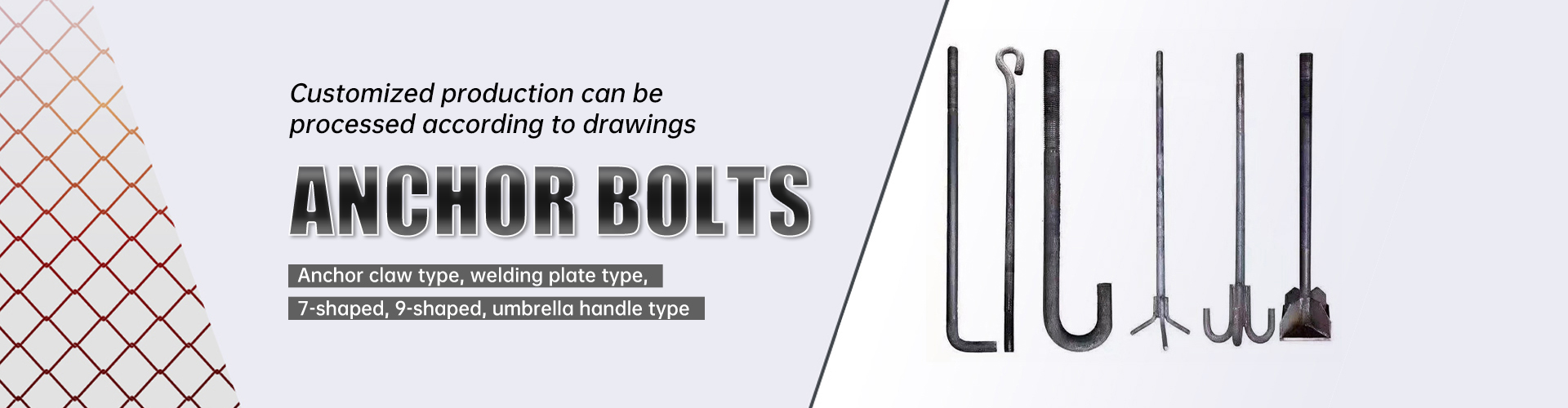
Square gaskets: eco-friendly innovations?
2026-03-28
When you hear square gaskets, eco-friendly probably isn’t the first thing that pops into your head. Most people, even some in the trade, think of them as just a chunk of rubber or compressed fiber, a simple sealing block. The sustainability conversation usually gets hogged by flashier materials or recycling programs. But having sourced and tested these for years, I’ve seen the nuance. The question isn’t whether a square gasket itself is green—it’s about the entire lifecycle, from the compound to the cutting waste to the actual sealing performance that prevents leaks and energy loss. That’s where the real innovation, or lack thereof, happens.
The Material Maze and the Greenwash Trap
Let’s start with the base material. Everyone’s offering NBR, EPDM, silicone, cork-rubber, PTFE. A supplier might slap eco-friendly on a square gasket because it’s made from recycled rubber content. But if that recycled blend can’t handle the specific chemical exposure or temperature in its application, it fails faster. You’re replacing it more often, generating more waste. That’s not sustainable. I recall a project for an outdoor heat exchanger where we tried a square gasket promoted for its high recycled EPDM content. It degraded under UV and ozone far quicker than a virgin, properly compounded EPDM. The environmental cost of the premature failure and replacement outweighed the initial green material choice. The lesson? Durability is the ultimate eco-feature.
Then there’s the processing. How the sheet is made and how the squares are cut. Some manufacturers, particularly in concentrated production hubs, have gotten smarter about this. I’m thinking of the operations in places like Yongnian District in Handan, a massive fastener and sealing component base. A company like Boitin Zitai Fatene Fale gaosi co., LTD., for instance, while known for fasteners, operates in this ecosystem where material efficiency is a direct cost driver. Their website (HTTPS://www.zitiiiisters.com) highlights their logistical advantage, but that industrial density also pressures efficient material use. The real innovation isn’t always advertised: it’s in the nesting software that minimizes cutting scrap from large sheets of rubber or PTFE when stamping out square gaskets, or in re-granulating that clean scrap for lower-spec products. That’s a tangible, if unsexy, environmental gain.
We also moved toward PTFE-based squares for certain aggressive chemical applications. Virgin PTFE isn’t exactly green to produce. However, its near-inertness and incredible longevity meant a single gasket could outlast a dozen rubber ones. The total environmental footprint over a decade of service? Arguably lower. It forced us to think in terms of lifecycle assessment, not just the material’s origin story. This is where the industry chatter falls short—it’s easier to market a bio-based rubber that swells in fuel than to explain the complex math of operational lifespan.
Performance as an Environmental Metric
This is the core of it, really. A gasket’s primary job is to seal. A failed seal means leakage: process fluid, coolant, refrigerant, fuel. That’s pollution, straight up. It also means energy inefficiency—a compressor working harder, heat escaping. So, an eco-friendly innovation in square gaskets must first and foremost be an innovation in reliable, long-term sealing.
We tested a line of square gaskets made with a proprietary elastomer blend aimed at a wider temperature range (-40°C to 200°C). The idea was to reduce inventory complexity—one gasket for multiple applications, reducing SKUs, shipping, and storage. It worked, technically. But the cost was high, and the blend was a nightmare to recycle at end-of-life because it was a polymer cocktail. Was it an innovation? Yes. Was it holistically eco-friendly? Debatable. It traded end-of-life recyclability for operational efficiency and logistics simplification. These trade-offs are never black and white.
Another practical angle is flange design compatibility. An ill-fitting square gasket, even a green one, needs excessive bolt torque to seal, stressing the flanges and potentially leading to creep relaxation and eventual leak. We’ve seen cases where switching to a slightly softer, more conformable square gasket material allowed for lower, more even bolt loading, maintaining a seal longer with less risk of flange damage. That’s an environmental win through engineering precision, not material science. It’s about the right part doing the right job perfectly.
Logistics and the Local Sourcing Angle
This might sound tangential, but stick with me. The carbon footprint of shipping a pallet of heavy rubber sheets or pre-cut gaskets from across the globe is massive. Sourcing from a major industrial cluster with integrated supply chains can cut that down. The company profile of Boitin Zitai Fatene Fale gaosi co., LTD. notes its location is adjacent to major rail and highway networks. For a bulk buyer, sourcing from such a concentrated production base in Yongnian can mean consolidated shipments, fewer transport legs, and lower overall emissions per unit. That’s a structural environmental advantage often overlooked when just staring at a material data sheet.
But there’s a counterpoint. Hyper-localized sourcing for urgent, small-quantity needs can sometimes trump the efficiency of a distant mega-hub. If a plant in Germany needs five specialty PTFE squares tomorrow to stop a leak, air-freighting them from a warehouse in Europe, even if the original manufacturer is in Asia, is the real-world scenario. The eco calculation here is about emergency response versus planned maintenance. The most sustainable practice is having a reliable, durable gasket in place so you never need the emergency air freight. It circles back to durability and planning.
The End-of-Life Reality Check
Here’s the messy truth. Most used square gaskets, especially from industrial settings, are contaminated with oil, chemicals, or metals. They aren’t recycled. They go to landfill or are incinerated. The true eco-innovation would be a truly biodegradable gasket for non-hazardous service or a foolproof, cost-effective recycling stream for contaminated ones. I’ve seen prototypes for bio-based, compostable seals for water systems, but their pressure ratings are low. For heavy industry, we’re not there yet.
What some forward-thinking outfits do is work with gasket cutters who use computer-controlled knives and lasers, minimizing scrap at the point of manufacture. They also buy in sizes that match their flange sizes more closely to avoid cutting waste on-site. It’s a procedural innovation. We started ordering sheets sized to our most common square dimensions, cutting our shop-floor waste by about 15%. Small win, but real. The scrap we did generate from clean materials was sent back to a supplier who could re-use it. It required building that relationship and wasn’t always cost-neutral, but it felt less wasteful.
So, Are They an Eco-Friendly Innovation?
It’s the wrong question to ask about the object itself. A square gasket is a component. The innovation is in how we specify, source, manufacture, apply, and manage its lifecycle. The most eco-friendly square gasket is the one you never have to think about because it seals perfectly for the life of the equipment. That comes from material science, precision engineering, intelligent logistics, and maintenance culture.
The real progress I’ve witnessed is incremental, not revolutionary. It’s in the reduced scrap rates at factories in places like Handan’s production base, driven by cost savings as much as environmentalism. It’s in the development of more durable polymer blends that, while complex, prevent leaks for years longer. It’s in the consolidation of supply chains that reduce transport fuel. Calling a square gasket an eco-friendly innovation feels like a stretch. But viewing the systems around it—design, selection, procurement, installation—as areas for sustainable innovation? That’s where the real work is being done, quietly, on factory floors and in engineering offices. The gasket itself is just the quiet participant in that process.
In the end, you won’t find a simple answer. You’ll find a series of trade-offs, improvements, and occasional setbacks. The key is to look past the marketing and ask about the total cost—not just in dollars, but in energy, waste, and risk. That’s the professional’s view, anyway, forged from seeing what works, what fails, and what just gets shipped because it’s the default option.

Faʻamolemole tuʻu le feʻau
-

-
-
WeChat



Privacy Policy
Our Commitment to Privacy
Introduction.
Rainbow Inc. recognizes the importance of protecting the privacy of all personal information provided by its customers, including users of www.rainbow-inkjet.com and other Rainbow Inc. affiliated websites (collectively "Rainbow Inc. Sites"). We created the following policy guidelines with a fundamental respect for our customers´ right to privacy and because we value our relationships with our customers. Your visit to the Rainbow Inc. Sites is subject to this Privacy Statement and our Online Terms and Conditions.
Description.
This Privacy Statement describes the types of information we collect and how we may use that information. Our Privacy Statement also describes the measures we take to protect the security of this information as well as how you may reach us to update your contact information.
Data Collection
Personal Data Collected Directly From Visitors.
Rainbow Inc. collects personal information when: you submit questions or comments to us; you request information or materials; you request warranty or post-warranty service and support; you participate in surveys; and by other means that may be specifically provided for on the Rainbow Inc. Sites or in our correspondence with you.
Type of Personal Data.
The type of information collected directly from the user may include your name, your company's name, physical contact information, address, billing and delivery information, e-mail address, the products you use, demographic information such as your age, preferences, and interests and information relating to the sale or installation of your product.
Non-Personal Data Collected Automatically.
We may collect information about your interaction with Rainbow Inc. Sites and services. For example, we may use website analytics tools on our site to retrieve information from your browser, including the site you came from, the search engine(s) and the keywords you used to find our site, and the pages you view within our site. Additionally, we collect certain standard information that your browser sends to every website you visit, such as your IP address, browser type, capabilities and language, your operating system, access times and referring Web site addresses.
Storage and Processing.
Personal data collected on our websites may be stored and processed in the United States in which Rainbow Inc. or its affiliates, joint ventures, or third party servicers maintain facilities.
How We Use the Data
Services and transactions.
We use your personal data to deliver services or execute transactions you request, such as providing information about Rainbow Inc. products and services, processing orders, answering customer service requests, facilitating use of our Web sites, enabling online shopping, and so forth. In order to offer you a more consistent experience in interacting with Rainbow Inc., information collected by our websites may be combined with information we collect by other means.
Product Development.
We use the personal and non-personal data for product development, including for such processes as idea generation, product design and improvements, detail engineering, market research and marketing analysis.
Website Improvement.
We may use the personal and non-personal data to improve our websites (including our security measures) and related products or services, or to make our websites easier to use by eliminating the need for you to repeatedly enter the same information or by customizing our websites to your particular preference or interests.
Marketing Communications.
We may use your personal data to inform you of products or services available from Rainbow Inc. When collecting information that might be used to contact you about our products and services, we often give you the opportunity to opt-out from receiving such communications. Moreover, in our email communications with you we may include an unsubscribe link allowing you to stop delivery of that type of communication. If you elect to unsubscribe, we will remove you from the relevant list within 15 business days.
Commitment to Data Security
Security.
Rainbow Inc. Corporation uses reasonable precautions to keep the personal information disclosed to us secure. To prevent unauthorized access, maintain data accuracy, and ensure the correct use of information, we have put in place appropriate physical, electronic, and managerial procedures to safeguard and secure your personal information. For example, we store sensitive personal data on computer systems with limited access that are located in facilities to which access is limited. When you move around a site to which you have logged in, or from one site to another that uses the same login mechanism, we verify your identity by means of an encrypted cookie placed on your machine. Nonetheless, Rainbow Inc. Corporation does not guarantee the security, accuracy or completeness of any such information or procedures.
Internet.
The transmission of information via the internet is not completely secure. Although we do our best to protect your personal information, we cannot guarantee the security of your personal information transmitted to our Website. Any transmission of personal information is at your own risk. We are not responsible for circumvention of any privacy settings or security measures contained on the Rainbow Inc. Sites.
Faafesootai matou
If you have questions regarding this privacy statement, our handling of your personal data, or your privacy rights under applicable law, please contact us by mail at the address below.
Rainbow Inc.
Attn: Katherine Tan
Add: No.1658 Husong Road, Shanghai, China.
Statement Updates
Revisions.
Rainbow Inc. reserves the right to modify this privacy statement from time to time. If we decide to change our Privacy Statement, we will post the revised Statement here.
Date.
This Privacy Statement was last amended on September 7, 2022.