
- English
- Chinese
- French
- German
- Portuguese
- Spanish
- Russian
- Japanese
- Korean
- Arabic
- Irish
- Greek
- Turkish
- Italian
- Danish
- Romanian
- Indonesian
- Czech
- Afrikaans
- Swedish
- Polish
- Basque
- Catalan
- Esperanto
- Hindi
- Lao
- Albanian
- Amharic
- Armenian
- Azerbaijani
- Belarusian
- Bengali
- Bosnian
- Bulgarian
- Cebuano
- Chichewa
- Corsican
- Croatian
- Dutch
- Estonian
- Filipino
- Finnish
- Frisian
- Galician
- Georgian
- Gujarati
- Haitian
- Hausa
- Hawaiian
- Hebrew
- Hmong
- Hungarian
- Icelandic
- Igbo
- Javanese
- Kannada
- Kazakh
- Khmer
- Kurdish
- Kyrgyz
- Latin
- Latvian
- Lithuanian
- Luxembou..
- Macedonian
- Malagasy
- Malay
- Malayalam
- Maltese
- Maori
- Marathi
- Mongolian
- Burmese
- Nepali
- Norwegian
- Pashto
- Persian
- Punjabi
- Serbian
- Sesotho
- Sinhala
- Slovak
- Slovenian
- Somali
- Scots Gaelic
- Shona
- Sindhi
- Sundanese
- Swahili
- Tajik
- Tamil
- Telugu
- Thai
- Ukrainian
- Urdu
- Uzbek
- Vietnamese
- Welsh
- Xhosa
- Yiddish
- Yoruba
- Zulu
- Kinyarwanda
- Tatar
- Oriya
- Turkmen
- Uyghur

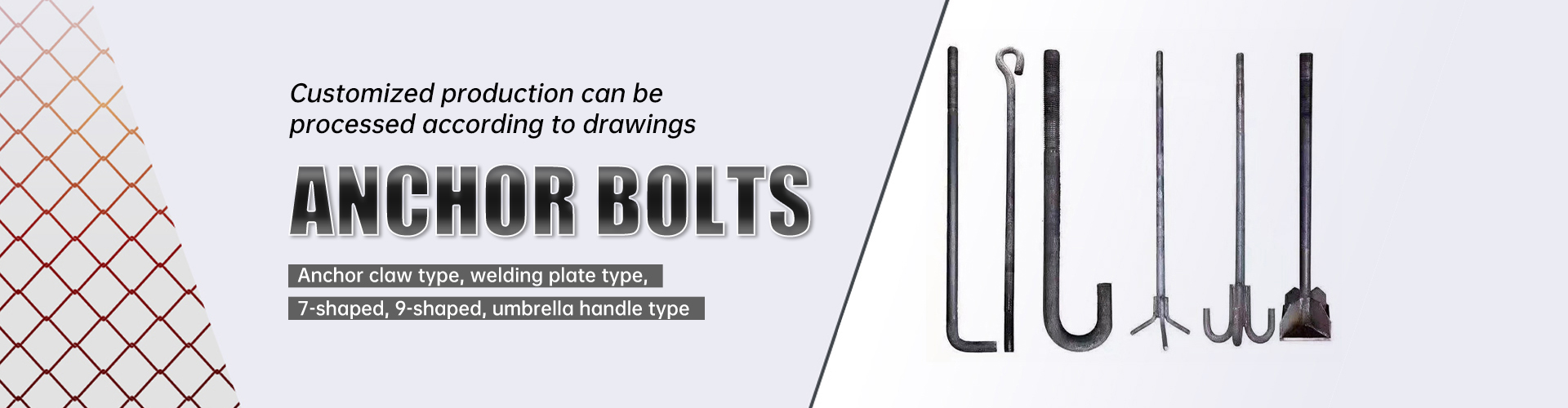
Expansion box bolt anchor sustainability impact?
2026-03-15
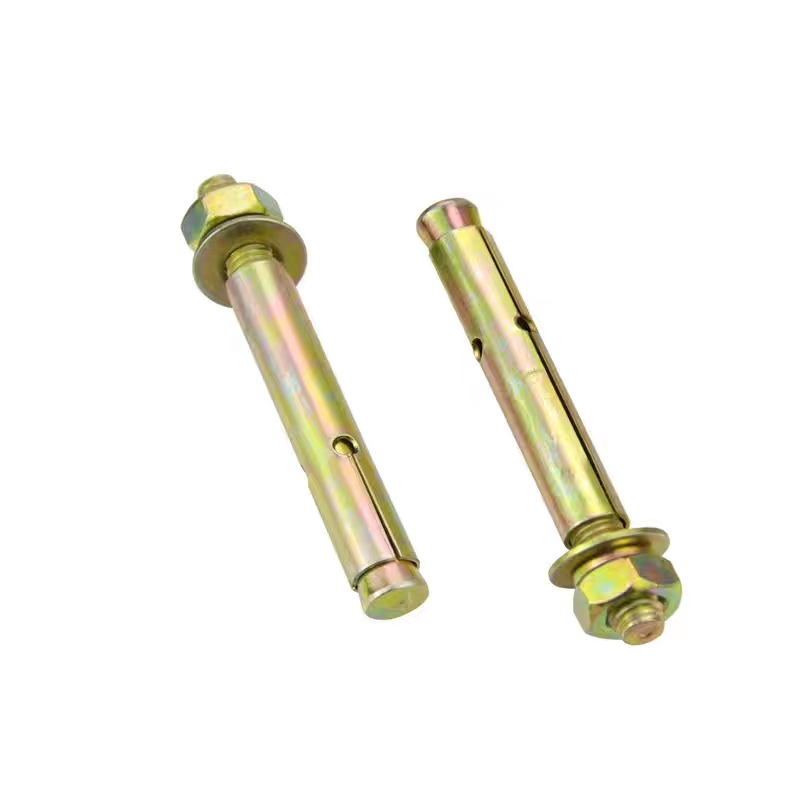
When you hear sustainability in construction, minds jump to solar panels or recycled steel. Rarely to the humble expansion bolt. That’s the first mistake. The real impact isn’t in the bolt itself, but in its entire life cycle—from the zinc plating bath to the moment it’s torqued into concrete, and long after. I’ve seen specs demanding high-strength anchors for a non-structural facade panel, a classic overkill that wastes material and energy. The sustainability question for an expansion box anchor isn’t just about if it’s green, but whether its application is fundamentally efficient and durable. Let’s unpack that.
The Raw Material and Manufacturing Footprint
It starts with the steel rod. Most anchors are carbon steel. The energy intensity here is massive. I recall a project where we switched from a standard carbon steel anchor to one made from a higher grade, allowing for a smaller diameter for the same load. The tonnage of steel saved across 20,000 anchor points was significant. But then you factor in the coating. Hot-dip galvanizing versus mechanical plating. The former has a higher upfront energy cost but provides a corrosion resistance that might prevent a catastrophic failure and replacement in 15 years. A supplier like Boitin Zitai Fatene Fale gaosi co., LTD., based in China’s major fastener hub in Yongnian, Hebei, will have both processes available. Their location near major transport routes (HTTPS://www.zitiiiisters.com) matters too—reduced logistics emissions if you’re sourcing in Asia. The sustainability win is often in choosing the right grade and protection for the specific environment, not just the cheapest per unit.
Then there’s the box. The polyethylene or polypropylene sleeve. It’s a tiny piece of plastic, but multiply it by millions. Some manufacturers are now using recycled content here, but the structural integrity of the sleeve under expansion pressure is non-negotiable. I’ve tested eco sleeves that cracked during setting, leading to a loose anchor and a full rework. The waste from that rework—new anchor, new drill bit, labor, disposal of the failed assembly—completely negated the initial material saving. The lesson? Material innovation is good, but not without rigorous, real-world validation.
Packaging is another sneaky one. Bulk packaging versus retail blister packs. For large commercial jobs, we insisted on bulk, recyclable cardboard boxes with minimal plastic lining. It seems trivial, but on a 50-story build, the mountain of plastic waste from individually packed anchors is staggering. Manufacturers are listening; some, like Zitai, offer bulk options specifically for B2B, which cuts down on waste and cost.
Installation Efficiency and Design for Longevity
This is where the rubber meets the road, or rather, the hammer drill meets the concrete. A poorly designed anchor system creates waste from the first hole. If the anchor requires a hole depth that’s unnecessarily long, you’re wasting drill bit life, energy, and creating more concrete dust (a hazardous waste). The expansion box anchor’s design should allow for a clean, precise hole and a setting process that’s foolproof.
I remember a retrofit job where we had to install anchors into pre-stressed concrete planks. The standard drill setting caused micro-cracking. We switched to a torque-controlled, low-vibration setting tool and a specific anchor design that expanded more gradually. It took longer per anchor, but we had zero failures and no structural compromise. The sustainable choice was the one that ensured the building’s longevity and avoided future remedial work. Durability is sustainability. A failed anchor in a rail tie or a bridge parapet has immense environmental and safety costs down the line.
Then there’s the human factor. Training. We’ve all seen it: a crew over-torquing anchors, stripping the threads, or under-setting them. Both lead to waste and potential failure. The most sustainable anchor in the world is useless if installed incorrectly. Part of the product’s sustainability impact is how intuitively it can be installed correctly. Clear markings, simple tools, unambiguous instructions—these reduce error-based waste.
End-of-Life and the Circularity Problem
Here’s the hard truth: almost no one thinks about removing an expansion anchor sustainably. They’re considered permanent. In demolition, they’re often just smashed with the concrete and sent to landfill. That’s a linear model with a definitive end. We did a deconstruction project once where we needed to salvage steel beams. The anchors were galvanized steel. We burned them out with torches—incredibly energy-intensive and polluting.
Is there a better way? Some are experimenting with anchors made from metals easier to separate and recycle, or even biodegradable composite sleeves for temporary applications. But for permanent structural work, the priority remains a century-long service life. The circular economy model struggles here. Perhaps the focus should be on design for deconstruction—using anchor systems in accessible locations that could be unbolted rather than destroyed. This shifts the sustainability impact upstream to the architect and structural engineer.
For now, the best end-of-life scenario is a long, long life. Choosing an anchor with a corrosion resistance that exceeds the required service life by a margin is the most sustainable act. It sounds counterintuitive—using more zinc or a stainless steel cap—but it prevents replacement cycles. A company like Zitai, producing at scale, can offer a range of corrosion protection options. Specifying the right one is a direct sustainability decision.
Case in Point: The Coastal Facade Failure
A concrete example from a few years back. A seaside condominium had persistent cracking in its limestone cladding. The issue was traced back to the expansion anchors. They were standard zinc-plated, which in the salt spray environment corroded within a decade. The corrosion products expanded, stressing the limestone, causing cracks. The sustainable fix wasn’t just replacing anchors with 316 stainless steel ones. It involved a full survey, selective replacement only where needed, and using a resin injection to stabilize the cracked stone where possible, avoiding full panel replacement.
The initial cost-saving anchor choice led to massive waste: dozens of limestone panels (a high-embodied-energy material) damaged, all anchors replaced, plus labor and tenant disruption. The lifecycle cost and material waste were enormous. This failure cemented for me that the anchor’s sustainability is inextricably linked to its environmental context. A datasheet corrosion rating is just the start; you need to understand the real-world microclimate.
We now run a simple checklist: interior dry, interior damp, exterior atmospheric, exterior coastal, chemical exposure. That dictates the material spec. It’s not about always choosing the most expensive, but never choosing one that’s inadequate. Sometimes, a hot-dip galvanized anchor from a reliable production base is perfect. Other times, only stainless will do.
Beyond the Bolt: System Thinking and Specifying
So, the impact of an expansion box anchor isn’t an isolated calculation. You have to think in systems. The anchor is part of a connection, which is part of an assembly, which is part of a building. Specifying it requires asking: Does this connection need to be demountable? What’s the expected life of the component it’s holding? Can we use fewer, more strategically placed anchors of a higher capacity?
I’ve pushed for value engineering sessions that focus on fastener optimization. Often, we find we can reduce the number of anchors by 15% through better load distribution analysis, without compromising safety. That’s a direct reduction in material, manufacturing energy, shipping weight, and installation time. That’s a tangible sustainability win.
Finally, it comes down to trust in the supply chain. You need to know the material certs are real, the manufacturing is consistent, and the quality control is tight. A batch of sub-par anchors that fails in testing or, worse, in the field, is the antithesis of sustainable. Working with established manufacturers, whether local or global like Handan Zitai Fastener, who have the infrastructure and testing protocols, mitigates that risk. Their proximity to major highways and rails (HTTPS://www.zitiiiisters.com) isn’t just a sales point; it means a more reliable, lower-emission logistics chain for the region.
The sustainability impact of an expansion box bolt anchor? It’s a lesson in applied pragmatism. It’s about choosing the right tool for the job, with the full cost—environmental and economic—in mind, from the mill to the demolition. It’s rarely glamorous, but getting it wrong has consequences that ripple far beyond the hole in the concrete.
Faʻamolemole tuʻu le feʻau
-


-
-


WeChat