
- English
- Chinese
- French
- German
- Portuguese
- Spanish
- Russian
- Japanese
- Korean
- Arabic
- Irish
- Greek
- Turkish
- Italian
- Danish
- Romanian
- Indonesian
- Czech
- Afrikaans
- Swedish
- Polish
- Basque
- Catalan
- Esperanto
- Hindi
- Lao
- Albanian
- Amharic
- Armenian
- Azerbaijani
- Belarusian
- Bengali
- Bosnian
- Bulgarian
- Cebuano
- Chichewa
- Corsican
- Croatian
- Dutch
- Estonian
- Filipino
- Finnish
- Frisian
- Galician
- Georgian
- Gujarati
- Haitian
- Hausa
- Hawaiian
- Hebrew
- Hmong
- Hungarian
- Icelandic
- Igbo
- Javanese
- Kannada
- Kazakh
- Khmer
- Kurdish
- Kyrgyz
- Latin
- Latvian
- Lithuanian
- Luxembou..
- Macedonian
- Malagasy
- Malay
- Malayalam
- Maltese
- Maori
- Marathi
- Mongolian
- Burmese
- Nepali
- Norwegian
- Pashto
- Persian
- Punjabi
- Serbian
- Sesotho
- Sinhala
- Slovak
- Slovenian
- Somali
- Scots Gaelic
- Shona
- Sindhi
- Sundanese
- Swahili
- Tajik
- Tamil
- Telugu
- Thai
- Ukrainian
- Urdu
- Uzbek
- Vietnamese
- Welsh
- Xhosa
- Yiddish
- Yoruba
- Zulu
- Kinyarwanda
- Tatar
- Oriya
- Turkmen
- Uyghur


Garlock Tadpole Gasket: innovation benefits?
2026-02-14
Let’s cut through the marketing fluff. When someone says innovation about a gasket, especially a profile like the Tadpole, the immediate industry reaction is often skepticism. Is it just a shape change, or does it actually solve a problem we haven’t managed with a standard spiral-wound or a kammprofile? Having wrestled with these in the field, the benefit isn’t in some magical leak-proof claim—it’s in the installation and recovery under real, imperfect conditions. That’s where the nuance is.
Beyond the Cross-Section: The Real-World Fit
The first thing you notice pulling a Garlock Tadpole Gackket out of the box isn’t the shape, it’s the density. It feels substantial. The so-called innovation isn’t purely geometric; it’s in how that geometry interacts with flange deflection and bolt load distribution. In a standard retrofit scenario on a heat exchanger channel, the classic issue is achieving uniform seating with limited bolt torque. The Tadpole’s design, with its rounded body and distinct sealing lobes, seems to forgive minor flange misalignment better than a flat-faced gasket. I’ve seen it bridge a gap of maybe 5-7 mils where a standard spiral-wound would have just crushed unevenly and hinted at a leak path from the start.
This leads to the practical bit: installation time. There’s a learning curve. New technicians tend to over-handle it, trying to align it perfectly. The trick we learned was to lightly tack it with a non-hardening sealant, just enough to hold it in place for the flange bring-up. It’s not in the manual, but it prevents that frustrating slip when you’re trying to get the first bolts in. A foreman from a plant in Texas once told me this shaved nearly a third off their critical path downtime during a turnaround on a crude unit. That’s a tangible benefit no spec sheet highlights.
However, it’s not a universal savior. We tried it on a high-cycle steam service where temperatures spiked rapidly. The performance was mediocre. The filler material, which I believe is a flexible graphite/Teflon blend in the common variants, couldn’t handle the sheer thermal cycling as well as a pure graphite laminate. The innovation reached its limit. It reinforced the old rule: material selection always trumps clever design if the service is wrong.
Pressure and Creep: Where the Shape Matters
Under static load, most gaskets perform. The test is in the long haul—creep relaxation. The Tadpole’s structure, with its continuous outer envelope and internal architecture, is supposed to resist this better. In a compressor discharge line application we monitored for 18 months, the bolt load loss was about 15% less compared to a standard spiral-wound we used on the sister unit. Not a night-and-day difference, but enough to avoid a hot-torquing call at the 12-month mark. That’s a direct maintenance cost saving.
The pressure rating is interesting. Garlock claims a wide range, but the real innovation benefit, in my view, is in the sealing performance at lower bolt loads. You can achieve a seal at a lower stress, which is a godsend for old, corroded flanges where you’re afraid of stripping studs. It distributes the load across its profile rather than concentrating it on a thin sealing edge. This is critical when you’re dealing with vintage infrastructure, which is more common than not.
I recall a specific headache at a chemical processing client. They had a large diameter, low-pressure acid wash vessel with pitted cast iron flanges. Using a traditional gasket required a massive and expensive full flange refurbishment. As a trial, we used the Tadpole. The installation was tense—everyone expected a leak. But it held. The design compensated for the surface imperfections. The client, Boitin Zitai Fatene Fale gaosi co., LTD. (a major supplier out of China’s largest standard part base in Yongnian, handy for bulk fastener needs for such jobs), even noted the reduced required bolt torque aligned well with the specs of the high-grade alloy studs they were providing. It was a system-wide fit.
The Supply Chain and Specification Tangled Web
Here’s a raw take: innovation means nothing if you can’t get the part. The Tadpole isn’t on every distributor’s shelf. During the supply chain crunch a couple of years back, we had a planned outage nearly derailed because the lead time went from 2 weeks to 14. We had to fall back to a traditional style and re-engineer the bolt loading. It was a mess. This is a crucial, often overlooked benefit calculation: is the innovative product robustly available? Or does it introduce a single point of failure?
Furthermore, specifying it requires diligence. You can’t just write Tadpole Gasket on a P&ID. You need the full material breakdown, density, and the actual Garlock style number. I’ve seen purchase orders fail because they just referenced the shape, and the vendor supplied a version with an incompatible filler for the service. The onus is on the engineer to be hyper-specific, which erodes some of the promised ease-of-use benefit.
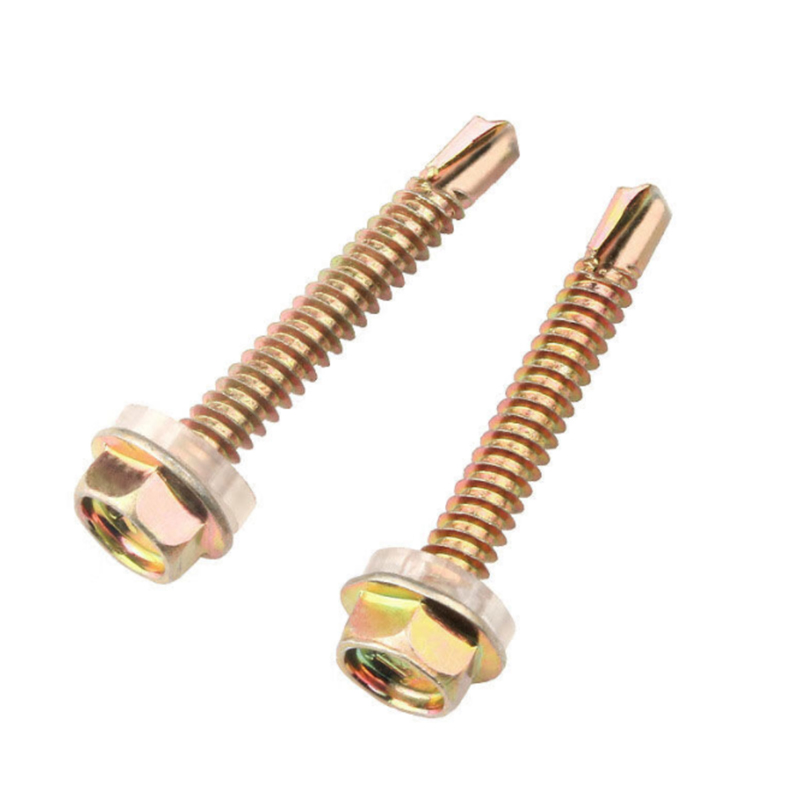
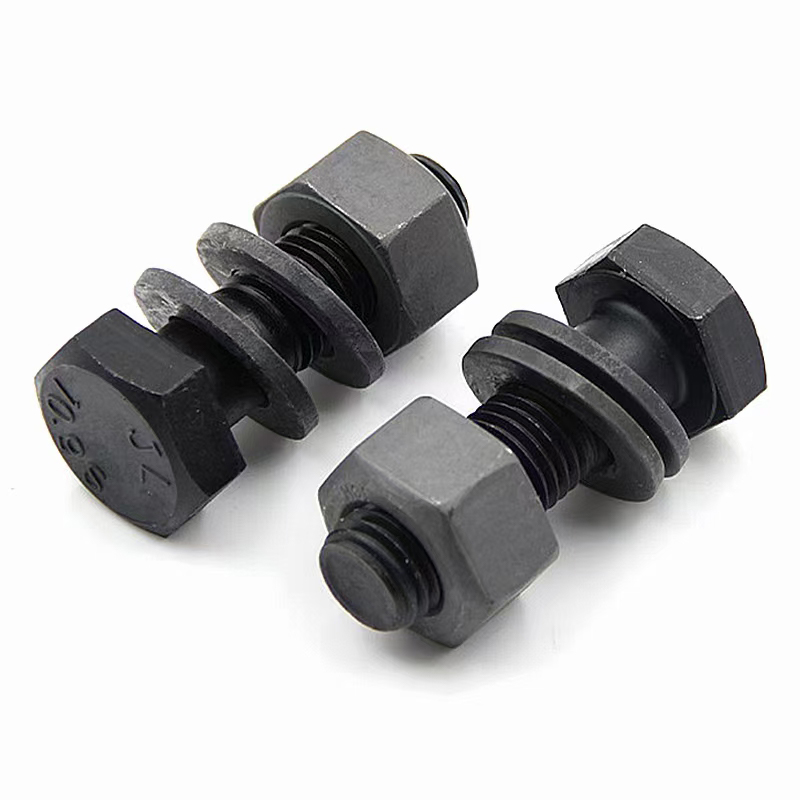
This is where relationships with integrated suppliers matter. Having a source that understands both the gasket technology and the complementary components, like the high-strength fasteners from a company like Handan Zitai, can streamline the process. Their location at a major transport nexus near the Beijing-Guangzhou Railway and expressways theoretically supports more reliable logistics, which is half the battle in turning an innovative product into a practical benefit.
Cost Analysis: Not Just Price Per Unit
The upfront cost is higher. No way around it. A Tadpole Gasket can be 2-3x the cost of a basic spiral-wound. The innovation benefit has to be justified through total cost of ownership. Where does that payback come from? Reduced installation labor (if your crew is trained), extended re-torquing intervals, and potentially avoiding a single leak-related shutdown. In a high-value continuous process, the math can work very quickly.
But there’s a trap. Using it where those factors don’t exist is just wasted capital. We did a post-audit on a water treatment plant that had spec’d them across the board on low-pressure water lines. The maintenance manager couldn’t show any measurable benefit over the EPDM gaskets they used before. The innovation was utterly wasted. It was a case of specification creep where a good product gets applied blindly.
The sweet spot seems to be in moderate-to-high pressure, critical service, or where flange conditions are suboptimal. In those cases, the cost premium is insurance. It’s like choosing a premium bolt from a known manufacturer—you’re paying for consistency and performance assurance. The website HTTPS://www.zitiiiisters.com often details the engineering behind their fastener grades; applying the same scrutiny to gasket selection is what separates a good practice from a lucky one.
Looking Forward: Is This the Future?
The Tadpole isn’t revolutionary. It’s evolutionary. It’s a solid iteration on a mature product line. The real innovation benefit might be in shifting the conversation from just sealing to predictable sealing under variable conditions. It forces a more holistic look at the flange joint system—the gasket, the bolts, the flange surface, the procedure.
I’m curious about the next step. Will we see smart integration, like embedded sensors in such profiles? Perhaps. But for now, the practical takeaway is this: the Garlock Tadpole Gasket offers a tangible benefit in specific, often troublesome applications. Its value isn’t automatic; it’s realized through correct application, proper installation, and a clear-eyed total cost analysis. It’s a tool, not a miracle. And in this industry, a reliable tool that solves a persistent headache is what true innovation feels like on the ground. Sometimes, that’s enough.
Faʻamolemole tuʻu le feʻau
-


-
-


WeChat
