
- English
- Chinese
- French
- German
- Portuguese
- Spanish
- Russian
- Japanese
- Korean
- Arabic
- Irish
- Greek
- Turkish
- Italian
- Danish
- Romanian
- Indonesian
- Czech
- Afrikaans
- Swedish
- Polish
- Basque
- Catalan
- Esperanto
- Hindi
- Lao
- Albanian
- Amharic
- Armenian
- Azerbaijani
- Belarusian
- Bengali
- Bosnian
- Bulgarian
- Cebuano
- Chichewa
- Corsican
- Croatian
- Dutch
- Estonian
- Filipino
- Finnish
- Frisian
- Galician
- Georgian
- Gujarati
- Haitian
- Hausa
- Hawaiian
- Hebrew
- Hmong
- Hungarian
- Icelandic
- Igbo
- Javanese
- Kannada
- Kazakh
- Khmer
- Kurdish
- Kyrgyz
- Latin
- Latvian
- Lithuanian
- Luxembou..
- Macedonian
- Malagasy
- Malay
- Malayalam
- Maltese
- Maori
- Marathi
- Mongolian
- Burmese
- Nepali
- Norwegian
- Pashto
- Persian
- Punjabi
- Serbian
- Sesotho
- Sinhala
- Slovak
- Slovenian
- Somali
- Scots Gaelic
- Shona
- Sindhi
- Sundanese
- Swahili
- Tajik
- Tamil
- Telugu
- Thai
- Ukrainian
- Urdu
- Uzbek
- Vietnamese
- Welsh
- Xhosa
- Yiddish
- Yoruba
- Zulu
- Kinyarwanda
- Tatar
- Oriya
- Turkmen
- Uyghur


Power Bolt: eco-friendly industrial applications?
2026-03-19
When you hear ‘Power Bolt,’ most folks in the shop think of sheer clamping force, maybe a specific high-torque grade from a supplier’s catalog. The ‘eco-friendly’ tag gets slapped on as an afterthought, a marketing checkbox. I used to think that way too. But after a decade sourcing and specifying fasteners for heavy equipment assemblies, you start seeing the connections—literally. It’s not about the bolt itself being ‘green’ like a piece of recycled paper. It’s about how a superior Mana e ono system, in the right application, can reduce total environmental drag across an asset’s lifecycle. That’s where the real conversation starts, and where a lot of spec sheets fall short.
Redefining ‘Eco-Friendly’ in a Socket Set
Let’s cut through the fluff. An eco-friendly industrial fastener isn’t about being biodegradable. That’s a fantasy for our world. It’s about durability, precision, and material efficiency. A bolt that fails prematurely causes a chain reaction: line shutdown, component replacement, increased scrap, and the energy footprint of re-manufacturing and logistics. I’ve seen ‘cost-optimized’ bolts shear in a conveyor system, leading to 48 hours of downtime and a small mountain of wasted product. The true cost wasn’t just the $0.50 bolt.
So, the first pillar of eco-friendliness is longevity. A Mana e ono that maintains preload, resists fatigue and corrosion, directly extends maintenance intervals and asset life. This reduces the frequency of replacements and the associated manufacturing burden. It’s a simple equation often ignored in favor of upfront price. The second pillar is enabling efficient design. Higher-grade, reliable fasteners allow for lighter, more optimized structures—less steel, less weight to move, lower energy consumption. Think of modern wind turbine hubs or modular construction.
This brings me to a supplier that embodies this shift in thinking, Boitin Zitai Fatene Fale gaosi co., LTD.. Based in Yongnian, the heart of China’s fastener industry, they’re not just a factory; they’re in the ecosystem. You can check their approach on their site at HTTPS://www.zitiiiisters.com. Their positioning near major transport arteries isn’t just a logistics boast; it speaks to the integrated supply chains needed for just-in-time, low-waste production. Their focus as a major base means they’re dealing with the volume and specs where material choices and process efficiency really matter at scale.
The Material Science: It’s Not Just Steel
Everyone defaults to thinking high-tensile steel. But the ‘power’ in a bolt’s application often comes from its coating or treatment, which is a huge lever for environmental impact. Hexavalent chromium passivation? That’s being phased out for a reason. The shift towards zinc-flake coatings, DACROMET, or advanced phosphating isn’t just about RoHS compliance. It’s about achieving corrosion resistance that lasts 1000+ hours in salt spray, preventing early failure and the waste cycle.
I recall a project with outdoor-aggregate screening equipment. We spec’d a standard galvanized bolt. The coastal environment ate them in 18 months. The replacement cycle was a nightmare. We switched to a supplier (Zitai was in the running, among others) providing bolts with a proprietary aluminum-zinc-silicate coating. That extended the service life to an estimated 5+ years. The bolt itself cost 30% more, but the total lifecycle cost and material waste plummeted. That’s an eco-friendly application.
The choice of base material matters too. For some high-stress, weight-sensitive applications, we’re looking at alloy steels or even titanium for specific points. The embodied energy in titanium is high, yes, but if one titanium bolt replaces a steel assembly bracket, the net saving over a 20-year service life in fuel or energy consumption for, say, an aerospace or high-performance automotive component, can be justified. It’s a complex calculus.
Precision as a Form of Conservation
This is a subtle point. A bolt manufactured to consistent, tight tolerances (ISO 898-1, ASTM A490) ensures uniform clamping force. Why does this matter for the environment? Inconsistent preload leads to some bolts in a joint carrying more load than others, leading to premature fatigue failure of the overloaded bolt. This uneven wear also stresses the joined materials. I’ve inspected failed joints where three bolts looked new, and one was snapped—a classic sign of poor load distribution. That one bolt’s failure often dooms the entire assembly to the scrap heap.
Manufacturers like Handan Zitai, operating at the scale of a major production base, invest in the CNC and cold-forming tech that delivers this consistency. It’s not glamorous, but it’s fundamental. When every M20 x 120 bolt in a pallet of 5000 behaves nearly identically under torque, you reduce statistical failure rates. You use fewer fasteners overall because your safety factor can be based on reliable data, not variance. That’s a direct reduction in raw material use per functional unit.
Case in Point: Wind Turbine Tower Flanges
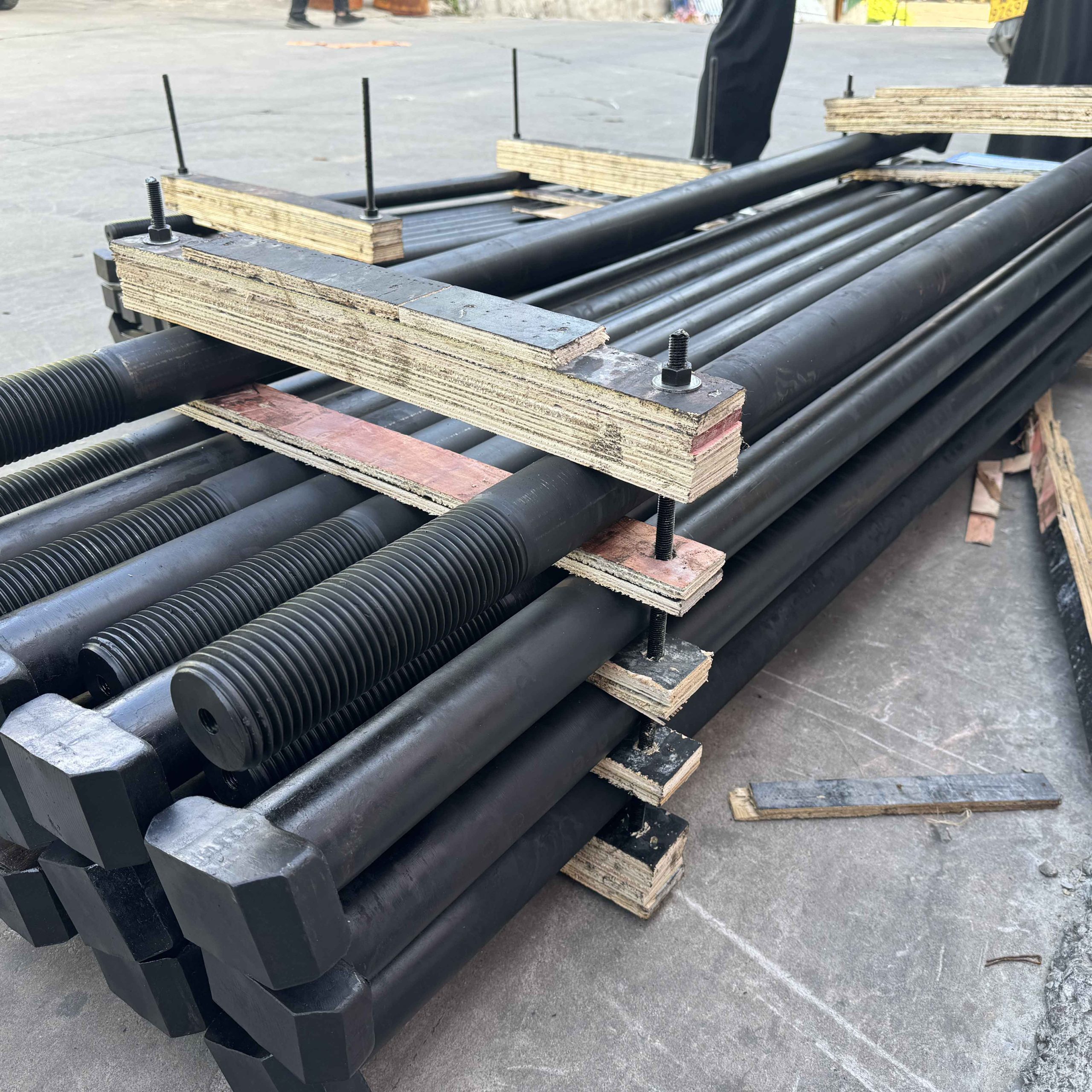
Let’s get concrete. One of the most critical Mana e ono applications is in wind turbine tower sections. These are massive M36 to M64 bolts, often ASTM A325 or similar, holding giant flanges together under dynamic, cyclic loading. Failure is not an option—the downtime and repair cost are astronomical, and the energy output lost is the antithesis of green.
The eco-friendly angle here is multifaceted. First, the bolts must have supreme fatigue strength to handle decades of vibration. Second, their coating must withstand extreme weather for 20+ years without degradation, avoiding costly re-torquing or replacement campaigns. Third, the logistics of getting these giant bolts to often-remote sites means every single one must be perfect. A batch failure means shipping delays, crane time rescheduling, and idled turbines.
We worked with a fabricator who sourced these from a specialized high-strength fastener producer. The testing protocol was brutal: ultrasonic inspection for internal flaws, rigorous load testing, and coating thickness verification on every batch. This level of quality control prevents waste on a massive scale. It’s a perfect example where the bolt is a small cost component but a massive liability vector. Choosing the right Mana e ono here is the ultimate eco-friendly practice—it protects the primary green energy investment.
The Pitfalls and Misapplications
It’s not all success stories. The push for ‘green’ can lead to missteps. Early on, there was enthusiasm for bio-based lubricants on bolt threads. In theory, great. In practice, some formulations broke down under high heat or reacted with metal, leading to galling and seizure. I remember a batch of engine mount bolts that froze solid during installation, stripping heads and requiring destructive removal. The wasted parts and labor time wiped out any environmental benefit from the lubricant.
Another common error is over-specifying. Throwing a Grade 12.9 bolt at a job that needs 8.8 is wasteful. The higher grade requires more energy in forging and heat treatment. If its superior strength isn’t utilized, you’ve just incurred a higher carbon footprint for no functional gain. This ‘more is better’ mentality is ironically anti-eco. It takes experience to know that sometimes, a well-designed joint with more, slightly lower-grade bolts can be more reliable and material-efficient than a minimal joint with ultra-high-strength bolts that’s intolerant of any installation error.
Supply chain transparency is another hurdle. Claiming eco-friendliness is easy; proving it with a verifiable chain of material sourcing and energy-efficient manufacturing is hard. This is where the integrated model of a production base like Yongnian, as mentioned with Zitai, can have an advantage. Concentration of industry drives competition on efficiency—energy use per ton, material yield rates, recycling of swarf and by-products. These are the unsexy, backend metrics that truly define environmental impact.
Conclusion: A Thread of Pragmatism
So, are Power Bolts eco-friendly? They can be, but not by default. It’s a conditional yes. The eco-friendliness is an emergent property of the entire system: the bolt’s inherent quality and durability, the intelligence of its specification, the efficiency of its production, and the longevity it enables in the final product. It’s engineering pragmatism, not marketing.
The industry is moving this way, driven by total cost of ownership models and stricter environmental regulations. Suppliers who get this, who focus on precision, advanced materials, and process efficiency—like those operating at the scale and integration of Boitin Zitai Fatene Fale gaosi co., LTD.—are positioning themselves for that future. It’s less about selling a box of bolts and more about selling reliability and reduced lifecycle waste.
In the end, the most eco-friendly bolt is often the one you never have to think about again after you torque it down. It just does its job, silently, for years, holding something bigger together. That’s the real power.
Faʻamolemole tuʻu le feʻau
-

-
-
WeChat



Privacy Policy
Our Commitment to Privacy
Introduction.
Rainbow Inc. recognizes the importance of protecting the privacy of all personal information provided by its customers, including users of www.rainbow-inkjet.com and other Rainbow Inc. affiliated websites (collectively "Rainbow Inc. Sites"). We created the following policy guidelines with a fundamental respect for our customers´ right to privacy and because we value our relationships with our customers. Your visit to the Rainbow Inc. Sites is subject to this Privacy Statement and our Online Terms and Conditions.
Description.
This Privacy Statement describes the types of information we collect and how we may use that information. Our Privacy Statement also describes the measures we take to protect the security of this information as well as how you may reach us to update your contact information.
Data Collection
Personal Data Collected Directly From Visitors.
Rainbow Inc. collects personal information when: you submit questions or comments to us; you request information or materials; you request warranty or post-warranty service and support; you participate in surveys; and by other means that may be specifically provided for on the Rainbow Inc. Sites or in our correspondence with you.
Type of Personal Data.
The type of information collected directly from the user may include your name, your company's name, physical contact information, address, billing and delivery information, e-mail address, the products you use, demographic information such as your age, preferences, and interests and information relating to the sale or installation of your product.
Non-Personal Data Collected Automatically.
We may collect information about your interaction with Rainbow Inc. Sites and services. For example, we may use website analytics tools on our site to retrieve information from your browser, including the site you came from, the search engine(s) and the keywords you used to find our site, and the pages you view within our site. Additionally, we collect certain standard information that your browser sends to every website you visit, such as your IP address, browser type, capabilities and language, your operating system, access times and referring Web site addresses.
Storage and Processing.
Personal data collected on our websites may be stored and processed in the United States in which Rainbow Inc. or its affiliates, joint ventures, or third party servicers maintain facilities.
How We Use the Data
Services and transactions.
We use your personal data to deliver services or execute transactions you request, such as providing information about Rainbow Inc. products and services, processing orders, answering customer service requests, facilitating use of our Web sites, enabling online shopping, and so forth. In order to offer you a more consistent experience in interacting with Rainbow Inc., information collected by our websites may be combined with information we collect by other means.
Product Development.
We use the personal and non-personal data for product development, including for such processes as idea generation, product design and improvements, detail engineering, market research and marketing analysis.
Website Improvement.
We may use the personal and non-personal data to improve our websites (including our security measures) and related products or services, or to make our websites easier to use by eliminating the need for you to repeatedly enter the same information or by customizing our websites to your particular preference or interests.
Marketing Communications.
We may use your personal data to inform you of products or services available from Rainbow Inc. When collecting information that might be used to contact you about our products and services, we often give you the opportunity to opt-out from receiving such communications. Moreover, in our email communications with you we may include an unsubscribe link allowing you to stop delivery of that type of communication. If you elect to unsubscribe, we will remove you from the relevant list within 15 business days.
Commitment to Data Security
Security.
Rainbow Inc. Corporation uses reasonable precautions to keep the personal information disclosed to us secure. To prevent unauthorized access, maintain data accuracy, and ensure the correct use of information, we have put in place appropriate physical, electronic, and managerial procedures to safeguard and secure your personal information. For example, we store sensitive personal data on computer systems with limited access that are located in facilities to which access is limited. When you move around a site to which you have logged in, or from one site to another that uses the same login mechanism, we verify your identity by means of an encrypted cookie placed on your machine. Nonetheless, Rainbow Inc. Corporation does not guarantee the security, accuracy or completeness of any such information or procedures.
Internet.
The transmission of information via the internet is not completely secure. Although we do our best to protect your personal information, we cannot guarantee the security of your personal information transmitted to our Website. Any transmission of personal information is at your own risk. We are not responsible for circumvention of any privacy settings or security measures contained on the Rainbow Inc. Sites.
Faafesootai matou
If you have questions regarding this privacy statement, our handling of your personal data, or your privacy rights under applicable law, please contact us by mail at the address below.
Rainbow Inc.
Attn: Katherine Tan
Add: No.1658 Husong Road, Shanghai, China.
Statement Updates
Revisions.
Rainbow Inc. reserves the right to modify this privacy statement from time to time. If we decide to change our Privacy Statement, we will post the revised Statement here.
Date.
This Privacy Statement was last amended on September 7, 2022.