
- English
- Chinese
- French
- German
- Portuguese
- Spanish
- Russian
- Japanese
- Korean
- Arabic
- Irish
- Greek
- Turkish
- Italian
- Danish
- Romanian
- Indonesian
- Czech
- Afrikaans
- Swedish
- Polish
- Basque
- Catalan
- Esperanto
- Hindi
- Lao
- Albanian
- Amharic
- Armenian
- Azerbaijani
- Belarusian
- Bengali
- Bosnian
- Bulgarian
- Cebuano
- Chichewa
- Corsican
- Croatian
- Dutch
- Estonian
- Filipino
- Finnish
- Frisian
- Galician
- Georgian
- Gujarati
- Haitian
- Hausa
- Hawaiian
- Hebrew
- Hmong
- Hungarian
- Icelandic
- Igbo
- Javanese
- Kannada
- Kazakh
- Khmer
- Kurdish
- Kyrgyz
- Latin
- Latvian
- Lithuanian
- Luxembou..
- Macedonian
- Malagasy
- Malay
- Malayalam
- Maltese
- Maori
- Marathi
- Mongolian
- Burmese
- Nepali
- Norwegian
- Pashto
- Persian
- Punjabi
- Serbian
- Sesotho
- Sinhala
- Slovak
- Slovenian
- Somali
- Scots Gaelic
- Shona
- Sindhi
- Sundanese
- Swahili
- Tajik
- Tamil
- Telugu
- Thai
- Ukrainian
- Urdu
- Uzbek
- Vietnamese
- Welsh
- Xhosa
- Yiddish
- Yoruba
- Zulu
- Kinyarwanda
- Tatar
- Oriya
- Turkmen
- Uyghur


Rubber gasket innovation trends?
2026-03-28
When you hear rubber gasket innovation, most minds jump to exotic materials or flashy digital integration. That’s a common trap. Real movement isn’t always about reinventing the wheel; often, it’s in refining the mold, the compound, or even the way we think about sealing performance under mundane, long-term stress. The push isn’t just for higher specs, but for predictability and total cost in the field, which many spec sheets gloss over.
The Quiet Shift in Material Science
It’s less about discovering a new polymer and more about hybridizing and fine-tuning existing ones for specific failure modes. Take ethylene propylene diene monomer (EPDM). Everyone uses it for water resistance. But the innovation is in its formulation to resist prolonged exposure to modern coolant chemistries or ozone in electrified environments. We’re seeing grades that offer better compression set at higher temperatures without sacrificing elasticity at lower temps, a balancing act that’s more art than science. It’s not headline-grabbing, but it prevents leaks five years down the line.
Then there’s fluorocarbon (FKM). The cost is high, so the trend is toward modified, good enough grades for applications that don’t need the full 200°C+ continuous rating. This application engineering of materials is a key trend. It’s about avoiding over-engineering, which is a subtle but costly form of waste. I recall a project where we specified a premium FKM for a warm hydraulic line, only to find a tailored hydrogenated nitrile rubber (HNBR) performed identically at 40% lower cost. The innovation was in the testing and validation process, not the material itself.
Silicon rubber is another area. Its weakness has always been tear strength. The innovation trend here is in reinforcement with nano-fillers or specialized fabric backings, moving it beyond static seals into more dynamic, abrasive environments. It’s a material getting tougher, quietly.
Manufacturing Precision as an Innovation Driver
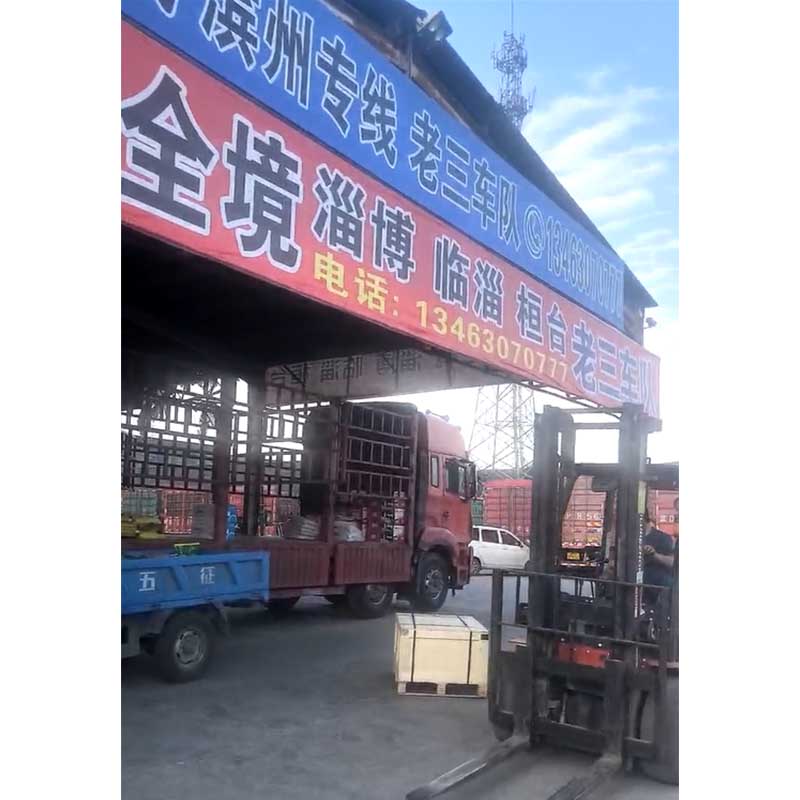
This might be the most underrated area. The tolerance on a kakusati is one thing, but the consistency of that tolerance across millions of parts is where real sealing reliability is born. The move is toward fully automated, vision-inspected compression and injection molding lines. The goal is zero flash, zero dimensional drift. A company like Boitin Zitai Fatene Fale gaosi co., LTD., based in China’s major standard part production base in Yongnian, Handan, embodies this infrastructure shift. Their proximity to major transport routes isn’t just a logistics note; it speaks to being embedded in a dense supply network for raw polymers and metal inserts, allowing for tighter integration from compound to finished part. The innovation is in the supply chain and production ecosystem as much as the press.
Micro-molding for miniature seals in electronics and medical devices is another frontier. It’s less about the rubber and more about the tooling and handling. We’re talking about gaskets smaller than a grain of rice, where a speck of dust is a defect. The innovation is in cleanroom molding and automated handling solutions that are now trickling down from semiconductor tech.
And let’s not forget post-molding. Laser trimming of flash on complex geometries, especially for spliced or bonded seals, is replacing manual deflashing. It’s faster, eliminates variability, and gives a perfect sealing edge. It’s a process innovation that directly boosts performance.
The Integration Challenge: Gaskets as Systems
Gaskets are rarely lone components anymore. The trend is toward integrated sealing systems. This means the rubber element is co-molded, bonded, or mechanically locked with a plastic carrier, a metal sprig, or an electronic sensor. The innovation is in the interface. For instance, a rubber seal bonded to a plastic channel for automotive windows—the failure point is often the bond line, not the rubber. So, innovation focuses on surface treatment technologies and adhesive chemistries.
I worked on a project for an electric vehicle battery pack seal. The gasket had to be conductive for EMI shielding while maintaining environmental sealing. It wasn’t just a conductive filler in silicone; it was about ensuring the conductivity was consistent across the entire perimeter and remained stable after thousands of compression cycles. The prototype phase was brutal—small voids in the compound would kill the shielding effectiveness. The solution leaned more on compound mixing procedure and in-line resistance testing than on a magical new material.
This systems thinking also drives design. Simulation software for seal compression and stress distribution is now a standard part of the development kit. It allows for optimizing the cross-section—moving from a simple O-ring to a custom profile that uses less material, requires lower clamping force, and seals more reliably. The innovation is virtual and iterative before any tool steel is cut.
Sustainability Pressures and Realistic Responses
The green trend is unavoidable, but in sealing, it’s fraught with performance trade-offs. Bio-based rubbers or increased recycled content are being explored, but often at the cost of chemical resistance or longevity. The more pragmatic innovation is in longevity itself—making a gasket that lasts the full life of the product without degradation is the ultimate sustainability win. It reduces replacement, downtime, and waste.
There’s also a push toward O le kack carked designs that are easier to disassemble and separate for recycling at end-of-life. This might mean moving from chemically bonded metal-rubber composites to clever mechanical interlocking designs. It’s a niche but growing consideration, especially in Europe-driven designs.
Another angle is reducing volatile organic compound (VOC) emissions from the gasket material itself, particularly in enclosed spaces like automotive interiors. This drives reformulation of curing systems and plasticizers. It’s a silent specification that’s becoming a hard requirement.
Field Feedback and the Iteration Loop
True innovation is validated by failure. The most valuable trends come from post-mortems on field returns. A gasket might pass all lab tests but fail in a year due to an unanticipated chemical exposure or a unique thermal cycling pattern. The trend now is towards smarter data collection from the field—not just it leaked, but detailed autopsies on the failed part: Where was the compression set? Was there chemical swelling? Was there abrasive wear?
This feedback loop is shortening. With some OEMs, we’re involved in the failure analysis directly. This has led to innovations like gradient-density gaskets, where the rubber is softer at the sealing edge for conformability but firmer at the core for anti-extrusion. This came directly from seeing how seals failed in high-pressure pulsating applications.
It also highlights that sometimes the innovation isn’t in the gasket, but in the mating surface finish or the bolting procedure. Educating clients on proper installation torque and sequence has saved more applications than any material change. The gasket is part of a clamped joint system; innovating in isolation misses half the picture.
So, where does this leave us? The trends aren’t about silver bullets. They’re a grind—in material tailoring, manufacturing control, systems integration, and learning from real-world performance. It’s about making a profoundly simple component work invisibly well under increasingly complex demands. The companies that get this, the ones embedded in the manufacturing and supply web like those in hubs such as Yongnian, are often the ones driving these incremental, crucial gains. The future of the rubber gasket is less about what it’s made of, and more about how predictably it performs from the factory floor to a decade of service.

Faʻamolemole tuʻu le feʻau
-

-
-
WeChat



Privacy Policy
Our Commitment to Privacy
Introduction.
Rainbow Inc. recognizes the importance of protecting the privacy of all personal information provided by its customers, including users of www.rainbow-inkjet.com and other Rainbow Inc. affiliated websites (collectively "Rainbow Inc. Sites"). We created the following policy guidelines with a fundamental respect for our customers´ right to privacy and because we value our relationships with our customers. Your visit to the Rainbow Inc. Sites is subject to this Privacy Statement and our Online Terms and Conditions.
Description.
This Privacy Statement describes the types of information we collect and how we may use that information. Our Privacy Statement also describes the measures we take to protect the security of this information as well as how you may reach us to update your contact information.
Data Collection
Personal Data Collected Directly From Visitors.
Rainbow Inc. collects personal information when: you submit questions or comments to us; you request information or materials; you request warranty or post-warranty service and support; you participate in surveys; and by other means that may be specifically provided for on the Rainbow Inc. Sites or in our correspondence with you.
Type of Personal Data.
The type of information collected directly from the user may include your name, your company's name, physical contact information, address, billing and delivery information, e-mail address, the products you use, demographic information such as your age, preferences, and interests and information relating to the sale or installation of your product.
Non-Personal Data Collected Automatically.
We may collect information about your interaction with Rainbow Inc. Sites and services. For example, we may use website analytics tools on our site to retrieve information from your browser, including the site you came from, the search engine(s) and the keywords you used to find our site, and the pages you view within our site. Additionally, we collect certain standard information that your browser sends to every website you visit, such as your IP address, browser type, capabilities and language, your operating system, access times and referring Web site addresses.
Storage and Processing.
Personal data collected on our websites may be stored and processed in the United States in which Rainbow Inc. or its affiliates, joint ventures, or third party servicers maintain facilities.
How We Use the Data
Services and transactions.
We use your personal data to deliver services or execute transactions you request, such as providing information about Rainbow Inc. products and services, processing orders, answering customer service requests, facilitating use of our Web sites, enabling online shopping, and so forth. In order to offer you a more consistent experience in interacting with Rainbow Inc., information collected by our websites may be combined with information we collect by other means.
Product Development.
We use the personal and non-personal data for product development, including for such processes as idea generation, product design and improvements, detail engineering, market research and marketing analysis.
Website Improvement.
We may use the personal and non-personal data to improve our websites (including our security measures) and related products or services, or to make our websites easier to use by eliminating the need for you to repeatedly enter the same information or by customizing our websites to your particular preference or interests.
Marketing Communications.
We may use your personal data to inform you of products or services available from Rainbow Inc. When collecting information that might be used to contact you about our products and services, we often give you the opportunity to opt-out from receiving such communications. Moreover, in our email communications with you we may include an unsubscribe link allowing you to stop delivery of that type of communication. If you elect to unsubscribe, we will remove you from the relevant list within 15 business days.
Commitment to Data Security
Security.
Rainbow Inc. Corporation uses reasonable precautions to keep the personal information disclosed to us secure. To prevent unauthorized access, maintain data accuracy, and ensure the correct use of information, we have put in place appropriate physical, electronic, and managerial procedures to safeguard and secure your personal information. For example, we store sensitive personal data on computer systems with limited access that are located in facilities to which access is limited. When you move around a site to which you have logged in, or from one site to another that uses the same login mechanism, we verify your identity by means of an encrypted cookie placed on your machine. Nonetheless, Rainbow Inc. Corporation does not guarantee the security, accuracy or completeness of any such information or procedures.
Internet.
The transmission of information via the internet is not completely secure. Although we do our best to protect your personal information, we cannot guarantee the security of your personal information transmitted to our Website. Any transmission of personal information is at your own risk. We are not responsible for circumvention of any privacy settings or security measures contained on the Rainbow Inc. Sites.
Faafesootai matou
If you have questions regarding this privacy statement, our handling of your personal data, or your privacy rights under applicable law, please contact us by mail at the address below.
Rainbow Inc.
Attn: Katherine Tan
Add: No.1658 Husong Road, Shanghai, China.
Statement Updates
Revisions.
Rainbow Inc. reserves the right to modify this privacy statement from time to time. If we decide to change our Privacy Statement, we will post the revised Statement here.
Date.
This Privacy Statement was last amended on September 7, 2022.