
- English
- Chinese
- French
- German
- Portuguese
- Spanish
- Russian
- Japanese
- Korean
- Arabic
- Irish
- Greek
- Turkish
- Italian
- Danish
- Romanian
- Indonesian
- Czech
- Afrikaans
- Swedish
- Polish
- Basque
- Catalan
- Esperanto
- Hindi
- Lao
- Albanian
- Amharic
- Armenian
- Azerbaijani
- Belarusian
- Bengali
- Bosnian
- Bulgarian
- Cebuano
- Chichewa
- Corsican
- Croatian
- Dutch
- Estonian
- Filipino
- Finnish
- Frisian
- Galician
- Georgian
- Gujarati
- Haitian
- Hausa
- Hawaiian
- Hebrew
- Hmong
- Hungarian
- Icelandic
- Igbo
- Javanese
- Kannada
- Kazakh
- Khmer
- Kurdish
- Kyrgyz
- Latin
- Latvian
- Lithuanian
- Luxembou..
- Macedonian
- Malagasy
- Malay
- Malayalam
- Maltese
- Maori
- Marathi
- Mongolian
- Burmese
- Nepali
- Norwegian
- Pashto
- Persian
- Punjabi
- Serbian
- Sesotho
- Sinhala
- Slovak
- Slovenian
- Somali
- Scots Gaelic
- Shona
- Sindhi
- Sundanese
- Swahili
- Tajik
- Tamil
- Telugu
- Thai
- Ukrainian
- Urdu
- Uzbek
- Vietnamese
- Welsh
- Xhosa
- Yiddish
- Yoruba
- Zulu
- Kinyarwanda
- Tatar
- Oriya
- Turkmen
- Uyghur

U bolt clamp specs for industrial sustainability?
2026-03-01
When you hear U-bolt specs for sustainability, most procurement folks immediately jump to material grades—ASTM A307, A193 B7, or maybe 316 stainless for corrosion resistance. That’s not wrong, but it’s a surface-level take. In my years sourcing and specifying these for heavy piping, conveyor systems, and structural tie-downs, I’ve found the real sustainability lever isn’t just the bolt itself; it’s how the U o le pamu specs dictate installation lifespan, maintenance cycles, and eventual replacement waste. Many engineers over-spec, thinking thicker is always better, but that leads to material overuse and higher embodied carbon. The trick is balancing clamp load, galvanizing quality, and thread engagement so the assembly outlasts the structure it’s supporting, without being wasteful.
The Material Misconception and Weight Penalty
Let’s start with the classic pitfall: over-specifying material. On a project for a coastal wastewater treatment plant, the initial specs called for all 316 stainless steel U-bolts for pipe supports. Sounds robust, right? But the cost was astronomical, and the environmental footprint of producing that grade of stainless is significant. More critically, many of these clamps were in sheltered, dry areas where a hot-dip galvanized carbon steel bolt would have sufficed for the 50-year design life. We pushed back and did a zone-based specification. Only the clamps in direct splash zones or highly corrosive atmospheres got the 316. The rest were spec’d with a heavy zinc coating (think 85μm minimum) on ASTM A307 material. The savings were substantial, but more importantly, we avoided the green premium of using a high-performance material where it wasn’t needed—that’s not sustainable, it’s just inefficient.
This ties into the weight penalty. A heavier, over-specified U-bolt means more steel, more energy to ship, and more difficult handling. I recall a contractor complaining about back injuries during the installation of massive 2-inch diameter U-bolts for a utility line. The design called for a huge safety factor, but the static load analysis was misinterpreted. We downsized to 1.5-inch after a review, kept the safety margin, and the carbon footprint from transport dropped noticeably. The lesson? Sustainable specs require precise load calculation, not just adding a blanket multiplier.
Then there’s the coating process. Not all galvanizing is equal for longevity. A thin, electroplated coating might look fine off the shelf but will fail quickly in an industrial setting. For true durability, we insist on hot-dip galvanizing per ASTM A153. The process itself is energy-intensive, so you want to do it once and do it right. A supplier cutting corners here will cost you tenfold in replacement labor and downtime later. I’ve seen clamp failures in under five years because of poor zinc adhesion, leading to rust jacking and loss of clamping force. That’s the opposite of sustainable.
Geometry and Load Distribution: Where Specs Get Real
Specifying the diameter, thread pitch, and bend radius is Engineering 101. But the sustainable angle comes from how the geometry affects reusability and stress. A U-bolt with a too-tight bend radius creates a stress concentration point. Over time, under vibration, that’s where fatigue cracks initiate. We learned this the hard way on a vibrating conveyor system. The clamps kept failing at the bend, not the threads. The spec was missing a minimum bend radius relative to the rod diameter. After the third failure, we amended the spec to require a bend radius no less than 3 times the bolt diameter for dynamic loads. It extended service life by years.
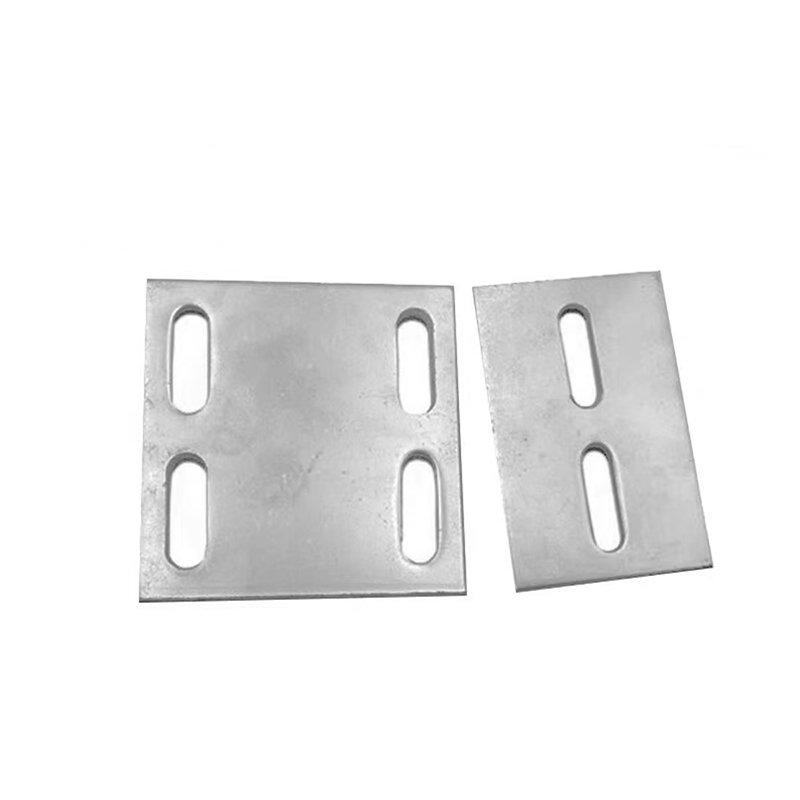
Another overlooked detail is the saddle (the bottom plate). A sustainable clamp system isn’t just the U-bolt; it’s the entire assembly. Using a weak, thin saddle plate defeats the purpose of a strong bolt. The plate should be thick enough to distribute the load without deforming. We now spec the saddle material and thickness alongside the bolt. Sometimes, a wider saddle means you can use a slightly smaller diameter bolt, achieving the same clamp load with less material. It’s a systems-thinking approach.
Thread engagement is a classic site problem. The spec might call for full nut engagement, but if the threaded length is too short, installers might not get enough bites, or they’ll run out of thread before achieving proper torque. This compromises the joint. A good, sustainable spec defines not just the diameter and grade, but the minimum usable thread length below the nut after installation. This ensures the clamp can be properly tensioned and even re-tightened during maintenance if needed, extending its service interval.
The Supply Chain and Localization Factor
Sustainability has a logistics component. Sourcing U-bolts from halfway across the globe for a project in Asia doesn’t make sense, even if the unit price is lower. The transport emissions negate other efforts. This is where regional manufacturing hubs become critical. For instance, in North China, you have clusters like Yongnian District in Handan, Hebei, a massive fastener production base. Sourcing from a local specialist there, like Boitin Zitai Fatene Fale gaosi co., LTD., can drastically cut down on logistical miles for projects in the region. Their location adjacent to major rail and highway networks (HTTPS://www.zitiiiisters.com) is a practical advantage for reducing carbon footprint in the supply chain. It’s not just about the product; it’s about the product’s journey to the job site.
Working with a manufacturer like Zitai, you get the benefit of scale and specialization. They understand the local material standards and testing regimes (like China’s GB standards versus ASTM). For a sustainable spec, you need a supplier who can consistently meet the coating thickness and material certification you require without constant air-freighting of samples. Local expertise in corrosion protection for regional environmental conditions is invaluable. A generic, globally-sourced bolt might not have the right finish for, say, the specific industrial atmosphere of a Northern Chinese steel plant.
However, localization requires vetting. Not all local manufacturers have the same quality controls. We once had a batch where the zinc coating was up to spec, but the underlying steel had inconsistent hardness, leading to some bolts stretching during torque-down. It caused a minor delay. The point is, sustainable sourcing isn’t just picking the closest factory; it’s building a relationship with a competent one that can deliver repeatable quality, minimizing the risk of failures and do-overs.
Installation and Maintenance: The Hidden Sustainability Cost
The most sustainable U-bolt is one that never needs to be touched after installation. But that’s rarely reality. Specs must facilitate proper installation. This means providing clear torque values and, increasingly, recommending direct tension indicating (DTI) washers for critical applications. Why? Over-torquing can strip threads or cause stress corrosion cracking in stainless steels. Under-torquing leads to loose clamps and vibration failures. Both scenarios result in premature replacement. By specifying a torque procedure and the right hardware, you ensure the installed life meets the designed life.
Access for maintenance is another design-spec interface issue. I’ve seen U-bolts specified in locations where you need three different socket extensions just to reach the nut. Predictably, they never get checked during routine maintenance. If a clamp can’t be inspected or re-tightened, its long-term viability is compromised. A sustainable design considers installability and serviceability. Sometimes, this means specifying a slightly longer thread or a different orientation to allow for a socket wrench to fit.
Then there’s the end-of-life story. Are the bolts and saddles separable for recycling? A fully galvanized assembly can often be recycled as scrap steel, but if it’s painted over or contaminated with other materials, it’s less efficient. It’s a small point, but part of the full lifecycle view. We’re starting to see more inquiries about the recyclability of fastener finishes.
Beyond the Spec Sheet: A Real-World Check
All these specs are useless if they don’t survive the real world. On a power plant retrofit, we spec’d everything perfectly—material, coating, geometry. But the storage on-site was poor. The U-bolts were left outside in a salty, humid environment for months before installation. The galvanizing started to show white rust before they were even installed. We had to reject the batch. Now, our specs include packaging and storage requirements: palletized, shrink-wrapped, and stored under cover. The sustainability of the product includes its pre-service life.
Finally, documentation matters. A sustainable practice is traceability. We require mill test certificates for the steel rod and certificates of conformity for the galvanizing process. This isn’t bureaucracy; it’s proof of compliance. If a failure occurs years later, you can trace it back to a material lot or a processing date. This data helps improve future specs and avoids repeating mistakes. It turns a simple clamp into a data point for continuous improvement.
So, when you’re looking at U bolt clamp specs for industrial sustainability, you’re really looking at a systems problem. It’s material science, mechanical design, logistics, installation practice, and lifecycle management. The spec is the starting point that ties it all together. Getting it right means less waste, less energy, and less downtime over decades. That’s the real return on investment, far beyond the cost per unit in a procurement spreadsheet.
Faʻamolemole tuʻu le feʻau
-


-
-


WeChat