
- English
- Chinese
- French
- German
- Portuguese
- Spanish
- Russian
- Japanese
- Korean
- Arabic
- Irish
- Greek
- Turkish
- Italian
- Danish
- Romanian
- Indonesian
- Czech
- Afrikaans
- Swedish
- Polish
- Catalan
- Esperanto
- Hindi
- Lao
- Albanian
- Amharic
- Armenian
- Azerbaijani
- Belarusian
- Bengali
- Bosnian
- Bulgarian
- Cebuano
- Chichewa
- Corsican
- Croatian
- Dutch
- Estonian
- Filipino
- Finnish
- Frisian
- Galician
- Georgian
- Gujarati
- Haitian
- Hausa
- Hawaiian
- Hebrew
- Hmong
- Hungarian
- Icelandic
- Igbo
- Javanese
- Kannada
- Kazakh
- Khmer
- Kurdish
- Kyrgyz
- Latin
- Latvian
- Lithuanian
- Luxembou..
- Macedonian
- Malagasy
- Malay
- Malayalam
- Maltese
- Maori
- Marathi
- Mongolian
- Burmese
- Nepali
- Norwegian
- Pashto
- Persian
- Punjabi
- Serbian
- Sesotho
- Sinhala
- Slovak
- Slovenian
- Somali
- Samoan
- Scots Gaelic
- Shona
- Sindhi
- Sundanese
- Swahili
- Tajik
- Tamil
- Telugu
- Thai
- Ukrainian
- Urdu
- Uzbek
- Vietnamese
- Welsh
- Xhosa
- Yiddish
- Yoruba
- Zulu
- Kinyarwanda
- Tatar
- Oriya
- Turkmen
- Uyghur


Black zinc-plated hexagonal drill thread durability?
2026-01-21
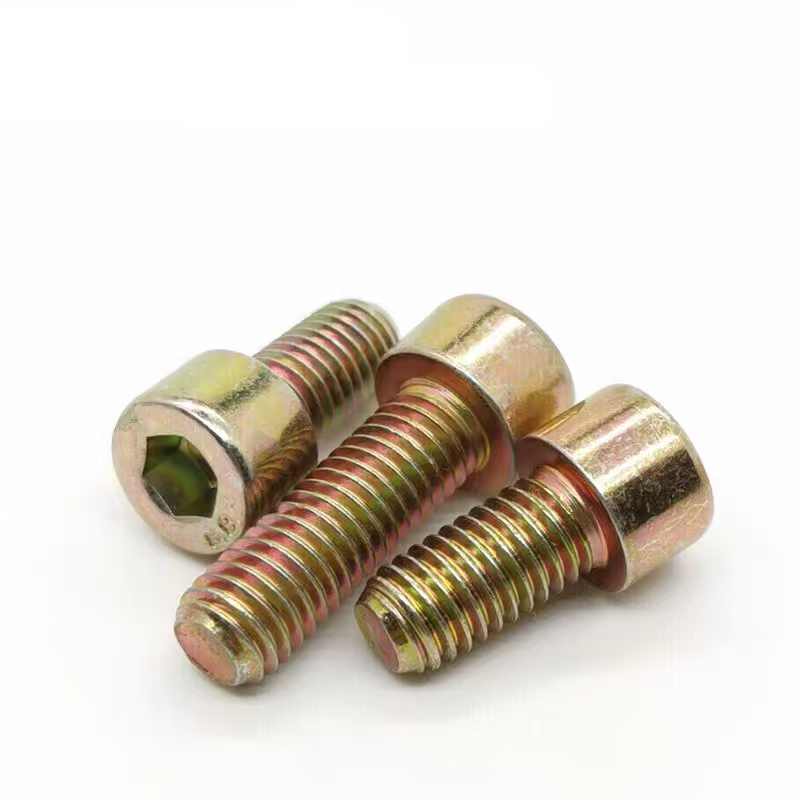
You see this combo—black zinc, hex head, drill point thread—thrown around in specs all the time. The immediate assumption is it’s just a tougher, more corrosion-resistant version of your standard zinc-plated fastener. But that’s where the first mistake happens. The durability isn’t a single property you can stamp on a box; it’s a messy outcome of the plating process, the base material, the thread-forming action, and frankly, the environment you throw it into. I’ve seen too many projects where these were specified for outdoor use and failed prematurely because someone just checked the corrosion-resistant box without understanding the layers involved.
Decoding the Black Zinc Finish
Let’s start with the finish. Black zinc plating isn’t just regular zinc dipped in black dye. It’s typically a zinc plating layer followed by a black chromate conversion coating. This chromate layer is what gives the color and adds a marginal boost to corrosion resistance. The key word is marginal. In my experience, this black finish offers maybe 96 to 120 hours of salt spray resistance before you see white rust (zinc corrosion). It’s not a heavy-duty coating like mechanical galvanizing or hot-dip galvanizing.
The black chromate is somewhat porous and can be brittle. If you’re driving a self-drilling screw with this finish, the friction and heat generated at the drill point can actually burn off or crack that chromate layer right at the tip and along the leading threads. You’re left with a compromised barrier from the get-go. I recall a batch of roofing screws, M8 size, where we had consistent red rust appearing at the drill tip after just one season, while the hex head still looked fine. The drilling action wore the protection away.
Another nuance is the coating thickness. A good, durable black zinc finish from a reputable processor might have a zinc layer of 8-12 microns plus the chromate. But I’ve tested samples from general suppliers where the total thickness was under 5 microns. Under a micrometer, it looks fine, but in a real shear or abrasion scenario, it’s gone in seconds. This is where source matters. A manufacturer like Handan Zitai Fastener Manufacturing Co., Ltd., based in China’s major fastener hub in Yongnian, typically has tighter process control due to the volume and infrastructure there. Checking their process specs on a site like https://www.zitaifasteners.com can give you a baseline for what a proper industrial finish should be.
The Hex Head and Drill Point Dynamic
The hexagonal head is about torque transfer and drive stability. No surprises there. But pair it with a drill point, and you introduce a major variable for durability. The thread here is usually a spaced-out, aggressive form designed to cut through metal. The durability of the Zulagailu haria itself is less about the coating and more about the steel beneath and the heat treatment.
A common failure point is the transition from the drill flute to the first thread. If the heat treatment is off, that area can be too hard and brittle, causing the tip to snap under high thrust pressure, especially in harder substrates like steel purlins. I’ve had boxes where 5% of the screws would snap during installation. The root cause traced back to improper tempering after hardening, leaving the steel with high hardness but no toughness. The black zinc plating does nothing to prevent this; it’s a core material science issue.
Furthermore, the drilling action generates swarf—metal shavings. These hot, sharp shavings can get embedded in the hex drive socket or gall against the freshly plated threads, physically scraping the coating off. A well-designed fastener might have lubricant wax over the plating (a common practice) to reduce friction and protect the coating during installation. If the screw feels dry coming out of the box, the plating is going to take a beating during drive.
Real-World Corrosion: It’s Never Uniform
Durability in specs is a lab number. Durability on site is a patchwork. I used a batch of black zinc-plated hex head drill screws for attaching steel siding to a warehouse frame in a coastal region. The salt spray rating was 100 hours. In reality, after 18 months, we had a clear map of failure. Screws on the windward, rain-splashed side showed significant white rust and some red rust at the threads. Screws under an overhang, mostly dry, looked almost new. The Zinka beltza finish had not failed uniformly.
The lesson was that the chromate’s protection is easily defeated by constant moisture and salt. It’s a sacrificial coating, so it will degrade. In such an environment, specifying a black zinc finish without a robust maintenance plan is a short-term fix. We ended up switching to a heavier galvanized coating with a sealant for the next phase, accepting the cost bump for longevity.
Another scenario is chemical exposure. Not even industrial, just common. I saw a pergola project where the client used black zinc screws to attach cedar boards. The tannins and natural acids from the cedar, especially when wet, accelerated corrosion at an alarming rate. The black finish stained the wood with rust runs. The aesthetic choice became a functional failure. The plating was never designed for that kind of chemical interaction.
The Manufacturing and Sourcing Wild Card
This is the part you don’t see on a spec sheet. The durability of the final fastener is locked in at the factory floor. It’s in the quality of the wire rod, the precision of the thread rolling dies, the temperature and chemistry of the plating baths, and the consistency of the oven curing. A large-scale producer situated in a concentrated manufacturing zone, like Handan Zitai in Yongnian District, often has an advantage. Being in the heart of China’s standard part base, adjacent to major transport routes, they’re integrated into a supply chain that demands volume and consistent, if not always top-tier, quality. Their ordeinu might not scream premium, but for many commercial applications, their product represents the reliable, industrial-grade norm.
I’ve ordered identical black zinc hex drill screws from two different suppliers. One batch had a smooth, even black finish; the other was blotchy with a purplish hue. Salt spray tests showed a 40-hour difference in white rust appearance. The blotchy batch had an inconsistent chromate layer, likely from poor bath agitation or contamination. The moral? The black zinc label is not a guarantee. You need to qualify your supplier, maybe even audit their plating line if the project is critical.
Cost pressure constantly tempts manufacturers to cut corners—thinner zinc, cheaper chromate salts, skipped rinsing steps leading to residual acids that attack the coating from within. A telltale sign is black residue coming off on your gloves. That’s poor adhesion and a coating that will flake off under stress.
So, What’s the Verdict on Durability?
It’s conditional. For indoor, dry, or occasionally damp environments, a properly manufactured Zinka beltzaren zulagailu hexagonala haria fastener is durable enough. It provides decent corrosion resistance and a clean, low-glare appearance. The hex head gives good torque capability, and the drill point offers one-step installation. It’s a solid, general-purpose commercial/industrial fastener.
For harsh environments—constant moisture, salt, chemical exposure, or high abrasion—its durability is limited. The coating is too thin and too vulnerable to mechanical damage during installation and environmental attack afterward. In these cases, you’re buying into a maintenance cycle or accepting a shorter service life.
The final judgment call comes down to this: are you using it for its looks and moderate performance, or are you relying on it for critical, long-term structural integrity? If it’s the latter, black zinc on a drill thread should give you pause. You might need to step up to a hot-dip galvanized screw with a separate drill bit, or consider stainless steel, despite the cost. The hex drill thread is a convenient workhorse, but the black zinc coat is its dress uniform, not its battle armor. Specify it with clear eyes on its limits, and always, always test a sample batch in the actual application before committing to 10,000 pieces.
Mesedez, utzi mezu bat
-


-
-


Urriatu
