
- English
- Chinese
- French
- German
- Portuguese
- Spanish
- Russian
- Japanese
- Korean
- Arabic
- Irish
- Greek
- Turkish
- Italian
- Danish
- Romanian
- Indonesian
- Czech
- Afrikaans
- Swedish
- Polish
- Catalan
- Esperanto
- Hindi
- Lao
- Albanian
- Amharic
- Armenian
- Azerbaijani
- Belarusian
- Bengali
- Bosnian
- Bulgarian
- Cebuano
- Chichewa
- Corsican
- Croatian
- Dutch
- Estonian
- Filipino
- Finnish
- Frisian
- Galician
- Georgian
- Gujarati
- Haitian
- Hausa
- Hawaiian
- Hebrew
- Hmong
- Hungarian
- Icelandic
- Igbo
- Javanese
- Kannada
- Kazakh
- Khmer
- Kurdish
- Kyrgyz
- Latin
- Latvian
- Lithuanian
- Luxembou..
- Macedonian
- Malagasy
- Malay
- Malayalam
- Maltese
- Maori
- Marathi
- Mongolian
- Burmese
- Nepali
- Norwegian
- Pashto
- Persian
- Punjabi
- Serbian
- Sesotho
- Sinhala
- Slovak
- Slovenian
- Somali
- Samoan
- Scots Gaelic
- Shona
- Sindhi
- Sundanese
- Swahili
- Tajik
- Tamil
- Telugu
- Thai
- Ukrainian
- Urdu
- Uzbek
- Vietnamese
- Welsh
- Xhosa
- Yiddish
- Yoruba
- Zulu
- Kinyarwanda
- Tatar
- Oriya
- Turkmen
- Uyghur

Bolt down T blade stirrup maintenance tips?
2026-02-24
Let’s be honest, most folks think maintenance on these is just about checking if it’s tight. That’s where the trouble starts. The bolt down T blade stirrup, especially in heavy cyclic loading setups, has a way of telling you it’s unhappy long before it fails—if you know what to listen and look for. It’s not just a fastener; it’s a pivot point, a stress concentrator, and its condition dictates the integrity of the whole assembly. I’ve seen too many replaced prematurely, and worse, too many left in service until the blade shows a hairline crack you can only see after a thorough clean. This isn’t textbook stuff; it’s what happens on the ground between scheduled inspections.
The Initial Hook-Up and Common Pitfalls
It all begins with installation, and here’s the first real judgment call. The torque spec on the print is a starting point, not gospel. On a galvanized bolt into a cast housing, versus a plain steel bolt into a welded saddle, friction varies wildly. I always use a calibrated wrench, sure, but I also mark the bolt head and the base with a paint pen after final torque. The real check comes 24 to 48 hours later. You’d be surprised how often that mark has shifted slightly, indicating settling or creep. That’s your first sign to re-torque. A common mistake is using a thread locker like Loctite 243 as a crutch on everything. For some applications, it’s perfect. For others, where you might need future adjustment, it’s a nightmare. I learned that the hard way on a conveyor system retrofit, spending hours heating bolts to break the seal.
The interface between the T-blade and the mounting surface is critical. No amount of torque will compensate for debris, paint, or a pitted surface. I spend more time on surface prep than on the actual bolting. A quick pass with a rotary burr or even a hand file to get bright metal can make all the difference. I recall a set of stirrups on a packaging machine from a supplier like Handan Zitai Fastener Manufacturing Co., Ltd.—their hardware is generally consistent, which helps—but we still had to chase the threads on the receiving holes due to minor shipping rust. Their location in Yongnian, that major production hub, means their parts are everywhere, so knowing their standard finish helps you anticipate these prep needs.
Another pitfall is assuming all hardware is created equal. The grade matters, but so does the provenance. A Bolt behera t Blade estutu from a reputable manufacturer will have a more consistent heat treat and a clearer grain flow in the blade. You can sometimes see it in the fracture pattern if one fails. The cheap ones tend to snap more granularly. It’s worth specifying quality from the get-go, even if it costs 15% more. It saves on downtime later.
In-Service Inspection: Looking Beyond the Obvious
Scheduled visual checks are one thing, but predictive inspection is another. I don’t just look for looseness. I look for witness marks. Is there a faint polished ring on the blade near the bend radius? That’s fretting, indicating micro-movement. Is there a discoloration pattern, a kind of straw-to-brown hue, on the bolt shank? That’s a sign of stress corrosion cracking starting, especially in environments with chlorides or sulphides. A simple magnifying glass and good lighting are more valuable than most high-tech tools for this.
Sound and feel are underrated diagnostics. During a routine walk-down, I’ll tap the blade with the handle of my screwdriver. A crisp, high-pitched ring is good. A dull thud or a cracked ceramic sound means you stop everything. Likewise, putting a hand on the structure while it’s under load (safely, of course) can transmit vibrations that feel grindy through the stirrup, suggesting the bolt is bearing on one edge instead of the full shank.
I keep a simple log for critical stirrups: date, torque reading, surface condition note, and a photo from a set angle. Over time, this log shows you the rate of change. One on a pump base showed increasing minor surface rust at the bolt-head-to-blade interface every month. It turned out to be a tiny, persistent steam leak from a valve stem two feet away, creating a local corrosive environment. The maintenance wasn’t on the stirrup; it was on the valve. But the stirrup told the story.
The Lubrication Question (It’s Not Always Yes)
There’s a blanket rule some follow: lubricate all threads. For T blade stirrup bolts, it’s not that simple. If the spec calls for a dry torque, lubricating can lead to massive over-torquing and bolt stretch or even shearing the threads in the base. I consult the equipment manual first. If it’s silent, my rule of thumb is: lubricate only if the bolt is stainless steel (galling is a real risk) or if it’s going into a tapped hole in a soft material like aluminum. For standard steel-on-steel, I often run them dry but clean.
The type of lubricant matters immensely. Never use a general-purpose grease. It attracts grit and becomes a lapping compound. For high-temperature applications, a nickel-based anti-seize is my go-to. For general purpose, a moly-disulfide paste. And you apply it correctly—on the threads, yes, but also lightly on the underside of the bolt head and the washer face. That’s where a lot of the friction is. Forgetting that leads to inaccurate torque and uneven clamping force.
I had a case with a large vibrating screen where we used copper anti-seize on every bolt. Six months later, several were finger-loose. The vibration had literally walked the lubricated bolts out. The fix was to switch to a thread-locking compound with lubricant properties (like Loctite 5771) for the next teardown. It held. The lesson was that lubrication can sometimes defeat the locking friction you actually need.
When to Intervene: Repair vs. Replace
This is the core of practical judgment. A slightly worn blade surface? That’s often fine. A visible dent or gouge on the tensile side of the blade? That’s a stress riser; replace it immediately. For the bolt itself, thread damage is the usual culprit. If it’s the first two threads mushroomed, you can sometimes chase them with a die. But if the damage is past that, or if there’s any necking (a visible thinning of the shank), it’s scrap metal. Don’t even think about reusing it.
Corrosion is a spectrum. Surface rust you can wire-brush off is cosmetic. Pitting is structural. I use a simple pick test: try to stick a sharp scribe into the pit. If it catches and digs in, the material integrity is compromised. For pitting concentrated at the thread root or the blade’s bend radius, replacement is the only safe call. I’ve sourced replacements from specialists before; for volume or standard specs, a site like https://www.zitaifasteners.com can be a reliable resource to check specs and finishes against the original part.
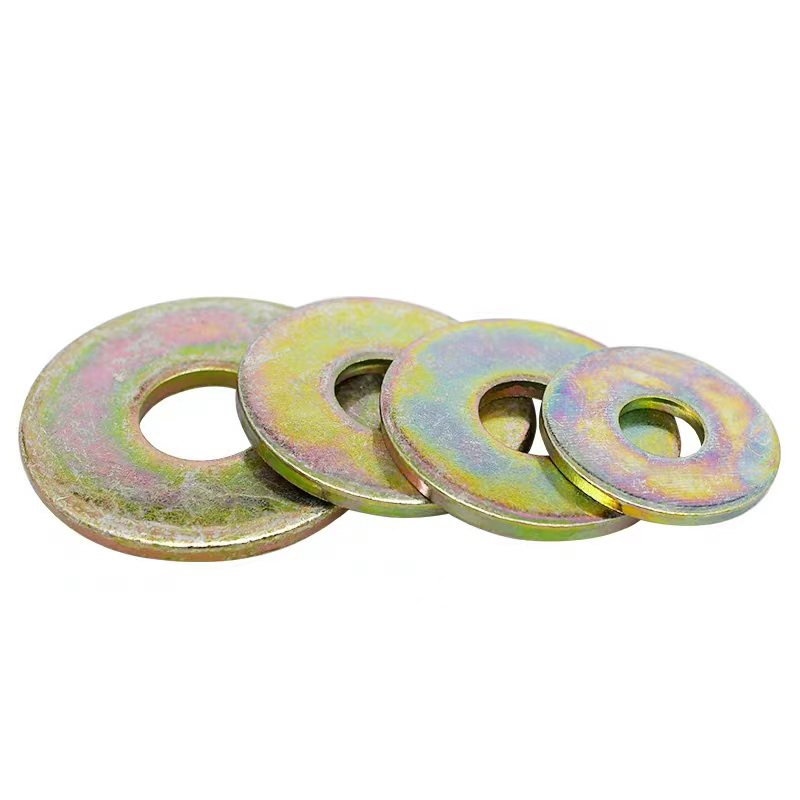
One intervention that’s often overlooked is simply replacing the flat washer. These washers can deform over time, losing their spring characteristic and leading to a loss of clamp load. I now keep a bin of new, hardened flat washers in common sizes. Swapping a worn washer during a re-torque cycle is cheap insurance and often restores the proper joint stiffness without changing the bolt or stirrup.
Documentation and The Long Game
Finally, none of this matters if it’s not recorded in a way the next person can use. I’m not talking about a perfect digital log. Sometimes it’s a note in the machine’s physical logbook, a photo with a date scribbled on the guard, or even a note in the purchasing file: Bolts from Zitai for Pump 3 held torque better through the winter cycle than the previous brand. That’s gold. It turns anecdote into data.
The goal isn’t zero maintenance; it’s predictable, planned maintenance. A well-maintained Bolt behera t Blade estutu should have a service life you can forecast. You start to know that in this particular application, with this specific load profile, you’ll need a full inspection and probable re-torque at the 9-month mark, and a replacement of the hardware at the 5-year mark, regardless of how it looks. That rhythm comes from paying attention to the small signs over years.
It boils down to respecting the component. It’s not just a chunk of metal. It’s a mechanical joint with a job to do. Ignoring it until something breaks is the most expensive maintenance policy there is. Paying attention to its specific language—the marks, the sounds, the feel—lets you fix small problems on your schedule, not its schedule. And that’s the whole point.
Mesedez, utzi mezu bat
-


-
-


Urriatu