
- English
- Chinese
- French
- German
- Portuguese
- Spanish
- Russian
- Japanese
- Korean
- Arabic
- Irish
- Greek
- Turkish
- Italian
- Danish
- Romanian
- Indonesian
- Czech
- Afrikaans
- Swedish
- Polish
- Catalan
- Esperanto
- Hindi
- Lao
- Albanian
- Amharic
- Armenian
- Azerbaijani
- Belarusian
- Bengali
- Bosnian
- Bulgarian
- Cebuano
- Chichewa
- Corsican
- Croatian
- Dutch
- Estonian
- Filipino
- Finnish
- Frisian
- Galician
- Georgian
- Gujarati
- Haitian
- Hausa
- Hawaiian
- Hebrew
- Hmong
- Hungarian
- Icelandic
- Igbo
- Javanese
- Kannada
- Kazakh
- Khmer
- Kurdish
- Kyrgyz
- Latin
- Latvian
- Lithuanian
- Luxembou..
- Macedonian
- Malagasy
- Malay
- Malayalam
- Maltese
- Maori
- Marathi
- Mongolian
- Burmese
- Nepali
- Norwegian
- Pashto
- Persian
- Punjabi
- Serbian
- Sesotho
- Sinhala
- Slovak
- Slovenian
- Somali
- Samoan
- Scots Gaelic
- Shona
- Sindhi
- Sundanese
- Swahili
- Tajik
- Tamil
- Telugu
- Thai
- Ukrainian
- Urdu
- Uzbek
- Vietnamese
- Welsh
- Xhosa
- Yiddish
- Yoruba
- Zulu
- Kinyarwanda
- Tatar
- Oriya
- Turkmen
- Uyghur


Embedded parts series: future trends?
2026-01-28
When you’ve been in the fastener and embedded parts game long enough, you start to see patterns—and a lot of misplaced hype. Everyone’s talking about the future, but half the time it’s just a rehash of old ideas with new buzzwords. The real shift isn’t about some magical new alloy; it’s in how we think about integration, supply chains, and the sheer, frustrating complexity of making a piece of metal sit perfectly in concrete for fifty years. I remember early pushes for smart anchor bolts with sensors—sounded great on paper, but the cost and failure rate in corrosive environments? A quick lesson in reality.
The Material Science Grind: Beyond Corrosion Resistance
Let’s get concrete. The baseline for embedded parts like anchor channels, cast-in studs, and inserts has always been material integrity. 304 and 316 stainless are the workhorses, but the frontier is in tailored grades and hybrid treatments. We’re seeing more spec sheets demanding not just a passive layer, but specific resistance to chlorides in coastal megaprojects or cyclic thermal loading in energy plants. It’s no longer just about passing a salt spray test; it’s about predicting performance in a niche, aggressive environment over decades. This pushes manufacturers beyond stock catalog items.
I recall a project in the Middle East where standard 316 anchors showed premature stress cracking. The culprit wasn’t the chloride content we’d tested for, but a combination of high ambient sulfur and persistent humidity—a cocktail our standard specs didn’t cover. The fix involved switching to a super-duplex grade, but the procurement and machining lag nearly derailed the schedule. The lesson? Future trends demand deeper environmental profiling and closer collaboration between metallurgists and civil engineers from day one. It’s a pain, but it prevents catastrophic call-backs.
Companies that get this, like Handan Zitai Fastener Manufacturing Co., Ltd., are investing upstream. Being in Yongnian, the heart of China’s fastener production, gives them a natural ecosystem. But it’s their move towards more specialized, application-specific embedded parts lines that’s telling. It’s not just about volume anymore; it’s about offering the engineering support to match. You can see this shift on their portal at https://www.zitaifasteners.com—the catalog is evolving from generic to solution-oriented.
Digital Threads: From BIM to the Bolt
Building Information Modeling (BIM) was supposed to solve everything. For embedded parts, the promise was perfect as-built placement. The reality is messier. I’ve spent hours reconciling a beautifully rendered BIM model with the fact that the rebar cage on site is off by 20mm, leaving no room for the designated anchor plate. The future trend here isn’t just more detailed models; it’s about flexible, adjustable systems and real-time verification.
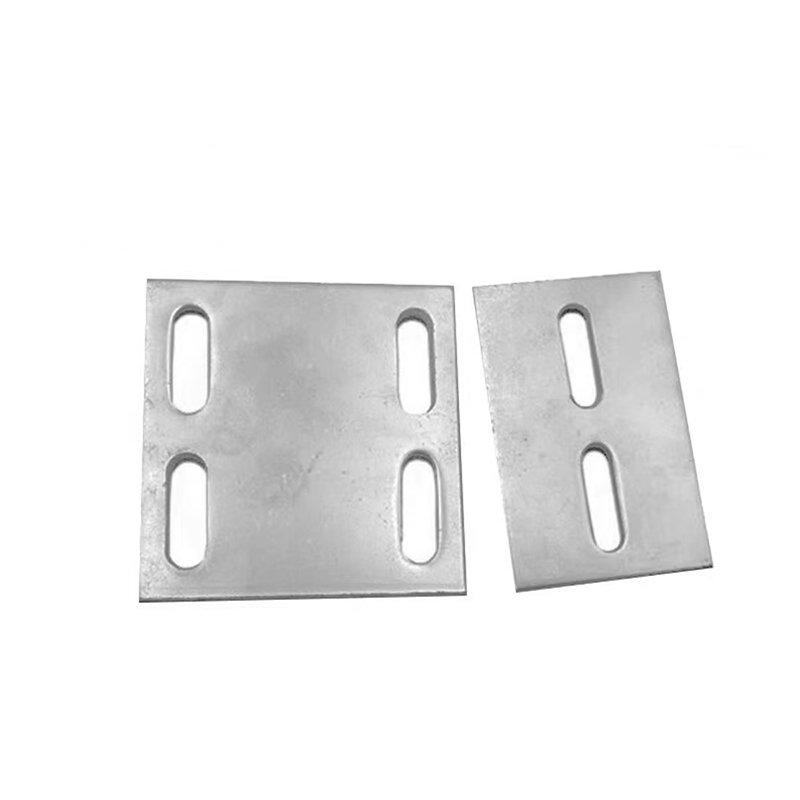
We’re now experimenting with prefabricated assemblies that have built-in tolerance for adjustment. Think of an embeds series that comes with slotted holes or modular shims, designed digitally to accommodate common field variances. The data from these installations—what actually got adjusted and why—feeds back to refine the next design cycle. It’s a slow, iterative learning process, not a revolution.
The digital thread also means traceability. Each batch of anchors, each casting, having a digital passport. This isn’t new for aerospace, but for civil construction, it’s a cultural shift. It adds cost, and clients balk until a failure occurs and liability is a black hole. The value is in risk mitigation, not upfront savings. This is where integrated manufacturers have an edge, controlling the data from their production base, like Zitai’s facility off the Beijing-Shenzhen Expressway, right through to shipment.
Logistics & The Just-Enough Inventory Paradox
Global supply chain shocks have made everyone rethink just-in-time for critical components. For embedded parts, which are often the literal foundation of a structure, delays are not an option. But stocking every possible variant is a capital nightmare. The trend I see is towards regionalized micro-hubs for standard items, paired with on-demand digital fabrication for specials.
This puts pressure on production bases to be agile. A location like Handan City, with its dense supplier network and transport links (that Beijing-Guangzhou Railway line isn’t just for show), becomes a strategic node. The future isn’t one giant factory shipping globally; it’s a network of specialized facilities, like Zitai’s, serving regional mega-projects with a mix of standard stock and rapid-turn custom solutions. The website becomes less of an online store and more of a configurator and logistics dashboard.
We tried a vendor-managed inventory system for a series of tunnel projects. The theory was perfect: the supplier monitors our usage and replenishes automatically. It failed because the lead time for specialized galvanized anchors was longer than our consumption rate during a push. We had to air-freight parts at ruinous cost. The future model needs better predictive algorithms, fed by actual project phasing data, not just historical sales.
The Sustainability Question: Weight vs. Lifecycle
There’s a lot of talk about lightweighting, but with embedded steel, it’s a tricky balance. Using less material is good for carbon footprint upfront, but if it compromises the safety factor or durability, you’ve lost the plot. The more meaningful trend is in lifecycle analysis—choosing materials and coatings that minimize maintenance over 50+ years.
This means sometimes using more material, or a more energy-intensive process like hot-dip galvanizing, because it outlasts cheaper alternatives three-to-one. I’ve seen calculations where a slightly more expensive, over-engineered anchor system saves millions in avoided inspection and replacement costs over a bridge’s life. The industry is slowly moving from cheapest-first to whole-life-cost models, driven by asset owner demands.
It also drives innovation in recycling. Can we design anchor channels for easier demolition and recovery of high-grade steel? It’s a niche concern now, but future regulations will make it standard. Manufacturers who are already thinking about end-of-life disassembly in their embedded parts series design will be ahead. It’s a subtle shift from how do we make it strong to how do we make it strong, maintainable, and ultimately recoverable.
Integration & The Dumb Component’s Revenge
Finally, let’s talk about the role of the embedded part itself. The hype cycle for IoT-enabled everything reached our world too. But after testing several smart bolts with embedded strain gauges and wireless transmitters, I’m skeptical for most applications. The failure points multiplied, and the data was often noisy and unactionable.
The stronger trend, in my view, is making the dumb component smarter through its context. This means perfect integration with the pour, flawless alignment, and absolute reliability. It’s about the boring stuff: better formwork compatibility, fool-proof installation jigs, and packaging that prevents on-site damage. A perfectly installed, standard M30 anchor is infinitely more valuable than a glitchy smart anchor that gives false readings.
The future of the embedded parts series lies in this humility. It’s about acknowledging that these components are the silent, unglamorous backbone of construction. The innovation is in precision manufacturing, robust logistics, and deep material science—ensuring that when the concrete sets, you never have to think about them again. That’s the real trend: reliability so profound it becomes invisible. Companies that master that, from their production base to the final installation torque, will define the next era. It’s less about flashy trends and more about the relentless pursuit of getting the fundamentals perfect, every single time.
Mesedez, utzi mezu bat
-


-
-


Urriatu
