
- English
- Chinese
- French
- German
- Portuguese
- Spanish
- Russian
- Japanese
- Korean
- Arabic
- Irish
- Greek
- Turkish
- Italian
- Danish
- Romanian
- Indonesian
- Czech
- Afrikaans
- Swedish
- Polish
- Catalan
- Esperanto
- Hindi
- Lao
- Albanian
- Amharic
- Armenian
- Azerbaijani
- Belarusian
- Bengali
- Bosnian
- Bulgarian
- Cebuano
- Chichewa
- Corsican
- Croatian
- Dutch
- Estonian
- Filipino
- Finnish
- Frisian
- Galician
- Georgian
- Gujarati
- Haitian
- Hausa
- Hawaiian
- Hebrew
- Hmong
- Hungarian
- Icelandic
- Igbo
- Javanese
- Kannada
- Kazakh
- Khmer
- Kurdish
- Kyrgyz
- Latin
- Latvian
- Lithuanian
- Luxembou..
- Macedonian
- Malagasy
- Malay
- Malayalam
- Maltese
- Maori
- Marathi
- Mongolian
- Burmese
- Nepali
- Norwegian
- Pashto
- Persian
- Punjabi
- Serbian
- Sesotho
- Sinhala
- Slovak
- Slovenian
- Somali
- Samoan
- Scots Gaelic
- Shona
- Sindhi
- Sundanese
- Swahili
- Tajik
- Tamil
- Telugu
- Thai
- Ukrainian
- Urdu
- Uzbek
- Vietnamese
- Welsh
- Xhosa
- Yiddish
- Yoruba
- Zulu
- Kinyarwanda
- Tatar
- Oriya
- Turkmen
- Uyghur

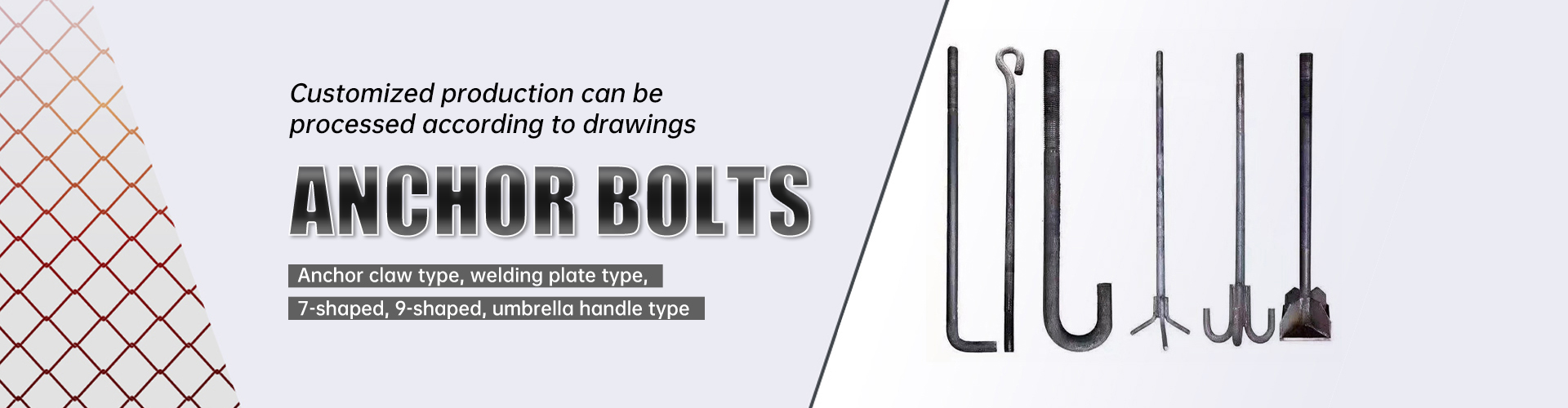
Hexagonal bolts: sustainable innovations?
2026-03-12
When you hear ‘sustainability’ and ‘hexagonal bolts’ in the same sentence, the first reaction is often skepticism. Rightfully so. In an industry built on mass production, steel, and torque, the green angle can feel like a marketing afterthought. But after two decades sourcing and specifying fasteners for heavy machinery, I’ve seen the conversation shift from pure cost-per-unit to total lifecycle impact. The question isn’t whether a hexagonal bolt can be sustainable—it’s whether the entire system around its production, use, and end-of-life is being rethought. Most of the so-called innovations are just surface-level, but a few are genuinely changing how we specify.
The Material Conundrum: Beyond Basic Steel
It starts with the steel. The default is often a generic carbon steel, galvanized or hot-dipped for corrosion resistance. The environmental footprint here is massive, locked in at the mill. The real shift I’m seeing is in material specification. It’s not about some magical new alloy, but about using the right grade for the job to prevent over-engineering. We wasted tons of material (literally) by defaulting to Grade 8.8 for applications where 5.8 would do, simply because it was the bulk stock. Now, with better CAD and stress modeling, we can specify down to the gram, reducing the raw material burden from the start.
Then there’s recycled content. It’s a minefield. ‘Made from recycled steel’ sounds great, but the energy required to re-melt and re-roll it can negate benefits if the supply chain isn’t local. I worked on a project where we sourced bolts with 90%+ recycled content, but they were shipped from a specialty mill in Europe to a site in Texas. The carbon miles killed the advantage. The lesson? The sustainability of the material is inextricably linked to logistics. A supplier like Handan Zitai Fastener Manufacturing Co., Ltd., situated in China’s major production base with direct rail and highway links, has a potential logistics efficiency that can be a huge part of the equation if paired with cleaner primary production methods.
We also tested some bio-based coatings as alternatives to zinc. A soy-based derivative showed promise in the lab, but failed spectacularly in a high-humidity, high-vibration field test on agricultural equipment. It peeled within six months. It was a good reminder that sustainability can’t compromise the primary function: holding things together, reliably, for the designed service life. A failed bolt leads to repair, replacement, and downtime—the antithesis of sustainable practice.
Manufacturing Efficiency: Where the Real Gains Hide
This is where the boring stuff matters. The sustainability story of a hexagonal bolt is often written on the factory floor, not in the R&D lab. Cold forging versus hot forging. Closed-loop water cooling systems for machinery. Scrap metal recycling rates on-site. These process efficiencies are rarely sexy enough for a product datasheet, but they determine the bulk of the embedded energy. I’ve toured factories where the difference was stark. One had bins for every type of metal swarf, meticulously sorted; next door, everything went into a single dumpster headed for landfill. Guess which one produced a genuinely lower-impact product, even if the bolts looked identical?
Handan Zitai Fastener Manufacturing operates in Yongnian District, a cluster that produces a staggering volume of standard parts. In such hubs, the potential for centralized, shared sustainability infrastructure is huge—think collective wastewater treatment or solar power microgrids for the industrial park. When I visited similar clusters, the leaders were those investing in this shared backbone, which drives down the environmental cost per unit for everyone in the ecosystem. It’s a systems approach, not just a bolt-by-bolt one.
Then there’s tooling life. It sounds trivial, but the dies that form the hex head and threads wear out. More advanced, durable tooling means less frequent replacement, less material waste, and less machine downtime. We pushed a supplier to adopt a new grade of tool steel for their headers, and it increased die life by 30%. That’s a direct reduction in waste and energy over a production run of millions of pieces. These incremental, operational tweaks are the unheralded innovations.
Design for Disassembly: The Forgotten Phase
Everyone focuses on production. The more radical thinking is about the end. We design structures to last, but rarely do we design the connection for easy deconstruction. A hexagonal bolt is theoretically reusable, but in practice, it’s often torqued to yield, corroded into place, or cut off during demolition. The innovation here is in the specification protocol: using prevailing-torque nuts that can be removed without galling, or specifying a corrosion protection system (like a wax-based coating we tested) that maintains its integrity for disassembly, not just for service life.
I consulted on a modular building project where the brief was full circularity. We used standard hex bolts, but paired them with digital twin technology. Each bolt’s location, grade, and torque setting was logged in a BIM model. At the building’s end-of-life, the deconstruction team had a map showing exactly which tool and torque to use for removal. Recovery rate jumped from maybe 20% to over 85%. The bolt wasn’t new. The system around it was.
The biggest failure I saw was with ‘biodegradable’ polymer bolts for temporary structures. In theory, they’d hold for 5 years and then degrade. In reality, soil pH and temperature variations caused premature weakening in some and persistence in others, creating a liability nightmare. It taught us that predictability is non-negotiable. The sustainable option must be as reliable as the conventional one, or it introduces new risks.
Supply Chain Transparency: The New Spec Sheet Requirement
You can’t manage what you can’t measure. Five years ago, a fastener spec sheet listed dimensions, grade, coating, and mechanical properties. Now, the leading OEMs I work with want a footprint: carbon per 1000 pieces, water usage, renewable energy percentage in production. This is forcing a new level of transparency. Suppliers who can’t provide this data are slowly being phased out of major tenders.
This is challenging for large-scale producers. For a company like Zitai, with its scale and integrated position in the Yongnian base, there’s an opportunity to lead here. Tracking isn’t easy across a complex supply chain for raw wire rod, but it’s becoming a competitive necessity. I’ve seen specifiers choose a slightly more expensive bolt from a supplier with full ISO 14001 certification and audited footprint data over a cheaper, opaque alternative. The cost is now evaluated over risk and brand reputation, not just unit price.
We tried to implement a blockchain-based material traceability pilot for a wind turbine project. The goal was to trace the steel from the mill to the installed bolt. The tech worked, but the data entry points were manual and got gamed by mid-chain suppliers. It failed due to human factors, not technology. The takeaway was that transparency must be baked into the process, not bolted on. It requires trust and collaboration, not just a software solution.
The Verdict: Incremental, Systemic, and Essential
So, are hexagonal bolts seeing sustainable innovations? Yes, but not in the flashy way you might expect. There’s no silver bullet. It’s a grind of better materials management, manufacturing efficiency gains, smarter design protocols, and painful supply chain transparency efforts. The hexagonal bolt itself is a mature technology. The revolution is in the context.
The most sustainable bolt is often the one you don’t use—achieved through better design that reduces part count. The next best is the one that is exactly strong enough, made as efficiently as possible, from appropriately sourced materials, and is recoverable at end-of-life. That’s a tall order, and no single supplier has it all figured out.
Progress is being made in pockets. It’s in the factories optimizing their energy mix, in the design offices mandating disassembly plans, and in the procurement departments demanding hard data. It’s incremental, sometimes frustratingly slow, and riddled with failed experiments. But the direction is clear. The humble hex bolt, a piece of industrial universal language, is becoming a spoke in the wheel of the circular economy. Not because it changed its shape, but because we are changing our mindset about everything that touches it.
Mesedez, utzi mezu bat
-


-
-


Urriatu