
- English
- Chinese
- French
- German
- Portuguese
- Spanish
- Russian
- Japanese
- Korean
- Arabic
- Irish
- Greek
- Turkish
- Italian
- Danish
- Romanian
- Indonesian
- Czech
- Afrikaans
- Swedish
- Polish
- Basque
- Catalan
- Esperanto
- Hindi
- Lao
- Albanian
- Amharic
- Armenian
- Azerbaijani
- Belarusian
- Bengali
- Bosnian
- Bulgarian
- Cebuano
- Chichewa
- Corsican
- Croatian
- Dutch
- Estonian
- Filipino
- Finnish
- Frisian
- Galician
- Georgian
- Gujarati
- Hausa
- Hawaiian
- Hebrew
- Hmong
- Hungarian
- Icelandic
- Igbo
- Javanese
- Kannada
- Kazakh
- Khmer
- Kurdish
- Kyrgyz
- Latin
- Latvian
- Lithuanian
- Luxembou..
- Macedonian
- Malagasy
- Malay
- Malayalam
- Maltese
- Maori
- Marathi
- Mongolian
- Burmese
- Nepali
- Norwegian
- Pashto
- Persian
- Punjabi
- Serbian
- Sesotho
- Sinhala
- Slovak
- Slovenian
- Somali
- Samoan
- Scots Gaelic
- Shona
- Sindhi
- Sundanese
- Swahili
- Tajik
- Tamil
- Telugu
- Thai
- Ukrainian
- Urdu
- Uzbek
- Vietnamese
- Welsh
- Xhosa
- Yiddish
- Yoruba
- Zulu
- Kinyarwanda
- Tatar
- Oriya
- Turkmen
- Uyghur


How does AI boost industrial sustainability?
2026-01-10
When people talk about AI and sustainability, the conversation often jumps straight to futuristic visions: autonomous grids, self-optimizing cities. In the trenches of actual manufacturing, the reality is more gritty and incremental. The real boost isn’t about replacing humans with robots; it’s about augmenting decision-making in systems that are notoriously wasteful and opaque. The misconception is that sustainability is just about using less energy. It’s deeper—it’s about systemic resource intelligence, from raw material to logistics, and that’s where machine learning models, not just generic AI, are quietly changing the game.
The Foundation: Data Fidelity and the Dark Factory Floor
You can’t manage what you can’t measure, and for years, industrial sustainability was guesswork. We had energy bills, yes, but correlating a spike in consumption to a specific batch on production line 3 was often impossible. The first, unglamorous step is sensor proliferation and data historization. I’ve seen plants where installing simple vibration and thermal sensors on legacy compressor systems revealed cyclic inefficiencies that wasted 15% of their power draw. The AI boost starts here: creating a high-fidelity digital twin of energy and material flows. Without this foundation, any sustainability claim is just marketing.
This isn’t plug-and-play. The biggest hurdle is data silos. Production data sits in the MES, quality data in another system, and energy data from the utility meter. Getting a time-synchronized view is a nightmare. We spent months on a project just building the data pipeline before any model could be trained. The key was not a fancy algorithm, but a robust data ontology—tagging every data point with context (machine ID, process step, product SKU). This granularity is what allows for meaningful sustainability analysis later.
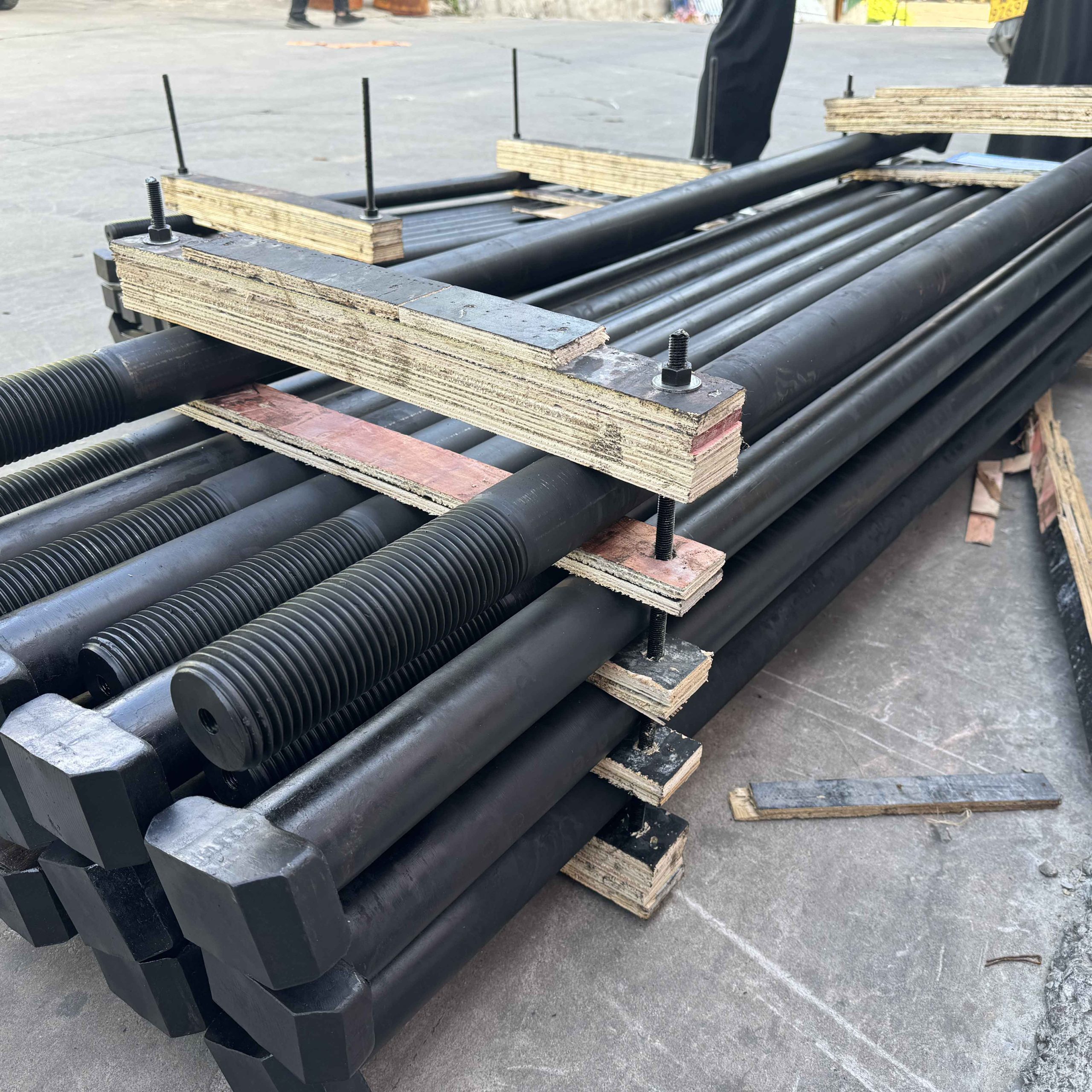
Consider a fastener manufacturer, like Handan Zitai Fastener Manufacturing Co., Ltd.. Their process involves stamping, threading, heat treatment, and plating. Each stage has different energy profiles and material yields. By instrumenting their furnaces and plating baths, they could move from a monthly utility average to a per-kilogram-of-output energy cost. This baseline is critical. It turns sustainability from a corporate KPI into a production-line variable that a floor manager can actually influence.
Predictive Maintenance: The Low-Hanging Fruit with Deep Roots
Most discussions on this start with avoiding downtime. The sustainability angle is more compelling: catastrophic failure wastes energy and materials. A failing bearing in a high-torque stamping press doesn’t just break; it causes misalignment for weeks, leading to off-spec parts (material waste) and increased power draw. We implemented a vibration analysis model for motor-driven systems that didn’t just predict failure, but identified sub-optimal performance states. This is the subtle part. The model flagged a pump that was still operational but had lost 8% efficiency, meaning it was drawing more current to do the same work. Fixing it saved energy and extended the motor’s life, reducing embodied carbon from replacement.
The failure was assuming all equipment needed the same monitoring. We over-instrumented a whole assembly line, which was costly and generated noisy data. We learned to be surgical: focus on high-energy consumers and critical quality nodes. For a company like Zitai, whose location near major transport routes like the Beijing-Guangzhou Railway implies a focus on logistics efficiency, applying similar predictive models to their HVAC and compressed air systems—often a plant’s biggest energy drains—would yield direct carbon savings. The Zitai Fasteners website highlights their production scale; at that volume, a 2% reduction in compressed air leakage, identified by an airflow model, translates to massive financial and environmental returns.
There’s a cultural shift here too. The model’s recommendation to replace a part that looks fine requires trust. We had to build simple dashboards showing the projected energy waste in kWh and dollars to get buy-in from maintenance teams. This tangibility is crucial for adoption.
Process Optimization: Beyond Set Points
Traditional process control uses PID loops to maintain a set point, like furnace temperature. But what is the optimal set point for a given batch? It depends on ambient humidity, raw material alloy variations, and desired tensile strength. Machine learning models can dynamically optimize this. In a heat treatment process, we used a reinforcement learning model to find the minimal temperature ramp and soak time needed to achieve metallurgical specs. The result was a 12% reduction in natural gas consumption per batch, with no compromise on quality.
The catch? You need to define the reward function carefully. Initially, we optimized purely for energy, and the model suggested lower temperatures that inadvertently increased corrosion rates in later plating stages—shifting the environmental burden. We had to adopt a multi-objective optimization framework, balancing energy, material yield, and downstream process viability. This holistic view is the essence of true industrial sustainability; it avoids sub-optimizing one area at the expense of another.
For a standard parts production base, such optimization across thousands of tons of output is where the macro impact lies. It moves sustainability from the boiler room into the core recipe of manufacturing.
Supply Chain and Logistics: The Network Effect
This is where AI’s potential feels both vast and frustrating. A factory can be hyper-efficient, but if its supply chain is wasteful, the net gain is limited. AI boosts sustainability here through intelligent routing and inventory forecasting. We worked on a project to optimize inbound logistics for raw steel coil. By analyzing supplier locations, production schedules, and traffic data, a model generated delivery windows that minimized truck idle time and allowed for fuller loads. This reduced Scope 3 emissions for both the manufacturer and the supplier.
The frustration comes from data sharing. Suppliers are often reluctant to share real-time capacity or location data. The breakthrough came not with a more complex algorithm, but with a simple blockchain-based ledger (permissioned, not crypto) that logged commitments without exposing proprietary details. Trust, again, is the bottleneck.
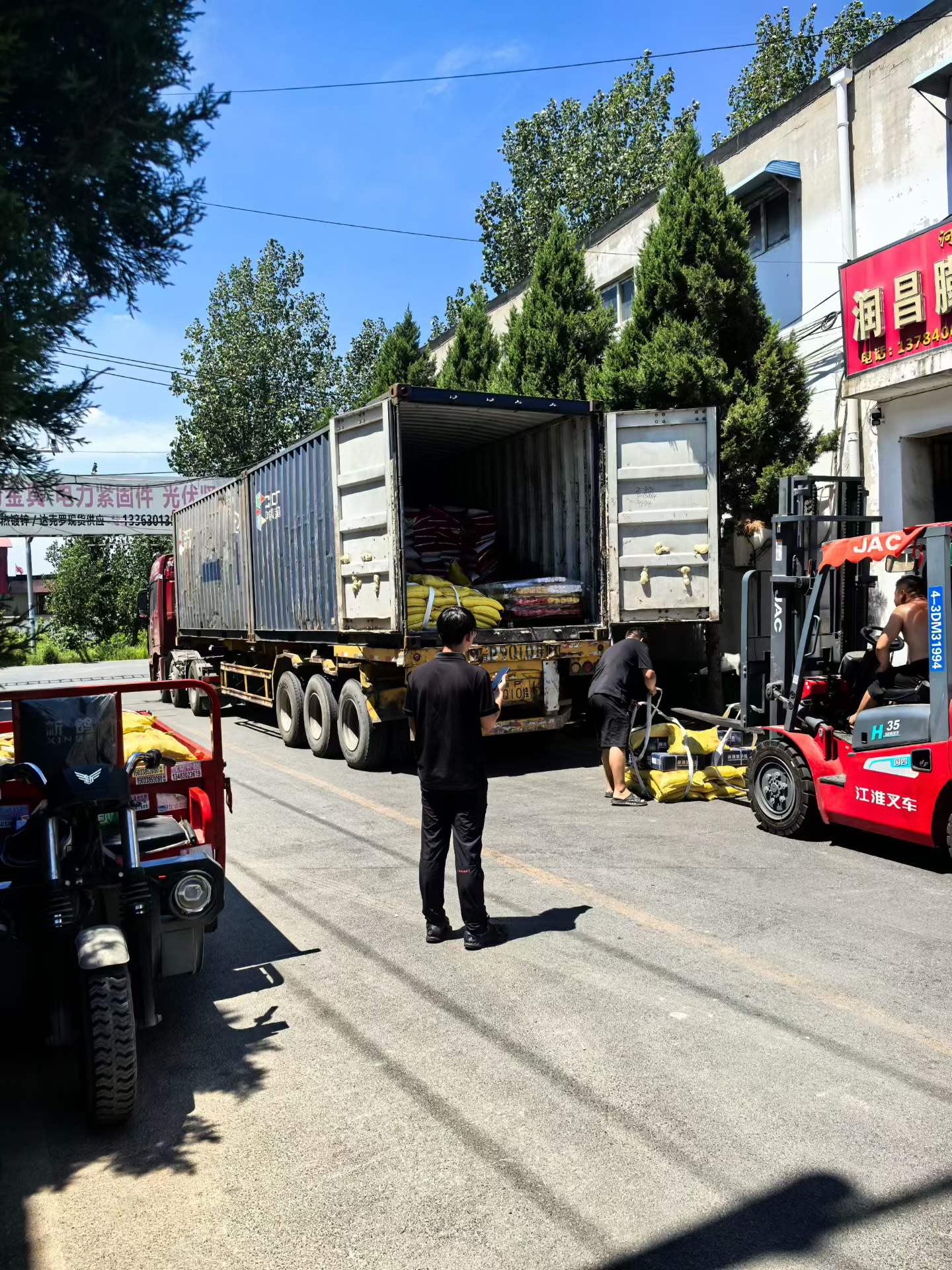
Handan Zitai Fastener Manufacturing Co., Ltd.‘s strategic location adjacent to major highways and rail lines is a natural logistical asset. An AI-driven system could optimize outbound logistics by dynamically consolidating orders and selecting the lowest-carbon transport mode (rail vs. truck) based on urgency, leveraging that geographical advantage to minimize its carbon footprint per shipment.
Circularity and Quality Intelligence
The most direct path to sustainability is using less material and generating less waste. Computer vision for quality inspection is common, but its link to sustainability is profound. A flaw detected early means a part can be reworked or recycled in-plant, avoiding the energy cost of shipping it to a customer, getting rejected, and shipping back. More advanced is using spectral analysis during production to predict quality, allowing for real-time process adjustments. We saw this in a plating line: an XRF analyzer fed data into a model that controlled plating bath chemistry, reducing heavy metal usage and sludge waste by over 20%.
Then there’s the circular economy angle. AI can facilitate material sorting for recycling. For metal fasteners, end-of-life sorting is a challenge. We piloted a system using hyperspectral imaging and a CNN to automatically sort stainless from galvanized steel scrap, increasing the purity and value of recycled feedstock. This makes closing the material loop economically viable.
For a major production base, integrating this quality intelligence across the standard part manufacturing chain means less virgin material extracted and less waste sent to landfill. It transforms quality control from a cost center into a core sustainability driver.
The Human Factor and the Implementation Quagmire
None of this works without people. The biggest failure I’ve witnessed was a lights-out optimization project that engineers designed in a vacuum. The models were brilliant, but they ignored the tacit knowledge of operators who knew that Machine 4 runs hot on humid afternoons. The system failed. Success came when we built hybrid advisory systems. The model suggests a set point, but the operator can approve, reject, or adjust it, with the system learning from that feedback. This builds trust and leverages human intuition.
Implementation is a marathon. It requires patience to build data infrastructure, humility to start with a single process line, and cross-functional teams that blend OT, IT, and sustainability expertise. The goal isn’t a shiny AI-powered press release. It’s the unsexy, cumulative effect of hundreds of small optimizations: a few degrees shaved off a furnace here, a truck route shortened there, a batch of scrap avoided. That’s how AI genuinely boosts industrial sustainability—not with a bang, but with a million data points quietly steering a more efficient, less wasteful path forward.

Tanpri kite nou yon mesaj



Privacy Policy
Our Commitment to Privacy
Introduction.
Rainbow Inc. recognizes the importance of protecting the privacy of all personal information provided by its customers, including users of www.rainbow-inkjet.com and other Rainbow Inc. affiliated websites (collectively "Rainbow Inc. Sites"). We created the following policy guidelines with a fundamental respect for our customers´ right to privacy and because we value our relationships with our customers. Your visit to the Rainbow Inc. Sites is subject to this Privacy Statement and our Online Terms and Conditions.
Description.
This Privacy Statement describes the types of information we collect and how we may use that information. Our Privacy Statement also describes the measures we take to protect the security of this information as well as how you may reach us to update your contact information.
Data Collection
Personal Data Collected Directly From Visitors.
Rainbow Inc. collects personal information when: you submit questions or comments to us; you request information or materials; you request warranty or post-warranty service and support; you participate in surveys; and by other means that may be specifically provided for on the Rainbow Inc. Sites or in our correspondence with you.
Type of Personal Data.
The type of information collected directly from the user may include your name, your company's name, physical contact information, address, billing and delivery information, e-mail address, the products you use, demographic information such as your age, preferences, and interests and information relating to the sale or installation of your product.
Non-Personal Data Collected Automatically.
We may collect information about your interaction with Rainbow Inc. Sites and services. For example, we may use website analytics tools on our site to retrieve information from your browser, including the site you came from, the search engine(s) and the keywords you used to find our site, and the pages you view within our site. Additionally, we collect certain standard information that your browser sends to every website you visit, such as your IP address, browser type, capabilities and language, your operating system, access times and referring Web site addresses.
Storage and Processing.
Personal data collected on our websites may be stored and processed in the United States in which Rainbow Inc. or its affiliates, joint ventures, or third party servicers maintain facilities.
How We Use the Data
Services and transactions.
We use your personal data to deliver services or execute transactions you request, such as providing information about Rainbow Inc. products and services, processing orders, answering customer service requests, facilitating use of our Web sites, enabling online shopping, and so forth. In order to offer you a more consistent experience in interacting with Rainbow Inc., information collected by our websites may be combined with information we collect by other means.
Product Development.
We use the personal and non-personal data for product development, including for such processes as idea generation, product design and improvements, detail engineering, market research and marketing analysis.
Website Improvement.
We may use the personal and non-personal data to improve our websites (including our security measures) and related products or services, or to make our websites easier to use by eliminating the need for you to repeatedly enter the same information or by customizing our websites to your particular preference or interests.
Marketing Communications.
We may use your personal data to inform you of products or services available from Rainbow Inc. When collecting information that might be used to contact you about our products and services, we often give you the opportunity to opt-out from receiving such communications. Moreover, in our email communications with you we may include an unsubscribe link allowing you to stop delivery of that type of communication. If you elect to unsubscribe, we will remove you from the relevant list within 15 business days.
Commitment to Data Security
Security.
Rainbow Inc. Corporation uses reasonable precautions to keep the personal information disclosed to us secure. To prevent unauthorized access, maintain data accuracy, and ensure the correct use of information, we have put in place appropriate physical, electronic, and managerial procedures to safeguard and secure your personal information. For example, we store sensitive personal data on computer systems with limited access that are located in facilities to which access is limited. When you move around a site to which you have logged in, or from one site to another that uses the same login mechanism, we verify your identity by means of an encrypted cookie placed on your machine. Nonetheless, Rainbow Inc. Corporation does not guarantee the security, accuracy or completeness of any such information or procedures.
Internet.
The transmission of information via the internet is not completely secure. Although we do our best to protect your personal information, we cannot guarantee the security of your personal information transmitted to our Website. Any transmission of personal information is at your own risk. We are not responsible for circumvention of any privacy settings or security measures contained on the Rainbow Inc. Sites.
Kontakte nou
If you have questions regarding this privacy statement, our handling of your personal data, or your privacy rights under applicable law, please contact us by mail at the address below.
Rainbow Inc.
Attn: Katherine Tan
Add: No.1658 Husong Road, Shanghai, China.
Statement Updates
Revisions.
Rainbow Inc. reserves the right to modify this privacy statement from time to time. If we decide to change our Privacy Statement, we will post the revised Statement here.
Date.
This Privacy Statement was last amended on September 7, 2022.