
- English
- Chinese
- French
- German
- Portuguese
- Spanish
- Russian
- Japanese
- Korean
- Arabic
- Irish
- Greek
- Turkish
- Italian
- Danish
- Romanian
- Indonesian
- Czech
- Afrikaans
- Swedish
- Polish
- Basque
- Catalan
- Esperanto
- Hindi
- Lao
- Albanian
- Amharic
- Armenian
- Azerbaijani
- Belarusian
- Bengali
- Bosnian
- Bulgarian
- Cebuano
- Chichewa
- Corsican
- Croatian
- Dutch
- Estonian
- Filipino
- Finnish
- Frisian
- Galician
- Georgian
- Gujarati
- Hausa
- Hawaiian
- Hebrew
- Hmong
- Hungarian
- Icelandic
- Igbo
- Javanese
- Kannada
- Kazakh
- Khmer
- Kurdish
- Kyrgyz
- Latin
- Latvian
- Lithuanian
- Luxembou..
- Macedonian
- Malagasy
- Malay
- Malayalam
- Maltese
- Maori
- Marathi
- Mongolian
- Burmese
- Nepali
- Norwegian
- Pashto
- Persian
- Punjabi
- Serbian
- Sesotho
- Sinhala
- Slovak
- Slovenian
- Somali
- Samoan
- Scots Gaelic
- Shona
- Sindhi
- Sundanese
- Swahili
- Tajik
- Tamil
- Telugu
- Thai
- Ukrainian
- Urdu
- Uzbek
- Vietnamese
- Welsh
- Xhosa
- Yiddish
- Yoruba
- Zulu
- Kinyarwanda
- Tatar
- Oriya
- Turkmen
- Uyghur


How does AI boost sustainability?
2026-01-10
When people ask how AI boosts sustainability, the immediate thought often jumps to grand visions: optimizing global supply chains overnight or magically solving climate modeling. Having worked on the ground with manufacturing and logistics teams, I’ve seen that the real impact is more granular, often messy, and far from a silver bullet. The misconception is that AI operates in a vacuum—it doesn’t. Its value is unlocked only when it’s deeply embedded in existing, often inefficient, processes. It’s less about intelligent algorithms and more about practical adjustments to material flows, energy consumption, and waste patterns. Let me walk through a few areas where this actually plays out, and where it sometimes stumbles.
The Concrete: Energy and Resource Optimization
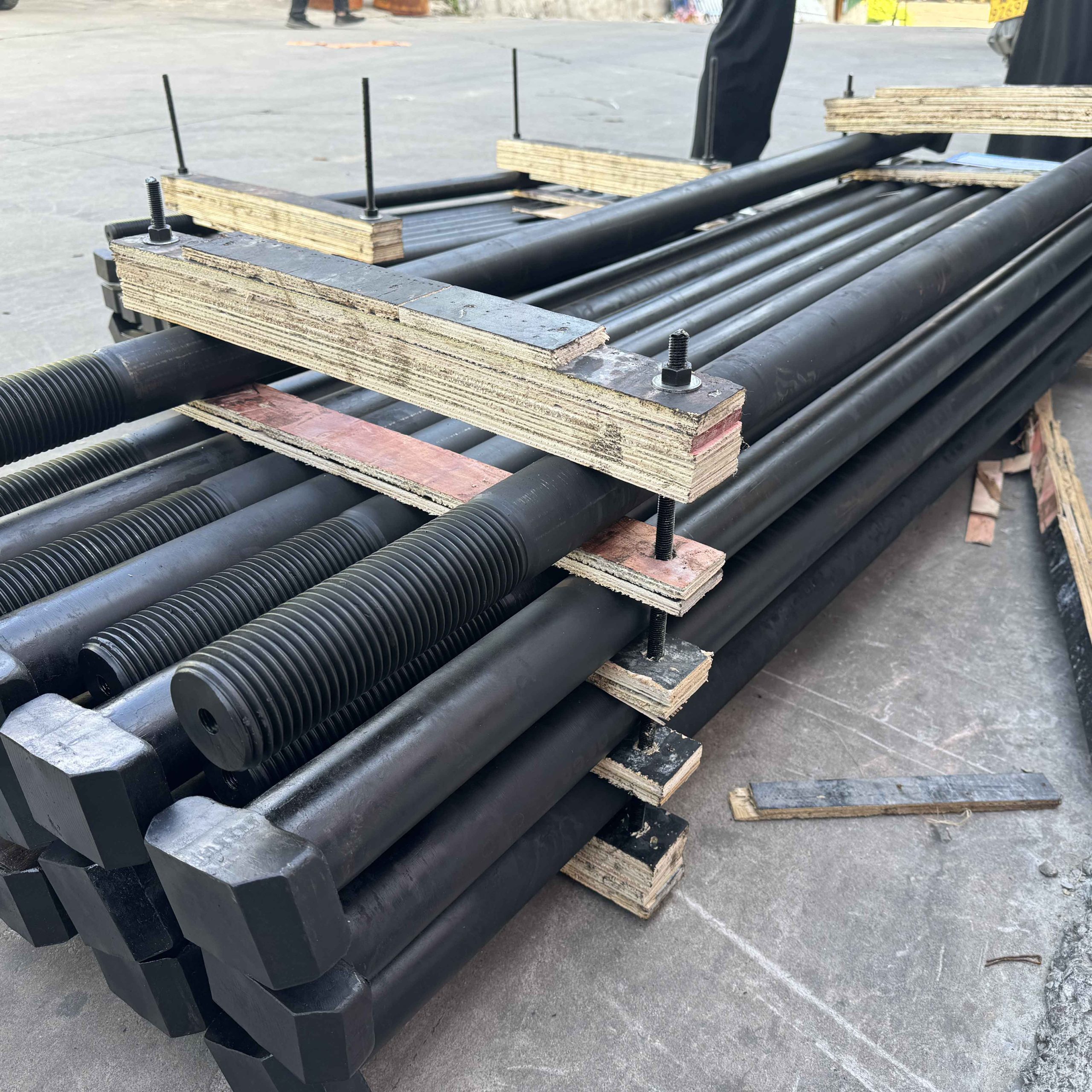
Take a typical industrial setting, like a fastener manufacturing plant. The energy load isn’t constant; it spikes during forging or heat treatment. We worked with a team at a facility in Hebei—think of the industrial cluster in Yongnian District—to deploy relatively simple machine learning models on historical power consumption data. The goal wasn’t to reinvent the process but to predict demand spikes and stagger non-critical operations. The result was a 7-8% reduction in peak-load charges, which directly cuts carbon footprint and cost. It sounds modest, but at scale, across hundreds of furnaces and presses, the cumulative effect is substantial. The AI here isn’t thinking; it’s pattern recognition applied to a very noisy, real-world dataset.
Where it gets tricky is the data infrastructure. Many plants, even sizable ones like Handan Zitai Fastener Manufacturing Co., Ltd., have legacy SCADA systems and manual logs. The first hurdle is getting clean, time-stamped data from the shop floor. We spent weeks just setting up basic IoT sensors to feed the models—a step often glossed over in glossy case studies. Without this, any AI model is just a theoretical exercise. The website https://www.zitaifasteners.com might showcase their products, but the sustainability gain happens behind the scenes, in the gritty integration of data streams from machines that were never designed to talk to each other.
Another angle is material yield. In fastener production, coil steel is punched and formed. Scrap is inevitable, but AI-driven computer vision systems can now inspect raw material for defects before stamping, and even dynamically adjust cutting patterns to minimize waste. We piloted this with a partner, and while the algorithm worked, the ROI was negative for smaller batch runs due to setup complexity. This is a critical nuance: AI for sustainability isn’t universally applicable; it demands a certain scale and operational maturity to pay off.
Logistics and the Hidden Network
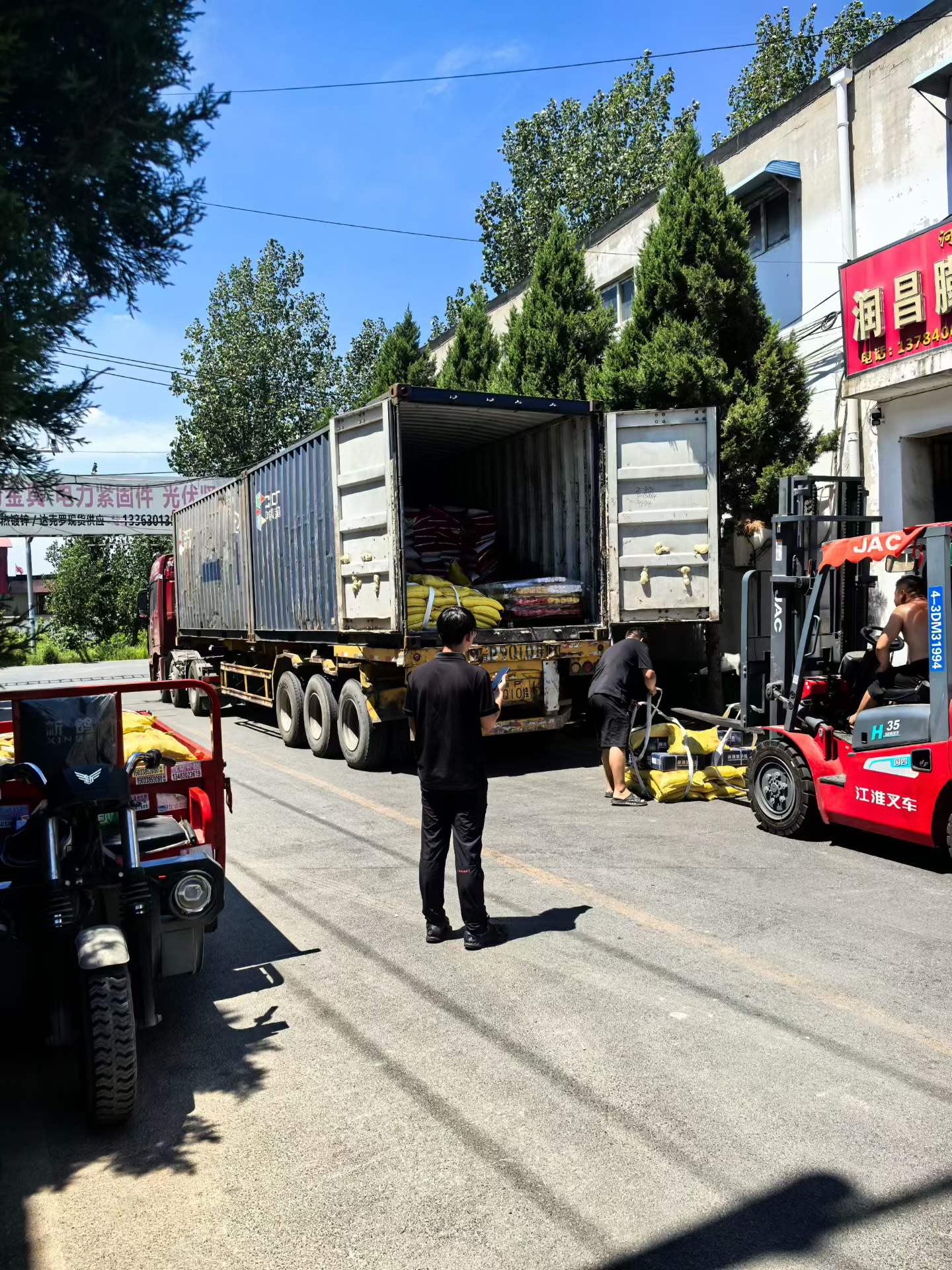
Transportation is a massive carbon emitter. Here, AI’s role in route optimization is well-known, but the real-world constraints are what make it interesting. For a manufacturer located advantageously near the Beijing-Guangzhou Railway and National Highway 107, like Zitai, the question isn’t just finding the shortest path. It’s about consolidating partial loads, predicting port delays, and even factoring in real-time traffic and weather data to reduce idle time for trucks. We implemented a system that did this, and the fuel savings averaged around 12%. However, the system’s recommendations were sometimes rejected by dispatchers who trusted their experience over the algorithm—a classic human-AI collaboration challenge.
Beyond routes, there’s inventory optimization. Holding excess inventory ties up capital and space, and often leads to waste (especially for coated or treated fasteners with shelf-life concerns). Predictive models using sales data, seasonal trends, and even broader economic indicators can tighten inventory levels. I recall one project where we reduced safety stock by 15% without increasing stock-out risk. But the model failed spectacularly when a sudden regional policy shift disrupted supply chains—it hadn’t been trained on such black swan events. This highlights that AI models are only as good as the historical data they’ve seen; they struggle with novel systemic shocks.
The extended supply chain is where it gets broader. AI can help design circular economy loops. For instance, by analyzing product lifecycle data, it can predict when a batch of fasteners from a decommissioned solar farm might become available for re-use or recycling, thus reducing the need for virgin material. This is still nascent, but pilot projects in the EU are exploring this. It moves sustainability from mere efficiency to systemic resource cycling.
Monitoring, Reporting, and the Transparency Push
Sustainability today requires rigorous measurement. AI drastically accelerates environmental monitoring. Instead of monthly manual audits of emissions or wastewater, sensor networks with AI analytics can provide continuous, granular data. We helped set up a system for monitoring volatile organic compound (VOC) emissions in a plating workshop. The AI didn’t just measure; it identified correlations between specific production batches and emission spikes, allowing for process adjustments. This turns compliance from a cost center into a source of operational insight.
However, generating data is one thing; trusting it is another. There’s an ongoing tension between AI-generated sustainability metrics and the need for auditable, verifiable records for frameworks like ESG reporting. Can regulators and investors trust an AI’s summary of carbon accounting? We’re in a phase where AI handles the heavy lifting of data crunching, but human experts are still needed to validate and interpret. The tool is powerful, but it hasn’t replaced the need for professional judgment.
On a macro scale, AI is enabling more accurate carbon footprint tracking across complex supply chains. By scraping and analyzing data from supplier portals, shipping manifests, and energy bills, it can create a near-real-time footprint map. For a company like Zitai, which is part of a vast production base, this visibility is crucial for downstream customers in Europe or North America who are under pressure to report Scope 3 emissions. It turns sustainability from a vague commitment into a quantifiable, managed component of the business.
The Pitfalls and Overlooked Costs
It’s not all positive. The computational cost of training and running large AI models is itself an environmental burden. A project focused on saving energy in a factory must weigh against the energy used by the cloud servers training the models. In our work, we’ve shifted to using more efficient, specialized models rather than brute-force deep learning for this very reason. Sometimes, a simpler statistical model gets you 80% of the benefit with 1% of the computational overhead. Sustainability through AI must account for its own footprint.
There’s also the risk of optimizing one part of a system at the expense of another. We once optimized a production schedule for energy efficiency, only to find it increased the wear on certain tools, leading to more frequent replacement and associated material waste. A holistic view is essential. True sustainability isn’t about local maxima but system-wide resilience and minimal total impact. AI systems need to be designed with multi-objective optimization in mind, which is a significantly harder problem.
Finally, the human element. Implementing AI-driven changes requires skilled personnel, change management, and often, upfront capital. For many small and medium-sized enterprises in the manufacturing belt, the priority is survival and order fulfillment. The sustainability argument must be coupled with a clear, short-to-medium-term economic benefit. That’s why the most successful pilots I’ve seen start with low-hanging fruit: predictive maintenance to avoid costly downtime and material waste, or smart lighting/heating controls that pay back in under two years.
Looking Ahead: Integration, Not Isolation
So, how does AI genuinely boost sustainability? It’s not through flashy, standalone AI for good projects. It’s through its gradual, often unsexy, integration into the operational technology stack of industries like manufacturing, logistics, and energy. It boosts sustainability by making resource efficiency measurable and actionable, by uncovering waste streams that were previously invisible, and by enabling more adaptive, responsive systems.
The future, in my view, lies in embedded AI. Think of an industrial machine that self-adjusts its parameters for minimal energy use while maintaining quality, or a logistics platform that automatically selects the lowest-carbon shipping option that meets cost and time constraints. It becomes a standard feature, not a separate initiative. The work at places like the Yongnian production base, with its dense network of manufacturers, is a perfect testing ground for these integrated approaches.
In the end, AI is a powerful tool, but it’s just that—a tool. Its contribution to sustainability is dictated by the hands that wield it and the problems they choose to solve. The boost comes from a relentless focus on concrete, incremental gains in material and energy flows, informed by data that we can now finally capture and understand. It’s a practical journey, full of trial and error, far removed from the hype cycle, and that’s exactly where its real value for a sustainable future is being built.

Tanpri kite nou yon mesaj



Privacy Policy
Our Commitment to Privacy
Introduction.
Rainbow Inc. recognizes the importance of protecting the privacy of all personal information provided by its customers, including users of www.rainbow-inkjet.com and other Rainbow Inc. affiliated websites (collectively "Rainbow Inc. Sites"). We created the following policy guidelines with a fundamental respect for our customers´ right to privacy and because we value our relationships with our customers. Your visit to the Rainbow Inc. Sites is subject to this Privacy Statement and our Online Terms and Conditions.
Description.
This Privacy Statement describes the types of information we collect and how we may use that information. Our Privacy Statement also describes the measures we take to protect the security of this information as well as how you may reach us to update your contact information.
Data Collection
Personal Data Collected Directly From Visitors.
Rainbow Inc. collects personal information when: you submit questions or comments to us; you request information or materials; you request warranty or post-warranty service and support; you participate in surveys; and by other means that may be specifically provided for on the Rainbow Inc. Sites or in our correspondence with you.
Type of Personal Data.
The type of information collected directly from the user may include your name, your company's name, physical contact information, address, billing and delivery information, e-mail address, the products you use, demographic information such as your age, preferences, and interests and information relating to the sale or installation of your product.
Non-Personal Data Collected Automatically.
We may collect information about your interaction with Rainbow Inc. Sites and services. For example, we may use website analytics tools on our site to retrieve information from your browser, including the site you came from, the search engine(s) and the keywords you used to find our site, and the pages you view within our site. Additionally, we collect certain standard information that your browser sends to every website you visit, such as your IP address, browser type, capabilities and language, your operating system, access times and referring Web site addresses.
Storage and Processing.
Personal data collected on our websites may be stored and processed in the United States in which Rainbow Inc. or its affiliates, joint ventures, or third party servicers maintain facilities.
How We Use the Data
Services and transactions.
We use your personal data to deliver services or execute transactions you request, such as providing information about Rainbow Inc. products and services, processing orders, answering customer service requests, facilitating use of our Web sites, enabling online shopping, and so forth. In order to offer you a more consistent experience in interacting with Rainbow Inc., information collected by our websites may be combined with information we collect by other means.
Product Development.
We use the personal and non-personal data for product development, including for such processes as idea generation, product design and improvements, detail engineering, market research and marketing analysis.
Website Improvement.
We may use the personal and non-personal data to improve our websites (including our security measures) and related products or services, or to make our websites easier to use by eliminating the need for you to repeatedly enter the same information or by customizing our websites to your particular preference or interests.
Marketing Communications.
We may use your personal data to inform you of products or services available from Rainbow Inc. When collecting information that might be used to contact you about our products and services, we often give you the opportunity to opt-out from receiving such communications. Moreover, in our email communications with you we may include an unsubscribe link allowing you to stop delivery of that type of communication. If you elect to unsubscribe, we will remove you from the relevant list within 15 business days.
Commitment to Data Security
Security.
Rainbow Inc. Corporation uses reasonable precautions to keep the personal information disclosed to us secure. To prevent unauthorized access, maintain data accuracy, and ensure the correct use of information, we have put in place appropriate physical, electronic, and managerial procedures to safeguard and secure your personal information. For example, we store sensitive personal data on computer systems with limited access that are located in facilities to which access is limited. When you move around a site to which you have logged in, or from one site to another that uses the same login mechanism, we verify your identity by means of an encrypted cookie placed on your machine. Nonetheless, Rainbow Inc. Corporation does not guarantee the security, accuracy or completeness of any such information or procedures.
Internet.
The transmission of information via the internet is not completely secure. Although we do our best to protect your personal information, we cannot guarantee the security of your personal information transmitted to our Website. Any transmission of personal information is at your own risk. We are not responsible for circumvention of any privacy settings or security measures contained on the Rainbow Inc. Sites.
Kontakte nou
If you have questions regarding this privacy statement, our handling of your personal data, or your privacy rights under applicable law, please contact us by mail at the address below.
Rainbow Inc.
Attn: Katherine Tan
Add: No.1658 Husong Road, Shanghai, China.
Statement Updates
Revisions.
Rainbow Inc. reserves the right to modify this privacy statement from time to time. If we decide to change our Privacy Statement, we will post the revised Statement here.
Date.
This Privacy Statement was last amended on September 7, 2022.