- English
- Chinese
- French
- German
- Portuguese
- Spanish
- Russian
- Japanese
- Korean
- Arabic
- Irish
- Greek
- Turkish
- Italian
- Danish
- Romanian
- Indonesian
- Czech
- Afrikaans
- Swedish
- Polish
- Basque
- Catalan
- Esperanto
- Hindi
- Lao
- Albanian
- Amharic
- Armenian
- Azerbaijani
- Belarusian
- Bengali
- Bosnian
- Bulgarian
- Cebuano
- Chichewa
- Corsican
- Croatian
- Dutch
- Estonian
- Filipino
- Finnish
- Frisian
- Galician
- Georgian
- Gujarati
- Hausa
- Hawaiian
- Hebrew
- Hmong
- Hungarian
- Icelandic
- Igbo
- Javanese
- Kannada
- Kazakh
- Khmer
- Kurdish
- Kyrgyz
- Latin
- Latvian
- Lithuanian
- Luxembou..
- Macedonian
- Malagasy
- Malay
- Malayalam
- Maltese
- Maori
- Marathi
- Mongolian
- Burmese
- Nepali
- Norwegian
- Pashto
- Persian
- Punjabi
- Serbian
- Sesotho
- Sinhala
- Slovak
- Slovenian
- Somali
- Samoan
- Scots Gaelic
- Shona
- Sindhi
- Sundanese
- Swahili
- Tajik
- Tamil
- Telugu
- Thai
- Ukrainian
- Urdu
- Uzbek
- Vietnamese
- Welsh
- Xhosa
- Yiddish
- Yoruba
- Zulu
- Kinyarwanda
- Tatar
- Oriya
- Turkmen
- Uyghur


Steel structure accessories: latest innovations?
2026-03-24
When you hear latest innovations in steel structure accessories, most minds jump to flashy new alloys or fully automated robotic welding cells. That’s the glossy brochure version. On the ground, the real shifts are more nuanced, often born from solving persistent, gritty problems on site or in the shop. It’s less about reinventing the wheel and more about making the connection—literally—smarter, faster, and more reliable under real-world stresses. The true innovation often lies in the details of a bolt, a coating, or a design detail that finally addresses what field engineers have been grumbling about for years.
Beyond the Bolt: Rethinking Connection Integrity
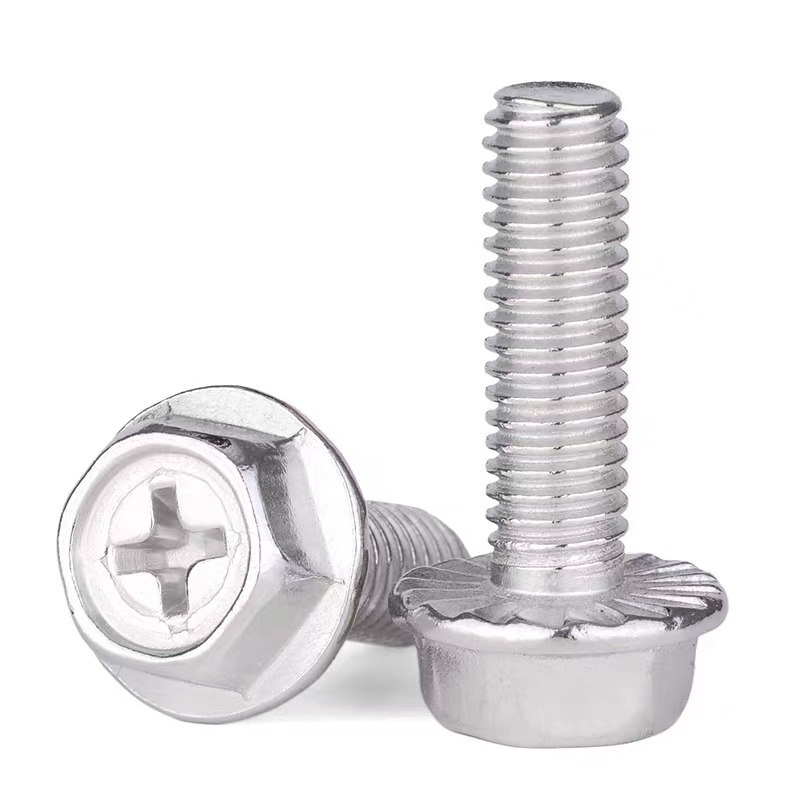
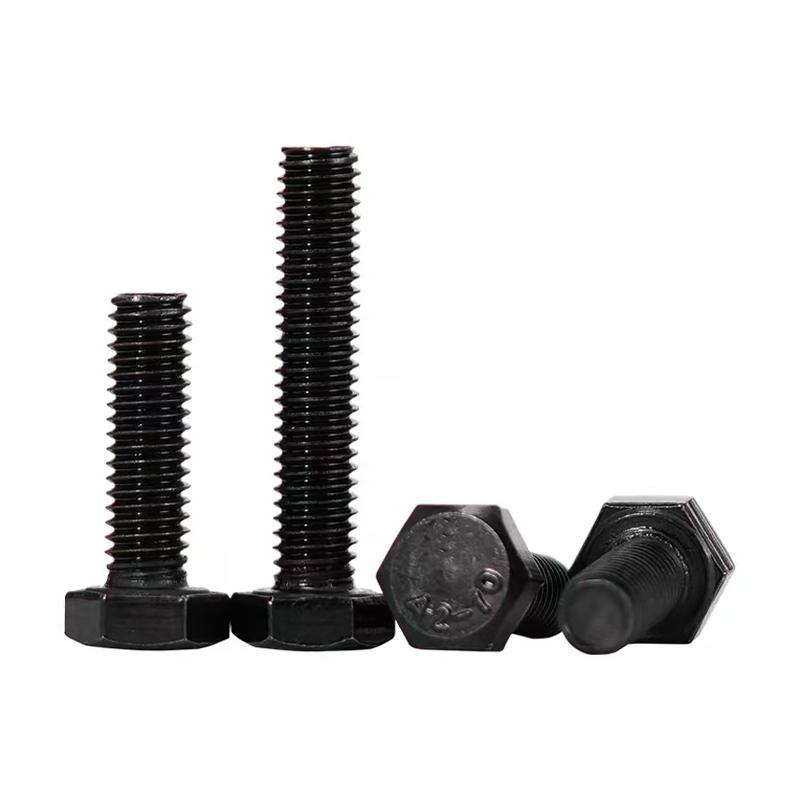
Let’s start with the humble high-strength bolt. The innovation isn’t necessarily in its tensile strength anymore—we’ve pushed that pretty far. It’s in the systems around it. We’re seeing more integrated solutions, like pre-assembled bolt-washer-nut packages with tension-indicating washers that are color-coded or have protrusions that flatten at a specific torque. This seems simple, but it tackles the chronic issue of inconsistent field tightening. I recall a project where we had to re-torque thousands of bolts after an audit found inconsistent clamping force. The cost in man-hours was staggering. A move toward such foolproof, visual verification systems is a quiet but significant leap.
Then there’s the rise of slip-critical joint designs pushing into more applications. The innovation here is in the faying surface treatments. It’s not just about grit blasting anymore. We’re testing and specifying proprietary coatings that provide a consistent, certified coefficient of friction. This shifts the performance guarantee from the variable skill of the sandblaster to a manufactured product with a data sheet. It adds cost, sure, but for critical seismic or dynamic load joints, it removes a huge variable. I’ve seen jobs stalled because friction tests on site samples failed. Using a pre-qualified coating from the get-go can sidestep that entire headache.
And let’s talk about corrosion at the interface. One of the trickiest spots is where galvanized members connect. The old-school method of touch-up paint over the scratched zinc is a maintenance nightmare. Newer innovations include combining galvanizing with a final thin layer of a passive, self-healing coating like some of the newer generation inorganic zinc silicates. It’s designed to be scratched during bolting, and the coating actually migrates to protect the exposed steel. We’re trialing this on an offshore access platform, and the early signs are promising compared to the red rust we’d usually see at bolt holes within a season.
The Quiet Revolution in Fabrication & Logistics
Innovation isn’t always a physical product; sometimes it’s a process enabled by new accessories. Take CNC-punched connecting plates. The innovation is in the software that optimizes nesting and, crucially, can drill/prepare holes for specific mechanical fasteners or even weld studs with incredible precision. This turns a generic plate into a bespoke connector right off the bat. It reduces fit-up time in the yard enormously. I remember the good old days of hand-marking and torch-cutting clip angles—the tolerances were a constant battle. Now, the steel arrives ready to bolt, which feels like a small miracle.
Logistics and identification are another area. It sounds mundane, but RFID tags or robust QR codes laser-etched onto major connection components are becoming more common. Scanning a gusset plate with a tablet and pulling up its material cert, heat number, paint type, and installation drawing is a game-changer for quality traceability and maintenance. We piloted this on a complex truss bridge project. When a question arose about a specific node years later during an inspection, finding the record took minutes, not days of sifting through archived paper folders in a storage container.
This ties into the growing ecosystem of digital twins. The accessory innovation here is the physical point of data capture. Think of a smart washer with embedded sensors that can monitor preload over time, or a corrosion sensor tag welded near a critical splice in a harsh environment. The data feeds back to the model, giving a real-time health diagnosis. It’s still premium-priced and for special applications, but it’s moving from pure R&D to actual, if limited, deployment. The value for long-term structural health monitoring on difficult-to-access infrastructure is immense.
Material Science: Not Just Stronger, But Smarter
Yes, there are new steels, but the accessory-specific advances are interesting. Look at fastener coatings. Beyond hot-dip galvanizing, there’s a lot of work in duplex and triplex systems—combining a zinc layer for cathodic protection with an organic topcoat for barrier protection and color coding. For a company deeply embedded in the production base, like Handan Zitai Fastener Manufacturing Co., Ltd. (you can find their range at https://www.zitaifasteners.com), staying on top of these coating technologies is critical. Based in Yongnian, Handan—the heart of China’s fastener industry—their proximity to major transport links like the Beijing-Guangzhou Railway and expressways is a logistical advantage for sourcing raw materials and distributing finished, innovative products to global construction sites.
Another material shift is in non-metallic components. High-performance polymer shims and bearing pads are getting better. We’re using electrically insulating nylon-based shims in specific applications to prevent galvanic corrosion between dissimilar metals, like carbon steel bolts on aluminum members. The key innovation is in the creep resistance and load-bearing capacity of these polymers, which now meet stringent structural specs. It’s a niche product, but when you need it, nothing else works.
Then there’s the re-emergence of cast steel nodes for complex architectural geometries. The innovation is in the simulation and casting technology itself, allowing for optimized, organic shapes that channel loads more efficiently than a welded assembly of plates. The accessory—the node—becomes a custom-designed, manufactured component. The lead time and cost are higher, but for signature structures, it solves immense fabrication challenges. I’ve seen a welded alternative for a complex node require over 200 individual welds; the single cast piece was not only stronger but eliminated all those potential inspection points.
Field Realities and the Yeah, But… Factor
Any discussion of innovation needs a heavy dose of field reality. The latest and greatest is useless if it can’t survive the site. A classic example: self-locking nuts with engineered plastic inserts. Great in theory, maintaining tension. But if they’re exposed to UV radiation for months before final assembly, the plastic degrades. We learned that the hard way on a project in the Middle East. The innovation failed because its environmental limits weren’t considered in the storage phasing. Now, specs for such items include strict storage and shelf-life clauses.
Compatibility is another minefield. Introducing a new, high-performance coating on a bolt must be tested with the chosen corrosion protection on the connected steel. I’ve seen a fantastic, new ceramic-based bolt coating react poorly with a specific shop-applied primer, leading to adhesion failure. The innovation in the lab must be validated in the full system context. This is where manufacturers with deep application knowledge, often those situated in major industrial clusters, add real value beyond just making the part.
Cost versus perceived value remains the eternal battle. Many innovations add 10-30% to the component cost. Convincing a project manager focused on upfront capital cost to adopt them requires hard data on lifecycle savings—reduced installation time, lower maintenance, extended lifespan. That data is often sparse or project-specific. Building that case history is the slow, unglamorous work of turning an innovation into a standard.
Where This is All Pointing
So, where’s the trajectory? The convergence is clear: smarter, more integrated connection systems with built-in verification and data. The bolt won’t be just a piece of metal; it will be a certified component of a system, possibly with a digital passport. Fabrication will continue to move towards kit-of-parts precision, where accessories are pre-engineered to snap or bolt together with minimal site adjustment.
The role of specialized manufacturers will evolve from commodity producers to solution providers. A company’s ability to offer not just the fastener, but the technical support on coating compatibility, installation procedure, and even digital asset management for their products, will be a differentiator. The physical product becomes one part of a larger service package.
Ultimately, the latest innovations in steel structure accessories are less about dramatic headlines and more about the steady, problem-solving grind. They’re about making structures more predictable, durable, and easier to build correctly the first time. The real test isn’t in a catalog or a lab report; it’s on a windy day, 50 stories up, when a crew is trying to fit the pieces together on schedule and budget. The best innovations are the ones that make that moment smoother, safer, and more certain.