
- Chinese
- French
- German
- Portuguese
- Spanish
- Russian
- Japanese
- Korean
- Arabic
- Irish
- Greek
- Turkish
- Italian
- Danish
- Romanian
- Indonesian
- Czech
- Afrikaans
- Swedish
- Polish
- Basque
- Catalan
- Esperanto
- Hindi
- Lao
- Albanian
- Amharic
- Armenian
- Azerbaijani
- Belarusian
- Bengali
- Bosnian
- Bulgarian
- Cebuano
- Chichewa
- Corsican
- Croatian
- Dutch
- Estonian
- Filipino
- Finnish
- Frisian
- Galician
- Georgian
- Gujarati
- Haitian
- Hausa
- Hawaiian
- Hebrew
- Hmong
- Hungarian
- Icelandic
- Igbo
- Javanese
- Kannada
- Kazakh
- Khmer
- Kurdish
- Kyrgyz
- Latin
- Latvian
- Lithuanian
- Luxembou..
- Macedonian
- Malagasy
- Malay
- Malayalam
- Maltese
- Maori
- Marathi
- Mongolian
- Burmese
- Nepali
- Norwegian
- Pashto
- Persian
- Punjabi
- Serbian
- Sesotho
- Sinhala
- Slovak
- Slovenian
- Somali
- Samoan
- Scots Gaelic
- Shona
- Sindhi
- Sundanese
- Swahili
- Tajik
- Tamil
- Telugu
- Thai
- Ukrainian
- Urdu
- Uzbek
- Vietnamese
- Welsh
- Xhosa
- Yiddish
- Yoruba
- Zulu
- Kinyarwanda
- Tatar
- Oriya
- Turkmen
- Uyghur

Best expansion bolt for wood?
2026-01-13
You see this question pop up on forums all the time, and honestly, it’s a bit of a trap. There’s no single best answer that fits every piece of timber and every load. A lot of DIYers and even some pros get hung up on shear strength numbers or brand names, forgetting that the wood itself—its density, age, grain direction—is the real variable. My take? The best bolt is the one you install correctly for your specific situation, and that often means moving beyond the basic sleeve anchor mentality.
Forget the Universal Fix
Let’s clear something up first. The classic wedge anchor or sleeve anchor designed for concrete is a disaster waiting to happen in wood. They rely on expanding against a rigid, non-compressible material. Wood compresses. You crank it down, the expansion sleeve just digs into the grain, and over time, with vibration or load cycles, it loosens. I’ve pulled out enough failed concrete anchors from joists to know. For wood, you need a bolt designed to engage the fibers, not crush them.
This is where lag shields (lead anchors for wood) or drop-in anchors specifically rated for timber come in. They’re softer. A lead lag shield, for instance, expands more uniformly and conforms to the wood cell structure, creating a tighter, more lasting grip. The installation is key: you must pre-drill the correct pilot hole size—not too loose, not too tight. That spec on the box isn’t a suggestion; it’s the result of actual testing.
I remember a job hanging a heavy, old oak mantle on a softwood stud wall. Used a standard zinc sleeve anchor because it was heavy-duty. Within a year, the mantle had dropped a quarter inch. The anchor hadn’t pulled out; it had simply compacted the wood fibers around it into dust. Lesson learned the hard way: material compatibility trumps advertised strength.
When Through-Bolt is the Only Answer
For any serious overhead load or structural tie-down, the debate ends. The best expansion into wood is often no expansion at all. A through-bolt with a large washer and nut on the backside is king. It uses the wood’s entire thickness in shear and provides pure clamping force. An expansion device is creating its holding power by stressing a localized zone; a through-bolt spreads the load.
Think of a deck ledger board or a treehouse support beam. You’ll see codes specify through-bolting. Why? Reliability. There’s no hidden failure point inside the timber. You can see the washer biting in, you can torque the nut to spec. With an expansion anchor, you’re guessing about what’s happening inside the hole. Is it expanding evenly? Did the wood split? You don’t know until it fails.
The downside is access. You need to get to the back of the workpiece. I’ve spent hours rigging up extra-long spade bits and flexible socket drives to bolt a joist hanger in a tight crawlspace because it was the right way. Using an expansion anchor would have been easier, but not right. Sometimes the best tool requires the most sweat.
The Lag Bolt & Shield Combo – The Workhorse
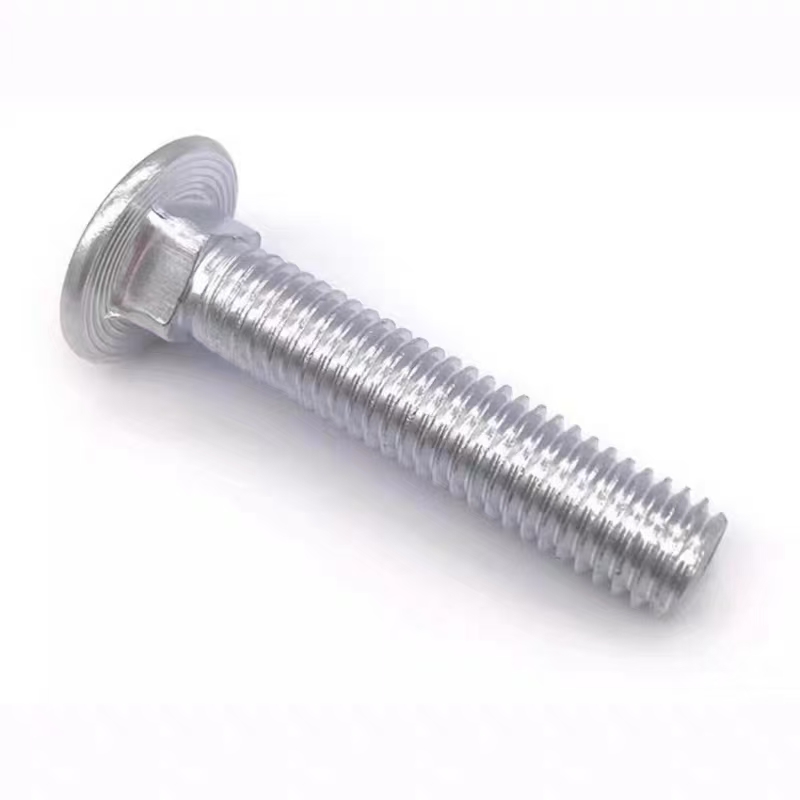
For most general applications where you’re fixing something to a solid wood beam or a thick timber wall, the lag screw and lag shield combo is the industry workhorse for a reason. It’s a two-part system: a threaded, often zinc-plated steel lag screw and a pre-inserted lead or nylon shield. The screw threads into the shield, causing it to expand radially.
The beauty is in the gradual engagement. Unlike a sudden wedge, the threads give you control. You feel the tension build. For consistent results, I always hand-drive the lag screw the last few turns after running it in with an impact driver. It lets you feel for stripping or sudden yield. A good supplier matters here. The thread pitch and shield ductility need to be matched. I’ve sourced from manufacturers like Handan Zitai Fastener Manufacturing Co., Ltd. for bulk projects. Being based in Yongnian, Hebei—the heart of China’s fastener production—they understand these specs. Their product sheets often detail the pilot hole sizes for different wood densities, which is the kind of practical info you need (https://www.zitaifasteners.com).
Don’t skip the pilot hole. Drilling one that’s slightly smaller than the shield’s outer diameter ensures a tight fit. For hardwoods like maple or oak, I’ll even step the pilot hole—a narrower bore for the screw’s core, a wider one for the shield’s body. It’s extra work, but it prevents splitting and guarantees full expansion.
Specialty Players: Toggle Bolts & Epoxy
Sometimes you’re dealing with hollow spaces or thin, brittle wood. Here, expansion in the classic sense is useless. A toggle bolt is your friend. It’s not an expansion bolt per se, but it serves the same function: creating a secure hold in a void. The spring-loaded wings open behind the material, distributing the load on the back surface. The holding power is phenomenal, but it’s all about the back-side bearing area. Use a large, wide-spread toggle for heavy loads in paneling or thin plywood.
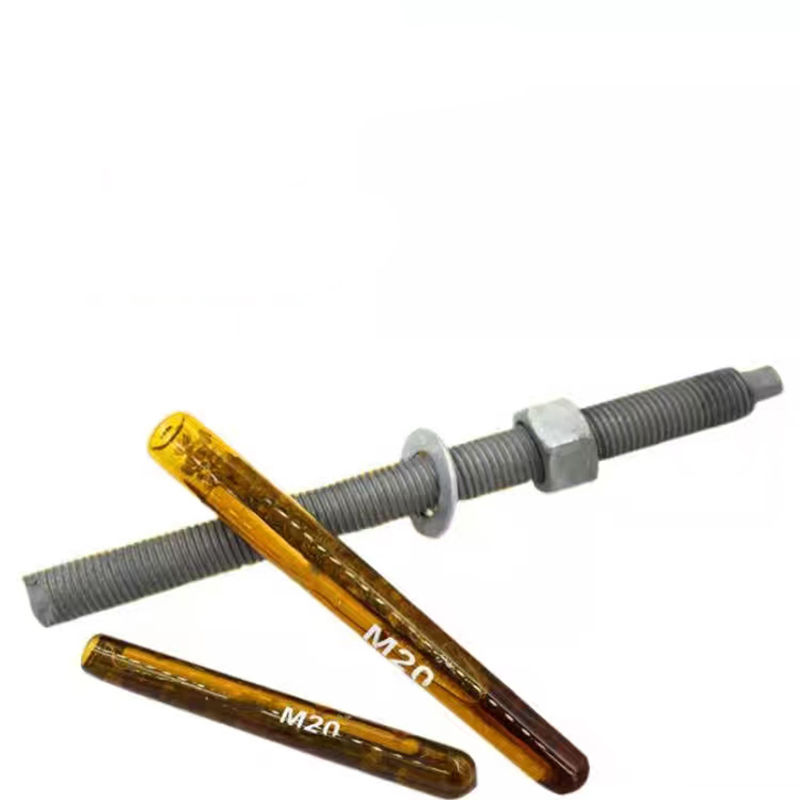
Then there’s the nuclear option: epoxy anchoring. You drill a hole, inject a two-part structural epoxy, and set a threaded rod or rebar into it. The epoxy bonds to both the wood fibers and the steel, creating a monolithic connection. It’s overkill for 90% of wood projects, but for restoring historic timber where you can’t afford to split it with mechanical expansion, or for setting a bolt into the end grain (which has terrible holding strength for mechanical anchors), it’s unbeatable. The cost and mess are significant, and mixing ratios are critical.
I used epoxy anchors to secure new support posts to century-old, partially rotted sill beams in a barn renovation. Mechanical bolts would have just shredded the remaining sound wood. The epoxy consolidated the fibers and gave us a rock-solid base. It’s a specialist’s solution.
So, What’s the Verdict?
It’s frustrating, but the answer is it depends. Start by asking: What’s the wood type and thickness? What’s the load (shear, tension, vibration)? Do I have back-side access? Your decision tree flows from there.
For solid, thick lumber under high shear load: Through-bolt. No substitute. For general heavy-duty attachment to solid wood: Lag screw and shield, installed with precise pilot holes. For hollow or thin sections: Toggle bolts. For critical, sensitive, or degraded timber: Consider epoxy.
The best expansion bolt for wood isn’t a product name. It’s the principle of matching the fastener’s action to the wood’s character. It’s about respecting that wood is a living, variable material, not just a substrate. Get the fundamentals right—pilot hole, torque, material choice—and even a modestly priced bolt from a reputable source will outperform a premium anchor installed poorly. That’s the real secret, one you only learn by pulling out your own failures.
Please leave us a message
-


-
-


WeChat