
- Chinese
- French
- German
- Portuguese
- Spanish
- Russian
- Japanese
- Korean
- Arabic
- Irish
- Greek
- Turkish
- Italian
- Danish
- Romanian
- Indonesian
- Czech
- Afrikaans
- Swedish
- Polish
- Basque
- Catalan
- Esperanto
- Hindi
- Lao
- Albanian
- Amharic
- Armenian
- Azerbaijani
- Belarusian
- Bengali
- Bosnian
- Bulgarian
- Cebuano
- Chichewa
- Corsican
- Croatian
- Dutch
- Estonian
- Filipino
- Finnish
- Frisian
- Galician
- Georgian
- Gujarati
- Haitian
- Hausa
- Hawaiian
- Hebrew
- Hmong
- Hungarian
- Icelandic
- Igbo
- Javanese
- Kannada
- Kazakh
- Khmer
- Kurdish
- Kyrgyz
- Latin
- Latvian
- Lithuanian
- Luxembou..
- Macedonian
- Malagasy
- Malay
- Malayalam
- Maltese
- Maori
- Marathi
- Mongolian
- Burmese
- Nepali
- Norwegian
- Pashto
- Persian
- Punjabi
- Serbian
- Sesotho
- Sinhala
- Slovak
- Slovenian
- Somali
- Samoan
- Scots Gaelic
- Shona
- Sindhi
- Sundanese
- Swahili
- Tajik
- Tamil
- Telugu
- Thai
- Ukrainian
- Urdu
- Uzbek
- Vietnamese
- Welsh
- Xhosa
- Yiddish
- Yoruba
- Zulu
- Kinyarwanda
- Tatar
- Oriya
- Turkmen
- Uyghur


Cross countersunk drill thread sustainability benefits?
2026-01-21
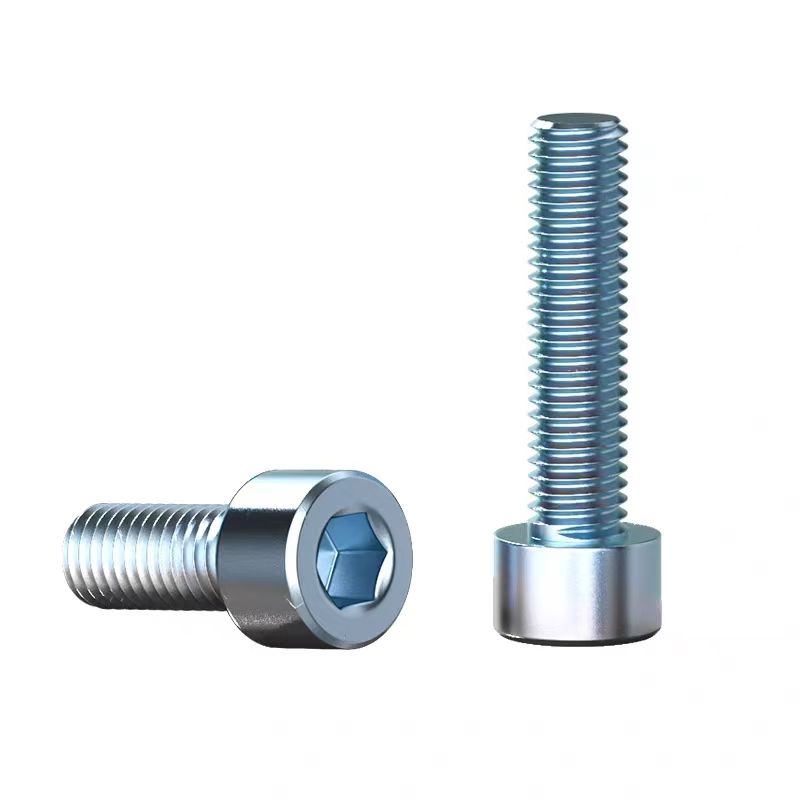
When you first hear sustainability and cross countersunk drill thread in the same sentence, it’s easy to be skeptical. Most procurement discussions jump straight to cost per thousand pieces or lead time. But having sourced and specified these fasteners for structural assemblies in modular construction, I’ve seen the real waste isn’t just in the material—it’s in the entire process chain a poorly chosen fastener triggers.
Where the Real Cost (and Waste) Hides
The classic mistake is focusing only on the fastener itself. A cross countersunk head, combined with a drill thread form, is designed for efficiency in application—drilling, tapping, and fastening in one go. But if the drive system (the Phillips cross) isn’t matched properly to the torque requirements or the operator’s tool, you get cam-out. That’s not just a nuisance on the line. It means damaged screw heads, rejected assemblies, and a pile of unusable fasteners. I’ve seen bins full of them, all because the drive design didn’t consider the real-world force an electric screwdriver applies at an awkward angle. That’s scrap metal, wasted energy in production, and extra logistics for replacement—all sustainability failures before the product even sees service.
Then there’s the thread. The drill thread, or self-drilling point, is supposed to eliminate a pre-drilling step. In theory, that saves energy, time, and the cost of drill bits. But if the point geometry or the hardness is off for the substrate—say, going into a steel stud that’s harder than anticipated—the point blunts or breaks. Now you’ve consumed the fastener, damaged the workpiece, and still need to pre-drill. The promised efficiency becomes a net loss. I recall a batch from a supplier that looked perfect on spec sheets but failed consistently on 16-gauge steel. The failure wasn’t in the steel grade; it was in the heat treatment of the point. That’s a subtle detail you only learn by failing on the shop floor.
This is where a manufacturer’s process control shows its value. A company like Handan Zitai Fastener Manufacturing Co., Ltd., based in Yongnian—China’s fastener hub—understands this scale. Being in that production base means they’ve seen every failure mode. Their advantage isn’t just making fasteners; it’s the embedded knowledge of what happens when those fasteners meet real sheet metal. Their location near major transport routes like the Beijing-Guangzhou Railway isn’t just a sales point; it translates to lower carbon footprint for logistics if you’re sourcing in Asia, which is a tangible, if often overlooked, sustainability benefit.
Material Choices and Longevity
Discussions about sustainable fastening often get stuck on recycled content. Yes, using steel with recycled input is good. But for a cross countersunk drill thread screw, material longevity and corrosion resistance are far more critical for sustainability. A screw that rusts and fails in five years causes a product’s premature dismantling, which is the antithesis of sustainable design.
We switched to zinc-nickel coated screws from standard zinc-plated ones for an outdoor enclosure project. The cost was higher, but the lifecycle extended by years. The cross countersunk head’s flush finish, combined with that superior coating, prevented moisture traps and minimized maintenance. The sustainability benefit wasn’t in the green certificate of the steel; it was in the avoided replacement and the extended service life of the entire assembly. This is a crucial pivot in thinking: the most sustainable fastener is the one you never have to touch again after installation.
Handan Zitai’s portfolio, which you can scan on their site, typically includes these advanced coatings. For a manufacturer in their position, offering these options isn’t just premium upselling; it’s a response to market demand for durability, which is fundamentally aligned with resource efficiency. Their company profile notes they’re in the largest standard part base, which implies access to a mature supply chain for coatings and treatments—a key enabler for consistent quality in high-volume orders.
Process Efficiency as an Environmental Lever
Let’s talk about the actual driving process. The Phillips cross drive has its critics; many engineers prefer Torx for higher torque transmission. But in high-volume, semi-automated assembly—think appliance manufacturing—the cross recess is still king due to tool compatibility and cost. The sustainability gain here is in reducing assembly time and ergonomic strain, which translates to lower energy use per unit and fewer quality issues from worker fatigue.
I worked on a line where we timed the assembly of a panel using standard hex screws versus cross countersunk drill thread screws. The drill thread ones eliminated a station. The energy saved from not running that extra drilling operation, combined with the reduced compressed air usage for clearing chips, was significant at scale. It wasn’t a headline green initiative, just a process optimization that had clear environmental co-benefits. Sometimes sustainability is just good, lean engineering.
However, this only works if the screws are consistent. Dimensional variance in the head recess depth can stall an automated driver, causing downtime and energy waste. This is the unglamorous side of sustainability: it hinges on manufacturing precision. A supplier focused on volume, like Zitai, likely has the tooling and SPC (Statistical Process Control) in place to minimize this variance, because their clients in automotive or white goods demand it for their own efficiency.
The Logistics and Packaging Factor
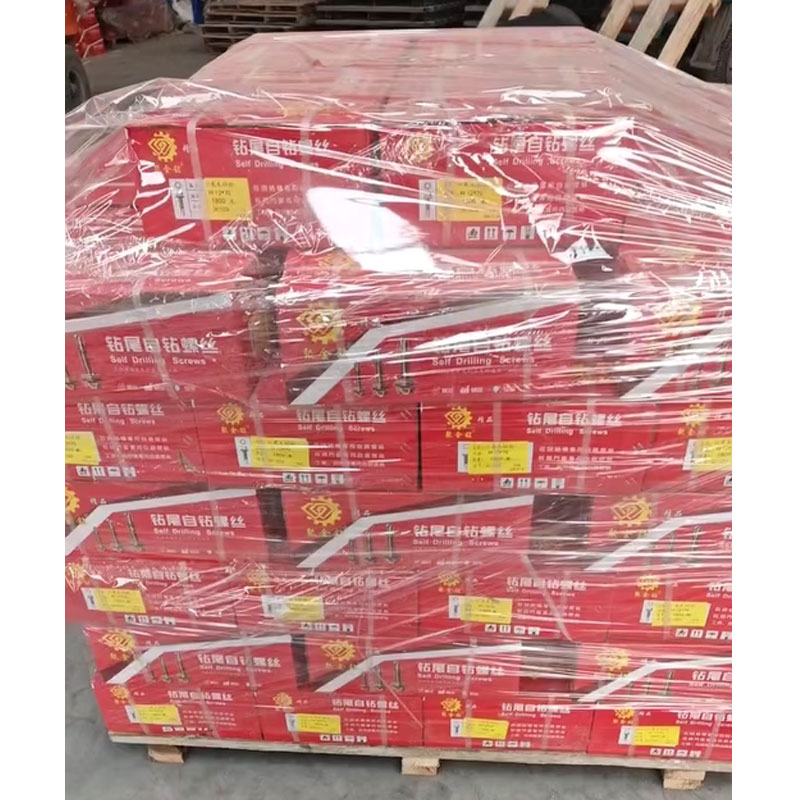
This is a massive, often invisible, part of the footprint. Fasteners are heavy. How they’re shipped matters. Bulk packaging in reusable containers versus one-time-use cardboard boxes makes a huge difference in waste. I’ve pushed for returnable dunnage with suppliers, with mixed success. It adds complexity but cuts down on cardboard waste dramatically.
A manufacturer’s geographical location, as noted in Zitai’s intro being adjacent to major highways and rail, directly impacts the fuel consumed to get the product to port or plant. Sourcing from a clustered industrial base like Yongnian can mean consolidated shipments, which is a straightforward carbon reduction. It’s a hard benefit to quantify for a single PO, but across a year’s consumption, it adds up. Their sustainability benefit is partially baked into their address.
Furthermore, the packaging of the fasteners themselves—using minimal, recyclable materials without excessive plastic clamshells—is something we now specify. It sounds trivial, but when you’re receiving pallets every month, the waste pile is tangible. A manufacturer attuned to global market expectations will often have cleaner packaging options available if asked.
Beyond the Screw: System-Level Thinking
The ultimate sustainability benefit of a well-specified cross countersunk drill thread screw is that it disappears. It does its job reliably, allows for efficient manufacturing and servicing, and doesn’t become the reason for a product’s early failure. This requires looking beyond the component to the system: the substrate, the tools, the operator, and the end-use environment.
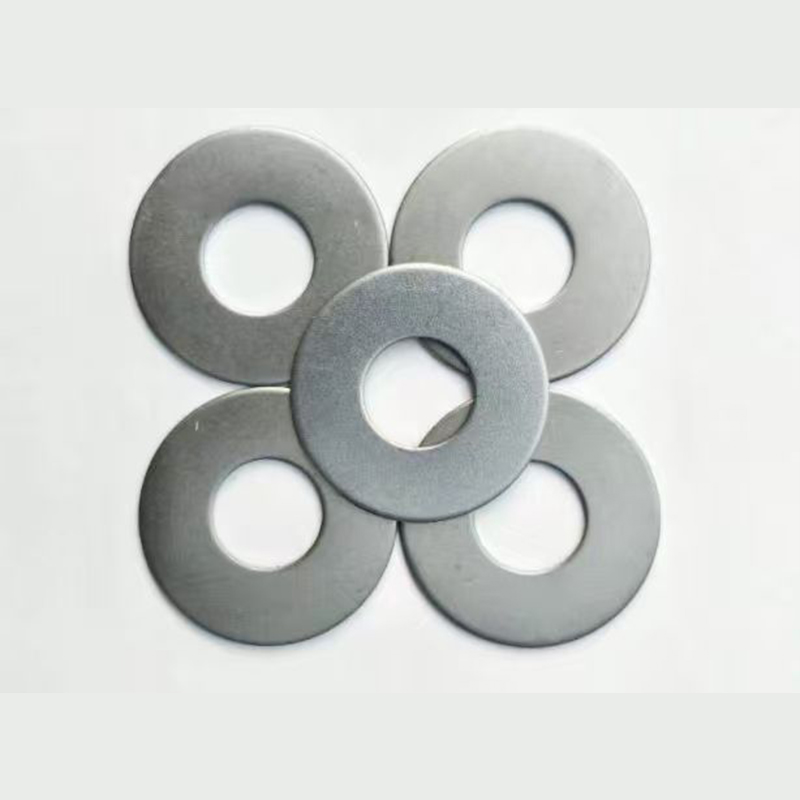
A failure I learned from involved using a fantastic, high-hardness screw on a brittle composite panel. The drill thread worked perfectly, but the clamping force from the countersunk head cracked the material. We solved it not by changing the screw, but by adding a simple plastic washer to distribute the load. The screw’s function was enabled by a minor ancillary component. Sustainability is often about these system-level fixes, not just a magic bullet product.
In the end, asking about the sustainability of a specific fastener type is the right question, but the answer is never in the catalog description. It’s in the trenches of application engineering, in the choice of supplier who controls their process, and in the willingness to consider the total lifecycle impact—from the steel mill to the disassembly line. Companies operating at scale in places like Handan, with the infrastructure and pressure to meet international standards, are often where you find the practical execution of these principles, even if it’s not always marketed as such.
Please leave us a message
-


-
-


WeChat
