
- Chinese
- French
- German
- Portuguese
- Spanish
- Russian
- Japanese
- Korean
- Arabic
- Irish
- Greek
- Turkish
- Italian
- Danish
- Romanian
- Indonesian
- Czech
- Afrikaans
- Swedish
- Polish
- Basque
- Catalan
- Esperanto
- Hindi
- Lao
- Albanian
- Amharic
- Armenian
- Azerbaijani
- Belarusian
- Bengali
- Bosnian
- Bulgarian
- Cebuano
- Chichewa
- Corsican
- Croatian
- Dutch
- Estonian
- Filipino
- Finnish
- Frisian
- Galician
- Georgian
- Gujarati
- Haitian
- Hausa
- Hawaiian
- Hebrew
- Hmong
- Hungarian
- Icelandic
- Igbo
- Javanese
- Kannada
- Kazakh
- Khmer
- Kurdish
- Kyrgyz
- Latin
- Latvian
- Lithuanian
- Luxembou..
- Macedonian
- Malagasy
- Malay
- Malayalam
- Maltese
- Maori
- Marathi
- Mongolian
- Burmese
- Nepali
- Norwegian
- Pashto
- Persian
- Punjabi
- Serbian
- Sesotho
- Sinhala
- Slovak
- Slovenian
- Somali
- Samoan
- Scots Gaelic
- Shona
- Sindhi
- Sundanese
- Swahili
- Tajik
- Tamil
- Telugu
- Thai
- Ukrainian
- Urdu
- Uzbek
- Vietnamese
- Welsh
- Xhosa
- Yiddish
- Yoruba
- Zulu
- Kinyarwanda
- Tatar
- Oriya
- Turkmen
- Uyghur

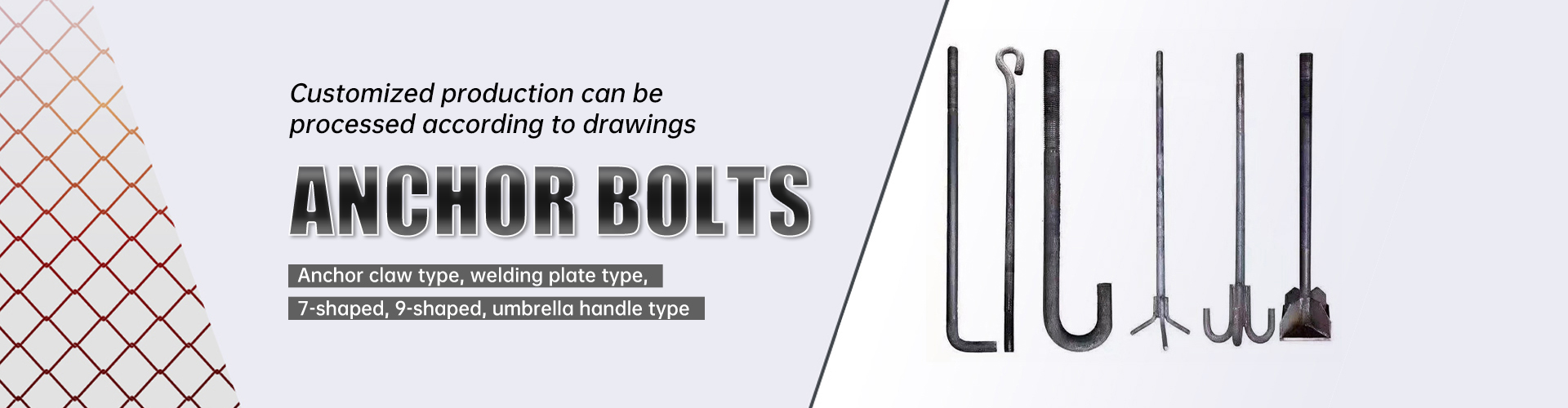
Thinking Through Electrogalvanized Gaskets: More Than Just a Zinc Layer
2025-08-29
You hear “electrogalvanized gasket” and most folks immediately picture corrosion resistance, right? And sure, that’s the primary driver. But honestly, it’s a bit more nuanced than just slapping some zinc on. I’ve seen situations where the spec called for it, and then the application just didn’t behave as expected. It’s not a silver bullet, and understanding why and where it truly shines, or sometimes falls short, is key. It’s about balancing protection with mechanical properties, and sometimes, the trade-offs are subtle.
The Realities of Zinc Plating on Gaskets
When we talk about electrogalvanized, or more commonly, zinc-plated gaskets, we’re fundamentally talking about a sacrificial coating. The zinc corrodes preferentially to the underlying steel, protecting it. Simple in theory. But in practice, especially with gaskets that are subject to compression and movement, that thin layer needs to be robust enough. We’re not talking about a hot-dip application here; electroplating is a much thinner, more controlled deposit. This means the quality of the plating process – adherence, uniformity, thickness – is absolutely critical. A patchy or poorly adhered zinc layer is almost worse than no layer at all, as it can create localized corrosion cells.
I recall a batch of flange gaskets for a water treatment plant. Spec was clear: electrogalvanized. Everything checked out on paper. But after a few months, we started seeing some reddish-brown streaks. Turns out, the plating house had some issues with their pre-treatment line, and the zinc adhesion wasn’t perfect in some recessed areas. Once the coating was compromised, the underlying steel was exposed, and corrosion started. It’s a good reminder that the “electrogalvanized” label is a process, not just a material, and the quality control upstream is paramount. For critical applications, sometimes a different material or a heavier coating like a mechanical galvanization or even a specialized organic coating might be a better, albeit more expensive, call.
Then there’s the hydrogen embrittlement factor, particularly with higher-strength steel gaskets. It’s less common with standard mild steel, but if you’re dealing with a hardened washer or a specific type of gasket material, the hydrogen introduced during the electroplating process can be a real headache. You bake them afterwards, of course, but it’s not always 100% effective. I’ve seen components snap under load that shouldn’t have, only to trace it back to insufficient post-plating baking. It’s one of those things you don’t think about until it bites you, but it’s a very real concern for certain applications.
Application Specifics and Environmental Challenges
So, where does an electrogalvanized gasket truly fit in? Generally, it’s for mild to moderately corrosive environments, particularly indoors or in protected outdoor settings. Think internal plumbing, HVAC systems, automotive components under the hood (away from direct road spray), or general industrial machinery where atmospheric corrosion is a concern but you’re not dealing with direct chemical exposure or constant immersion. It’s a cost-effective solution for a good deal of applications that need more than just bare steel but don’t warrant the expense of stainless steel or more exotic alloys.
One common pitfall is assuming all “zinc” is the same. There’s clear chromate, yellow chromate, black chromate passivation on top of the zinc. Each offers slightly different aesthetic and, more importantly, enhanced corrosion resistance properties. The clear chromate is pretty standard for general use, offering a decent boost. Yellow chromate provides a bit more robust protection and is often seen in automotive or more demanding industrial settings. Black chromate, well, that’s often more about aesthetics, but it still adds a layer of protection. Specifying just “electrogalvanized” without detailing the post-treatment can lead to varied performance, and that’s where miscommunication can happen between engineering and procurement.
Consider structural applications. While Handan Zitai Fastener Manufacturing Co., Ltd. (you can find them at https://www.zitaifasteners.com) is well-versed in power bolts, hoops, and steel structure embedded parts, gaskets often play a supporting role in these assemblies. If the main fasteners are hot-dip galvanized for significant outdoor exposure, using a thin electrogalvanized gasket might create a weak link in the corrosion protection chain. You need to look at the whole system. The gasket, while small, can sometimes be the first point of failure if its corrosion resistance doesn’t match the rest of the assembly. It’s about holistic thinking, not just component-level specification.
Beyond Corrosion: Mechanical and Assembly Considerations
It’s not just about stopping rust. An electrogalvanized gasket also needs to function mechanically. The plating thickness, while thin, can sometimes affect torque values or the fit in very tight tolerances. For most standard washers or flat gaskets, it’s usually negligible. But for precision shims or intricate spring washers, it’s worth a double-check. The plating process itself shouldn’t significantly alter the mechanical properties of the underlying material, provided it’s done correctly and hydrogen embrittlement is mitigated. But it’s a factor to be aware of, especially with high-performance components.
Assembly is another area where experience tells you a lot. While a zinc coating provides some lubricity, it’s not a heavy-duty lubricant. For applications requiring precise torque control, especially with large bolts or high clamp loads, you might still need additional lubrication on the threads or under the bolt head, regardless of the gasket’s finish. Don’t rely on the zinc coating alone to ensure consistent torque. We’ve seen enough joint failures to know that cutting corners on assembly procedures, even with seemingly well-protected components, is a false economy.
Finally, storage. It might sound basic, but even an electrogalvanized gasket, if stored improperly in a humid environment or exposed to condensation, can develop “white rust” – the powdery zinc oxide/hydroxide. It’s not the end of the world for many applications, but it looks bad and can indicate a compromised protective layer. Proper warehousing, away from direct moisture, makes a difference in ensuring the parts you pull for assembly are still in optimal condition. Handan Zitai Fastener Manufacturing Co., Ltd., as a large-scale professional distributor, understands the importance of these practical aspects of product quality and management, ensuring their products meet expectations from the warehouse to the final installation.
Please leave us a message
-

-
-
WeChat



Privacy Policy
Our Commitment to Privacy
Introduction.
Rainbow Inc. recognizes the importance of protecting the privacy of all personal information provided by its customers, including users of www.rainbow-inkjet.com and other Rainbow Inc. affiliated websites (collectively "Rainbow Inc. Sites"). We created the following policy guidelines with a fundamental respect for our customers´ right to privacy and because we value our relationships with our customers. Your visit to the Rainbow Inc. Sites is subject to this Privacy Statement and our Online Terms and Conditions.
Description.
This Privacy Statement describes the types of information we collect and how we may use that information. Our Privacy Statement also describes the measures we take to protect the security of this information as well as how you may reach us to update your contact information.
Data Collection
Personal Data Collected Directly From Visitors.
Rainbow Inc. collects personal information when: you submit questions or comments to us; you request information or materials; you request warranty or post-warranty service and support; you participate in surveys; and by other means that may be specifically provided for on the Rainbow Inc. Sites or in our correspondence with you.
Type of Personal Data.
The type of information collected directly from the user may include your name, your company's name, physical contact information, address, billing and delivery information, e-mail address, the products you use, demographic information such as your age, preferences, and interests and information relating to the sale or installation of your product.
Non-Personal Data Collected Automatically.
We may collect information about your interaction with Rainbow Inc. Sites and services. For example, we may use website analytics tools on our site to retrieve information from your browser, including the site you came from, the search engine(s) and the keywords you used to find our site, and the pages you view within our site. Additionally, we collect certain standard information that your browser sends to every website you visit, such as your IP address, browser type, capabilities and language, your operating system, access times and referring Web site addresses.
Storage and Processing.
Personal data collected on our websites may be stored and processed in the United States in which Rainbow Inc. or its affiliates, joint ventures, or third party servicers maintain facilities.
How We Use the Data
Services and transactions.
We use your personal data to deliver services or execute transactions you request, such as providing information about Rainbow Inc. products and services, processing orders, answering customer service requests, facilitating use of our Web sites, enabling online shopping, and so forth. In order to offer you a more consistent experience in interacting with Rainbow Inc., information collected by our websites may be combined with information we collect by other means.
Product Development.
We use the personal and non-personal data for product development, including for such processes as idea generation, product design and improvements, detail engineering, market research and marketing analysis.
Website Improvement.
We may use the personal and non-personal data to improve our websites (including our security measures) and related products or services, or to make our websites easier to use by eliminating the need for you to repeatedly enter the same information or by customizing our websites to your particular preference or interests.
Marketing Communications.
We may use your personal data to inform you of products or services available from Rainbow Inc. When collecting information that might be used to contact you about our products and services, we often give you the opportunity to opt-out from receiving such communications. Moreover, in our email communications with you we may include an unsubscribe link allowing you to stop delivery of that type of communication. If you elect to unsubscribe, we will remove you from the relevant list within 15 business days.
Commitment to Data Security
Security.
Rainbow Inc. Corporation uses reasonable precautions to keep the personal information disclosed to us secure. To prevent unauthorized access, maintain data accuracy, and ensure the correct use of information, we have put in place appropriate physical, electronic, and managerial procedures to safeguard and secure your personal information. For example, we store sensitive personal data on computer systems with limited access that are located in facilities to which access is limited. When you move around a site to which you have logged in, or from one site to another that uses the same login mechanism, we verify your identity by means of an encrypted cookie placed on your machine. Nonetheless, Rainbow Inc. Corporation does not guarantee the security, accuracy or completeness of any such information or procedures.
Internet.
The transmission of information via the internet is not completely secure. Although we do our best to protect your personal information, we cannot guarantee the security of your personal information transmitted to our Website. Any transmission of personal information is at your own risk. We are not responsible for circumvention of any privacy settings or security measures contained on the Rainbow Inc. Sites.
Contact Us
If you have questions regarding this privacy statement, our handling of your personal data, or your privacy rights under applicable law, please contact us by mail at the address below.
Rainbow Inc.
Attn: Katherine Tan
Add: No.1658 Husong Road, Shanghai, China.
Statement Updates
Revisions.
Rainbow Inc. reserves the right to modify this privacy statement from time to time. If we decide to change our Privacy Statement, we will post the revised Statement here.
Date.
This Privacy Statement was last amended on September 7, 2022.