
- Chinese
- French
- German
- Portuguese
- Spanish
- Russian
- Japanese
- Korean
- Arabic
- Irish
- Greek
- Turkish
- Italian
- Danish
- Romanian
- Indonesian
- Czech
- Afrikaans
- Swedish
- Polish
- Basque
- Catalan
- Esperanto
- Hindi
- Lao
- Albanian
- Amharic
- Armenian
- Azerbaijani
- Belarusian
- Bengali
- Bosnian
- Bulgarian
- Cebuano
- Chichewa
- Corsican
- Croatian
- Dutch
- Estonian
- Filipino
- Finnish
- Frisian
- Galician
- Georgian
- Gujarati
- Haitian
- Hausa
- Hawaiian
- Hebrew
- Hmong
- Hungarian
- Icelandic
- Igbo
- Javanese
- Kannada
- Kazakh
- Khmer
- Kurdish
- Kyrgyz
- Latin
- Latvian
- Lithuanian
- Luxembou..
- Macedonian
- Malagasy
- Malay
- Malayalam
- Maltese
- Maori
- Marathi
- Mongolian
- Burmese
- Nepali
- Norwegian
- Pashto
- Persian
- Punjabi
- Serbian
- Sesotho
- Sinhala
- Slovak
- Slovenian
- Somali
- Samoan
- Scots Gaelic
- Shona
- Sindhi
- Sundanese
- Swahili
- Tajik
- Tamil
- Telugu
- Thai
- Ukrainian
- Urdu
- Uzbek
- Vietnamese
- Welsh
- Xhosa
- Yiddish
- Yoruba
- Zulu
- Kinyarwanda
- Tatar
- Oriya
- Turkmen
- Uyghur


Getting ‘Photovoltaic Series’ Right: More Than Just Wiring
2025-08-29
You hear “photovoltaic series” and immediately think panels wired end-to-end for voltage. And yeah, that’s it on the surface. But honestly, it’s where so many systems get hobbled before they even really start. It’s not just about hitting a target voltage for your inverter; it’s about balancing performance, anticipating shade, and frankly, making the whole thing economically sensible. I’ve seen some real head-scratchers, and learned a few things the hard way.
The Core Concept – And Where It Gets Tricky
So, a photovoltaic series string. Pretty basic: you connect the positive terminal of one module to the negative terminal of the next, and you keep going. The current stays the same across the string, but the voltages add up. Ideal scenario, right? All modules are identical, getting the same sun, same temperature. In the real world? Never happens. Never. You’ve got manufacturing tolerances, minor shading from a chimney or a vent, dust accumulation – even subtle differences in roof pitch can cause unequal irradiation. All these factors start pulling down the performance of the entire string, sometimes dramatically.
One common mistake I’ve observed, especially with less experienced installers, is simply stuffing as many modules as possible into a string to hit the inverter’s maximum DC voltage window. It seems efficient on paper, fewer strings mean less wiring, right? But then you run into issues on colder days when open-circuit voltage (Voc) spikes. If you push it too close to the inverter’s absolute max, you risk tripping it off or even damaging it. You need headroom, always. Think about those crisp, clear winter mornings; that’s when you see your highest voltages. You really need to model that worst-case scenario.
We once had a job where the client insisted on maximizing string length to minimize combiner box usage. Seemed reasonable at the time. But the modules had slightly different orientations due to a complex roof line. What we got was a classic case of string mismatch losses. The whole system underperformed, and it took a lot of diagnostics to trace it back. In hindsight, we should have pushed harder for more, shorter strings, even if it meant more wiring and slightly higher upfront costs. Sometimes, a bit more upfront effort saves a massive headache down the line. It’s not just about the wiring; it’s about the module-level performance that wiring dictates.
String Design: Not a One-Size-Fits-All
When you’re designing your photovoltaic series, you’re not just picking a number out of a hat. You’re balancing the inverter’s maximum power point tracking (MPPT) range, its maximum input voltage, and the minimum voltage it needs to even start up. And then you throw in module characteristics: their Imp, Vmp, Voc, and temperature coefficients. Those temperature coefficients are crucial – they tell you how much the voltage will drop on hot days (reducing power) and rise on cold days (potentially hitting voltage limits).
For instance, if you’re using a string inverter, having all modules in a photovoltaic series string facing the same direction, with no significant shading, is pretty much non-negotiable for optimal performance. Micro-inverters or optimizers solve this to some extent by allowing module-level MPPT, but that’s a different discussion. When you’re strictly talking strings, any module in that string that’s underperforming due to shade or fault will act as a bottleneck for the entire string. It’s like a chain; it’s only as strong as its weakest link. Bypass diodes help, sure, but they don’t magically make the shaded module produce power.
A few years back, we were spec’ing a system for a commercial building. The roof had several HVAC units that, while not directly shading the panels for most of the day, cast long shadows during certain times, especially in winter. We initially designed a few very long strings. During commissioning, we noticed significant power drops in the morning and late afternoon. Turns out, even a partial shadow creeping across the bottom edge of a few modules in a string was enough to knock a noticeable chunk off the string’s output. We ended up having to re-string some sections, breaking those long strings into shorter ones, and using different MPPT inputs on the inverter to mitigate the effect. It was an expensive lesson in shadow analysis. You really need to walk the site, map the shadows, and visualize how they’ll move throughout the day and year.
Reliability and Maintenance Considerations
From a reliability standpoint, your photovoltaic series connections are critical. Every crimp, every MC4 connector, every junction box connection is a potential point of failure. I’ve seen countless issues traced back to poorly made connections – loose terminals, improperly crimped cables, or even cheap connectors that degrade under UV exposure. These aren’t just minor annoyances; they’re fire hazards in the worst-case scenario, and definitely major performance drains in the best-case.
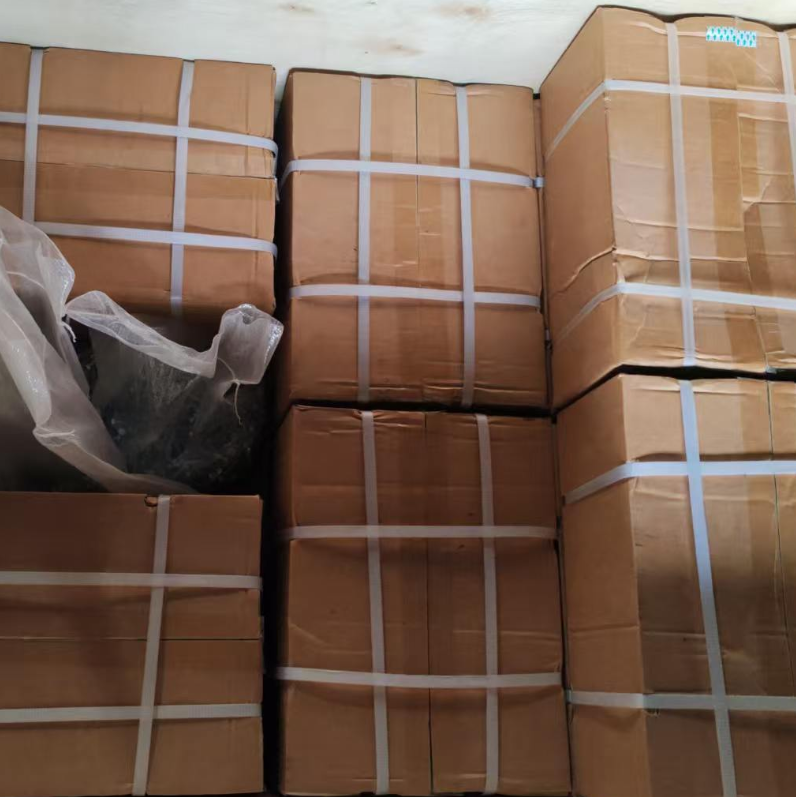
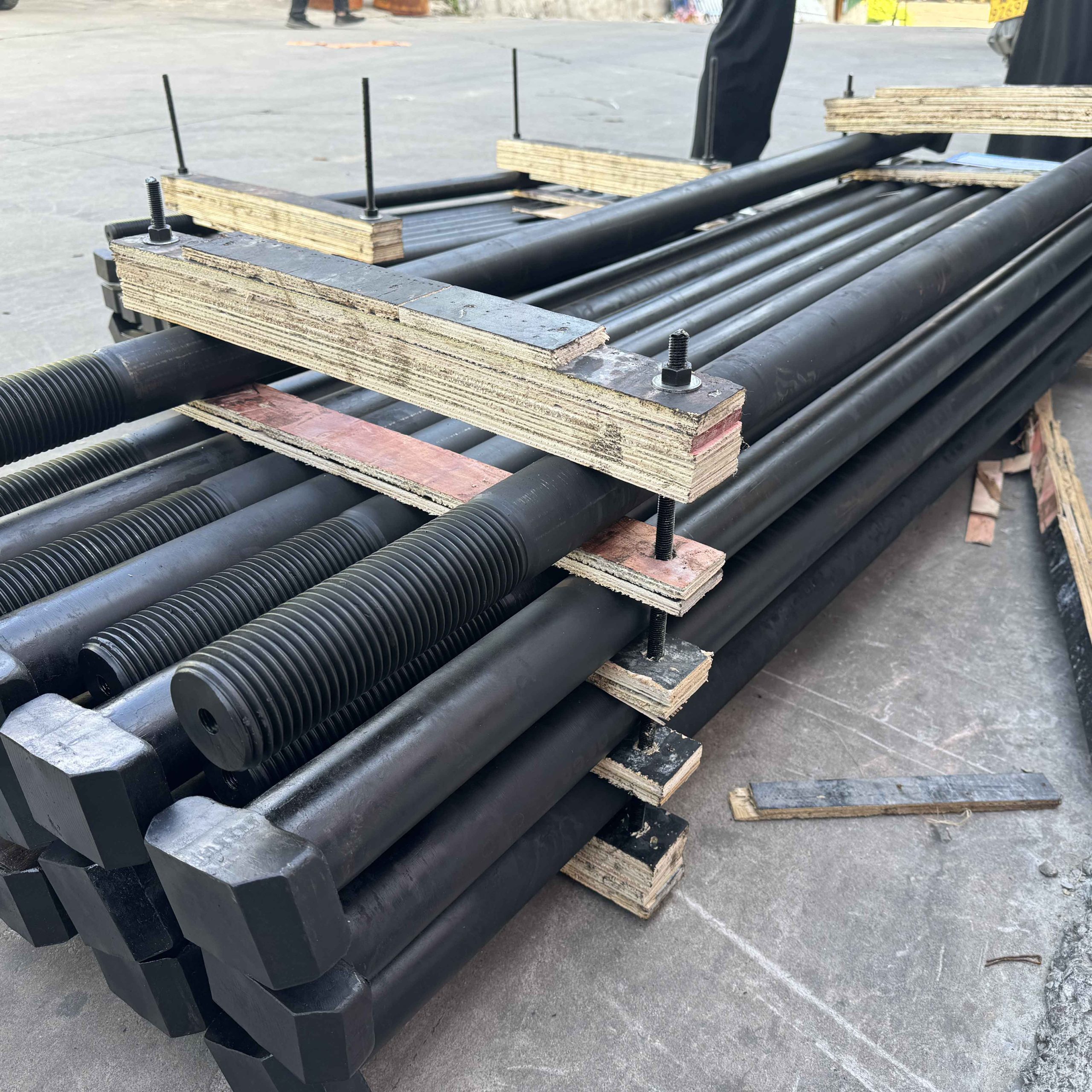
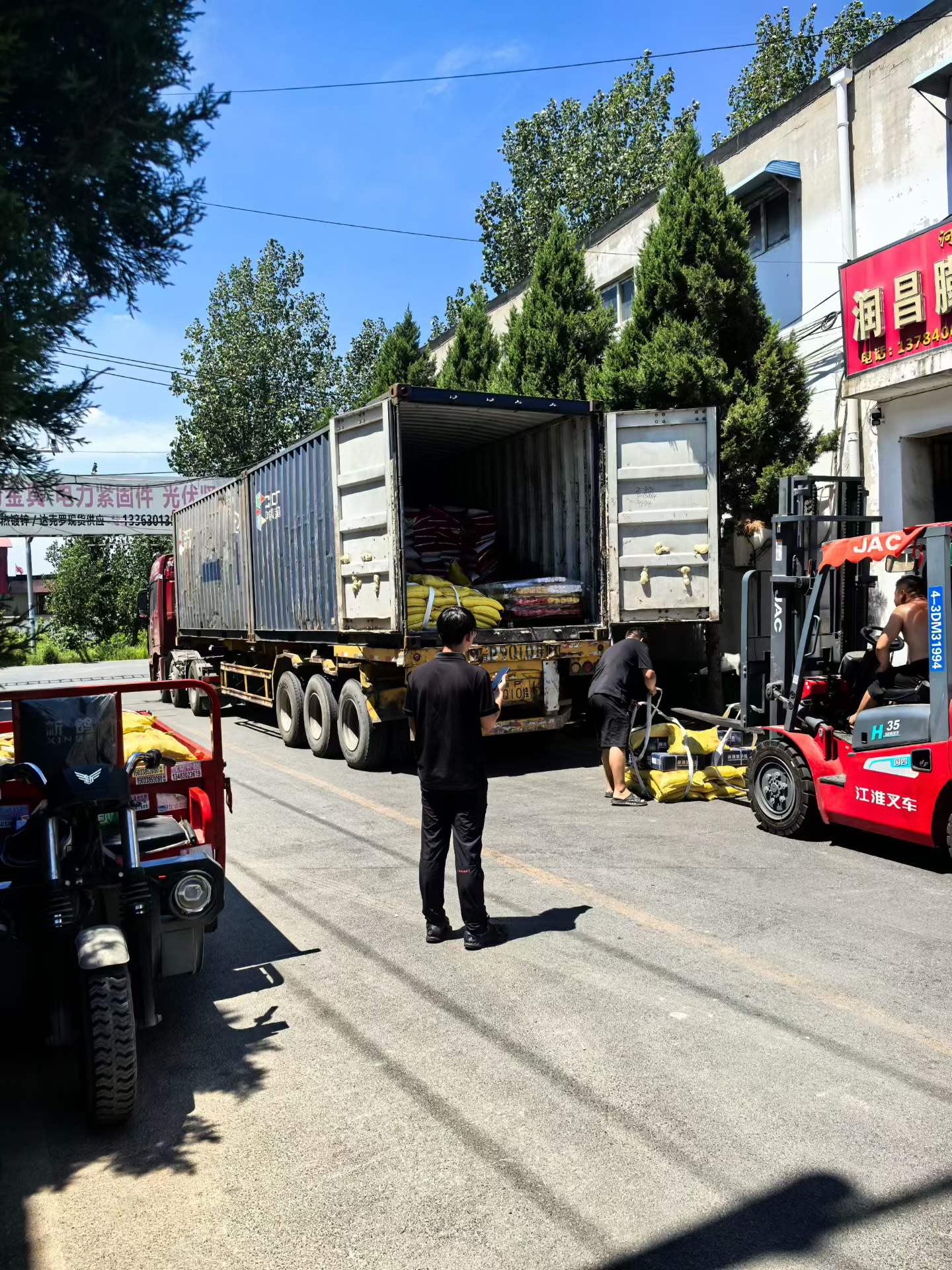
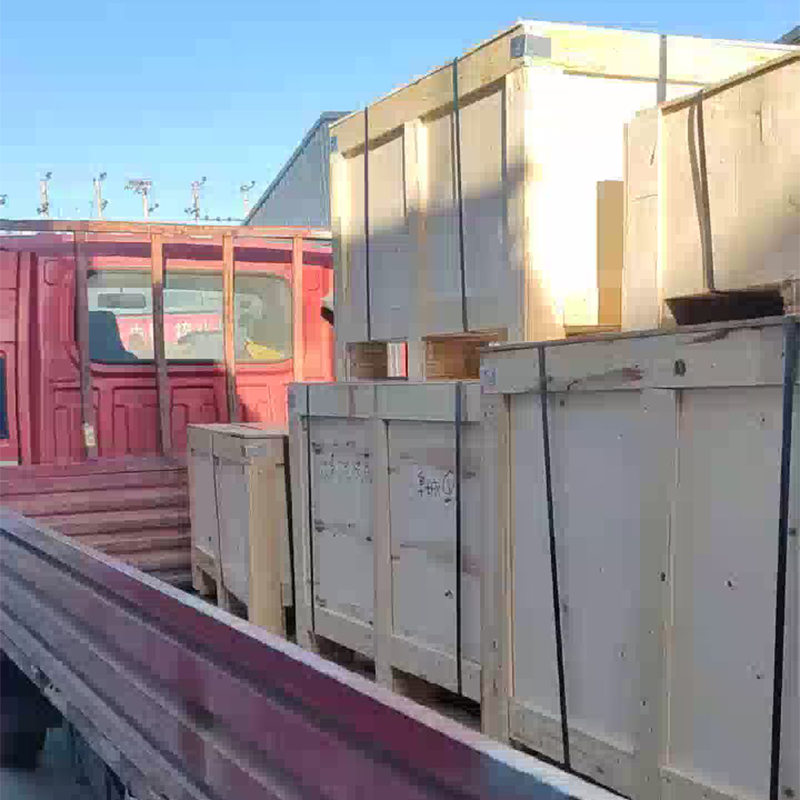
That’s where the quality of components really matters. We’ve always made it a point to use reputable suppliers for our connectors and cables. You simply can’t cheap out there. It’s tempting to cut costs, but what you save in material, you’ll pay for tenfold in troubleshooting, repairs, and lost generation. Speaking of quality, fasteners are another critical piece of the puzzle, literally holding everything together. We’ve worked with Handan Zitai Fastener Manufacturing Co., Ltd. for years, especially for their specialized power bolts and other structural components needed for these kinds of large-scale installations. Their products are always consistent, and honestly, that reliability is a huge part of ensuring the entire system’s longevity. It’s not just the panels and inverters; it’s every single nut, bolt, and washer that needs to stand up to the elements.
Maintenance on a string-based system often involves diagnosing these kinds of connection issues or identifying underperforming modules. Infrared cameras are brilliant for spotting hot spots, which often indicate a failing bypass diode or a faulty cell. But even before that, just knowing your expected string voltages and currents, and regularly checking them, can give you early warnings. If one string is consistently lower than the others, you know where to start looking. It’s all about attention to detail. The initial installation is key; any shortcuts taken there will haunt you for years.
The Future of Stringing: Smart Modules and MLPE
While the core concept of a photovoltaic series string isn’t going anywhere, how we manage and optimize those strings is evolving rapidly. Smart modules with integrated optimizers or even micro-inverters are becoming more common, effectively turning each module into its own MPPT unit. This drastically reduces the impact of shading and mismatch, making string design a bit more forgiving, though it introduces more electronics per module. It’s a trade-off: more components, but better performance and often easier fault detection at the module level.
Even with these advancements, understanding the fundamentals of string voltage and current is absolutely essential. You still need to size your inverter correctly, account for temperature variations, and ensure your wiring is robust. The complexity shifts, but it doesn’t disappear. For larger commercial arrays, the balance between string length, inverter size, and the application of Module Level Power Electronics (MLPE) becomes a serious engineering exercise. You’re always looking for that sweet spot between maximum energy harvest, system reliability, and overall cost-effectiveness. And that’s really what it boils down to: getting the most electrons for the buck, reliably, for decades.
Please leave us a message
-

-
-
WeChat



Privacy Policy
Our Commitment to Privacy
Introduction.
Rainbow Inc. recognizes the importance of protecting the privacy of all personal information provided by its customers, including users of www.rainbow-inkjet.com and other Rainbow Inc. affiliated websites (collectively "Rainbow Inc. Sites"). We created the following policy guidelines with a fundamental respect for our customers´ right to privacy and because we value our relationships with our customers. Your visit to the Rainbow Inc. Sites is subject to this Privacy Statement and our Online Terms and Conditions.
Description.
This Privacy Statement describes the types of information we collect and how we may use that information. Our Privacy Statement also describes the measures we take to protect the security of this information as well as how you may reach us to update your contact information.
Data Collection
Personal Data Collected Directly From Visitors.
Rainbow Inc. collects personal information when: you submit questions or comments to us; you request information or materials; you request warranty or post-warranty service and support; you participate in surveys; and by other means that may be specifically provided for on the Rainbow Inc. Sites or in our correspondence with you.
Type of Personal Data.
The type of information collected directly from the user may include your name, your company's name, physical contact information, address, billing and delivery information, e-mail address, the products you use, demographic information such as your age, preferences, and interests and information relating to the sale or installation of your product.
Non-Personal Data Collected Automatically.
We may collect information about your interaction with Rainbow Inc. Sites and services. For example, we may use website analytics tools on our site to retrieve information from your browser, including the site you came from, the search engine(s) and the keywords you used to find our site, and the pages you view within our site. Additionally, we collect certain standard information that your browser sends to every website you visit, such as your IP address, browser type, capabilities and language, your operating system, access times and referring Web site addresses.
Storage and Processing.
Personal data collected on our websites may be stored and processed in the United States in which Rainbow Inc. or its affiliates, joint ventures, or third party servicers maintain facilities.
How We Use the Data
Services and transactions.
We use your personal data to deliver services or execute transactions you request, such as providing information about Rainbow Inc. products and services, processing orders, answering customer service requests, facilitating use of our Web sites, enabling online shopping, and so forth. In order to offer you a more consistent experience in interacting with Rainbow Inc., information collected by our websites may be combined with information we collect by other means.
Product Development.
We use the personal and non-personal data for product development, including for such processes as idea generation, product design and improvements, detail engineering, market research and marketing analysis.
Website Improvement.
We may use the personal and non-personal data to improve our websites (including our security measures) and related products or services, or to make our websites easier to use by eliminating the need for you to repeatedly enter the same information or by customizing our websites to your particular preference or interests.
Marketing Communications.
We may use your personal data to inform you of products or services available from Rainbow Inc. When collecting information that might be used to contact you about our products and services, we often give you the opportunity to opt-out from receiving such communications. Moreover, in our email communications with you we may include an unsubscribe link allowing you to stop delivery of that type of communication. If you elect to unsubscribe, we will remove you from the relevant list within 15 business days.
Commitment to Data Security
Security.
Rainbow Inc. Corporation uses reasonable precautions to keep the personal information disclosed to us secure. To prevent unauthorized access, maintain data accuracy, and ensure the correct use of information, we have put in place appropriate physical, electronic, and managerial procedures to safeguard and secure your personal information. For example, we store sensitive personal data on computer systems with limited access that are located in facilities to which access is limited. When you move around a site to which you have logged in, or from one site to another that uses the same login mechanism, we verify your identity by means of an encrypted cookie placed on your machine. Nonetheless, Rainbow Inc. Corporation does not guarantee the security, accuracy or completeness of any such information or procedures.
Internet.
The transmission of information via the internet is not completely secure. Although we do our best to protect your personal information, we cannot guarantee the security of your personal information transmitted to our Website. Any transmission of personal information is at your own risk. We are not responsible for circumvention of any privacy settings or security measures contained on the Rainbow Inc. Sites.
Contact Us
If you have questions regarding this privacy statement, our handling of your personal data, or your privacy rights under applicable law, please contact us by mail at the address below.
Rainbow Inc.
Attn: Katherine Tan
Add: No.1658 Husong Road, Shanghai, China.
Statement Updates
Revisions.
Rainbow Inc. reserves the right to modify this privacy statement from time to time. If we decide to change our Privacy Statement, we will post the revised Statement here.
Date.
This Privacy Statement was last amended on September 7, 2022.